开放型经济体系

Search documents
三大区域,外贸为啥跑得快?
Ren Min Ri Bao· 2025-11-24 22:57
Core Insights - The foreign trade performance of China's three major regions—Yangtze River Delta, Guangdong-Hong Kong-Macao Greater Bay Area, and Beijing-Tianjin-Hebei—has shown strong resilience and vitality, with significant year-on-year growth in imports and exports [2][4][8] Group 1: Trade Performance - In the first ten months of this year, the Yangtze River Delta's import and export volume reached 14 trillion yuan, a year-on-year increase of 6% [2] - The Guangdong-Hong Kong-Macao Greater Bay Area's import and export volume was 7.52 trillion yuan, marking a historical high with a growth of 4% [3] - The Beijing-Tianjin-Hebei region's import and export volume reached 3.91 trillion yuan, with exports hitting a historical high of 1.2 trillion yuan [4] Group 2: Sector Performance - In the Yangtze River Delta, private enterprises contributed significantly, with their import and export volume reaching 7.83 trillion yuan, a growth of 9.7% [2] - The Guangdong-Hong Kong-Macao Greater Bay Area saw nearly 70% of its exports coming from electromechanical products, with electronic components and "new three types" products growing by 19.5% and 32.2% respectively [3] - The Beijing-Tianjin-Hebei region has leveraged its free trade zones and comprehensive bonded zones to enhance export growth, with significant increases in exports from specific areas [4] Group 3: Structural Advantages - The three regions benefit from strong industrial foundations and innovation capabilities, transitioning from traditional cost advantages to innovation-driven growth [5] - The regions are deeply integrated into global supply chains, showcasing adaptability to external demand fluctuations [6] - Institutional innovations, such as breaking down administrative barriers and optimizing resource allocation, have created a favorable business environment [7] Group 4: Future Outlook - The future of regional foreign trade is expected to expand, with digital trade and green trade emerging as new growth drivers [10] - The differentiation in regional trade development is forming a "multi-polar support" structure, enhancing the overall economic resilience [9] - The integration of high-end manufacturing and service trade is anticipated to strengthen the competitive position of these regions in the global market [10]
“苏大强”是怎样炼成的?
Jin Rong Shi Bao· 2025-09-15 13:42
Core Insights - Jiangsu Province is positioned as a key hub in the "Belt and Road" initiative, showcasing significant growth in foreign trade and investment, with a total import and export value exceeding 5 trillion yuan, ranking second nationally for 22 consecutive years [1][2] - The province has maintained the highest actual foreign investment in China for seven years, with a projected foreign investment of 19.05 billion USD in 2024, cumulatively reaching 103.74 billion USD over four years, accounting for 16.2% of the national total [1][7] - Jiangsu's cities, particularly Nanjing and Suzhou, are emerging as new centers for service trade innovation, focusing on digital culture, traditional Chinese medicine, and intellectual property [1] Foreign Trade and Investment - Jiangsu has optimized its foreign trade structure, emphasizing new growth drivers while maintaining scale, with exports to emerging markets increasing to 59.9% in the first seven months of the year, up 12.6 percentage points from 2020 [3] - The province has achieved full coverage of cross-border e-commerce pilot zones, supporting the development of 30 cross-border e-commerce industrial belts [3] - Foreign enterprises contribute significantly to the national economy, accounting for one-third of imports and exports, one-fourth of industrial added value, and one-seventh of tax revenue, creating over 30 million jobs [5] Economic Environment - Jiangsu has established a market-oriented, law-based, and international business environment, with nearly 43,000 foreign enterprises contributing 46.6% of the province's export value and 19.2% of total tax revenue [7] - The province has seen a substantial increase in foreign investment from countries like Germany, Japan, and Switzerland, with investment growth exceeding 90% [7] - Jiangsu's free trade zone, despite occupying only 0.1% of the province's area, accounts for 10% of its total imports and actual foreign investment [8][9] Business Ecosystem - The province has been recognized for five consecutive years as having the best business environment, implementing a new round of actions to enhance this environment [9] - Jiangsu has reduced the ratio of social logistics costs to GDP to 12.8%, promoting market-oriented reforms in data elements and social credit systems [9] - The province's focus on optimizing the business environment includes supporting foreign enterprises in equipment upgrades and promoting a stable, fair, transparent, and predictable development environment [9]
福州新区十周年 加大建设对外开放平台
Zhong Guo Xin Wen Wang· 2025-09-01 09:30
Core Insights - Fuzhou New Area celebrates its 10th anniversary, focusing on enhancing its role as a significant hub for domestic and international exchanges and cooperation [1][2] - Since its establishment, Fuzhou New Area has achieved an average annual GDP growth of 8.4%, fixed asset investment growth of 13.1%, and industrial added value growth of 8.4%, with a total economic output exceeding 330 billion yuan [1] - The area has improved its transportation capabilities, with Changle International Airport upgraded to a regional hub, operating 130 domestic and international routes, and handling over 15 million passengers annually [1][2] Economic Development - Fuzhou New Area has made significant progress in multimodal transport, connecting maritime routes with domestic rail services, and launching several international freight trains, enhancing its logistics network [2] - The area has established 72 bilateral cooperation projects with a total investment exceeding 93 billion yuan, focusing on marine fisheries and tropical agriculture through the "Two Countries, Twin Parks" initiative with Indonesia [2] - By 2024, Fuzhou New Area is projected to achieve an impressive foreign trade total of 193.2 billion yuan, with ongoing development of various economic zones and platforms to support cross-border e-commerce and other foreign-related industries [2]
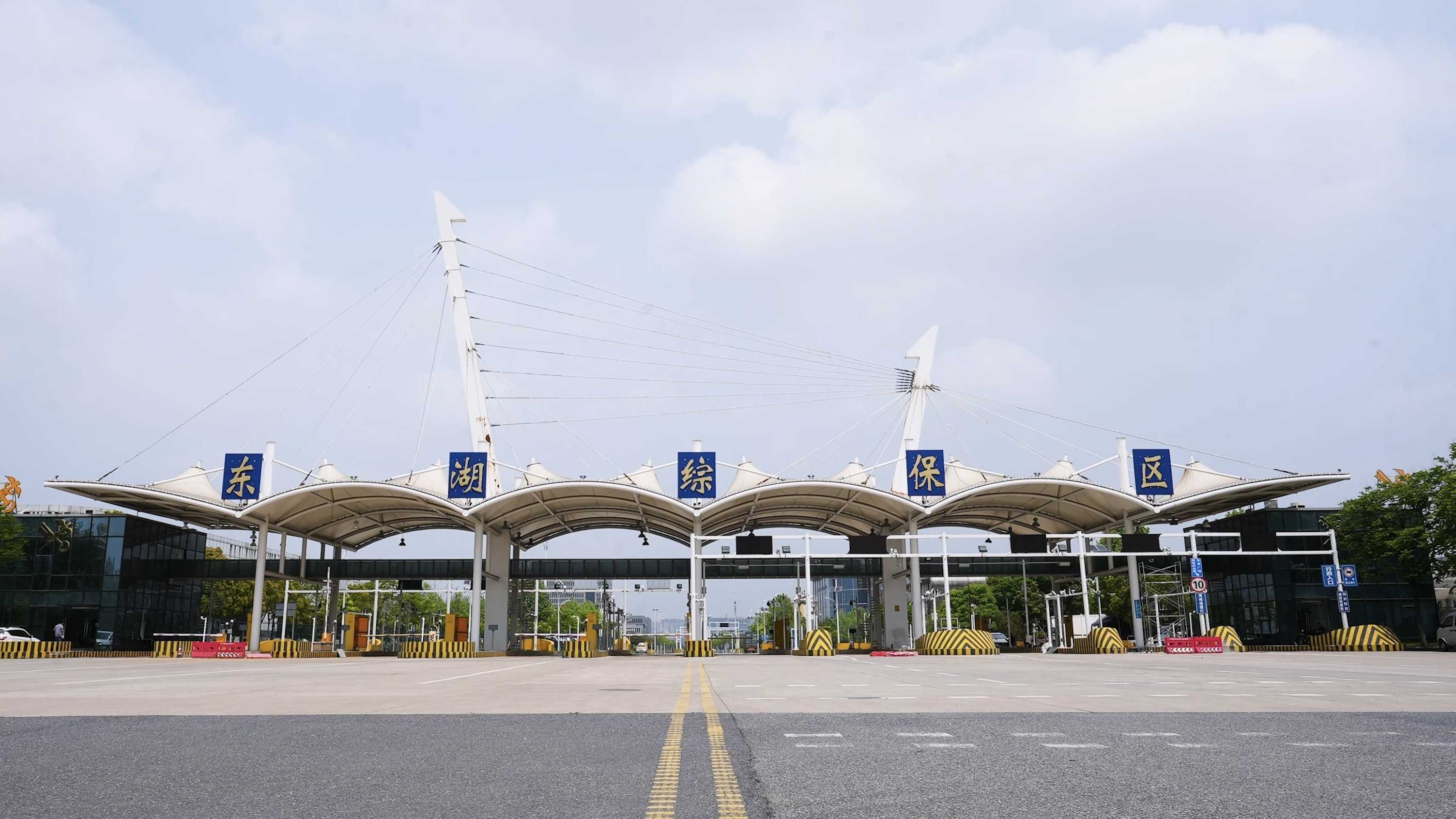
进出口总值首破800亿元 武汉东湖综保区全国排名跃升14位
Chang Jiang Ri Bao· 2025-08-29 05:30
Core Insights - The Customs General Administration announced the 2024 performance evaluation results for national comprehensive bonded zones, with Wuhan Donghu Comprehensive Bonded Zone (Donghu CBZ) rated as an "A-class" zone nationally and in the central region, rising 14 places in the national ranking [1][5] Group 1: Evaluation Process - The evaluation of comprehensive bonded zones began in 2019 and is conducted annually, led by the Customs General Administration with participation from multiple ministries [4] - A total of 154 bonded zones participated in this evaluation, with only the top 20% receiving the highest "A-class" rating [4] Group 2: Performance Metrics - Donghu CBZ ranked 15th nationally and 3rd among 23 evaluated units in the central region, showing improvements in institutional environment, industrial structure, and openness efficiency [5] - The total import and export value of the zone exceeded 80 billion yuan for the first time in 2024, becoming a significant driver of foreign trade growth in Hubei [8] Group 3: Industry Development - Donghu CBZ focuses on high-tech industrial trade, leveraging the advantages of the Optics Valley industry, with key enterprises like Guangxun Technology and Xian Dao Rare Materials established in the zone [7] - The zone has also fostered several specialized and innovative "little giant" enterprises, creating a collaborative innovation ecosystem among leading and small to medium-sized enterprises [7] Group 4: Strategic Importance - The recent "double A-class" rating reflects Donghu CBZ's comprehensive strength in institutional innovation, business model expansion, and operational efficiency, highlighting Wuhan's substantial progress in building high-level open platforms [9]