
全球产业链供应链

Search documents
共建“一带一路”畅通全球产供链
Jing Ji Ri Bao· 2026-01-17 22:16
Core Insights - The article discusses the measurement of global industrial and supply chain paths, emphasizing the role of the Belt and Road Initiative (BRI) in enhancing connectivity and mitigating the impacts of decoupling [1] Group 1: Global Supply Chain Analysis - The authors constructed indicators to measure global industrial supply chain paths using data from the Asian Development Bank's international input-output tables [1] - The analysis reveals that China's "broad internal circulation" has a low dependency on overseas paths from a unilateral perspective [1] - From a bilateral perspective, the intermediate paths of the global supply chain between China and the US are concentrated around both countries [1] Group 2: Multilateral Supply Chain Dynamics - In a multilateral context, countries like Singapore, Vietnam, and Mexico are more inclined to become important intermediate paths in China's multilateral supply chain, while the US and Japan are more likely to serve as downstream endpoints and upstream starting points [1] - The BRI strengthens China's supply chain connections with other regions, helping to buffer the decline in supply chain interconnections caused by decoupling [1] Group 3: Policy Recommendations - It is essential to implement effective measures from the Regional Comprehensive Economic Partnership (RCEP), such as trade facilitation, liberalization, and tariff reductions, to lower costs and enhance efficiency, ensuring stable supply chains [1] - The establishment of bilateral and multilateral free trade agreements with BRI countries is recommended to create efficient and stable regional supply chains, leveraging the BRI members to develop and facilitate a digital Silk Road and green infrastructure connectivity [1] - Short-term communication and coordination with developed economies like the US and Japan should be strengthened to prevent supply chain disruptions, while long-term strategies should focus on enhancing independent innovation capabilities to mitigate the "bottleneck" challenges in related industries [1]
2025年,“中国好物”在全球广受欢迎
Xin Hua She· 2026-01-15 03:38
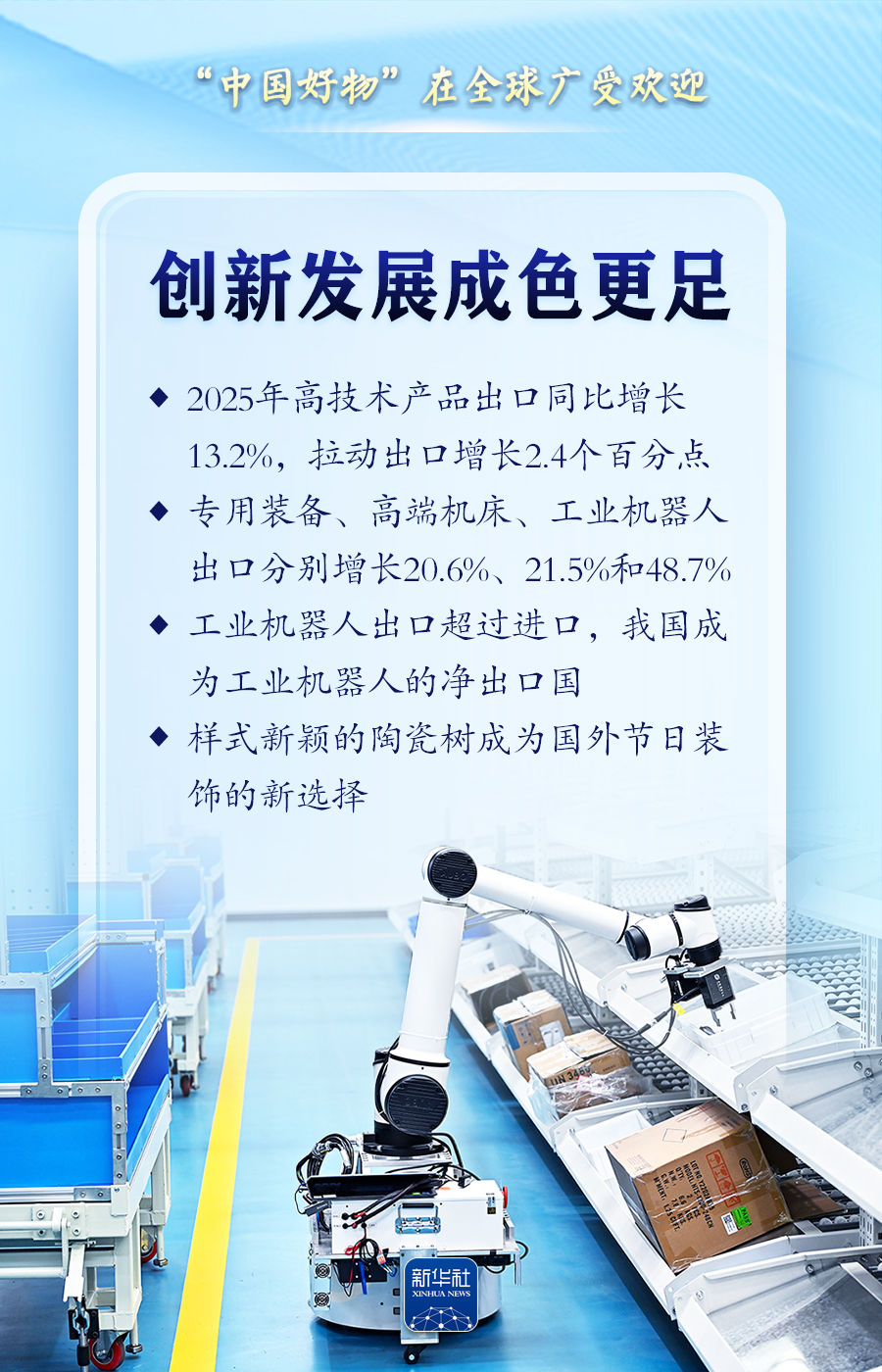
Core Viewpoint - In 2025, China's exports are projected to reach 26.99 trillion yuan, reflecting a year-on-year growth of 6.1%, driven by quality improvements and the global popularity of "Chinese good products" [1] Group 1: Export Growth - Exports of lithium batteries and wind turbine generators are expected to grow by 26.2% and 48.7% respectively [3] - Exports of electric motorcycles and bicycles increased by 18.1%, while electric locomotives saw a growth of 27.1% [3] - Exports of industrial gas purification equipment rose by 17.3%, and electric forklifts experienced a growth of 5.2% [3] Group 2: Market Expansion - Exports to countries involved in the Belt and Road Initiative grew by 11.2%, contributing 5.4 percentage points to overall export growth [5] - ASEAN has been China's largest export market for three consecutive years [5] - Export growth rates to emerging markets in Latin America, the Middle East, Central Asia, and Africa are all faster than the overall growth rate [5] - China has become a "key link" in the global industrial and supply chains [5]

美国对华实施新一轮关税,中国拿出中美“釜山会晤”共识,奉劝特朗普不要心存侥幸!
Sou Hu Cai Jing· 2025-12-26 03:59
Core Viewpoint - The Trump administration's announcement of new tariffs on China's semiconductor industry, effective June 2027, reflects deeper geopolitical and economic considerations amidst global supply chain challenges [1][3]. Group 1: Tariff Announcement and Implications - The new tariffs are framed as a response to China's pursuit of industrial self-sufficiency, which the U.S. claims harms American interests [1]. - The delayed implementation until 2027 suggests a strategic compromise within the U.S. government, indicating uncertainty about the potential economic impact of these tariffs [3]. - The tariffs are perceived as a political maneuver ahead of upcoming midterm elections, showcasing a tough stance to voters while balancing internal economic considerations [3]. Group 2: China’s Response and Strategic Position - China's immediate and strong opposition to the tariffs highlights its shift from a passive to a more assertive role in international trade disputes [3][5]. - The ongoing trade tensions and the historical context of the tariff wars indicate a persistent struggle between the U.S. and China, with both sides maintaining consistent policies despite changes in administration [3][5]. - China's dominance in the rare earth supply chain provides it with significant leverage against U.S. trade pressures, suggesting that the U.S. may be underestimating China's resilience and strategic stability [5]. Group 3: Future Economic Landscape - The evolving U.S.-China relationship and the implementation of tariffs will serve as critical indicators of both countries' strategic approaches in the coming years [7]. - The outcome of this tariff battle will depend on the patience and strategic acumen displayed by both nations, with the potential for significant global economic implications [7]. - The ongoing tensions reflect a broader anxiety within the U.S. regarding China's rise, indicating that the economic competition will be a long-term engagement [5].

事关半导体、稀土磁体、TikTok,商务部回应
Zheng Quan Shi Bao· 2025-12-25 08:29
Group 1 - The Ministry of Commerce firmly opposes the U.S. imposing 301 tariffs on Chinese semiconductor products and has lodged a serious representation through the China-U.S. economic and trade consultation mechanism [2] - The U.S. unilateral tariffs violate WTO rules, disrupt global supply chains, and harm the interests of U.S. businesses and consumers, prompting China to urge the U.S. to correct its actions and cancel the related measures [2] - China is willing to resolve concerns through equal dialogue and consultation based on mutual respect and cooperation [2] Group 2 - The Ministry of Commerce stated that it is actively promoting and facilitating compliant trade regarding the export restrictions on rare earth magnets to the U.S. [3] - The Ministry emphasized its commitment to maintaining the security and stability of global supply chains while facilitating compliant trade [3] Group 3 - The Ministry of Commerce commented on TikTok's establishment of a joint venture in the U.S., expressing hope for a solution that aligns with Chinese laws and balances interests [4] - The Ministry highlighted the importance of a fair, open, transparent, and non-discriminatory business environment for Chinese companies operating in the U.S. to ensure stable and sustainable development of China-U.S. economic relations [4]
通行量已达5166列 中欧班列“东通道”今年运送超53万标准箱
Yang Shi Xin Wen· 2025-12-10 08:10
Core Viewpoint - The China-Europe Railway Express "East Corridor" has seen significant growth in freight transport, with a total of 5,166 trains operating and over 530,000 standard containers transported since the beginning of the year [1] Group 1: Trade Growth - China's foreign trade has shown a steady and positive trend, supported by strong demand for cross-border cargo transportation [1] - The variety of goods transported by the China-Europe Railway Express has expanded to over 1,000 types, including high-value products such as computers, refrigerators, and finished automobiles [1] Group 2: Infrastructure and Connectivity - The East Corridor consists of the Manzhouli, Suifenhe, and Tongjiang railway ports, with the operational routes expanding to 27, covering 14 countries including Poland, Germany, and the Netherlands [1] - The railway connects over 60 cities in China, including Changsha, Zhengzhou, and Chengdu, enhancing the integration of China's foreign trade into the global supply chain [1]
突破5000列
中国能源报· 2025-12-10 07:53
Core Viewpoint - The "East Corridor" of the China-Europe Railway Express has surpassed 5,000 trains in transit this year, demonstrating strong momentum in supporting high-level foreign trade and economic integration [1][3]. Group 1: Operational Performance - As of February 10, 2023, the number of trains in the "East Corridor" reached 5,166, transporting over 530,000 standard containers of various goods [1]. - The range of goods transported has expanded to over 1,000 types, including high-value products such as computers, refrigerators, and finished automobiles [3]. - The operational routes have increased to 27, connecting 14 countries including Poland, Germany, and the Netherlands, and linking over 60 cities in China such as Changsha, Zhengzhou, and Chengdu [3]. Group 2: Efficiency Improvements - To enhance operational efficiency, the China Railway Harbin Group has prioritized train scheduling and implemented a "digital port" system, improving coordination with customs and border inspection [3]. - The introduction of paperless customs clearance and optimization of broad-gauge vehicle inspection processes has reduced the customs clearance time to under 30 minutes, achieving an overall efficiency improvement of nearly 10% [3]. Group 3: Future Developments - The ongoing expansion project of the Jiamusi to Tongjiang railway is expected to triple the capacity of the Tongjiang railway port, further enhancing the corridor's capabilities [3].

李强分别会见世界银行、国际货币基金组织、联合国贸易和发展会议负责人
Sou Hu Cai Jing· 2025-12-09 13:41
Core Viewpoint - The Chinese economy is demonstrating resilience amidst global trade and investment challenges, with a focus on expanding domestic demand and enhancing the modern industrial system [1][2]. Group 1: Economic Strategy - China aims to promote consumption and investment while ensuring a positive interaction between supply and demand, enhancing the internal circulation's intrinsic motivation and reliability [1]. - The government plans to implement proactive macroeconomic policies to maintain economic growth within a reasonable range, leveraging fiscal and monetary policies effectively [1]. Group 2: International Cooperation - China expresses strong support for a UN-centered international system and multilateralism, aiming to collaborate with international organizations like the World Bank and IMF in various sectors, including knowledge sharing and green development [2]. - The Chinese government is committed to enhancing cooperation in areas such as digital economy, artificial intelligence, and low-carbon transition with the United Nations Conference on Trade and Development [2]. Group 3: Global Economic Impact - The achievements of the Chinese economy are recognized as significant contributors to global economic growth, with the "14th Five-Year Plan" expected to provide valuable certainty and strong momentum for the world economy [2].
三大区域,外贸为啥跑得快?
Ren Min Ri Bao· 2025-11-24 22:57
Core Insights - The foreign trade performance of China's three major regions—Yangtze River Delta, Guangdong-Hong Kong-Macao Greater Bay Area, and Beijing-Tianjin-Hebei—has shown strong resilience and vitality, with significant year-on-year growth in imports and exports [2][4][8] Group 1: Trade Performance - In the first ten months of this year, the Yangtze River Delta's import and export volume reached 14 trillion yuan, a year-on-year increase of 6% [2] - The Guangdong-Hong Kong-Macao Greater Bay Area's import and export volume was 7.52 trillion yuan, marking a historical high with a growth of 4% [3] - The Beijing-Tianjin-Hebei region's import and export volume reached 3.91 trillion yuan, with exports hitting a historical high of 1.2 trillion yuan [4] Group 2: Sector Performance - In the Yangtze River Delta, private enterprises contributed significantly, with their import and export volume reaching 7.83 trillion yuan, a growth of 9.7% [2] - The Guangdong-Hong Kong-Macao Greater Bay Area saw nearly 70% of its exports coming from electromechanical products, with electronic components and "new three types" products growing by 19.5% and 32.2% respectively [3] - The Beijing-Tianjin-Hebei region has leveraged its free trade zones and comprehensive bonded zones to enhance export growth, with significant increases in exports from specific areas [4] Group 3: Structural Advantages - The three regions benefit from strong industrial foundations and innovation capabilities, transitioning from traditional cost advantages to innovation-driven growth [5] - The regions are deeply integrated into global supply chains, showcasing adaptability to external demand fluctuations [6] - Institutional innovations, such as breaking down administrative barriers and optimizing resource allocation, have created a favorable business environment [7] Group 4: Future Outlook - The future of regional foreign trade is expected to expand, with digital trade and green trade emerging as new growth drivers [10] - The differentiation in regional trade development is forming a "multi-polar support" structure, enhancing the overall economic resilience [9] - The integration of high-end manufacturing and service trade is anticipated to strengthen the competitive position of these regions in the global market [10]
聚创新之势 谋共享之福
Ren Min Ri Bao· 2025-11-07 22:00
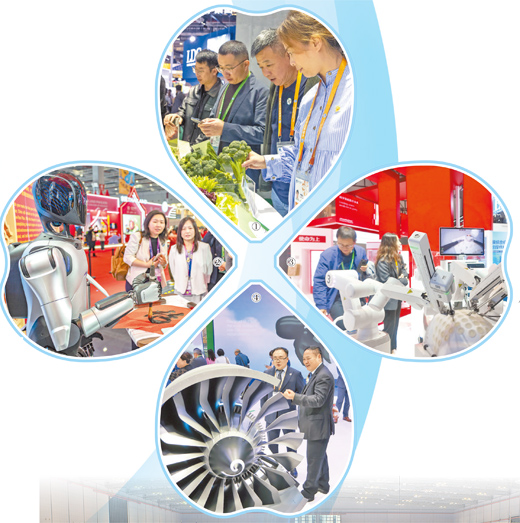
Core Insights - The eighth China International Import Expo (CIIE) showcases 461 new products, technologies, and services, emphasizing China's commitment to high-level opening-up and becoming a global innovation testing ground [4][5] - The event facilitates communication and resource integration for Chinese enterprises, enhancing their development through technological innovation and industry collaboration [5] Group 1: Global Procurement Trends - COFCO Group highlights a significant increase in the import volume of Kazakhstani wheat compared to the previous year and has entered the coconut water market through collaboration with Thai brands [6] - The trend towards diversified global procurement is evident, with increasing consumer demand for high-quality and unique global products, creating new opportunities for cross-border business [6] Group 2: Central Enterprises Participation - The "Central Enterprises Procurement Corridor" made its debut at this year's expo, with nearly 20,000 attendees from over 100 central enterprises, resulting in procurement agreements exceeding $40.9 billion across various categories [7] - China National Petroleum Corporation (CNPC) signed agreements with 34 partners from 17 countries, while China National Machinery Industry Corporation (Sinomach) introduced advanced production lines for sustainable packaging [7] Group 3: International Cooperation and Innovation - Guangxi Canglong Technology Co., Ltd. showcased its AI-powered underwater robots, which have been utilized in international cooperation projects in ASEAN countries [9] - HaiLiang Group aims to expand its collaboration in low-carbon copper materials and recycling, reflecting a commitment to green development and innovation [10][11] Group 4: Opportunities for Future Collaborations - Shanxi Pengfei Group plans to sign procurement agreements for automotive core components with German companies, highlighting the expo as a platform for new business opportunities [11] - The increasing quality and sustainability of exhibited products indicate a growing trend towards innovation and green development in global supply chains [11]

每日市场观察-20251106
Caida Securities· 2025-11-06 02:33
Market Performance - A-shares showed resilience with a trading volume of 1.89 trillion, down approximately 500 billion from the previous trading day[1] - The Shanghai Composite Index rose by 0.23%, while the Shenzhen Component increased by 0.37% and the ChiNext Index gained 1.03%[4] - The October China Warehousing Index improved to 50.6%, up 1 percentage point from the previous month, indicating economic vitality[1] Sector Analysis - The power equipment sector, including energy storage and distribution, was the standout performer, driven by AI computing infrastructure concerns and energy shortages[2] - Main capital inflows were observed in power grid equipment, batteries, and photovoltaic equipment, while software development, semiconductors, and IT services saw capital outflows[4] Policy Developments - The State Council announced the suspension of additional tariffs on certain U.S. imports effective November 10, 2025, as part of trade negotiations[5][8] - China signed an economic partnership framework agreement with several Pacific island nations to enhance bilateral trade and investment cooperation[6][7] Fund Dynamics - The total trading volume of ETFs reached 497.25 billion, with stock ETFs accounting for 112.1 billion and bond ETFs for 246.06 billion[13][14] - Public fund reports indicate a concentration in technology growth sectors, with increased holdings in TMT while reducing positions in large finance and consumer sectors[15]