快速补能

Search documents
新能源车要开始卷充电速度了
虎嗅APP· 2025-11-13 00:09
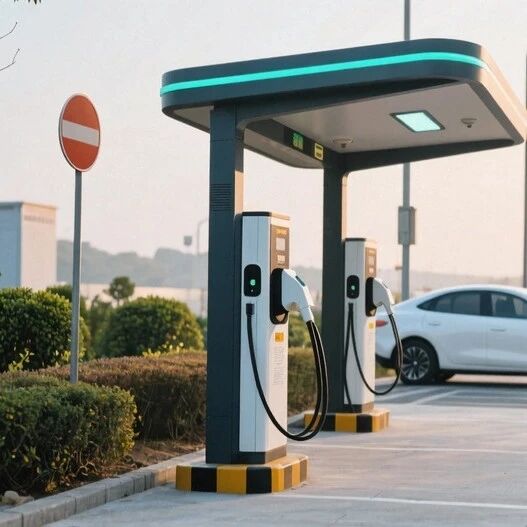
Core Viewpoint - The article discusses the growth of China's new energy vehicles (NEVs) and charging piles, highlighting the decreasing vehicle-to-pile ratio while emphasizing that the charging difficulties persist due to the imbalance between private and public charging infrastructure [5][6][8]. Group 1: Growth of NEVs and Charging Infrastructure - In 2020, China had 4.92 million NEVs and 1.68 million charging piles, with a vehicle-to-pile ratio of 3.1:1. By 2022, NEV ownership rose to 13.1 million, and charging piles increased to 5.2 million, reducing the ratio to 2.5:1 [5][6]. - Projections for 2024 indicate NEV and charging pile ownership will reach 31.4 million and 13.08 million, respectively, with a further decrease in the vehicle-to-pile ratio to 2.4:1 [6]. - As of mid-2025, NEV ownership is expected to hit 36.89 million, with charging piles around 16.04 million, leading to a vehicle-to-pile ratio of 2.3:1 [6]. Group 2: Charging Difficulties - The article argues that simply observing a declining vehicle-to-pile ratio does not accurately reflect the alleviation of charging difficulties, as it fails to differentiate between public and private charging piles [8]. - By the end of 2024, out of 16.04 million charging piles, 11.94 million will be private piles, leaving owners of vehicles without charging piles reliant on public options [10]. - The growth of private piles has consistently outpaced public piles, with private piles increasing by 373,000 and public piles by only 85,300 in 2024 [11]. Group 3: Public Charging Infrastructure Challenges - The article identifies three critical variables affecting charging difficulties: the percentage of vehicle owners with private charging piles, the ratio of new public piles to vehicles without charging piles, and the ratio of existing vehicles to public piles [14][15]. - The ratio of existing vehicles to public piles has worsened from 6.5:1 in 2021 to 9:1 by mid-2025, indicating that the growth of public charging infrastructure is lagging behind vehicle sales [15][17]. - The annual production of 30 million vehicles contrasts sharply with the addition of only 850,000 public charging piles, highlighting inefficiencies in public charging infrastructure investment and operation [17]. Group 4: Economic Viability of Charging Operators - The article discusses the performance of 特来电 (Telai Electric), which operates 792,000 public charging terminals, holding a 24% market share as of mid-2025 [19]. - Despite a significant number of terminals, the average profit per terminal is low, with each terminal generating only 4.1 yuan in gross profit per day [24]. - The decline in revenue per terminal is attributed to the expansion of partnerships and collaborations, which dilute the profitability of individual charging stations [22]. Group 5: Charging Speed and User Experience - The article emphasizes that the primary issue is not the number of charging piles but the slow charging speed, which contributes to user anxiety regarding vehicle range [29]. - Current average charging power across 18 million charging piles is only 44 kW, leading to long wait times for users [31]. - The article advocates for a "charging revolution" where charging speeds match those of refueling gasoline vehicles, which would significantly improve user experience and operational efficiency for charging operators [31][38]. Group 6: Government Initiatives and Future Outlook - As of September 2025, China aims to have 28 million charging piles by 2027, with a focus on increasing charging speed and efficiency [32]. - The government has recognized the need for faster charging solutions and plans to enhance the infrastructure to support high-power charging stations [32]. - The article concludes that the future of NEV competitiveness will hinge on charging convenience and speed, rather than just battery capacity [41].


比亚迪Q3
数说新能源· 2025-10-31 07:44
Group 1: Global Sales - In Q3 2025, the company achieved pure electric vehicle sales of 582,500 units, surpassing Tesla's 497,100 units by 85,400 units, marking four consecutive quarters of leading sales [1] - Total sales of new energy vehicles (NEV) in the first three quarters reached 3.26 million units, with pure electric vehicles accounting for 1.606 million units (49.26%) and plug-in hybrids at 1.654 million units, indicating a balanced product structure [1] - To meet the annual target of 5.5 million units for 2025, the company needs to sell 2.24 million units in Q4, averaging 24,900 units per day, which presents a significant challenge, although overseas markets may provide a breakthrough opportunity [1] Group 2: Overseas Expansion - In the first three quarters of 2025, overseas sales exceeded 700,000 units, nearing the annual target of 800,000 units, representing a year-on-year increase of 91.8%, with monthly sales in countries like Spain, France, Thailand, and Malaysia surpassing Tesla [2] - The growth is supported by localized production in Thailand and Uzbekistan, which reduces tariff costs [2] - The product matrix is adapted to cover different price ranges, from 100,000 yuan models to 300,000 yuan models, and the service network is being improved with the simultaneous advancement of overseas charging facilities [2] Group 3: Technology Implementation - Research and development investment in the first three quarters reached 43.748 billion yuan, a year-on-year increase of 31.3%, focusing on smart driving, rapid charging, and in-car technology [3] - The "Tian Shen Zhi Yan" smart driving system has been equipped in 21 models, with prices starting from 70,000 yuan, enhancing the competitiveness of mid-to-low-end models through "technology equality" [3] - The launch of high-end models like Tengshi N9 and Yangwang U7 is expected to improve the product structure and overall profitability, as high-end models have higher gross margins than mass-market vehicles [3] Group 4: Strategic Shift - The decline in revenue and profit signals a strategic transformation for the company, which is actively opting for volume over price, with a price war initiated in Q2 affecting current profits but solidifying market share [3] - The management's focus on reducing internal competition and leveraging the supply chain indicates a shift from scale expansion to quality and risk control, preparing for potential market downturns [3] - In the short term, this transformation is deemed necessary, and if the company cannot rely on high-end products to open new markets, the strategic adjustment may become reactive [3]