快餐行业成本压力

Search documents
麦当劳中国食品安全事件引关注,股价近期小幅波动
Jing Ji Guan Cha Wang· 2026-02-11 16:51
Core Insights - McDonald's is facing a food safety incident in China, alongside cost pressures and local competition, leading to slight fluctuations in its stock price [1] Recent Events - On February 9, 2026, a consumer reported finding hair in a hamburger at McDonald's Beijing Gongda Bridge store, prompting an investigation by the company, which may lead to short-term brand scrutiny [2] - On February 5, 2026, McDonald's China raised prices on some core menu items by 0.5-1 yuan in December 2025, reflecting cost pressures in the fast-food industry, with the price increase trending on social media [2] - On February 10, 2026, Burger King and McDonald's accelerated localization efforts in the Chinese market, with key figure Patrick Siewert involved in McDonald's China, indicating a trend of multinational companies adjusting leadership to better connect with local markets, which may impact long-term growth [2] - On February 4, 2026, McDonald's launched a Spring Festival marketing campaign titled "One Light, One Wish," integrating intangible cultural heritage to enhance emotional brand connections, reaching over 7,700 restaurants nationwide [2] - On February 6, 2026, the Ronald McDonald House celebrated its tenth anniversary in China, having served 1,890 families, showcasing the company's long-term commitment to philanthropy, with plans for further expansion [2] Stock Performance - Over the past 7 days (February 5 to 11, 2026), McDonald's (MCD.N) stock price decreased by 0.22% with a volatility of 2.24%. The latest stock price on February 11 was $322.99, down 0.92% for the day, with a trading volume of approximately $200 million; on February 5, the trading volume reached $1.278 billion, indicating active trading. Year-to-date, the stock has increased by 5.68%, but this performance is below that of the S&P 500 index [3]

肯德基涨价了!外送产品平均贵0.8元
Guo Ji Jin Rong Bao· 2026-01-26 13:33
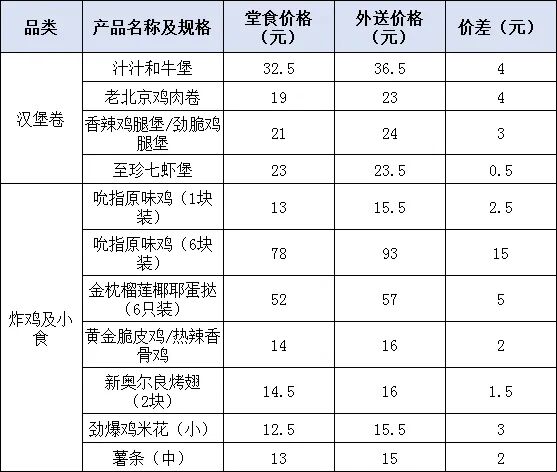
Core Viewpoint - KFC China has announced a price increase for its delivery products, with an average rise of 0.8 yuan, while dine-in prices remain unchanged [1] Group 1: Price Adjustment Details - The price increase is limited to the delivery channel, with specific price differences noted for various products, such as a 4 yuan increase for the "Juicy Beef Burger" and "Old Beijing Chicken Wrap" compared to dine-in prices [2][3] - Delivery prices for popular items like "Original Recipe Chicken" and "Golden Crispy Chicken" have increased by 2.5 to 3 yuan, with total delivery costs potentially exceeding dine-in prices by approximately 10 yuan when including delivery fees [2][3] Group 2: Rationale Behind Price Increase - KFC stated that the price adjustment is a normal market response to changes in operational costs, aiming to maintain stable and healthy operations [4] - This is not the first price adjustment due to cost pressures; a previous increase occurred in December 2024, with similar justifications regarding market cost adaptation [4] Group 3: Industry Context and Performance - The price increase reflects broader cost pressures within the fast-food industry, as evidenced by McDonald's recent price hikes on core items [4] - KFC's delivery sales have seen a significant increase, with a 33% year-on-year growth, contributing to over 51% of the company's restaurant revenue in the latest quarter [5] - Despite rising delivery costs, KFC's restaurant profit margin reached 18.5%, indicating effective operational efficiency [5] Group 4: Future Goals - KFC aims to achieve an operating profit of over 10 billion yuan by 2028, with plans to expand its store count to over 17,000 by that year [6]


麦当劳是如何涨价的?
Sou Hu Cai Jing· 2025-12-23 21:11
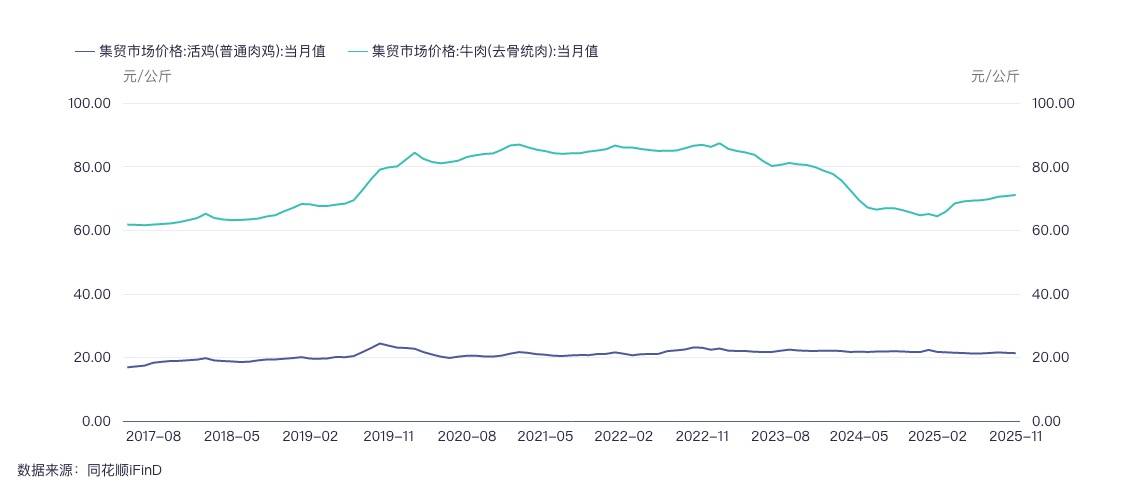
Core Viewpoint - McDonald's has raised prices across its menu by 0.5 to 1 yuan, marking the fourth price increase in five years, with the price adjustments affecting various popular items and reflecting ongoing cost pressures in the fast-food industry [1][2]. Price Adjustments - The price of popular items such as the Big Mac and Double Fillet-O-Fish has increased by 1 yuan, while other items like medium fries and desserts have seen a 0.5 yuan increase [1]. - The "1+1 Flexible Combo," initially priced at 12 yuan, has undergone three price hikes since its launch in 2019, now costing 14.9 yuan, representing a cumulative increase of nearly 24% [2]. Cost Pressures - Rising costs of core ingredients have been a common issue in the fast-food industry, with prices for live chickens and beef showing a long-term upward trend since 2019 [2]. - McDonald's has adopted a moderate structural price increase strategy, including product tiered pricing and small adjustments, to manage cost pressures while maintaining customer flow [4]. Product Strategy - McDonald's product matrix is categorized into three tiers: high-end products like the Angus series, core products like classic burgers, and entry-level products like the "1+1 Flexible Combo," which serves as a traffic driver [4]. - The average price increase across selected products is about 3%, with the "1+1 Flexible Combo" remaining unchanged during the recent adjustments [4]. Market Expansion - McDonald's aims to expand its presence in lower-tier cities, with plans to open 1,000 new stores annually, targeting a total of over 10,000 restaurants by 2028, half of which will be located in these markets [6][7]. - Competitors like KFC are also focusing on expanding into lower-tier cities, utilizing a franchise model to accelerate growth in previously underserved areas [6].