
老北京鸡肉卷

Search documents
肯德基涨价了!外送产品平均贵0.8元
Guo Ji Jin Rong Bao· 2026-01-26 13:33
Core Viewpoint - KFC China has announced a price increase for its delivery products, with an average rise of 0.8 yuan, while dine-in prices remain unchanged [1] Group 1: Price Adjustment Details - The price increase is limited to the delivery channel, with specific price differences noted for various products, such as a 4 yuan increase for the "Juicy Beef Burger" and "Old Beijing Chicken Wrap" compared to dine-in prices [2][3] - Delivery prices for popular items like "Original Recipe Chicken" and "Golden Crispy Chicken" have increased by 2.5 to 3 yuan, with total delivery costs potentially exceeding dine-in prices by approximately 10 yuan when including delivery fees [2][3] Group 2: Rationale Behind Price Increase - KFC stated that the price adjustment is a normal market response to changes in operational costs, aiming to maintain stable and healthy operations [4] - This is not the first price adjustment due to cost pressures; a previous increase occurred in December 2024, with similar justifications regarding market cost adaptation [4] Group 3: Industry Context and Performance - The price increase reflects broader cost pressures within the fast-food industry, as evidenced by McDonald's recent price hikes on core items [4] - KFC's delivery sales have seen a significant increase, with a 33% year-on-year growth, contributing to over 51% of the company's restaurant revenue in the latest quarter [5] - Despite rising delivery costs, KFC's restaurant profit margin reached 18.5%, indicating effective operational efficiency [5] Group 4: Future Goals - KFC aims to achieve an operating profit of over 10 billion yuan by 2028, with plans to expand its store count to over 17,000 by that year [6]


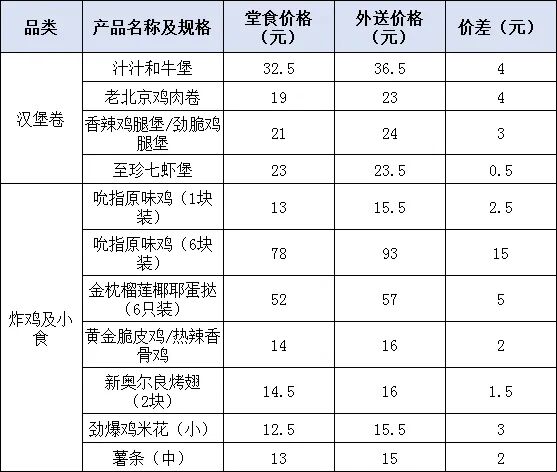
部分外送产品调价,肯德基回应:是为应对运营成本变化
Nan Fang Du Shi Bao· 2026-01-26 05:15
Core Viewpoint - KFC has announced a price adjustment for its delivery products, with an average increase of 0.8 yuan, while dine-in prices remain unchanged [1] Group 1: Price Adjustments - The price adjustment for KFC's delivery products ranges from 0.5 yuan to 1.5 yuan, with some items remaining at their original prices [1] - Examples of price changes include: medium fries from 14 yuan to 15 yuan, creamy mashed potatoes from 9 yuan to 10.5 yuan, and New Orleans grilled wings from 15.5 yuan to 16 yuan [1] - Dine-in prices are significantly lower than delivery prices, with dine-in prices for the double-layer beef burger at 22 yuan and medium fries at 9.5 yuan [1] Group 2: Consumer Promotions - KFC's popular promotional packages such as "Crazy Thursday" and "Weekend Crazy Deal" will maintain their prices despite the delivery price adjustments [2] - The last public price adjustment by KFC occurred in December 2024, with an average increase of 2% [2] Group 3: Financial Performance - KFC China's revenue for the first three quarters of 2025 reached 6.746 billion USD, marking a year-on-year growth of 2.91% [3] - The restaurant operating profit margin increased by 0.6 percentage points to 15.8%, and the overall restaurant profit margin rose by 0.4 percentage points to 18.4% [3] - As of September 2025, KFC operates 12,640 stores in China [3]
创立仅1年,又一网红汉堡品牌多地关店?
3 6 Ke· 2025-12-01 12:26
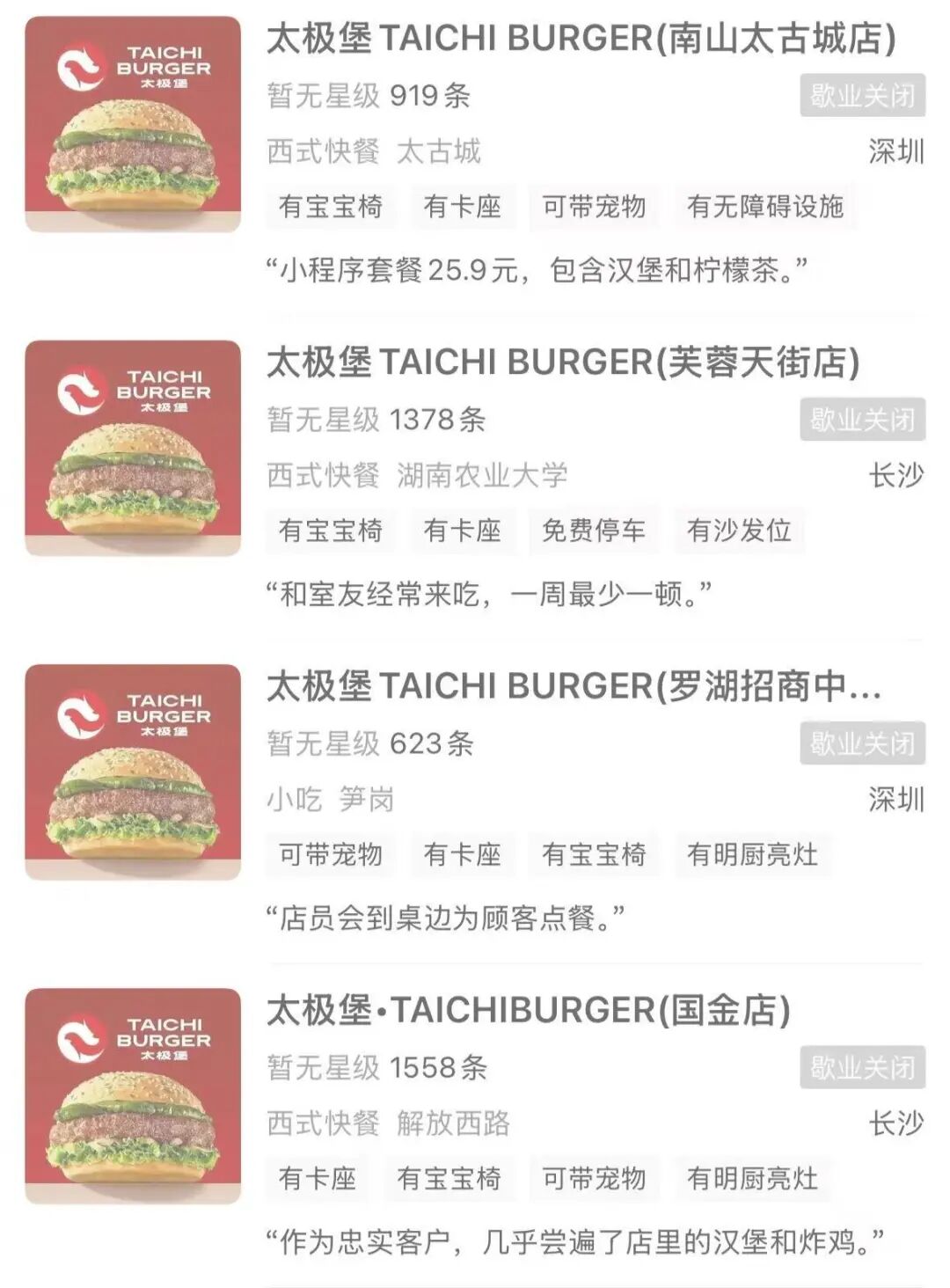
Core Viewpoint - The rapid rise and subsequent closure of multiple locations of the burger brand Taiji Burger, which was established in 2024, raises questions about its sustainability and market strategy in a competitive landscape [1][8]. Company Overview - Taiji Burger was launched on November 30, 2024, in Changsha, aiming to redefine burgers with an "Oriental burger" concept and high-end positioning [8]. - The brand initially gained popularity through its unique design and product offerings, including a new Chinese-style menu featuring high-quality ingredients [10][11]. Expansion and Closure - Despite opening 17 locations within a year, Taiji Burger has faced significant closures, with reports indicating that nearly 60% of its stores have shut down in a short period [13][14]. - In Changsha, out of six original locations, only two remain operational, while in Shenzhen, five out of ten stores are closed [14]. Challenges Faced - High operational costs due to manual preparation processes and a large store model in prime urban areas have created financial strain [15][18]. - The brand's average customer price of around 30 yuan is at a disadvantage in a market increasingly dominated by low-cost competitors [19][22]. Competitive Landscape - The hamburger market is highly competitive, with major players like KFC and McDonald's expanding aggressively, while local brands are also gaining traction with cost-effective strategies [22][23]. - Taiji Burger's position in the market is further challenged by established brands that have created significant supply chain advantages and customer loyalty [23][25]. Future Outlook - The future of Taiji Burger remains uncertain, with the potential for further store closures unless the brand can optimize its business model or innovate its product offerings [25].
【书籍专题 · 如何开一家赚钱的餐厅】根据风味和地区确定餐厅的经营特色
东京烘焙职业人· 2025-11-23 08:33
Group 1 - The core idea emphasizes the importance of localizing restaurant offerings based on regional flavors and consumer preferences, as exemplified by KFC's success in China with unique menu items not found in the U.S. [2][11] - KFC's strategy includes continuous product innovation since the late 1990s, introducing a variety of localized dishes that resonate with Chinese consumers [2][11] - The article highlights that a restaurant's operational characteristics should be consciously developed to create a competitive advantage, rather than relying on superficial changes [4][6] Group 2 - Establishing a restaurant's unique characteristics requires thorough market research and should align with regional traits and the restaurant's actual capabilities [4][6] - The formation of a restaurant's unique identity is a long-term process that integrates cultural values, management philosophy, and operational strategies [6][10] - Successful differentiation in the restaurant industry involves providing personalized services that cater to individual customer preferences, fostering loyalty and repeat business [7][9] Group 3 - Continuous innovation in menu offerings and service is crucial for maintaining customer interest and satisfaction, with an emphasis on seasonal and creative changes [9][10] - The article stresses that the essence of a restaurant's uniqueness lies in its cultural and thematic coherence, which should be reflected in both product and service [10][11] - Theme restaurants exemplify the integration of cultural elements into their design and offerings, enhancing the overall dining experience and brand identity [11]
【书籍专题 · 如何开一家赚钱的餐厅】根据风味和地区确定餐厅的经营特色
东京烘焙职业人· 2025-11-22 08:33
Group 1 - The core idea emphasizes the importance of localizing restaurant offerings based on regional flavors and consumer preferences, as exemplified by KFC's success in China with unique menu items not found in the U.S. [2][11] - KFC's strategy includes continuous product innovation since the late 1990s, introducing a variety of localized dishes that resonate with Chinese consumers [2][11] - The article highlights that a restaurant's operational characteristics should be consciously developed to create a competitive advantage, rather than relying on superficial changes [4][6] Group 2 - Establishing a restaurant's unique characteristics requires thorough market research and should align with regional traits and the restaurant's actual capabilities [4][6] - The formation of a restaurant's unique identity is a long-term process that integrates cultural values, management philosophy, and operational strategies [6][10] - Successful differentiation in the restaurant industry is characterized by value superiority, uniqueness, and difficulty in imitation, which collectively contribute to a restaurant's core competitiveness [6][10] Group 3 - Personalized service is crucial for creating a memorable dining experience, fostering customer loyalty through tailored interactions [7][9] - Continuous innovation in menu offerings and service styles is essential to maintain customer interest and avoid monotony [9][10] - The article stresses that the essence of a restaurant's identity lies in its cultural themes and the integration of various elements such as design, menu, and service [11]
星巴克之后汉堡王中国也卖了,中国市场玩法变了
2 1 Shi Ji Jing Ji Bao Dao· 2025-11-14 23:32
Core Insights - International brands like Starbucks and Burger King are seeking local partnerships in China to adapt to the unique market dynamics and consumer preferences [1][2] - The rapid growth of local dining brands and changing consumer expectations have made traditional strategies less effective for foreign brands [1][3] Group 1: Market Dynamics - Burger King announced a joint venture with CPE Yuanfeng, investing $350 million to expand its Chinese stores from 1,250 to 4,000 by 2035 [1] - Starbucks has partnered with Boyu Capital, relinquishing 60% of its stake in its Chinese operations [1] - The shift towards localization is driven by the need for brands to innovate their product offerings to meet the evolving tastes of Chinese consumers [1][3] Group 2: Strategic Adaptations - Companies must enhance supply chain agility to quickly respond to trending flavors and consumer demands [2] - There is a need for deeper market insights and localized decision-making, moving away from centralized control [2] - Successful examples include McDonald's and Yum China, which have thrived after local partnerships and restructuring, demonstrating the importance of a localized approach [2] Group 3: Broader Industry Trends - The trend of localization is not limited to the food industry; it is also evident in the automotive sector, where traditional car manufacturers are adopting comprehensive localization strategies [3] - The competitive landscape in China is increasingly favoring brands that understand local consumer needs and preferences [3] - Future innovations may include products that blend local and international flavors, enhancing consumer experience [3]
星巴克之后汉堡王中国也卖了,中国市场玩法变了|财经早察
2 1 Shi Ji Jing Ji Bao Dao· 2025-11-14 23:09
Core Insights - International brands like Starbucks and Burger King are seeking local partnerships in China to adapt to the unique market dynamics and consumer preferences [1][2] - The shift towards localization is not merely about menu adjustments but involves a comprehensive restructuring of supply chains, store strategies, and marketing approaches [2][3] - Successful examples from the past decade, such as McDonald's and Yum China, highlight the necessity of localization for international brands to thrive in the Chinese market [2][3] Group 1 - Burger King announced a joint venture with CPE Yuanfeng, investing $350 million to expand its Chinese stores from 1,250 to 4,000 by 2035 [1] - Starbucks has partnered with Boyu Capital, relinquishing 60% of its stake in its Chinese operations [1] - The changing consumer landscape in China demands innovative products that cater to local tastes rather than standardized offerings [1][2] Group 2 - Localization requires a more agile supply chain to quickly respond to trends and consumer preferences [2] - Store opening strategies must adapt to lower-tier cities, considering appropriate store types and pricing [2] - Marketing strategies need to resonate with local culture and trends, such as engaging with social media platforms [2][3] Group 3 - The trend of localization is evident beyond the food industry, with automotive companies also prioritizing comprehensive localization strategies [3] - The rapid evolution of the Chinese electric vehicle market necessitates a fundamental restructuring of international brands' approaches [3] - The competitive landscape in China favors brands that deeply understand local consumer needs and preferences [3]
洋快餐集体卖身中国资本,汉堡王交出控股权,新东家10年冲4000店
Sou Hu Cai Jing· 2025-11-13 02:35
Core Insights - Burger King's presence in the Chinese market has been lackluster compared to competitors like KFC and McDonald's, with a significant gap in social media engagement and store count [1][5][8] - The company has announced a strategic partnership with CPE Yuanfeng, which will acquire approximately 83% of Burger King China, aiming to enhance its market position [1][17] - The fast-food landscape in China is becoming increasingly competitive, with local brands gaining traction and international brands needing to adapt to local tastes and preferences [20][25] Group 1: Market Position and Performance - As of September 2023, Burger King China has around 1,300 stores, significantly trailing behind KFC's 11,648 and McDonald's over 7,000 [5] - Burger King's average annual sales per store in China is approximately $40,000, starkly lower than $380,000 in France and $120,000 in South Korea [5] - The brand's late entry into the Chinese market in 2005, 15 years after KFC and McDonald's, has contributed to its struggles [3] Group 2: Consumer Trends and Preferences - The younger generation, particularly Gen Z, is shifting their fast-food preferences towards value and quality, with 85% of young consumers willing to spend no more than 30 yuan on fast food [9][10] - Burger King's traditional offerings have not resonated well with Chinese consumers, leading to a need for more localized menu options [10][12] Group 3: Strategic Moves and Future Plans - The partnership with CPE Yuanfeng will inject $350 million into Burger King China, with plans to expand the store count to over 4,000 by 2035 [17] - Other international brands, such as Starbucks and McDonald's, have also pursued similar strategies of local partnerships to enhance their market presence [16][14] - The competitive landscape is intensifying, with McDonald's and KFC planning to open hundreds of new stores, while local brands like Wallace and Tastin are rapidly expanding [20][25]
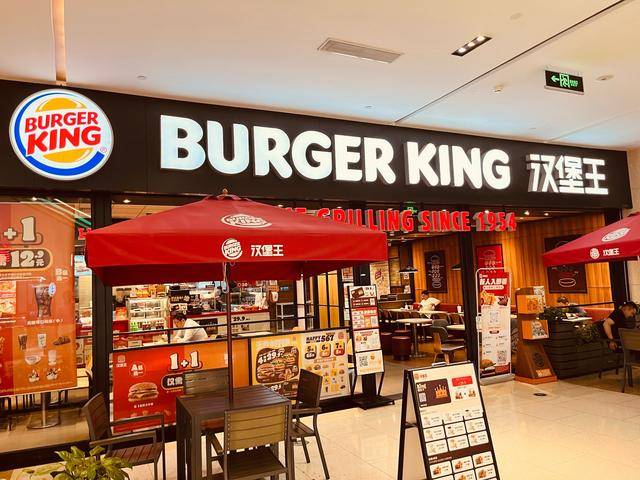
21社论丨本土化转型是国际品牌赢得中国市场的关键
21世纪经济报道· 2025-11-13 00:51
Core Insights - The article discusses the trend of international restaurant brands, such as Burger King, adopting local partnerships in China to enhance their operations and market presence [1][2][3] - The collaboration between CPE Yuanfeng and Burger King aims to establish a joint venture to expand Burger King's footprint in China, with plans to increase the number of stores from approximately 1,250 to over 4,000 by 2035 [1][2] - The shift towards local capital and management is seen as a necessary strategy for international brands to adapt to the rapidly evolving Chinese market and meet consumer demands for quality and innovation [2][3] Group 1 - CPE Yuanfeng will invest $350 million in Burger King China to support store expansion, marketing, menu innovation, and operational upgrades [1] - The partnership reflects a broader trend where international brands are increasingly localizing their operations in China, as seen with McDonald's and KFC, which have successfully expanded their store counts through local investments [1][2] - The need for deeper localization is driven by changing consumer expectations and the competitive landscape, requiring international brands to adapt their product offerings and operational strategies [2][3] Group 2 - The competitive environment in China necessitates that international brands integrate into the local ecosystem, adopting strategies that align with Chinese consumer habits and preferences [3][4] - The article highlights that many Chinese brands are also emerging as global competitors, leveraging their experience in a highly competitive domestic market to expand internationally [4][5] - The Chinese market is increasingly recognized as a critical platform for global companies to refine their innovation capabilities and validate their business models [5]

21社论丨本土化转型是国际品牌赢得中国市场的关键
2 1 Shi Ji Jing Ji Bao Dao· 2025-11-12 22:12
Group 1 - CPE Yuanfeng and Burger King have formed a strategic partnership to establish a joint venture for operating Burger King's business in China, with CPE Yuanfeng investing $350 million for store expansion, marketing, menu innovation, and operational upgrades [1] - After the investment, CPE Yuanfeng will hold approximately 83% of the joint venture, while Burger King's global parent company, RBI, will retain about 17%, with plans to increase the number of Burger King stores in China from around 1,250 to over 4,000 by 2035 [1] - This trend of international restaurant brands partnering with local investors for deeper localization has been observed in other companies like McDonald's and KFC, which have seen significant growth in store numbers after local capital involvement [1][2] Group 2 - The shift towards localization by international brands is a response to structural changes in the Chinese market, where consumer demands for quality, innovation, and service have increased, leading to slower growth for established foreign brands [2] - To sustain growth in China, international brands need more than just local operational teams; they require local capital to enhance autonomy in product positioning, supply chain management, and store expansion [2] - The transfer of equity does not indicate a withdrawal from the Chinese market but rather a transformation towards localized operations, which is crucial for maximizing value in a competitive landscape [2][3] Group 3 - The rapid evolution and intense competition in the Chinese market necessitate that international brands like Burger King adapt their standardized products and operations to local consumer preferences and innovative pressures from domestic brands [3] - Successful adaptation involves integrating local capital and talent while adopting product strategies, marketing methods, and supply chain systems that resonate with Chinese consumers [3] - The trend of localization is not limited to the food service industry; traditional automotive giants from Germany and Japan are also facing competition from local brands and are adapting their strategies accordingly [3] Group 4 - The future will likely see more Chinese brands leveraging their competitive capabilities developed in the domestic market to expand globally, while international brands must deeply localize in China to remain competitive [4] - The Chinese market is increasingly becoming a critical platform for global companies to refine their innovation capabilities and validate business models across various sectors, including both services and manufacturing [4]