
连锁餐饮扩张

Search documents
90后体育生卖饺子,年入25亿
首席商业评论· 2026-01-24 03:58
Core Viewpoint - The article highlights the rapid expansion and growth of Yuanji Cloud Dumplings, which has become the largest Chinese fast-food chain globally, with a significant increase in store numbers and revenue over recent years [5][6][18]. Group 1: Expansion and Growth - As of early 2023, Yuanji Cloud Dumplings had 1,990 stores, which increased to 4,266 by September 2025, marking a growth of 2.14 times [5][6]. - The average opening rate is one to two new stores every three days, indicating aggressive expansion [5]. - By November 2025, the total number of stores exceeded 5,000, showcasing the brand's rapid growth trajectory [13]. Group 2: Financial Performance - In 2023, the company's revenue was 2.026 billion yuan, which grew to 2.561 billion yuan in 2024, representing a year-on-year increase of 26.4% [5][6]. - For the first three quarters of 2025, revenue reached 1.982 billion yuan, reflecting an 11% increase compared to the same period in 2024 [6][18]. - The average net profit per order was approximately 0.99 yuan in 2023, 0.72 yuan in 2024, and 0.91 yuan in the first nine months of 2025, indicating a low-margin business model [21]. Group 3: Business Model and Market Strategy - Yuanji Cloud Dumplings operates primarily as a fast-food chain, focusing on convenience and affordability, with menu items priced between 15 to 25 yuan [8][9]. - The majority of its stores (95%) are franchise-operated, relying on a supply chain model where revenue is generated from selling ingredients to franchisees [18]. - The company is expanding into lower-tier cities, with the number of stores in third-tier and below cities increasing from 617 in 2023 to 1,121 by the third quarter of 2025, nearly doubling its presence [16][17]. Group 4: Challenges and Future Directions - The brand faces challenges in maintaining consumer recognition and expanding its franchise network, which is crucial for sustained growth [22]. - Future growth strategies include targeting the northern market and university campuses, although there are concerns about regional taste preferences [22][23]. - The company is also exploring international expansion, having opened its first overseas store in Singapore in late 2024 and planning further openings in Southeast Asia [23].

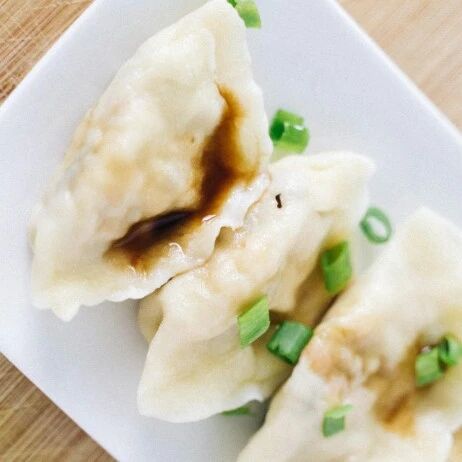
90后体育生卖饺子,年入25亿
创业家· 2026-01-23 10:27
Core Viewpoint - Yuanji Cloud Dumplings is rapidly expanding its presence across China, with a significant increase in store numbers and revenue, positioning itself as the largest Chinese fast-food chain globally [6][22][24]. Group 1: Expansion and Growth - As of early 2023, Yuanji Cloud Dumplings had 1,990 stores, which increased to 4,266 by September 2025, marking a growth of 2.14 times [6]. - The company is opening new stores at an average rate of one to two every three days, and by November 2025, the total number of stores exceeded 5,000 [18]. - The brand has expanded into 32 provinces and municipalities, covering over 200 cities, and aims to penetrate northern markets and college campuses for further growth [18][31]. Group 2: Financial Performance - In 2023, Yuanji Cloud Dumplings reported a revenue of 2.026 billion yuan, which grew to 2.561 billion yuan in 2024, reflecting a year-on-year increase of 26.4% [8][9]. - For the first three quarters of 2025, the revenue was 1.982 billion yuan, showing an 11% increase compared to the same period in 2024 [10]. - The average net profit per order was approximately 0.99 yuan in 2023, 0.72 yuan in 2024, and 0.91 yuan in the first nine months of 2025, indicating a thin profit margin [27]. Group 3: Business Model and Challenges - Yuanji Cloud Dumplings operates primarily through a franchise model, with 95% of its stores being franchises that rely on purchasing ingredients from the headquarters [24]. - The company's profitability is largely dependent on the price difference in the supply chain, as it sources raw materials like pork and flour, which have high price transparency [24]. - The brand faces challenges in maintaining consumer recognition and expanding its franchise network, which are critical for sustainable growth [29][30]. Group 4: Market Strategy - The brand is focusing on entering northern markets and college campuses, which are expected to provide stable and frequent customer traffic [31]. - There are concerns regarding regional taste preferences, particularly in the northern market, where some consumers have expressed dissatisfaction with the flavor profiles of certain dumplings [32]. - Yuanji Cloud Dumplings has also begun international expansion, opening its first overseas store in Singapore in late 2024 and planning further openings in Malaysia and Thailand [33].

IPO路上,“比格”比萨还想变得更大
Sou Hu Cai Jing· 2026-01-23 06:49
Core Viewpoint - The article highlights the contrasting strategies and performance of two restaurant chains, Big Pizza and Xibei, with Big Pizza accelerating its IPO process while maintaining a low-price strategy that appeals to young consumers [2][5]. Group 1: Company Overview - Big Pizza has officially submitted its prospectus to the Hong Kong Stock Exchange for an IPO [2]. - The company is known for its affordable pricing, with an average customer spending of less than 80 yuan, earning it the nickname "poor man's buffet" [2]. - Big Pizza's revenue for 2023, 2024, and the first three quarters of 2025 is projected to be 944 million yuan, 1.147 billion yuan, and 1.389 billion yuan, respectively, showing a year-on-year increase [4]. Group 2: Financial Performance - Despite revenue growth, Big Pizza's profit margins are declining, with profits of 47.52 million yuan and 41.74 million yuan for 2023 and 2024, respectively, resulting in profit margins of 5% and 3.6% [6]. - The profit for the first three quarters of 2025 is expected to be 51.65 million yuan, with a profit margin of 3.7%, down from 3.9% the previous year [6][7]. - The company's net current liabilities surged by 70.2% to 275.8 million yuan as of September 30, 2025, indicating liquidity pressure [17]. Group 3: Expansion Strategy - Big Pizza's store count increased from 210 to 342 between the end of 2023 and September 2025, a growth rate of 62.9% [9]. - By January 11, 2026, the number of stores reached 387, covering 127 cities across China [10]. - The company primarily focuses on direct-operated stores to maintain service quality, with only 77 franchise stores as of September 30, 2025 [31]. Group 4: Market Challenges - The overall restaurant industry is facing a downturn, with high closure rates among new openings, particularly in the casual dining segment [35]. - Competitors like Pizza Hut and Domino's are increasingly offering low-priced options, challenging Big Pizza's value proposition [36]. - The company faces significant debt pressure, with a debt ratio exceeding 90%, which is above the industry average and regulatory limits [32]. Group 5: Consumer Sentiment and Marketing - Big Pizza's low-price strategy has become a core part of its brand identity, making price increases challenging without risking customer loyalty [19]. - The company has engaged in various promotional activities, such as offering discounted meals for sanitation workers, which sparked public debate about affordability [23][25]. - Big Pizza's marketing strategies include leveraging social media to create engagement and brand awareness, although this approach may not provide long-term stability [37].
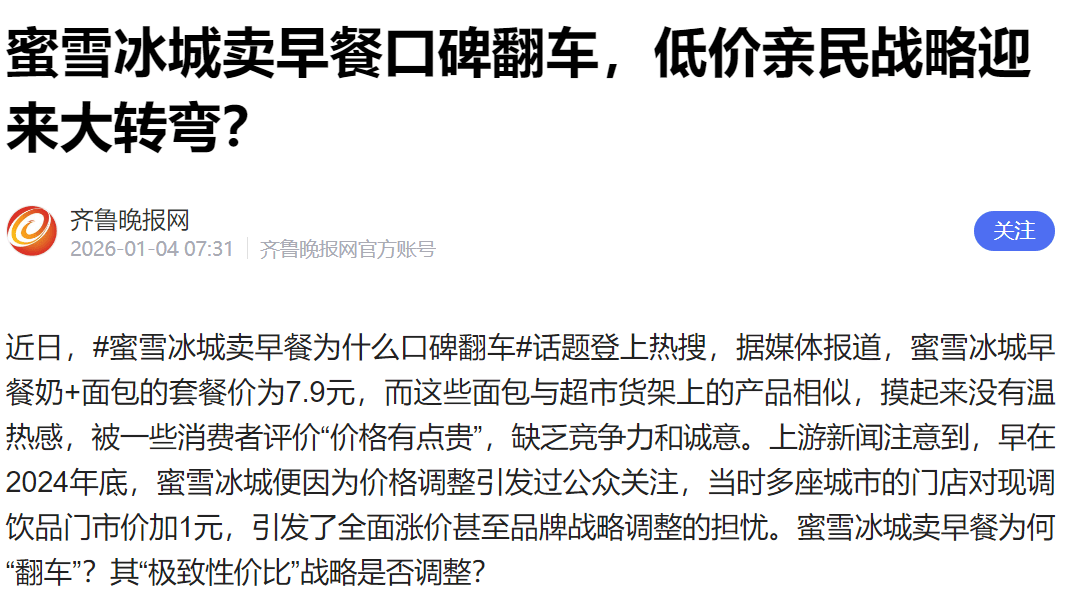
90后体育生卖饺子,年入25亿
盐财经· 2026-01-21 10:07
Core Viewpoint - Yuanji Cloud Dumpling has rapidly expanded its presence in China, becoming the largest Chinese fast-food chain by store count, with plans for further growth and international expansion [3][4][6]. Group 1: Expansion and Growth - As of early 2023, Yuanji Cloud Dumpling had 1,990 stores, which increased to 4,266 by September 2025, representing a growth of 2.14 times [3][4]. - The average opening rate is one to two new stores every three days, indicating aggressive expansion [4]. - By November 2025, the total number of stores exceeded 5,000, showcasing rapid growth in a short period [16]. Group 2: Financial Performance - In 2023, the company's revenue was 2.026 billion yuan, which grew to 2.561 billion yuan in 2024, marking a year-on-year increase of 26.4% [7][8]. - For the first three quarters of 2025, revenue reached 1.982 billion yuan, reflecting an 11% increase compared to the same period in 2024 [9]. - The average net profit per order was approximately 0.99 yuan in 2023, 0.72 yuan in 2024, and 0.91 yuan in the first nine months of 2025 [28]. Group 3: Business Model and Operations - Yuanji Cloud Dumpling operates primarily as a fast-food chain, focusing on convenience and affordability, with menu items priced between 17 to 25 yuan [11][14]. - Approximately 95% of its stores are franchise-operated, relying on the sale of ingredients from the headquarters for their operations [25]. - The company's profitability is largely derived from the price difference in the supply chain, as it sources raw materials like pork and flour from suppliers [24][26]. Group 4: Market Strategy and Challenges - The company is focusing on expanding into northern markets and university campuses, which present both opportunities and challenges due to regional taste preferences [32][33]. - Brand recognition and consumer trust are critical for future growth, as the company acknowledges the need to maintain and enhance its brand image [31]. - The perception of "handmade" products versus the reality of standardized supply chain practices may impact consumer trust and brand loyalty [34][35].

菲律宾餐饮巨头向外扩张,永和大王母公司快乐蜂如何在全球开出万店? | 声动早咖啡
声动活泼· 2026-01-19 09:04
Core Viewpoint - Jollibee Foods Corporation, known as "快乐蜂," announced a restructuring plan to spin off its international business into a new company that will be listed in the U.S., aiming to enhance its valuation and compete with global giants like McDonald's and Yum Brands [4][3]. Group 1: Company Overview - Jollibee started as an ice cream shop in the Philippines in 1975 and evolved into a fast-food chain focusing on fried chicken after recognizing market demand [5]. - The company has expanded to over 10,000 restaurants and cafes globally, with about 70% located outside the Philippines [4]. Group 2: International Expansion Strategy - The initial overseas expansion aimed to serve the Filipino diaspora, which numbers between 10 to 12 million globally, with around 4.6 million in the U.S. [8]. - Jollibee strategically opened its first U.S. store in Daly City, California, where the Filipino population is significant [8]. Group 3: Growth and Market Position - Jollibee has over 1,700 global stores, with plans to open 500 more in North America by 2030 [7]. - The brand's signature fried chicken and other products have driven substantial international growth, with Jollibee's revenue from its restaurants accounting for half of the group's total income in 2023 [12]. Group 4: Challenges in Global Market - The acceptance of Filipino cuisine abroad is limited, as the diverse influences on Filipino food make it hard to define and promote [11]. - Jollibee faces stiff competition in the U.S. from established brands like KFC and McDonald's, which complicates its market penetration [11]. - Past acquisitions, such as Smashburger, have not always been successful, highlighting the risks associated with the company's growth strategy [12]. Group 5: Acquisition Strategy - Since 2000, Jollibee has made 27 cross-border acquisitions, spending approximately $1.1 billion, often targeting smaller, struggling companies for turnaround [9]. - The company operates multiple brands, including Jollibee, Chowking, and Yonghe King, but its core revenue still heavily relies on the Jollibee brand [9].

巴比食品20260104
2026-01-04 15:35
Summary of the Conference Call for Babi Foods Company Overview - **Company**: Babi Foods - **Industry**: Food and Beverage, specifically focusing on dumplings and buns Key Developments - Babi Foods has made significant progress in the past year, particularly in promoting its new handmade dumpling store model, which began trials in the second half of 2025, achieving daily sales exceeding 10,000 yuan per store [3][4] - The company currently operates three business segments: traditional bun shops, group meals, and the new handmade dumpling stores [3] - Traditional bun shop sales turned positive in the second half of 2025, while the handmade dumpling stores are expected to become a new growth engine [3][4] Growth Potential - Market expectations suggest that Babi Foods could open around 100 new stores in Q1 2025, with total new store openings for the year potentially reaching hundreds to over a thousand [3][4] - Even if daily sales per store decrease to 6,000-7,000 yuan, annual revenue could still reach approximately 2 million yuan per store, contributing about 600,000 yuan to Babi's revenue [3][4] - The new dumpling stores are larger, offer more dining options, and have a richer product structure, leading to a faster return on investment despite higher initial costs [3][5] Market Positioning - Babi Foods entered the dumpling market due to its large potential and lack of leading chain brands, with over 30,000 dumpling shops nationwide but no dominant players [6] - The dumpling product line is versatile and suitable for various dining occasions, enhancing its market appeal [6] Financial Projections - Babi Foods is projected to achieve a profit of approximately 340 million yuan in 2026, with a target market capitalization exceeding 10 billion yuan, indicating a potential upside of 30%-50% [4][14] - Each new or remodeled dumpling store is expected to generate an additional revenue increment of about 160 million yuan for every 200 stores, contributing around 20 million yuan in profit [12] Operational Advantages - The company has established five major factories nationwide, providing significant supply chain advantages and strong management capabilities [9] - Babi Foods is focused on ensuring the replicability of its new store model, with plans to promote successful outcomes at the 2026 franchisee conference [10] Investment Recommendations - Given the successful achievement of 2025 goals and the validated replicability of its business model, Babi Foods is expected to enter an accelerated growth phase in 2026 [14] - The company is recommended as a strong investment opportunity within the food and beverage sector, characterized by high growth potential and clear industry logic [14]

麦当劳是如何涨价的?
Sou Hu Cai Jing· 2025-12-23 21:11
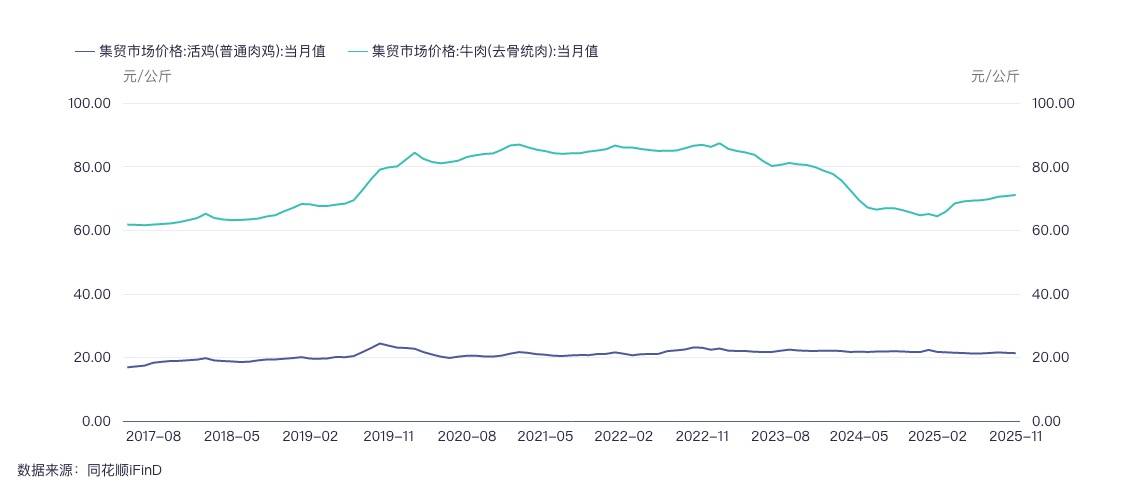
Core Viewpoint - McDonald's has raised prices across its menu by 0.5 to 1 yuan, marking the fourth price increase in five years, with the price adjustments affecting various popular items and reflecting ongoing cost pressures in the fast-food industry [1][2]. Price Adjustments - The price of popular items such as the Big Mac and Double Fillet-O-Fish has increased by 1 yuan, while other items like medium fries and desserts have seen a 0.5 yuan increase [1]. - The "1+1 Flexible Combo," initially priced at 12 yuan, has undergone three price hikes since its launch in 2019, now costing 14.9 yuan, representing a cumulative increase of nearly 24% [2]. Cost Pressures - Rising costs of core ingredients have been a common issue in the fast-food industry, with prices for live chickens and beef showing a long-term upward trend since 2019 [2]. - McDonald's has adopted a moderate structural price increase strategy, including product tiered pricing and small adjustments, to manage cost pressures while maintaining customer flow [4]. Product Strategy - McDonald's product matrix is categorized into three tiers: high-end products like the Angus series, core products like classic burgers, and entry-level products like the "1+1 Flexible Combo," which serves as a traffic driver [4]. - The average price increase across selected products is about 3%, with the "1+1 Flexible Combo" remaining unchanged during the recent adjustments [4]. Market Expansion - McDonald's aims to expand its presence in lower-tier cities, with plans to open 1,000 new stores annually, targeting a total of over 10,000 restaurants by 2028, half of which will be located in these markets [6][7]. - Competitors like KFC are also focusing on expanding into lower-tier cities, utilizing a franchise model to accelerate growth in previously underserved areas [6].

遇见小面上市破发,425倍认购变亏本买卖,疯狂扩张难解资本冷漠
Sou Hu Cai Jing· 2025-12-12 11:00
Core Insights - The company "Yujian Xiaomian" faced a significant drop in stock price after its IPO, despite initial investor enthusiasm and high subscription rates [1] - The company's revenue growth appears impressive, but underlying metrics such as single-store performance and customer spending are declining [3] - Rapid expansion has led to operational challenges, including quality control and customer complaints, as the company opened over a hundred new stores in the past year [5] - The company's heavy reliance on the Guangdong region poses risks for national expansion, as it struggles to establish a foothold outside its familiar territory [8] - The noodle restaurant industry faces inherent challenges in maintaining flavor consistency across locations, which can lead to customer dissatisfaction [10] - The business model is constrained by limited peak dining hours, making it difficult to compete with brands that can generate revenue throughout the day [12] - Investors are increasingly focused on sustainable profitability rather than just rapid growth, emphasizing the need for the company to strengthen its operational fundamentals [14]
百胜中国 CFO 揭秘,如何扩张,如何赚钱,如何提效
晚点LatePost· 2025-11-27 13:18
Core Viewpoint - Yum China believes that the current challenging environment in the restaurant industry presents a unique opportunity for expansion, aiming to increase its store count to over 30,000 in five years, with a focus on penetrating lower-tier cities [2][5]. Expansion Strategy - The company plans to open 4,500 new stores across various counties and cities, effectively doubling its current count of over 17,000 stores [2]. - Financial targets include maintaining same-store sales growth between flat and 2%, improving group profit margins, and increasing return on invested capital (ROIC) from 16.9% to 20% [2][15]. Store Models and Innovations - Yum China has developed a "three-in-one" store model, combining KFC, K Coffee, and KPRO (light meals), which has reportedly doubled weekly sales in some locations [3][8]. - The company is diversifying its product offerings to cater to different consumer preferences, including introducing Chinese-style toppings on Western dishes [3][5]. Market Penetration - The penetration rate of chain restaurants in China is around 20%, significantly lower than over 50% in the US, Europe, and Japan, indicating substantial growth potential in lower-tier cities [5]. - The company is focusing on a mix of direct ownership and franchising to expand its presence, particularly in lower-tier cities where market density is low [5][22]. Cost Management and Efficiency - The company aims to improve operational efficiency by optimizing supply chain management and reducing costs through direct sourcing from suppliers [18][20]. - Innovations in menu design and product offerings are intended to enhance customer experience while managing costs effectively [19][20]. Pricing Strategy - Yum China has adopted a strategy of lowering prices to increase customer traffic, with Pizza Hut's average transaction value dropping from over 100 RMB in 2019 to around 70 RMB in recent quarters [10]. - The company plans to maintain stable effective pricing while introducing value-driven products to attract consumers without sacrificing profitability [24]. Franchise Management - The company has shifted its franchise agreements from a 10-year to a 5-year renewal cycle to provide more flexibility and assurance for franchisees [22][23]. - Training and support for franchisees are emphasized to ensure compliance with food safety standards and operational efficiency [22]. Brand Differentiation - Yum China is focusing on enhancing its brand offerings by introducing new modules rather than entirely new brands, leveraging the established brand strength of KFC and Pizza Hut [28]. - The company is also exploring the coffee market with its K Coffee and LAVAZZA brands, aiming to differentiate through quality and unique product offerings [26][27].


百胜中国:上半年总收入同比增长2%至58亿美元
Jin Rong Jie· 2025-08-11 10:56
Group 1 - The core point of the article highlights that Yum China reported a 3% year-on-year increase in system sales for the first half of the year, excluding foreign currency translation effects [1] - The growth in system sales was primarily driven by the contribution of net new store openings, with same-store sales reaching 100% of the previous year's level [1] - Total revenue increased by 2% to $5.8 billion, or 3% when excluding foreign currency translation effects [1] Group 2 - The company added a net total of 583 new stores, with 151 of these being franchise stores, accounting for 26% of the total new openings [1] - As of June 30, 2025, the total number of stores reached 16,978, including 12,238 KFC stores and 3,864 Pizza Hut stores [1] - Operating profit grew by 10% to $703 million, with core operating profit increasing by 11% [1] Group 3 - The company returned $536 million to shareholders in the six months ending June 30, 2025, which included $356 million in stock buybacks and $180 million in cash dividends [1]