巨无霸

Search documents
McDonald's(MCD) - 2025 Q4 - Earnings Call Transcript
2026-02-11 22:32
Financial Data and Key Metrics Changes - In 2025, McDonald's achieved system-wide sales of nearly $140 billion, reflecting a 5.5% increase in constant currency for the full year [4] - Global comparable sales rose by 5.7% in Q4, with U.S. comp sales increasing by 6.8%, driven by positive check and guest count growth [12][16] - Adjusted earnings per share for Q4 was $3.12, including a $0.10 benefit from foreign currency translation, with a 7% increase in adjusted earnings per share on a constant currency basis compared to the prior year [19] Business Line Data and Key Metrics Changes - The U.S. market saw strong performance from the relaunch of Extra Value Meals (EVM), which improved units sold and value perception [15][16] - International operated markets reported a 5.2% increase in comp sales, with notable growth in the U.K., Germany, and Australia, each achieving mid to high single-digit growth [16][17] Market Data and Key Metrics Changes - In the U.K., the turnaround continued with market share gains for the first time in over a year, driven by successful promotions [16] - Japan's performance remained strong, supported by the launch of the My McDonald's Rewards loyalty program, while China maintained market share despite macroeconomic pressures [19] Company Strategy and Development Direction - McDonald's plans to accelerate new restaurant openings, targeting approximately 2,600 gross openings in 2026, aiming for a total of 50,000 restaurants by the end of 2027 [5][32] - The company emphasizes a disciplined focus on value, marketing, and menu innovation to outperform competitors [6][28] Management's Comments on Operating Environment and Future Outlook - Management expressed confidence in the company's ability to navigate a challenging QSR industry environment, with expectations for continued sales growth driven by strategic initiatives [28][29] - The company anticipates that net restaurant expansion will contribute approximately 2.5% to system-wide sales growth in 2026 [28] Other Important Information - McDonald's capital expenditure for 2025 was $3.4 billion, slightly above the high end of the range, with plans for $3.7 billion to $3.9 billion in 2026 [20][32] - The company aims for a net income to free cash flow conversion rate in 2026 to be in the low- to mid-80% range, consistent with 2025 [32] Q&A Session Summary Question: U.S. sales trajectory in 2026 - Management highlighted the importance of the McValue program and EVM in driving sales growth, emphasizing the need for execution across value, marketing, and innovation [42][44] Question: Impact of value strategies on restaurant-level margins - Management indicated that predictable value and price-pointed items are both essential, with strong top-line sales growth necessary for margin improvement [50][52] Question: Capital budget increase - The increase in capital budget is attributed to a focus on accelerating new store openings and addressing gaps in trading areas, with positive early results from new sites [56][58] Question: Momentum in pipeline of ideas - Management noted that the company is testing various innovations across categories, leveraging new capabilities to enhance customer engagement and productivity [62][64] Question: Changes needed in kitchen for taste and quality goals - Management acknowledged the need for innovation in kitchen operations and equipment as part of the ongoing remodel cycle to improve taste and quality [68][70] Question: Franchisee sentiment on value strategy - Franchisees are generally enthusiastic about the business momentum, with the EVM strategy showing positive results, although support from McDonald's is temporary [76][78]

麦当劳才涨完价,肯德基也宣布涨价,洋快餐纷纷涨价想干嘛?
Xin Lang Cai Jing· 2026-02-04 10:18
Group 1 - McDonald's recently raised prices on several core menu items by 0.5 to 1 yuan, affecting burgers, snacks, and desserts, while KFC adjusted delivery prices by an average of 0.8 yuan, keeping dine-in prices unchanged [3][6] - The price adjustments by both fast-food giants are attributed to rising operational costs, including increases in raw materials, labor, and logistics expenses, which have put significant pressure on the fast-food industry [6][8] - The price increases are seen as a necessary strategy for maintaining financial stability and brand image, as lowering product quality or service could harm consumer loyalty [8][9] Group 2 - Despite the rationale behind price hikes, the competitive landscape in the restaurant market is intensifying, with consumers becoming more price-sensitive and potentially shifting to more affordable dining options [9][11] - Competitors may capitalize on the price increases by offering discounts or promotions, which could further erode market share for fast-food brands like McDonald's and KFC [9][11] - The reliance on price adjustments to manage cost pressures is viewed as a short-term solution, with a need for these companies to innovate and diversify their offerings to ensure sustainable growth [11]


3年涨价4次,麦当劳的“穷鬼套餐”涨价之路怎么分析?
Bei Jing Ri Bao Ke Hu Duan· 2026-02-03 03:19
Group 1 - The "poor man's meal" at McDonald's has seen price increases four times in three years, transforming from a budget option to one perceived as exclusive to the middle class [3][5] - Price hikes of 0.5 to 1 yuan have been noted across various menu items, with popular items like the Big Mac and McChicken increasing by 1 yuan, while smaller items and desserts have risen by 0.5 yuan [3][5] - The initial purpose of the "poor man's meal" was to counter KFC's "Crazy Thursday" promotions, aiming to attract price-sensitive consumers and regain market share [5][7] Group 2 - Rising operational costs, including raw material prices, labor costs, and rent, have pressured McDonald's to increase prices as a means to maintain profit levels [7][10] - The phenomenon of price increases coupled with reduced portion sizes has led to consumer dissatisfaction, as they feel their value for money is compromised [7][8] - McDonald's attempts to appeal to both low-income and middle-class consumers have resulted in a disconnect, leaving both groups feeling alienated [8][10] Group 3 - The pricing strategy reflects a misunderstanding of the fast-food industry's core principle of "low margin, high volume," which is essential for survival in the competitive market [10] - The failure to balance cost pressures with consumer expectations has led to a decline in McDonald's competitiveness in the mass market, as local brands offer better value propositions [10]

麦当劳涨价,肯德基也涨了,网友吐槽“汉堡越做越小堪比小笼包”
Sou Hu Cai Jing· 2026-01-26 06:10
Group 1 - KFC has adjusted the prices of some delivery products by an average of ¥0.8, while dine-in prices remain unchanged [1][4] - Popular promotional packages such as "Crazy Thursday" and "Weekend Crazy Combo" will maintain their prices despite the adjustments [1][4] - KFC stated that the price adjustment is a normal market practice necessary for the healthy operation of the industry, and they will continue to optimize their cost structure to provide high-quality and cost-effective products and services [4] Group 2 - McDonald's has also recently raised prices, with increases generally ranging from ¥0.5 to ¥1 for various menu items, including burgers and sides [5] - There has been consumer backlash regarding the shrinking size of McDonald's burgers, with many comparing them to smaller objects like headphone cases [6][9] - Consumers have expressed dissatisfaction with the rising prices alongside the decreasing size of the burgers, highlighting a growing concern in the fast-food industry [6][9]
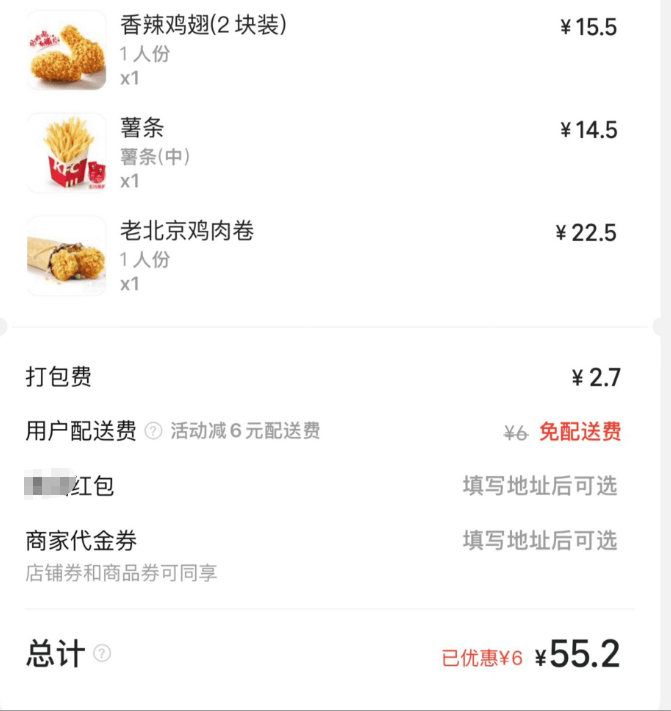
肯德基上一次涨价是一年前
Di Yi Cai Jing Zi Xun· 2026-01-26 03:04
Group 1 - KFC has adjusted the prices of its delivery products by an average of 0.8 yuan, while dine-in prices remain unchanged [2] - The last price increase for KFC occurred approximately one year ago, with a 2% average increase on December 24, 2024, ranging from 0.5 yuan to 2 yuan [2] - KFC aims to adapt to market cost changes and ensure sustainable and healthy development by optimizing its cost structure [2] Group 2 - McDonald's also experienced a price increase on December 15, 2025, with most items rising by 0.5 to 1 yuan, including popular burgers and snacks [3] - The fluctuation in prices of agricultural products such as rice, meat, and vegetables poses challenges for cost control and risk management for fast-food companies [3]
肯德基外送价格上涨0.8元 上一次涨价是一年前
Di Yi Cai Jing· 2026-01-26 03:01
Group 1 - KFC has adjusted the prices of its delivery products by an average of 0.8 yuan, while dine-in prices remain unchanged [1] - The last price increase for KFC occurred approximately one year ago, with a 2% average increase on December 24, 2024, ranging from 0.5 yuan to 2 yuan [1] - KFC aims to adapt to changes in operational costs and ensure sustainable and healthy business development [1] Group 2 - McDonald's also experienced a price increase on December 15, 2025, with most items rising by 0.5 to 1 yuan, including popular burgers and snacks [2] - The fluctuation in prices of agricultural products such as rice, meat, cooking oil, and vegetables poses challenges for cost control and risk management in the fast-food industry [2]
肯德基上一次涨价是一年前
第一财经· 2026-01-26 02:55
Group 1 - KFC has adjusted the prices of its delivery products by an average of 0.8 yuan, while dine-in prices remain unchanged, effective from January 26 [3] - The last price increase for KFC occurred approximately one year ago, with a 2% average increase on December 24, 2024, ranging from 0.5 yuan to 2 yuan [3] - KFC aims to optimize its cost structure to provide high-quality and cost-effective products and services, with over 12,600 stores in China as of September 2025 [3] Group 2 - McDonald's also experienced a price increase on December 15, 2025, with most items rising by 0.5 to 1 yuan, including classic burgers and snacks [4] - The fluctuations in prices of agricultural products such as rice, meat, and vegetables have posed challenges for fast-food companies in cost control and risk management [4]
肯德基外送价格上涨0.8元,上一次涨价是一年前
Di Yi Cai Jing· 2026-01-26 02:48
Group 1 - KFC has adjusted the prices of its delivery products by an average of 0.8 yuan starting January 26, while dine-in prices remain unchanged [1] - The last price increase for KFC occurred approximately one year ago, with a 2% average increase on December 24, 2024, ranging from 0.5 yuan to 2 yuan [1] - KFC aims to adapt to market cost changes and ensure sustainable and healthy business development through these price adjustments [1] Group 2 - As of September 30, 2025, KFC will have over 12,600 stores in China, continuing to optimize its cost structure to provide high-quality and cost-effective products and services [3] - McDonald's has also raised prices on some menu items, with increases generally between 0.5 yuan and 1 yuan, including popular items like the Big Mac and McChicken [3] - The fast food industry faces challenges in cost control and risk management due to price volatility in agricultural products such as rice, meat, cooking oil, and vegetables [3]
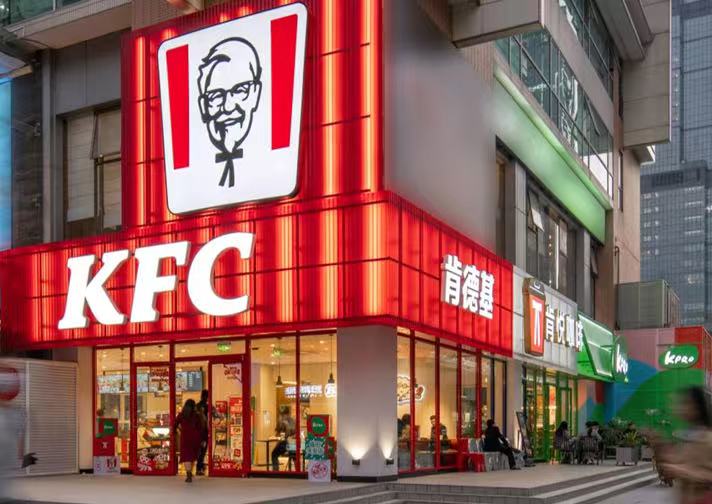
麦当劳逆势涨价,茅台控量保价,但国补还在持续促消费?
Sou Hu Cai Jing· 2026-01-21 16:16
Group 1 - The core focus of the articles is on the ongoing efforts to stimulate domestic consumption in China, which is seen as a key driver for economic progress [1][5] - The government is continuing its policies to promote consumption, including subsidies for replacing old equipment and consumer goods, indicating a commitment to enhancing domestic demand [5] - Despite the push for increased consumption, there are signs of market challenges, such as intense competition in the restaurant industry leading to price wars, while some companies like McDonald's are raising prices [5][7] Group 2 - McDonald's has increased prices across various products by approximately 0.5 to 1 yuan, which is seen as a counterintuitive move given the current market dynamics favoring lower prices [7] - The fast-food chain's decision to raise prices contrasts with competitors who have not followed suit, raising questions about its market strategy [7] - The overall trend in the restaurant sector shows a decline in high-end dining, with consumers gravitating towards more affordable options, which McDonald's is expected to capitalize on [7] Group 3 - Guizhou Moutai has begun to implement supply control measures to stabilize the price of its products, reducing quotas for various types of its liquor by significant percentages [9] - The price of Moutai has seen a temporary increase following the announcement of these measures, but the long-term effectiveness of such strategies is questioned due to changing consumer habits [9][11] - The decline in Moutai's price is attributed to a shrinking consumer base and the financial pressures faced by distributors holding excess inventory [11][13]

冲上热搜,23元麦当劳汉堡缩水成马卡龙
21世纪经济报道· 2026-01-14 14:34
Core Viewpoint - The recent controversy surrounding McDonald's shrinking burger sizes has sparked significant public discussion, particularly after a consumer measured a burger and found it to be only 8 cm for 23 yuan, raising concerns about "shrinkflation" amidst a price increase announcement [1][3]. Group 1: Price Increase and Consumer Reaction - McDonald's confirmed a price increase effective December 15, 2025, with select menu items seeing a price rise of 0.5 to 1 yuan, including classic burgers and snacks [3]. - The company has faced criticism for potentially misleading consumers regarding product sizes while maintaining its "value" branding, which contradicts the recent price hikes [3][4]. - McDonald's has historically raised prices annually, but the current backlash focuses on consumer awareness and perceived value [3]. Group 2: Market Position and Strategy - McDonald's CEO Zhang Jiayin announced plans to enhance the "super value" experience by introducing new burger and beverage options, alongside various promotional activities throughout the year [3]. - The competitive landscape in China includes not only KFC but also a broader range of dining options, intensifying price competition [4]. - McDonald's aims to open approximately 1,000 new stores in China by 2025, reflecting confidence in the market despite the challenges of price management [4].