成本定价模式

Search documents
五年前快死掉,这家车企如今逆袭第一
盐财经· 2025-12-15 10:10
Core Viewpoint - Leap Motor has transformed from a struggling startup to a leading player in the new energy vehicle market, achieving significant growth in sales and profitability through a cost-effective strategy and self-research capabilities [5][15][50]. Financial Performance - In Q3 2024, Leap Motor reported revenue of 32.16 billion RMB, a 92.1% increase from 2023, with a gross profit of 2.69 billion RMB, marking a 3,248.4% increase [7]. - The company achieved a net profit of 1.5 billion RMB in Q3 2024, marking its continuous quarterly profitability [7]. - The gross margin reached 14.5%, a significant increase from 8.1% in the previous year [31]. Sales and Delivery Growth - Leap Motor delivered over 170,000 vehicles, a 101.8% increase compared to the same period in 2024, making it the top-selling brand among new energy vehicle startups in China [6]. - The company aims to reach an annual sales target of 1 million vehicles by 2026, following a successful sales strategy that has led to rapid growth [10][44]. Product Strategy and Market Positioning - Leap Motor has focused on a cost-effective pricing strategy, allowing it to offer competitive products while maintaining healthy profit margins [8][50]. - The introduction of models like the C11 and the new Lafa5 has allowed Leap Motor to penetrate both the mainstream and high-end markets, showcasing its versatility [12][13][26]. - The company emphasizes self-research and development, with 65% of its core components being self-manufactured, which aids in cost control and product quality [8][38]. Future Outlook and Challenges - Leap Motor is expanding its production capacity and aims to enhance its supply chain efficiency, which is crucial for sustaining its growth trajectory [29][31]. - The company faces challenges from market competition and changing policies, such as the potential return of purchase tax and subsidy reductions, which could impact its pricing strategy [44][49]. - Leap Motor is committed to balancing cost-effective pricing with maintaining a healthy profit margin, ensuring long-term sustainability [50].


建信期货豆粕日报-20251110
Jian Xin Qi Huo· 2025-11-10 08:59
Report Overview - Report Date: November 10, 2025 [2] - Reported Industry: Soybean Meal [1] - Research Team: Agricultural Products Research Team [4] - Researchers: Yu Lanlan, Lin Zhenlei, Wang Haifeng, Hong Chenliang, Liu Youran [4] 1. Investment Rating - No investment rating provided in the report 2. Core View - After the Sino - US agreement, domestic soybean meal has returned to the CBOT soybean cost - pricing model, and the price transmission chain between China and the US has been re - established. Due to cost increases and low crushing profits, the support at the bottom of soybean meal is relatively strong. In the context of strong policy uncertainty, treat soybean meal with short - term cautious optimism. The risk lies in the collapse of the cost increase expectation caused by China's small - scale purchase of US soybeans later [6] 3. Summary by Section 3.1 Market Review and Trading Suggestions - **Market Data**: For the soybean meal 2601 contract, the previous settlement price was 3070, the opening price was 3065, the highest price was 3070, the lowest price was 3034, the closing price was 3058, down 12 or - 0.39%, with a trading volume of 951,916 and an open interest of 1,577,123, an increase of 8,927. Similar data is provided for the 2603 and 2605 contracts [6] - **International Market**: The US soybean futures contract on the external market declined, with the main contract at 1110 cents. After the Sino - US agreement in late October, the US expected China to purchase 12 million tons of US soybeans by January next year and 25 million tons per year for the next three years. However, with a 13% tariff on US soybean imports, it is more cost - effective for Chinese oil mills to import Brazilian soybeans, and it is difficult to achieve the purchase targets. The US government shutdown makes it impossible to verify China's purchase situation, and uncertainties are high [6] 3.2 Industry News - The US Department of Agriculture's National Agricultural Statistics Service (NASS) will release several major agricultural reports in November, including the monthly supply - demand report. The reports were not released in October due to the government shutdown. The crop production report and the global agricultural supply - demand forecast report, originally scheduled for November 10, will be released on November 14 [7] - The Buenos Aires Grain Exchange reported that Argentine farmers started sowing soybeans for the 2025/26 season. Most farmland soil moisture is in the "optimal" state. The exchange expects Argentina to harvest 48.5 million tons of soybeans this year, and farmers have sown 4.4% of the expected 17.6 million hectares [8] 3.3 Data Overview - The data sources for various figures (such as soybean meal ex - factory price, basis of soybean meal 01 contract, 1 - 5 spread of soybean meal, 5 - 9 spread of soybean meal, US dollar - RMB central parity rate, US dollar - Brazilian real exchange rate) are Wind and the Research and Development Department of CCB Futures [10][12][14]
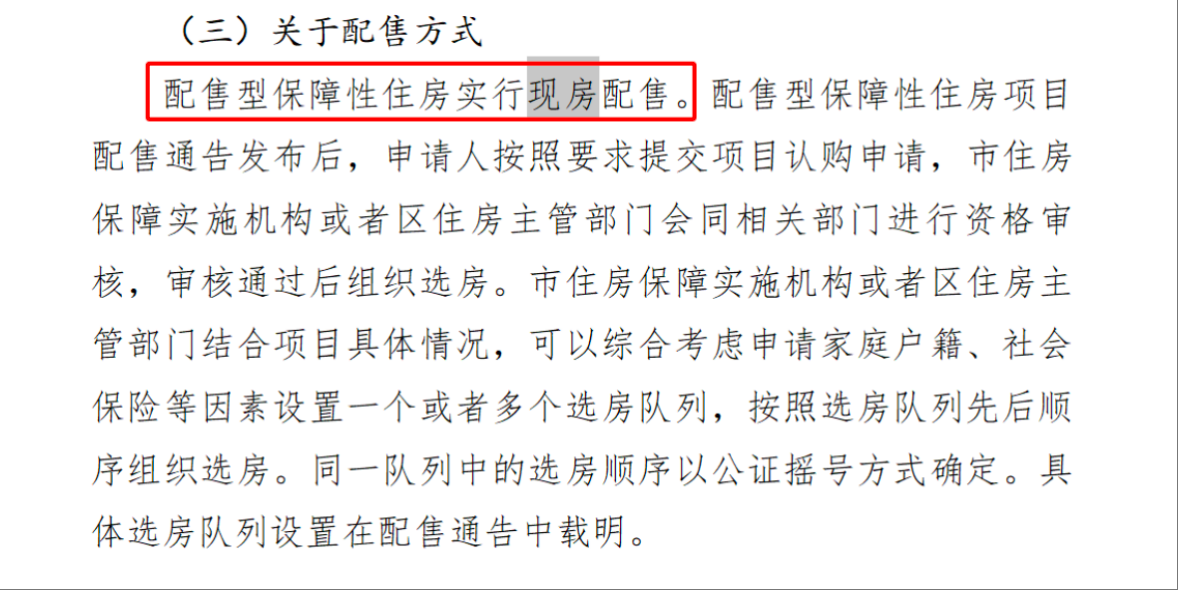
现房配售、封闭流转,深圳发布配售型保障性住房征求意见
Mei Ri Jing Ji Xin Wen· 2025-05-28 13:09
Core Viewpoint - Shenzhen's housing security system is undergoing significant changes with the introduction of new management measures for affordable housing, emphasizing strict application conditions and transfer limitations [1][4]. Group 1: Policy Changes - The Shenzhen Municipal Housing and Urban-Rural Development Bureau released draft regulations for the management of affordable housing, detailing application conditions, allocation methods, and closed management [1]. - The new regulations implement strict closed management for affordable housing, prohibiting any conversion to commercial housing [1]. - After three years of ownership, buyers can apply for a closed transfer of affordable housing to eligible individuals, with the housing authority setting reference price caps to regulate transfer behavior [1]. Group 2: Pricing and Allocation - The pricing of affordable housing will follow a "cost pricing model," breaking the direct correlation with surrounding commercial housing prices [2]. - The specific price of affordable housing will consider land allocation costs, construction costs, reasonable profits, taxes, and factors such as economic development, housing supply and demand, and residents' payment capabilities [2]. Group 3: Eligibility Criteria - To purchase affordable housing, applicants must be Shenzhen residents, have no self-owned housing in the city, and have paid social insurance in Shenzhen for at least five years [1][4]. - Compared to other cities in China, Shenzhen's eligibility criteria are stricter, requiring local residency and a longer duration of social insurance payments [4].