托幼一体化服务

Search documents
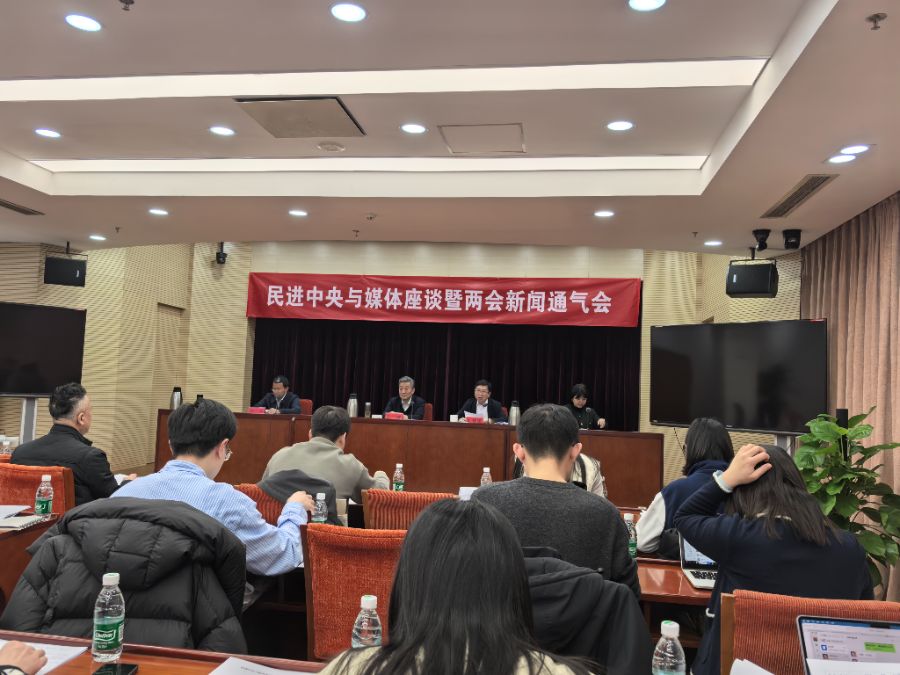
两会时间丨民进中央与媒体座谈暨两会新闻通气会在京召开
2 1 Shi Ji Jing Ji Bao Dao· 2026-02-28 00:16
Core Viewpoint - The meeting held by the Central Committee of the Democratic Progressive Party (民进中央) emphasizes the importance of enhancing self-construction and fulfilling responsibilities in line with the overall situation, particularly in preparation for the 2026 "14th Five-Year Plan" [2]. Group 1: Proposals and Focus Areas - The Central Committee received 567 proposal materials this year and plans to submit 74 proposals to the conference, with 46 submitted under the name of the Central Committee and 28 under the name of the democratic party [2]. - The proposals will focus on various fields including education, culture, publishing and media, technology and healthcare, economy, population resources and environment, and social law [2]. Group 2: Specific Areas of Focus - In the education sector, 11 proposals will address issues such as enhancing integrated services for early childhood education, promoting balanced development of compulsory education in western regions, and improving the support system for young scientific talent [2]. - The culture sector will have 4 proposals focusing on the prosperity of new mass arts under internet conditions and the protection of revolutionary cultural heritage [3]. - The publishing and media sector will have 2 proposals aimed at accelerating the development of top-tier Chinese journals and strengthening language governance in cyberspace [4]. - The technology and healthcare sector will have 8 proposals, including promoting AI in healthcare and improving the financial support mechanism for major scientific tasks [4]. - The economy sector will have 8 proposals focusing on establishing mechanisms to prevent poverty, promoting green industry development, and addressing the impact of AI on the job market [4]. - The population resources and environment sector will have 8 proposals, including strengthening wetland protection in the Yellow River basin and advancing the national carbon market [6]. - The social and legal sector will have 5 proposals aimed at promoting new employment forms and improving the management system for intellectual property [6].

女儿肉眼可见地长结实了
Xin Lang Cai Jing· 2025-12-27 22:49
Group 1 - The core viewpoint of the article highlights the positive impact of enrolling children in public kindergartens, specifically focusing on the benefits of a new kindergarten in Guanying Town, Leshan City, which offers quality facilities and experienced staff [1][2]. - The kindergarten has successfully implemented a "托班" (toddler class) program, which has been well-received by parents, as it alleviates the burden on families and provides a nurturing environment for young children [1][2]. - The provincial government plans to support the development of integrated childcare services by expanding public kindergarten resources, aiming to increase the availability of public childcare spots and reduce costs for families [3]. Group 2 - The new kindergarten features excellent facilities, including a large outdoor sports area and a planting garden, enhancing the overall learning experience for children [1]. - The monthly fee for the toddler class is set at 280 yuan, which is considered affordable and convenient for families [1]. - As of now, Leshan City has enrolled 2,151 children aged 2-3 years, with 724 of them in public kindergartens, indicating a growing demand for early childhood education [3].
托育服务,为带娃家庭“减负”(建言)
Ren Min Ri Bao· 2025-12-24 22:18
Core Insights - The development of inclusive childcare services is crucial for children's health and family welfare, as highlighted in the "14th Five-Year Plan" which emphasizes the establishment of a comprehensive childcare service system [1] Group 1: Current State of Childcare Services - As of the "14th Five-Year Plan" period, there are 126,000 childcare institutions in China, providing a total of 6.657 million childcare spots, with a ratio of 4.73 spots per 1,000 population for children under three years old [1] - Various regions are increasing resource investment in childcare services, with innovative measures being implemented, such as Heilongjiang's inclusion of affordable childcare services in its "Happy Heilongjiang" initiative [1] Group 2: Challenges in Childcare Services - Many working parents report a heavy burden in balancing work and childcare, with a lack of nearby, high-quality childcare institutions, and issues such as high costs and unstable service hours [2] - There is a significant gap between the effective supply of childcare services and the diverse, convenient, and inclusive needs of families, leading to concerns about affordability and trust in childcare services [2] Group 3: Recommendations for Improvement - It is recommended to establish accessible childcare institutions within communities to provide affordable and quality services to more families [2] - Encouragement of diverse social entities to participate in the provision of inclusive childcare services is necessary to create a multi-layered supply system [2] - Support for kindergartens to expand services by enrolling 2-3 year-olds and integrating childcare resources is essential [2] Group 4: Service Model Optimization - There is a need to optimize service models to meet family needs, including offering flexible childcare options such as full-time, part-time, and holiday care [3] - Establishing urban comprehensive childcare service centers is suggested to enhance the quality of childcare services and provide training and consultation for childcare institutions [3] Group 5: Integration of Health and Education - Promoting the integration of health services and childcare is vital, with recommendations to connect healthcare institutions, childcare facilities, and families to support children's health and development [4] - The establishment of "health-education combined" childcare units is proposed to introduce scientific parenting concepts and health services into childcare practices [4]
地方解题“千人4.5个托位”:部分城市已提前达标
2 1 Shi Ji Jing Ji Bao Dao· 2025-09-04 05:14
Core Points - The article discusses the rapid development of childcare services in China, particularly in response to the 2025 target of having 4.5 childcare slots per 1,000 people for children under three years old [1][3][5] - Various cities have already exceeded this target, with notable examples including Guangzhou and Suzhou, which have achieved 5.73 and 4.54 slots per 1,000 people, respectively [1][3][4] - The article highlights the disparities in childcare service availability and quality across different regions, indicating a structural gap that needs to be addressed [2][4][8] Summary by Sections Childcare Service Development - As of September, Chengdu has 2,067 childcare institutions with a total of 97,600 slots, achieving 4.55 slots per 1,000 people, surpassing the national target [1] - The national goal set in July aims for 660,000 new slots by 2025, with a current upward trend in the number of slots available [1][3] Regional Disparities - Cities like Nanjing and Sanya have also reported exceeding the target, with Nanjing achieving 4.7 slots per 1,000 people and plans to reach 4.8 by 2026 [3][4] - However, there are still regions, particularly rural areas, where the availability of slots is insufficient, highlighting the need for tailored local policies [2][4][8] Policy Support and Funding - The growth in childcare slots is supported by government policies, including financial subsidies for new slots, with some provinces offering additional funding [5][8] - The article emphasizes the importance of timely and adequate subsidies to ensure the sustainability of childcare services, especially in rural areas [8] Quality of Care Concerns - Despite the increase in slots, there are significant concerns regarding the quality of childcare services, with many parents dissatisfied due to high costs and inadequate staffing [10][11] - The need for improved standards and training for childcare providers is highlighted, as well as the importance of ensuring that services meet the needs of families [12]
育儿补贴,要来了!
21世纪经济报道· 2025-03-07 06:30
Group 1 - The core viewpoint emphasizes the importance of addressing population issues through dynamic research and policy implementation, including the introduction of childcare subsidies and the development of integrated childcare services [1][2]. - The government plans to issue childcare subsidies and promote policies that encourage childbirth, aiming to reduce the costs associated with childbirth, upbringing, and education [2][1]. - There is a focus on expanding the supply of inclusive childcare services to support families in need of childcare [2][1].