
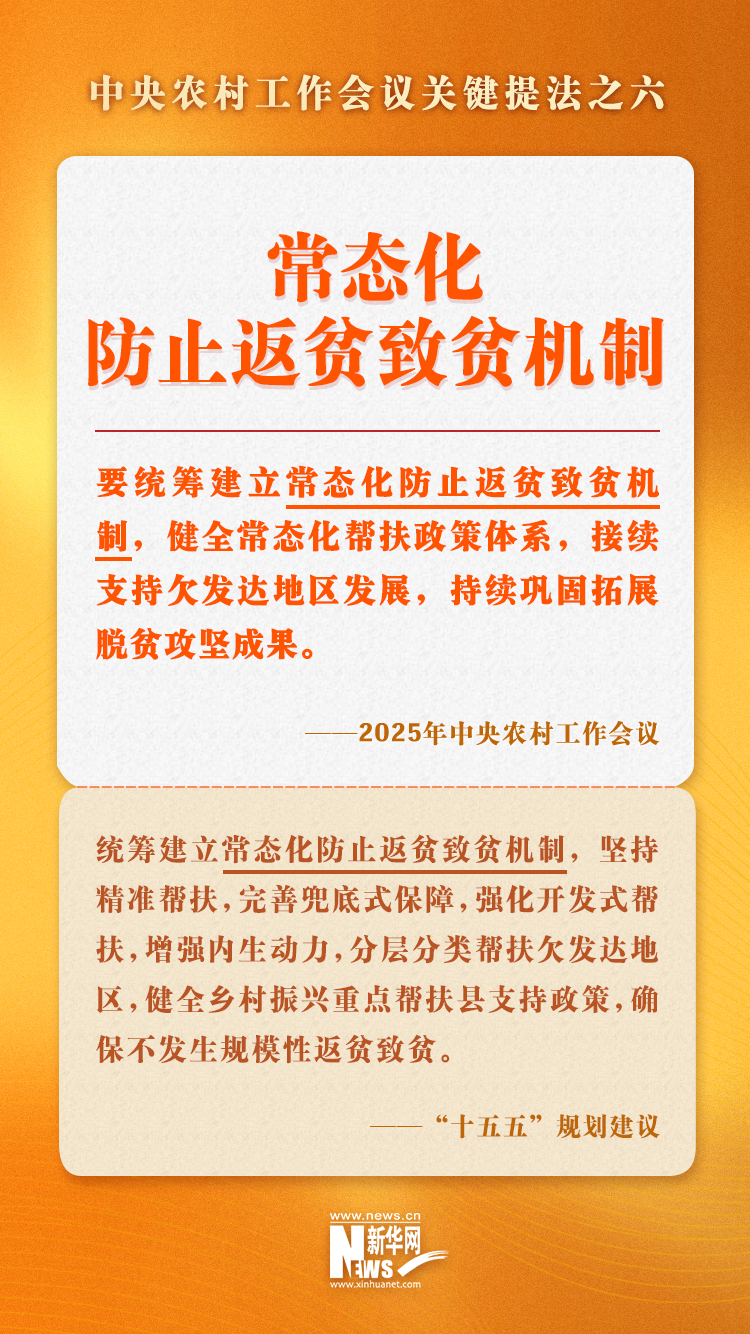
常态化防止返贫致贫机制

Search documents
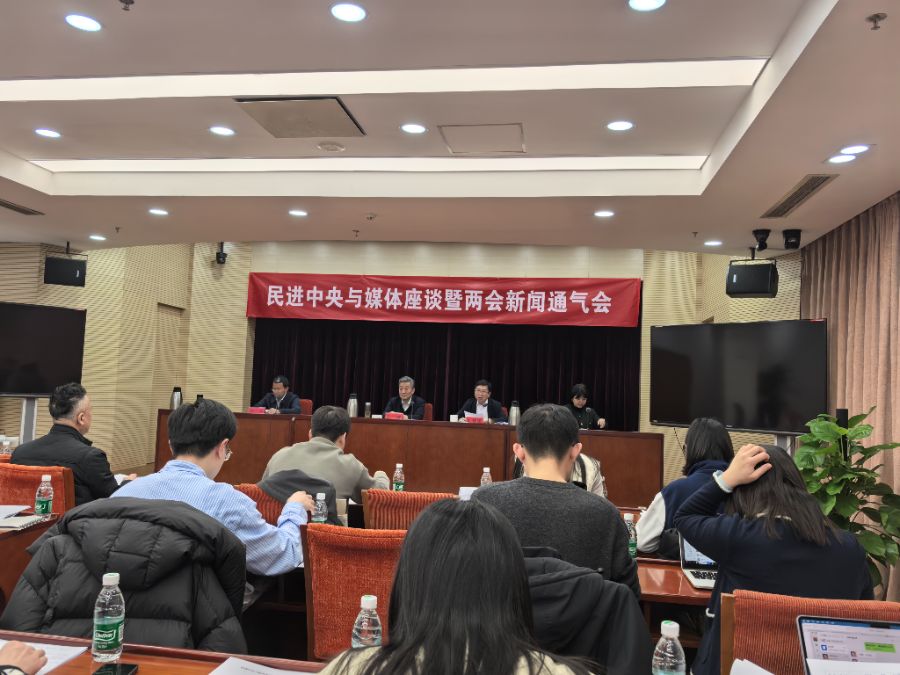
两会时间丨民进中央与媒体座谈暨两会新闻通气会在京召开
2 1 Shi Ji Jing Ji Bao Dao· 2026-02-28 00:16
Core Viewpoint - The meeting held by the Central Committee of the Democratic Progressive Party (民进中央) emphasizes the importance of enhancing self-construction and fulfilling responsibilities in line with the overall situation, particularly in preparation for the 2026 "14th Five-Year Plan" [2]. Group 1: Proposals and Focus Areas - The Central Committee received 567 proposal materials this year and plans to submit 74 proposals to the conference, with 46 submitted under the name of the Central Committee and 28 under the name of the democratic party [2]. - The proposals will focus on various fields including education, culture, publishing and media, technology and healthcare, economy, population resources and environment, and social law [2]. Group 2: Specific Areas of Focus - In the education sector, 11 proposals will address issues such as enhancing integrated services for early childhood education, promoting balanced development of compulsory education in western regions, and improving the support system for young scientific talent [2]. - The culture sector will have 4 proposals focusing on the prosperity of new mass arts under internet conditions and the protection of revolutionary cultural heritage [3]. - The publishing and media sector will have 2 proposals aimed at accelerating the development of top-tier Chinese journals and strengthening language governance in cyberspace [4]. - The technology and healthcare sector will have 8 proposals, including promoting AI in healthcare and improving the financial support mechanism for major scientific tasks [4]. - The economy sector will have 8 proposals focusing on establishing mechanisms to prevent poverty, promoting green industry development, and addressing the impact of AI on the job market [4]. - The population resources and environment sector will have 8 proposals, including strengthening wetland protection in the Yellow River basin and advancing the national carbon market [6]. - The social and legal sector will have 5 proposals aimed at promoting new employment forms and improving the management system for intellectual property [6].

【新思想引领新征程·非凡“十四五”】激发脱贫地区新动能 推进乡村全面振兴
Yang Shi Wang· 2026-01-22 11:47
Core Viewpoint - The consolidation and expansion of poverty alleviation achievements is a fundamental task for advancing rural revitalization in China, with significant progress made during the 14th Five-Year Plan period [1][2]. Group 1: Poverty Alleviation Achievements - The Chinese government has successfully eliminated absolute poverty for nearly 100 million rural residents within eight years, marking a historic achievement in poverty alleviation [1]. - A five-year transition period has been established to prevent large-scale return to poverty, with ongoing monitoring and support mechanisms emphasized by President Xi Jinping [2]. Group 2: Economic Development in Poverty Alleviation Areas - Industries in poverty alleviation areas are growing, with 832 poverty-stricken counties developing 2 to 3 leading industries each, generating a total output value exceeding 1.7 trillion yuan [2]. - Employment stability has been maintained for over 30 million people from poverty-stricken households for five consecutive years, securing more than two-thirds of their income [2]. Group 3: Infrastructure Improvements - Infrastructure conditions in poverty alleviation areas are continuously improving, with rural water supply coverage increasing from 84% to 96% and rural road mileage exceeding 4.64 million kilometers [3]. - The establishment of new transportation links, such as the Huajiang Gorge Bridge, has facilitated local economic growth, evidenced by a 6% year-on-year increase in tourism revenue in Zhenfeng County [3]. Group 4: Future Strategies - The 15th Five-Year Plan suggests establishing a regular mechanism to prevent poverty and emphasizes targeted assistance for underdeveloped areas, integrating this into the rural revitalization strategy [4]. - The focus is on enhancing endogenous development power through effective development-oriented assistance and a comprehensive social security system to ensure no large-scale return to poverty occurs [4]. Group 5: Overall Progress - Poverty alleviation areas are actively advancing rural revitalization, contributing to a solid foundation for Chinese-style modernization [5].
以常态化帮扶机制筑牢防止返贫致贫底线
Jing Ji Ri Bao· 2026-01-10 21:57
Core Viewpoint - The recent Central Rural Work Conference emphasizes the establishment of a regular mechanism to prevent poverty and improve support policies, which is crucial for promoting rural revitalization and common prosperity for farmers [1] Group 1: Achievements and Current Status - During the "14th Five-Year Plan" period, significant progress has been made in consolidating poverty alleviation achievements, with the income levels and living quality of the impoverished population significantly improved [1] - Over 7 million monitoring subjects have been identified and supported to eliminate the risk of returning to poverty, with continuous improvements in education, healthcare, housing, and drinking water safety for the impoverished population [1] - The central government has invested a total of 850.5 billion yuan in rural revitalization support funds over the past five years, focusing on key areas such as 160 counties and 35,000 resettlement areas [1] Group 2: Future Challenges and Strategies - Despite the achievements, there are still risks of returning to poverty for some farmers, and underdeveloped regions face various constraints that require national support [2] - The transition from temporary assistance to a regular governance model aligned with rural revitalization strategies is necessary, as the current support system still falls short of the requirements for comprehensive rural revitalization [2] - There is a need to enhance development momentum and internal motivation, as some beneficiaries exhibit a reliance mentality and lack skills that match market demands [2] Group 3: Key Focus Areas for Support - The core goal of regular assistance should shift from "safety net" to "empowerment," emphasizing capacity building and opportunity provision [3] - The focus should be on cultivating characteristic industries, improving the development environment, and enhancing human capital, balancing both "blood transfusion" and "blood production" approaches [3] - The government should transition from a leading role to a collaborative approach, integrating market forces and encouraging social participation in the assistance process [3] Group 4: Monitoring and Evaluation - A unified, precise, and dynamic monitoring system for preventing poverty should be established, enhancing data sharing and connectivity among relevant departments [4] - The application of digital technologies, such as big data and AI, is essential for accurately identifying those at risk of returning to poverty [4] - There should be a focus on dynamic management of beneficiaries, including clear exit conditions and procedures for assistance policies [4]
中央农村工作会议关键提法之六:常态化防止返贫致贫机制
Xin Hua Wang· 2026-01-07 00:49
Core Viewpoint - The recent Central Rural Work Conference analyzed the current situation and challenges facing the "three rural issues" and outlined the work plan for 2026 [1] Group 1: Poverty Alleviation and Support Mechanisms - The establishment of a normalized mechanism to prevent the return to poverty is essential after the historic victory in poverty alleviation in 2020, where all rural poor populations, villages, and counties successfully escaped poverty [5] - The transition period of five years has been set to consolidate and expand the achievements of poverty alleviation, with a focus on providing support to low-income rural populations and underdeveloped areas [5] - A layered and classified support system will be implemented to build a more robust defense against returning to poverty, aiming to narrow income and development gaps [5] Group 2: Monitoring and Assistance Framework - A comprehensive monitoring system will be established to ensure scientific, precise, and effective identification of individuals at risk of returning to poverty, while reducing the burden on grassroots organizations [6] - The criteria for identifying those at risk will consider various factors, including per capita disposable income and household assets, adapting to changes in economic and social development [6] - Targeted assistance will be provided based on the specific difficulties faced by individuals, with a focus on both labor-capable and non-labor-capable populations [6] Group 3: Support for Underdeveloped Areas - Specific measures will be taken to address the constraints faced by underdeveloped regions, improving development conditions and creating a better environment for growth [7] - The focus will be on key counties for rural revitalization, with a structured support system to ensure targeted assistance [7] - Infrastructure development will be prioritized in underdeveloped areas, enhancing connectivity and resource flow, while public services will be improved to ensure equitable access [7]
学习规划建议每日问答丨如何理解统筹建立常态化防止返贫致贫机制
Xin Hua Wang· 2026-01-01 23:51
Core Viewpoint - The article emphasizes the establishment of a normalized mechanism to prevent poverty and ensure sustainable development, which is essential for consolidating the achievements of poverty alleviation and promoting common prosperity for all people in China [1] Group 1: Poverty Alleviation Achievements - In 2020, China successfully eradicated poverty, with all rural poor populations, villages, and counties lifting themselves out of poverty [1] - The transition period of five years has been set to consolidate and expand the achievements of poverty alleviation, with significant improvements in income levels and living quality for the formerly impoverished [1] Group 2: Mechanism for Preventing Poverty - A normalized monitoring system will be established to ensure scientific, precise, and effective identification of poverty risks while reducing the burden on grassroots organizations [2] - The system will focus on basic requirements such as "no worries about food and clothing" and "guarantees for education, healthcare, and housing," considering factors like disposable income and household assets [2] Group 3: Support for Underdeveloped Areas - Targeted measures will be implemented to assist underdeveloped regions in improving their development conditions and creating a better environment for growth [3] - The focus will be on key counties for rural revitalization, with a structured support system that includes national and provincial levels to prioritize assistance for previously impoverished counties [3] Group 4: Policy Stability and Adjustment - The principle of "big stability, small adjustments" will be adhered to, maintaining the overall stability of existing support policies while making necessary optimizations [4] - The approach will ensure that those who meet the criteria for assistance are included, while those who no longer require support can exit the system promptly [4]
学习规划建议每日问答 | 如何理解统筹建立常态化防止返贫致贫机制
Xin Hua She· 2026-01-01 09:49
Core Viewpoint - The article emphasizes the establishment of a normalized mechanism to prevent poverty and ensure sustainable development, which is essential for consolidating the achievements of poverty alleviation and promoting common prosperity for all people in China [1] Group 1: Poverty Alleviation Mechanism - The proposal includes a five-year transition period following the historic victory in poverty alleviation, during which the income levels and quality of life for the formerly impoverished population have significantly improved [1] - The "15th Five-Year Plan" marks the first five years after the transition period, focusing on establishing a permanent mechanism to prevent poverty and support low-income rural populations and underdeveloped regions [1] Group 2: Monitoring and Support System - A unified and precise monitoring system will be established to identify and dynamically manage poverty prevention targets, focusing on basic needs such as food security and access to clean water [2] - The support will be differentiated based on the specific difficulties faced by individuals, with a focus on both labor-capable and non-labor-capable populations [2] Group 3: Targeted Assistance for Underdeveloped Areas - Targeted measures will be implemented to improve development conditions in underdeveloped areas, with a focus on enhancing infrastructure and public services [3] - The plan includes prioritizing support for key rural revitalization counties and ensuring that assistance is tailored to the unique challenges faced by these regions [3] Group 4: Policy Stability and Adjustment - The approach will maintain overall stability in existing support policies while making necessary adjustments based on evaluations of the changing circumstances and challenges post-transition [4] - The system will allow for the entry and exit of beneficiaries based on their eligibility and needs, ensuring timely support and withdrawal when appropriate [4]
产能提升 常态帮扶 空间提质——专家解读2026年“三农”工作三大亮点
Shang Hai Zheng Quan Bao· 2025-12-31 00:03
Core Viewpoint - The Central Rural Work Conference held on December 29-30 in Beijing discussed the draft opinions on agricultural and rural modernization, emphasizing the importance of agriculture in China's overall modernization strategy and outlining key initiatives for the "14th Five-Year Plan" period [1] Group 1: Enhancing Agricultural Production Capacity and Quality - The main focus is on enhancing agricultural production capacity and quality efficiency, with an emphasis on stabilizing grain and oil production and implementing a new round of actions to increase grain production capacity by 100 billion jin [2] - The new terminology of "stabilizing grain and oil production" reflects the current needs of agricultural supply, particularly due to high dependence on imports for oilseed crops [2] - Increasing yield per unit area is identified as a critical pathway to overcome production bottlenecks, particularly for major crops like rice, wheat, corn, and soybeans [2] Group 2: Strengthening Agricultural Technology and Innovation - The conference proposed strengthening key agricultural technologies and efficiently transforming scientific achievements, focusing on developing new agricultural productivity tailored to local conditions [3] - Developing new agricultural productivity is seen as essential for addressing low efficiency, resource waste, and environmental pressures in traditional agriculture [3] Group 3: Establishing Poverty Prevention Mechanisms - A key measure is to establish a regular mechanism to prevent poverty, with a focus on supporting underdeveloped areas and consolidating poverty alleviation achievements [4] - The transition to a normalized support phase for poverty alleviation is expected to begin in 2026, with continued policy support and measures [4] Group 4: Promoting County-Level Industries - The conference highlighted the importance of cultivating and expanding county-level industries to enhance farmers' participation in industrial development and improve income [5] - Developing industries with comparative advantages at the county level is crucial for preventing large-scale poverty and promoting rural employment opportunities [5] Group 5: Building Livable and Workable Villages - The need to promote the construction of livable and workable villages is emphasized, with a focus on optimizing rural spatial layout and improving living conditions [6] - The concept of creating quality living spaces in rural areas is seen as a core aspect of urban-rural integration, aiming to enhance rural living standards while preserving local characteristics [6] Group 6: Innovating Financing Mechanisms for Rural Development - The conference called for innovative financing mechanisms to invigorate rural development, including the promotion of agricultural facility and livestock collateral financing [7] - Ongoing exploration of financing solutions, such as agricultural machinery collateral and increased bank support for agricultural credit, is expected to provide financial support for agricultural production and rural construction [7]
产能提升 常态帮扶 空间提质 专家解读2026年“三农”工作三大亮点
Shang Hai Zheng Quan Bao· 2025-12-30 19:26
Core Insights - The central theme of the article revolves around the key highlights of the 2026 "Three Rural Issues" work, emphasizing the modernization of agriculture and rural areas as a crucial aspect of China's overall modernization strategy [1] Group 1: Agricultural Production Capacity and Quality - Enhancing agricultural comprehensive production capacity and quality is identified as the main focus for accelerating agricultural modernization, with an emphasis on stabilizing grain and oil production [2] - The meeting introduced a new initiative to implement a new round of actions aimed at increasing grain production capacity by 1 billion jin, focusing on major crops like rice, wheat, corn, and soybeans [2] - The shift from "stabilizing grain production" to "stabilizing grain and oil production" reflects the current reality of China's agricultural supply, addressing the high dependency on imports for oilseed crops [2] Group 2: Technological Advancements - The meeting highlighted the need to strengthen core agricultural technologies and efficiently convert scientific achievements into practical applications, which is essential for addressing traditional agricultural inefficiencies [3] - Developing new agricultural productivity is seen as a key pathway to enhance efficiency and reduce resource waste, thereby ensuring food security [3] Group 3: Poverty Alleviation Mechanisms - Establishing a regular mechanism to prevent poverty is deemed a critical measure for advancing agricultural modernization, with a focus on continuous support for underdeveloped regions [4] - The transition to a normalized assistance phase post-2025 will maintain the intensity of poverty alleviation policies and measures [4] Group 4: County-Level Economic Development - The meeting emphasized the importance of cultivating and expanding county-level industries to enhance farmers' participation in economic development, which is vital for preventing large-scale poverty [5][6] - Developing industries with comparative advantages at the county level can create local employment opportunities and support returning migrant workers, contributing to farmers' sustained income growth [6] Group 5: Rural Infrastructure and Living Conditions - Promoting the construction of livable and workable rural areas is essential for agricultural modernization, with a focus on improving rural infrastructure and living conditions [7] - The concept of creating quality living spaces in rural areas aims to integrate urban and rural development while preserving rural characteristics [7] Group 6: Financial Mechanisms for Rural Development - The meeting called for innovative financing mechanisms to invigorate rural development, including the promotion of collateral financing for agricultural facilities and livestock [8] - Ongoing efforts to explore various financing solutions aim to alleviate funding challenges for agricultural production and rural construction, thereby supporting the steady advancement of agricultural modernization [8]
统筹建立常态化防止返贫致贫机制
Jing Ji Ri Bao· 2025-11-30 22:50
Core Viewpoint - The article emphasizes the importance of establishing a normalized mechanism to prevent poverty and ensure sustainable development after the poverty alleviation campaign, as outlined in the "Suggestions" from the 20th Central Committee of the Communist Party of China [1] Summary by Sections Importance of Establishing a Normalized Mechanism - The establishment of a normalized mechanism to prevent poverty is crucial for maintaining the achievements of poverty alleviation and ensuring that large-scale poverty does not reoccur [2] - It is a necessary requirement for implementing new development concepts and promoting common prosperity, ensuring that no one is left behind in the modernization process [2] - Addressing external risks and challenges necessitates focusing on vulnerable groups and regions to enhance their development capabilities and economic resilience [3] Principles for Establishing the Mechanism - Emphasizing the leadership of the Party and the advantages of the socialist system in mobilizing resources for major tasks [4] - Implementing precise assistance strategies that are tailored to individual needs and circumstances [4] - Enhancing internal development motivation while ensuring that support measures are sustainable and effective [5] Key Work Areas for Preventing Poverty - Improving the effectiveness of monitoring systems to accurately identify and track individuals at risk of falling back into poverty [6] - Implementing precise and categorized assistance measures based on the specific needs and capabilities of individuals [8] - Supporting underdeveloped regions by enhancing their competitive advantages and promoting economic cooperation [9] - Stabilizing and optimizing the assistance system and policy framework to ensure effective implementation and accountability [10]
建立常态化防止返贫致贫机制 帮扶不是“到期就撤”
Jing Ji Ri Bao· 2025-11-18 06:17
Core Viewpoint - Consolidating and expanding the achievements of poverty alleviation is a bottom-line task for promoting comprehensive rural revitalization, requiring continuous vigilance and proactive measures to prevent the risk of returning to poverty [1][2] Group 1: Mechanisms and Strategies - The establishment of a normalized mechanism to prevent the return to poverty is essential, as some farmers will continue to face difficulties due to illness, accidents, or disasters [1][2] - The "14th Five-Year Plan" emphasizes the need for layered and categorized support for low-income rural populations and underdeveloped areas to build a stronger defense against poverty [1][2] - The transition period has shown that effective methods from poverty alleviation can be applied to rural revitalization, and vice versa, ensuring that support does not cease abruptly after the transition [2] Group 2: Implementation of Support - Normalized and precise assistance is crucial, which involves timely identification and intervention to eliminate risks at their inception [2][3] - Differentiated measures should be taken based on the actual difficulties faced by the beneficiaries, with greater support for those in more severe conditions [3] - Development-oriented assistance focuses on empowering those with labor capabilities through industry, employment, health, and education, while comprehensive social security measures are in place for those without such capabilities [3]