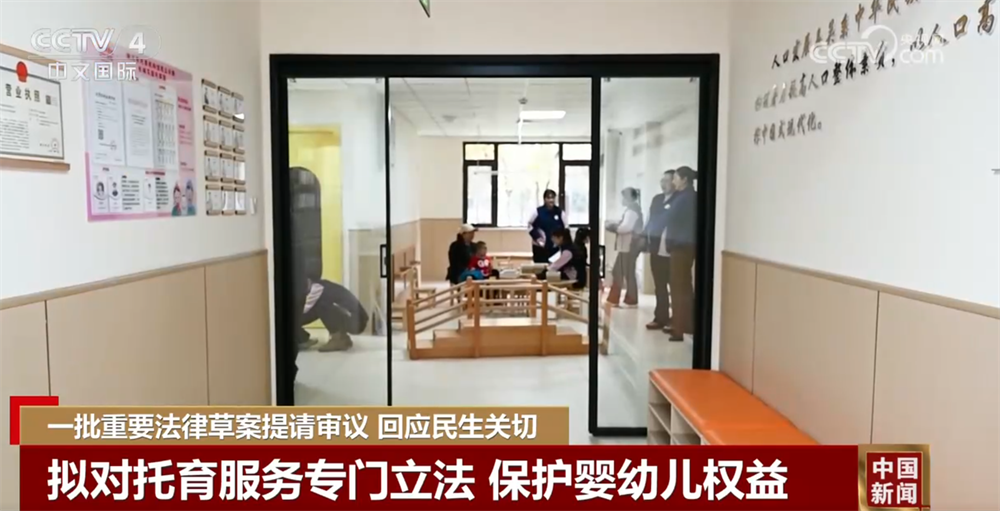
托育服务立法

Search documents
推动“幼有所托”迈向“幼有善托”
Xin Lang Cai Jing· 2026-01-23 19:56
Core Viewpoint - The draft of the Childcare Service Law is currently open for public consultation until January 25, 2026, aiming to address issues such as low service quality, inconsistent caregiver qualifications, and regulatory blind spots in childcare services, thereby promoting high-quality development in the childcare sector [1][2]. Group 1: Key Issues Addressed by the Draft - The draft aims to tackle the prominent issues of "difficulty in accessing childcare" and "high costs of childcare" by incorporating childcare service development into national economic and social development plans, ensuring a balanced allocation of resources [2][3]. - It establishes a subsidy system for childcare services, encouraging local governments to create financial support for economically disadvantaged families and children with disabilities [2][3]. Group 2: Regulatory and Quality Standards - The draft clarifies responsibilities among various departments to enhance safety and establish a "universal" approach, emphasizing government accountability [3]. - It proposes the establishment of a "childcare teacher" qualification system and service standards that integrate health, nutrition, and education, focusing on the unique developmental needs of infants [3][4]. Group 3: Enhancing Trust and Participation - The draft includes measures to build trust in childcare services, such as mandatory information disclosure, security standards, and background checks for caregivers [5][6]. - It emphasizes the importance of family involvement in childcare services and suggests that local governments issue childcare service vouchers to allow families to choose providers freely [6][7]. Group 4: Support for Caregivers - The draft advocates for the protection of childcare workers' rights and the establishment of salary standards linked to qualifications and experience, aiming to stabilize the workforce [7]. - It also highlights the need for psychological support for childcare workers to alleviate job-related stress and improve service quality [7].
托育服务法草案公开征求意见——推动托育服务“从有到优”
Jing Ji Ri Bao· 2026-01-03 02:18
Core Viewpoint - The introduction of the Childcare Services Law aims to alleviate parental anxiety regarding childcare and enhance the legal framework supporting childcare services in China, addressing existing challenges in the sector [1][2]. Group 1: Legislative Framework - The draft of the Childcare Services Law consists of 8 chapters and 76 articles, covering various aspects such as childcare institutions, personnel, service provision, and legal responsibilities [1]. - The law is intended to provide a solid legal guarantee for the development of childcare services for children under three years old, which is crucial for improving birth support policies and reducing family rearing costs [2]. Group 2: Demand and Supply Issues - A significant portion of families with infants express a strong need for childcare services, with one-third indicating this demand, highlighting the lack of care for children under three as a major factor limiting birth rates [3]. - The draft law emphasizes the need for government-led initiatives to address the mismatch between supply and demand in childcare services, advocating for increased fiscal support and community involvement [2][4]. Group 3: Multi-Supply Promotion - The draft law encourages diverse supply sources for childcare services, including public and private partnerships, and supports the integration of childcare services into urban communities [4]. - Recommendations include incorporating childcare service funding into government budgets and providing various subsidies to lower operational costs, ensuring affordability for families [4]. Group 4: Regulatory Framework - The draft law aims to enhance the quality of childcare services by establishing standards and a comprehensive regulatory framework, including the creation of a statistical survey system for childcare services [5][6]. - It emphasizes the protection of children's rights and the establishment of a multi-tiered oversight system involving government, social, and institutional self-regulation [6].
托育服务法草案公开征求意见—— 推动托育服务“从有到优”
Jing Ji Ri Bao· 2026-01-02 22:10
Core Viewpoint - The introduction of the Childcare Services Law draft aims to provide legal support for childcare services, addressing the challenges of "difficulty in finding childcare" and "high costs" while enhancing the quality of services for children under three years old [1][2]. Group 1: Legislative Framework - The draft consists of 8 chapters and 76 articles, covering various aspects such as childcare institutions, personnel, service provision, and legal responsibilities [1]. - The law is intended to integrate inclusive childcare services into the basic public service framework, establishing a public service attribute for childcare [2]. Group 2: Demand and Supply Issues - One-third of families with infants express a strong need for childcare, with the lack of care for children under three being a significant factor limiting birth rates [3]. - The draft emphasizes the need for government-led initiatives, increased financial support, and the involvement of social forces to address the mismatch between supply and demand in childcare services [2][4]. Group 3: Multi-Supply Promotion - The draft encourages diverse supply sources for childcare services, including public and private partnerships, and the integration of services into urban communities [4]. - It suggests that government budgets should include funding for childcare services, with incentives such as subsidies and tax reductions to lower operational costs [4]. Group 4: Regulatory Framework - The draft outlines the necessity for a robust regulatory system to enhance the quality of childcare services, including the establishment of statistical surveys and specific regulations for childcare institutions [5]. - It aims to protect the rights of infants and their families, introducing third-party evaluations of service quality and establishing standards for childcare personnel [6].
“最柔软群体”的“硬”托育,一线园长们最关心这些立法难题
Xin Jing Bao· 2025-12-25 00:01
Core Viewpoint - The draft of the Childcare Services Law is being reviewed, aiming to establish a national framework for childcare services, addressing the needs of families and promoting the development of children under three years old [1][2]. Group 1: Current State of Childcare Services - In Beijing, there are approximately 33,000 childcare spots available in various types of kindergartens, with over 26,000 being affordable spots, accounting for more than 50% of the total [1]. - The average enrollment rate for children under three in OECD countries is 35%, while China's rate is only 5%, indicating a significant gap [2]. Group 2: Legislative Importance - The legislation is deemed necessary to enhance the quality and accessibility of childcare services, addressing parents' concerns and potentially increasing enrollment rates [2][3]. - The draft specifies the establishment conditions for childcare institutions, requiring a licensing system and safety management protocols [2]. Group 3: Challenges in Implementation - Space limitations and structural constraints in existing kindergartens pose significant challenges for transforming facilities to accommodate younger children [4][5]. - The need for infrastructure upgrades includes creating safe play areas and appropriate sleeping zones for infants, which can be costly and time-consuming [5]. Group 4: Financial Support and Subsidies - The draft encourages local governments to explore childcare service subsidy systems to alleviate financial burdens on families and support the development of affordable services [6]. - Recommendations include increasing per-student subsidies and providing targeted financial support for facility upgrades [6]. Group 5: Workforce Development - The draft outlines qualifications for childcare workers, including a certification and registration system, to ensure a skilled workforce [8]. - There is a recognized need for training programs to enhance the skills of existing educators, particularly in caring for children aged 0-3 [10][11]. Group 6: Future Outlook - The introduction of the Childcare Services Law is expected to standardize and regulate the childcare market, promoting a collaborative ecosystem among public, private, and community providers [12][13]. - The law aims to improve the quality and accessibility of childcare services, addressing the needs of working parents and enhancing the overall childcare landscape in China [13].
【社评】以法治之力助托育服务更便捷可及
Xin Lang Cai Jing· 2025-12-24 19:51
Group 1 - The core viewpoint of the news emphasizes the importance of well-structured childcare services for the healthy growth of infants and toddlers, which directly impacts family welfare and influences the fertility intentions of childbearing families, thereby affecting long-term population development [1][2] - The draft of the Childcare Services Law, which consists of 8 chapters and 76 articles, aims to ensure the healthy growth of infants and toddlers and serves as a foundational law for promoting high-quality population development [1][3] - The increasing demand for childcare services is driven by the rise in dual-income families and the declining capacity for intergenerational care, making childcare a necessity for many families [1][2] Group 2 - Despite the growth in the number of childcare institutions and available spots, there are significant disparities in service quality and accessibility, leading to a mismatch between supply and demand in different regions [2][3] - Recent policies have been introduced to address challenges in the childcare sector, including the 2019 guidelines to integrate childcare services into economic and social development plans and the 2024 measures to enhance supportive policies for childcare services [2][3] - The proposed law includes strict safety measures, professional qualifications for childcare workers, and aims to integrate affordable childcare services into public service frameworks, which could alleviate the high costs and difficulties associated with childcare [3][4] Group 3 - The legislation is seen as a crucial step towards creating a multi-faceted, safe, high-quality, and accessible public childcare service system, which is essential for building a fertility-friendly society [4] - Successful implementation of the law will require collaboration among various departments and community stakeholders to meet diverse needs and ensure the effective application of the law [4] - The legislation is expected to enhance the professional recognition and sense of belonging among childcare workers, attracting more talent to the industry and ultimately increasing the availability of quality childcare services [3][4]
托育服务,既是家事也是国事!
Yang Shi Wang· 2025-12-24 00:06
Core Viewpoint - The draft of the Childcare Service Law aims to provide legal protection for children under three years old, enhance fertility support policies, reduce family upbringing costs, and improve population quality [1] Group 1: Government Role and Responsibilities - The draft emphasizes the government's leading role, mandating that childcare service funding be included in local government budgets [2] - It recognizes childcare services as an independent category within basic public services, addressing potential inequalities in service provision across regions [4] - The legislation will legally authorize government expenditures related to childcare services, alleviating concerns about budget allocations [5] Group 2: Standards and Safety in Childcare Services - The legislation will raise the entry standards for childcare institutions, ensuring that only qualified entities can operate, thus enhancing oversight and credibility [7] - Safety is a fundamental requirement, with the draft addressing various safety aspects, including institutional, personnel, facility, and service safety [8] - Specific standards for facility materials, air quality, dietary guidelines, and procedures for managing closures will be established to ensure a safe environment for children [10] Group 3: Financial Implications and Accessibility - The high cost of childcare services, which can consume 50% to 60% of a household's disposable income, has been a significant concern [11] - The legislation aims to reduce operational costs for childcare institutions through financial support measures, which could lead to lower service prices and make childcare more affordable for families [11]

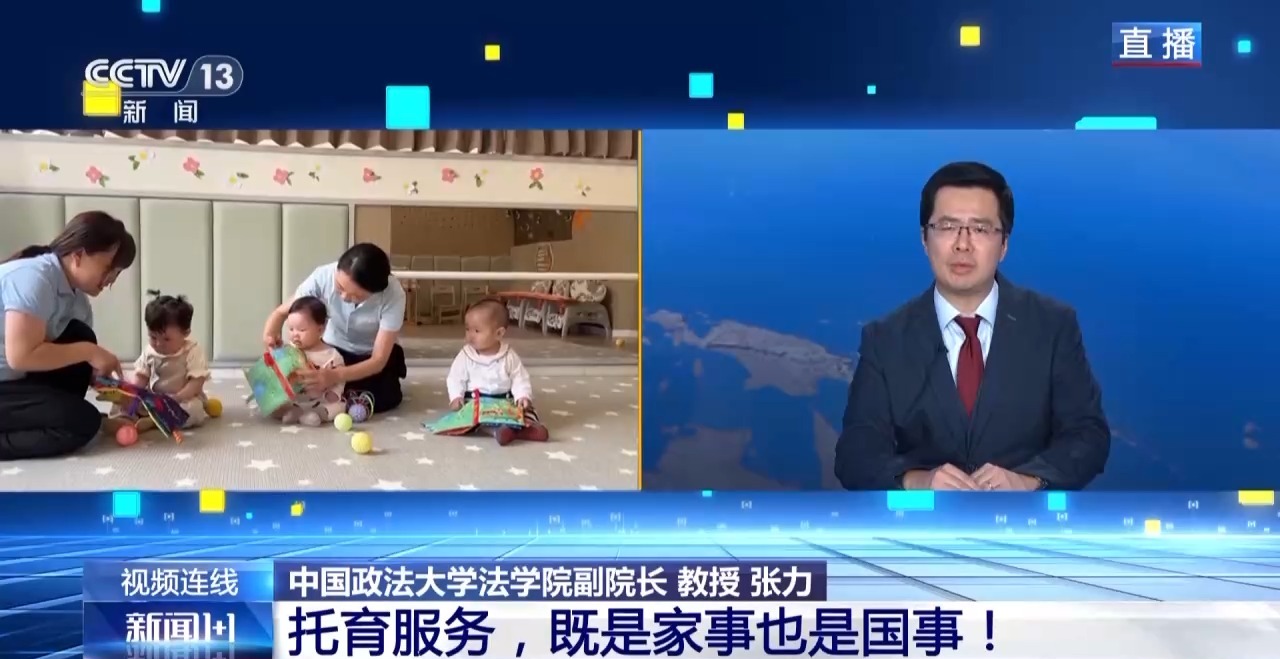
新闻1+1丨托育服务,既是家事也是国事!
Yang Shi Wang· 2025-12-23 22:36
Core Viewpoint - The draft of the Childcare Service Law aims to provide legal protection for children under three years old, improve fertility support policies, reduce family upbringing costs, and enhance population quality [1] Group 1: Government Role and Responsibilities - The draft emphasizes the government's leading role, mandating that childcare service funding be included in local government budgets [2] - It recognizes childcare services as an independent category within basic public services, addressing potential inequalities in service provision across regions [4] - The legislation will legally authorize government expenditures on childcare services, alleviating concerns about budget allocations [5] Group 2: Standards and Safety Measures - The transition from registration to licensing for childcare institutions will raise entry standards, ensuring that institutions meet certain capabilities and professional levels [7] - The draft outlines safety requirements across various aspects, including institutional, personnel, facility, and service safety, establishing a comprehensive safety framework [8] - Specific standards for facility materials, air quality, dietary guidelines, and protocols for managing closures will provide clear guidelines for parents and industry development [10] Group 3: Cost Reduction and Accessibility - The high cost of childcare services, which can consume 50% to 60% of a household's disposable income, has been a significant concern [11] - The legislation aims to reduce operational costs for childcare institutions through financial support measures, which could lead to lower service prices and make childcare more affordable for families [11]
国家拟立法鼓励政府补贴托育服务
第一财经· 2025-12-23 04:50
Core Viewpoint - The article discusses the proposed legislation for childcare services in China, aiming to provide legal support for the development and regulation of childcare services for children under three years old, addressing issues such as high costs and insufficient supply [3][5]. Group 1: Importance of Legislation - The importance of childcare services is increasingly recognized as a crucial support measure for high-quality population development, yet there are significant challenges such as low local attention, insufficient supply, high operational costs, and inadequate regulatory oversight [5]. - A report from the National Health Commission highlighted that over 30% of families with children under three have a demand for childcare services, but the actual enrollment rate is only 7.86%, indicating a substantial gap in available childcare slots [6]. Group 2: Legislative Framework - The draft law consists of 8 chapters and 76 articles, emphasizing government leadership in childcare services and encouraging social participation to develop affordable and accessible public childcare services [8][9]. - The draft law aims to integrate affordable childcare services into basic public services, reflecting the government's commitment to reducing family childcare costs and enhancing population support policies [10]. Group 3: Government Responsibilities and Financial Support - The draft encourages local governments to explore establishing childcare service subsidy systems and to support the development of affordable childcare services through various means, including purchasing services [11]. - It mandates that local governments include childcare service development in their economic and social development plans and budget for related expenses, establishing a financial support mechanism [10]. Group 4: Regulation of Institutions and Personnel - The draft law introduces strict regulations for the establishment of childcare institutions, requiring licenses from health authorities and compliance with various operational standards [13][14]. - It establishes a qualification examination and registration system for childcare workers, setting educational and professional standards to ensure the quality of care provided [14][15]. Group 5: Safety and Monitoring - The draft law includes detailed provisions for the health management of infants, food safety, and the establishment of monitoring systems in childcare facilities to enhance safety and accountability [15]. - It requires local governments to create comprehensive supervision mechanisms for childcare services to improve regulatory oversight and prevent incidents of harm [15].

国家拟立法鼓励政府补贴托育服务
Di Yi Cai Jing· 2025-12-23 03:55
Core Viewpoint - China is proposing specialized legislation for childcare services to address issues such as high costs, insufficient supply, and reluctance to use these services, providing legal protection for children under three years old [1][2]. Group 1: Legislative Background - The draft of the childcare services law was submitted for initial review by legislative bodies on December 22, marking a significant step in elevating childcare services from policy guidance to legal protection [1][3]. - The legislation aims to resolve long-standing issues in the childcare sector, including high costs and low availability, which have been highlighted by various stakeholders [2]. Group 2: Government Role and Support - The draft emphasizes a government-led approach to childcare services, encouraging public participation and aiming to integrate affordable childcare into basic public services [4][6]. - It proposes that local governments should explore establishing subsidy systems for families using childcare services and support the development of affordable childcare through various means [7]. Group 3: Regulatory Framework - The draft outlines strict requirements for the establishment of childcare institutions, including obtaining permits from health authorities and meeting various operational standards [8]. - It introduces a qualification examination and registration system for childcare workers, aiming to ensure that only qualified individuals are employed in the sector [9]. Group 4: Service Standards and Monitoring - The draft specifies detailed service provisions for childcare institutions, including health management systems for infants and compliance with food safety standards [10]. - It mandates the installation of video monitoring systems in childcare facilities to enhance oversight and safety, with a requirement for local governments to establish comprehensive supervisory mechanisms [11].
一批重要法律草案提请审议回应“民之所盼” 涉及诸多重要领域
Yang Shi Wang· 2025-12-23 01:40
Group 1 - The draft law on childcare services aims to protect the rights of infants and toddlers, mandating that local governments include affordable childcare services in basic public services [2] - The draft emphasizes the protection of infants' rights, prohibiting childcare personnel from harming their physical and mental health, and requiring immediate protective measures in case of suspected harm [2][4] - The draft law will establish entry permits for childcare institutions and staff, standardizing service content and promoting the overall development of infants' physical and mental health [4] Group 2 - The revised trademark law aims to strengthen the enforcement against trademark infringement, with specific prohibitions on using the names, flags, and emblems of the Communist Party of China as trademarks [6] - The draft includes penalties for misleading use of registered trademarks, with fines of up to 50,000 yuan for non-compliance, and severe cases may lead to the cancellation of trademark registrations [8] Group 3 - The civil aviation law revision addresses public concerns regarding flight delays and cancellations, requiring airlines and airports to manage resources effectively to minimize such occurrences [11] - The draft mandates timely and accurate communication from airlines and airports regarding the reasons for flight delays or cancellations, enhancing transparency for passengers [11]