
拨投结合

Search documents
构筑内陆产业发展新高地
Jing Ji Ri Bao· 2026-01-12 22:10
Core Insights - The Liangjiang New Area is positioned as a significant growth engine for modern Chongqing, enhancing the investment environment and fostering innovation and entrepreneurship [1] - The Guoyuan Port serves as the largest inland multi-modal transport hub in China, facilitating the development of the Yangtze River Economic Belt and the Belt and Road Initiative [2][3] - The area is set to become the third national-level new area to achieve administrative status by November 2025, further enhancing its development capabilities and strategic importance [1] Infrastructure and Logistics - Guoyuan Port is equipped with advanced facilities and technology, including remote-controlled operations for container handling, which enhances operational efficiency [2] - The port connects to various transport networks, including the China-Europe Railway Express and the ASEAN routes, facilitating trade and logistics [3] - The port's logistics capabilities are supported by a comprehensive service framework, including customs measures that have saved companies significant costs [5] Economic Development and Industry - The Liangjiang New Area has attracted over 1,500 enterprises to the Guoyuan Port economic zone, with nearly 400 companies in the comprehensive bonded area [4] - The automotive industry in the region is robust, with major players like Changan and over 200 supporting parts manufacturers, fostering a complete supply chain [6][7] - Investment in the automotive sector is significant, with plans for further expansion and the establishment of new production lines [8] Innovation and Technology - The area promotes a collaborative innovation ecosystem, with a focus on high-tech and technology-driven enterprises, aiming to increase the number of high-tech firms significantly by 2025 [11][12] - Partnerships with local universities and research institutions enhance R&D capabilities, driving technological advancements in the automotive and electronics sectors [11][13] - The establishment of innovation zones and support for startups has led to the incubation of numerous technology firms and the transfer of scientific achievements [14]
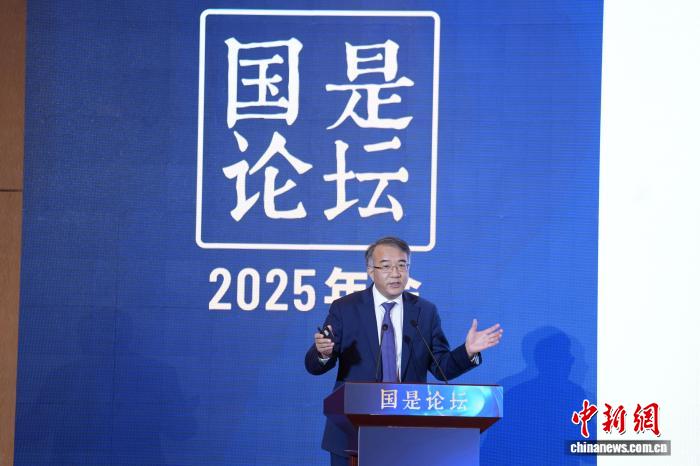
(经济观察)赋能中国经济发展 专家解码“关键变量”
Zhong Guo Xin Wen Wang· 2025-12-16 23:32
Group 1 - Innovation is a key variable for China's economic development, with enterprises being the main drivers of innovation and creativity [1] - The transformation of China's economy from high growth to high-quality development is influenced by "timing, location, and harmony," which includes supportive policies for private enterprises, rapid technological advancements, and resilient entrepreneurs [1] - Recent innovations in China span various fields, including breakthroughs in nuclear power, marine engineering, AI, quantum technology, and deep space exploration, highlighting the importance of exploring pathways for the application and transformation of these innovations [1] Group 2 - The "拨投结合" (allocation and investment combination) model is proposed to address the financing difficulties of forward-looking and leading technology projects, providing initial funding for R&D and converting it into investment based on market pricing as projects gain market recognition [2] - The new wave of global technological revolution, represented by AI, is creating new opportunities for industry development and technological innovation across countries [2] - There is a significant gap between the exponential growth of AI prediction results and the linear growth of human verification and industrialization capabilities, leading to a bottleneck in the application of scientific discoveries [2][3] Group 3 - Recommendations to address the challenges include strengthening the construction of datasets, high-value knowledge centers, and evaluation standards for AI prediction results, as well as accelerating the establishment of autonomous laboratories and pilot platforms to promote engineering innovation [3]
刘庆谈创新成果转化:研发作为产业、技术作为商品
Zhong Guo Xin Wen Wang· 2025-12-16 14:14
Core Viewpoint - Liu Qing emphasizes the importance of integrating technological innovation with industrial application, referring to the transformation of scientific research into marketable technology as a critical process for development [1][3]. Group 1: Platform Development - The Yangtze River Delta National Technology Innovation Center has established 110 research and development platforms with over 16,000 researchers [3]. - Most research institutes operate under a corporate mechanism, functioning as a group company that holds stakes in several small R&D firms [3]. Group 2: Resource Allocation - Liu Qing advocates for aligning innovation resources with the "real needs" of enterprises, particularly in fields such as electronic information, advanced materials, energy and environmental protection, and biomedicine [3]. - A specialized team of over 200 technical managers collaborates with companies to conduct market research, validate R&D plans, assess funding needs, and refine business plans [3]. Group 3: Innovative Financing - To address the challenges of early-stage financing for pioneering technologies, Liu Qing proposes a "拨投结合" (allocation and investment combination) model to support major innovation projects [4]. - This model involves providing initial R&D funding based on comprehensive project evaluation, which can later be converted into investment as the project gains market recognition [4]. Group 4: Bridging Global Innovation - The primary role of the Yangtze River Delta National Technology Innovation Center is to build two bridges: one from science to industry and another connecting global innovation resources to the Yangtze River Delta [4]. - The center has established 10 overseas representative offices and collaborated with 98 national strategic partner universities, facilitating over 250 international R&D collaborations [4]. Group 5: Achievements in Technology - The new R&D institution has made significant strides in overcoming critical technologies, such as single crystal blades for aircraft engines, and has nurtured semiconductor unicorn companies valued at billions [5].

科技+金融双向赋能!企业创新积分制、拨投结合激活新质生产力
Bei Ke Cai Jing· 2025-10-29 13:29
Group 1 - The core viewpoint emphasizes the need to strengthen the "technology-industry-finance" virtuous cycle to cultivate new productive forces [1] - The "enterprise innovation points system" is being promoted as a tool for evaluating and supporting enterprise financing, with a total credit limit of 224.2 billion yuan and loans issued amounting to 124.3 billion yuan as of April this year [4][6] - The Torch Center has been hosting the China Innovation and Entrepreneurship Competition since 2012, attracting over 350,000 participating enterprises and teams, with financing exceeding 1 trillion yuan from banks and venture capital institutions [7] Group 2 - The "拨投结合" mechanism supports leading and original projects through milestone-based financial support, allowing for equity conversion if market financing is achieved [9][12] - The Long Triangle National Technology Innovation Center has supported over 160 projects with an average investment of approximately 27 million yuan per project [10] - Hong Kong is positioned as a launch point for mainland enterprises going overseas, providing a favorable business environment and professional services to navigate international markets [13][15]

“拨投结合”让无声代码撬动商业未来
Xin Hua Ri Bao· 2025-07-07 23:12
Core Viewpoint - The article highlights the successful development and commercialization of a high-precision indoor positioning technology, 5G-A, by Nanjing Xinhuitong Technology Co., Ltd., which is expected to significantly enhance the digital transformation of offline commercial spaces [1][2]. Group 1: Technology Development - The 5G-A high-precision indoor positioning technology achieves positioning accuracy at the decimeter to centimeter level, improving precision by ten times compared to traditional 5G positioning [1]. - This technology addresses the limitations of existing indoor positioning systems like GPS and UWB, which struggle indoors and have high maintenance costs [1]. - The technology has been successfully deployed on a large scale, marking a significant breakthrough in real-time positioning capabilities [1]. Group 2: Funding and Support Mechanism - The company was established with nearly 20 million yuan in funding through a "拨投结合" (funding and investment combination) mechanism, which supports the transformation of scientific research achievements into marketable products [2]. - This funding model allows startups to secure a two to three-year window for product development and business model validation without the immediate pressure of traditional financing routes [3]. - The Nanjing Purple Mountain Laboratory has also transferred core technologies to the company, facilitating accelerated product development [3]. Group 3: Innovation Ecosystem - The article outlines a comprehensive innovation ecosystem in Nanjing, where the Purple Mountain Laboratory serves as a key innovation source, while the Purple Mountain Group provides capital support [4]. - Nanjing's strategic layout includes the establishment of innovation hubs and technology transfer centers to enhance the integration of technology and industry [5]. - The city is actively reforming its innovation environment to facilitate smoother technology transfer and commercialization processes [6][7]. Group 4: Market Applications and Collaborations - The company has secured partnerships with major commercial entities, such as Guangzhou Taikoo Hui, to implement its 5G-A technology for smart commerce upgrades [5]. - Potential applications of the technology extend to various sectors, including smart factories, transportation, healthcare, and intelligent connected vehicles [5].
上海机构建立全流程服务体系 入库32个项目孵化出8家科技企业 走通“概念验证” 样机获投千万变产品——科技服务如何按下快进键(下)
Jie Fang Ri Bao· 2025-07-05 01:58
Core Viewpoint - The article discusses the importance of "concept validation" in China's technology sector, emphasizing the establishment of a market-oriented operation model and a risk-sharing mechanism to enhance the feasibility of technology and market validation [1] Group 1: Concept Validation Progress - Shanghai has introduced policies to deepen reform and innovation in the technology service industry, focusing on the construction and operation of concept validation platforms [1] - The Shanghai International Green Low-Carbon Concept Validation Center has established a comprehensive service system for concept validation, which includes technology research and development, evaluation, demonstration application, investment acceleration, and industrial landing [2][4] - As of May this year, the center has registered 32 concept validation projects and launched 6 industrial prototypes, successfully incubating 8 green low-carbon technology companies [2] Group 2: Role of Technical Managers - Technical managers play a crucial role in bridging the gap between academia and industry, acting as "translators" who understand both technical and market languages [4] - The center has trained 15 certified technical managers from prestigious universities, enabling them to effectively communicate the technical features and market potential of academic innovations to industry stakeholders [4] Group 3: Collaboration and Funding - The East China Center is actively building multiple concept validation platforms, collaborating with hospitals, universities, and medical device companies to transform innovative ideas into products [5][6] - The Long Triangle National Innovation Center has partnered with high-quality incubators to support early-stage innovative projects, providing funding and resources for successful concept validation [7] Group 4: Policy Recommendations - The article suggests that the government should enhance support for concept validation services by increasing the allocation of innovation vouchers specifically for these services [8] - It is recommended to package various concept validation services into comprehensive solutions, ensuring ease of access and credibility for companies seeking support [8]