
企业创新积分制

Search documents
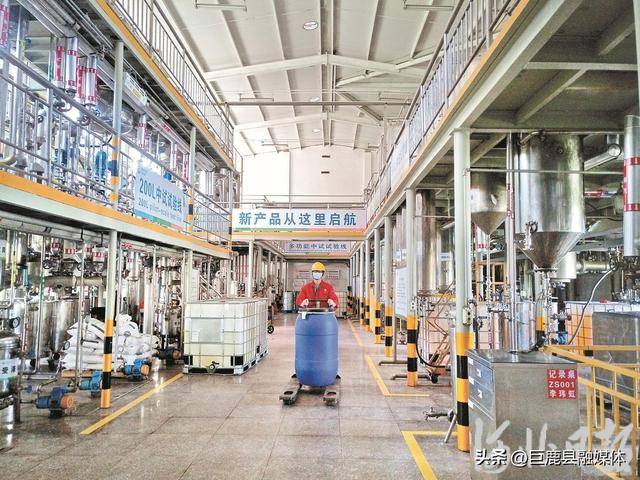
贷款不用抵押物,创新能力可变现,邯郸以创新积分巧解科创企业融资难
Sou Hu Cai Jing· 2026-02-25 02:10
Core Viewpoint - Handan City has implemented an innovative credit scoring system to facilitate financing for technology-driven enterprises, allowing them to secure loans without traditional collateral [1][3]. Group 1: Financing Innovations - The innovative credit scoring system enables companies like Jiqiao (Hebei) Metal Products Co., Ltd. to obtain loans based solely on their innovation scores, exemplified by a recent loan of 3 million yuan [3]. - Handan has provided loans totaling 84.2 billion yuan to 636 enterprises ranked high in innovation scores, demonstrating the effectiveness of this financing model [3][4]. Group 2: Technology and Financial Integration - The city has established a platform to connect high-quality tech enterprises with financial institutions, facilitating the launch of credit products like "Innovation Score Loan" and "Jike Digital Loan" [4]. - The innovation score system quantifies various aspects of a company's capabilities, including technological innovation and growth potential, allowing for tailored financial support [4]. Group 3: Insurance Innovations - The introduction of the "Jike Score Insurance" product links innovation scores to insurance premiums, providing discounts and government subsidies to high-scoring companies, thereby reducing their risk in R&D [5]. - Companies with higher innovation scores can receive up to a 40% discount on insurance premiums, significantly lowering the costs associated with innovation [5]. Group 4: Future Developments - By the end of 2025, Handan was selected as a pilot city for the Ministry of Science and Technology's innovation scoring system, aiming to expand the application of this scoring model [6]. - The city plans to develop a multi-layered financial service system to support technology-driven enterprises throughout their lifecycle, including loans and insurance products tailored to their specific needs [6].

惠州巧用“创新积分制” 广东省内首创“先代偿后补偿”政银担专项贷款
Jin Rong Shi Bao· 2026-01-22 02:13
Core Viewpoint - The People's Bank of China (PBOC) in Guangdong Province is implementing a "Corporate Innovation Points System" to address the information asymmetry between technology enterprises and financial institutions, aiming to enhance the financing capabilities of tech companies and lower their financing costs [1][2][3]. Group 1: Financing Models and Mechanisms - The PBOC has introduced a "pre-repayment and post-compensation" model for special loans, which has already provided 5.12 billion yuan in loans to first-time borrowers among small and medium-sized tech enterprises [3]. - The "Corporate Innovation Points System" platform in Huizhou has expanded its evaluation metrics to 40 indicators across five dimensions, significantly improving the loan approval process and increasing credit limits by 20%-50% compared to traditional financial products [2][3]. - A special loan risk compensation fund has been established, with an initial scale of 1 billion yuan and a total scale of 3 billion yuan, to encourage banks to increase lending to small enterprises [3][4]. Group 2: Operational Efficiency and Risk Management - The loan application process has been optimized to reduce approval times, allowing for quicker access to funds for enterprises in need [4]. - The risk compensation mechanism has been streamlined, ensuring that compensation payments are processed efficiently, with a maximum compensation amount of 80% of overdue principal and interest [4]. - The PBOC plans to continue refining its financial support system for tech enterprises, integrating various financial resources to enhance regional innovation [5].
成都企业,掀起IPO热潮
Sou Hu Cai Jing· 2026-01-21 09:36
Core Viewpoint - Chengdu enterprises are actively engaging in the capital market, with several companies from the semiconductor and biopharmaceutical sectors initiating IPO processes, indicating the city's growth vitality and potential in these industries [1][2]. Semiconductor Sector - The semiconductor industry in Chengdu is experiencing significant growth, with companies like Chengdu Super Pure Materials Co., Ltd. and Chengdu Starway Microelectronics Co., Ltd. leading the charge in IPO applications [3][4]. - Chengdu Super Pure Materials aims to raise 1.12468 billion yuan through its IPO, focusing on precision components for semiconductor manufacturing and optical fields, holding a 5.7% market share in mainland China [4][6]. - Chengdu Starway Microelectronics, founded in 2019, has initiated its A-share IPO process and has secured over 230 invention patents, emphasizing its strong R&D capabilities [6][8]. Biopharmaceutical Sector - Chengdu has a well-established biopharmaceutical industry, transitioning from generic drugs to innovative drug development, with companies like Zeling Biopharmaceutical Technology Co., Ltd. and Olin Bio leading recent IPO efforts [9][10]. - Zeling Biopharmaceutical completed a 600 million yuan Series C financing round and has submitted its IPO application to the Hong Kong Stock Exchange shortly after [10][13]. - Olin Bio, a veteran in the vaccine sector, has also applied for an H-share listing on the Hong Kong Stock Exchange, highlighting the ongoing growth in Chengdu's biopharmaceutical landscape [13]. Diverse Industry Growth - Chengdu is witnessing a surge in various sectors, with many companies characterized as "specialized, refined, and innovative" preparing for IPOs [14][18]. - Companies like Sentai Precision Tools Co., Ltd. and Hongming Electronics Co., Ltd. are making strides in their respective fields, with Sentai completing IPO counseling for the Beijing Stock Exchange and Hongming successfully passing the IPO review for the Shenzhen Stock Exchange [15][17]. - The "Rongyi Shang" system in Chengdu is facilitating a supportive environment for IPOs, with over 700 potential listing companies and 2,900 high-growth enterprises being nurtured [18].

支持成都市要素市场化配置综合改革试点
Xin Lang Cai Jing· 2026-01-13 18:49
Core Viewpoint - The Chengdu pilot program for market-oriented allocation of production factors aims to enhance efficiency and promote high-quality economic development by 2027 through a comprehensive reform initiative [2][4]. Group 1: Key Tasks and Goals - The reform plan includes 102 specific tasks across seven categories: land, technology, talent, data, and environment [2]. - The goal is to significantly improve the efficiency of factor allocation and complete all pilot tasks as mandated by the national government by 2027 [2][4]. Group 2: Mechanisms and Strategies - The pilot program emphasizes a collaborative approach between provincial and municipal levels to address major issues in implementation and reform [3]. - It aims to create a "Sichuan model" for market-oriented allocation of factors by integrating local resources and development strategies [3]. Group 3: Challenges and Solutions - The program seeks to address issues such as the smooth flow of factors, particularly in human resources, and improve the efficiency of resource allocation [4][5]. - Specific strategies include optimizing land use, enhancing the integration of technology and finance, and breaking down barriers to resource flow [5]. Group 4: Broader Implications - The pilot is designed to foster new pathways for factor supply, urban transformation, and regional coordinated development, leveraging Chengdu's role to benefit the entire province [5].
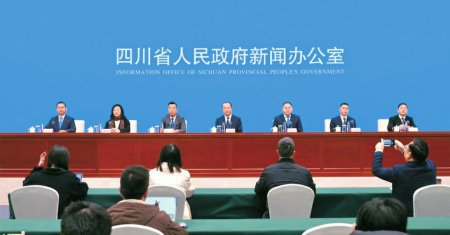
成都入围科技部创新积分制“揭榜挂帅”名单4项榜单
Zhong Guo Xin Wen Wang· 2025-12-29 17:34
Core Insights - Chengdu has been recognized for its innovative practices in technology governance, successfully entering all four categories of the "Innovation Points System" initiative, which includes developing a regional indicator system and expanding application scenarios [1] Group 1: Innovation Points System - Chengdu is one of the first cities in China to pilot the "Enterprise Innovation Points System," which uses points to evaluate and support enterprise innovation, helping to identify competitive "hard tech" companies [2] - The Chengdu Science and Technology Bureau has implemented a comprehensive indicator system consisting of six primary indicators and 55 secondary indicators to create an "innovation profile" for enterprises [2] Group 2: Financial Support for Enterprises - The "Points Loan" product, launched in collaboration with banks, allows enterprises to convert their innovation points into credit, with loan amounts up to 10 million yuan, facilitating a seamless online application process [2] - This model shifts the lending approach from "passive credit" where enterprises seek banks to "active credit" where banks identify suitable enterprises, effectively addressing the loan difficulties faced by high-quality tech SMEs [3] Group 3: Impact and Results - Chengdu has completed innovation profiles for over 46,000 enterprises, covering various industry chains and stages of development, with the "Points Loan" program disbursing 484 loans totaling 2.245 billion yuan since its launch in December 2023 [3]
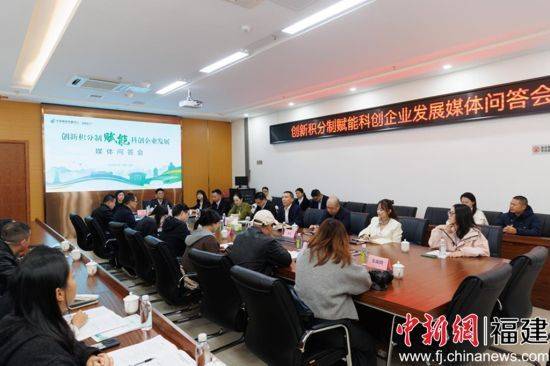
创新积分制赋能龙岩科创企业:小积分撬动政银企协同大能量
Sou Hu Cai Jing· 2025-12-04 02:09
Core Insights - The article discusses the innovative credit scoring system implemented in Longyan, Fujian, aimed at empowering technology-driven enterprises by addressing their financing challenges and facilitating technological advancements [1][9]. Group 1: Innovation Credit System - The innovation credit system is a national initiative designed to accurately identify and empower technology enterprises, with Longyan being the first in Fujian and the second nationwide to implement this system [1][2]. - The system utilizes a "20+N" evaluation framework, which includes 79 specific indicators across various dimensions such as technological innovation and management, to assess the innovation capabilities of enterprises [2][3]. Group 2: Financial Empowerment - The credit scoring system allows for the quantification of innovation capabilities, transforming them into "digital assets" that can be leveraged for financing, thus attracting quality resources for technology innovation [3][4]. - Financial institutions, such as Postal Savings Bank, have developed tailored loan products based on the credit scores, providing significant funding to enterprises like Fujian Fufang Technology Group and Fujian Qianglian New Materials [4][8]. Group 3: Collaborative Ecosystem - Longyan High-tech Zone has established a collaborative ecosystem involving government, banks, and enterprises, creating a seamless service system that integrates online and offline resources for better support [9][11]. - The integration of the credit scoring system with various policies and services aims to enhance the overall support for high-scoring enterprises, facilitating their growth and innovation [11].
张家港锻造更强经济韧性
Xin Hua Ri Bao· 2025-12-03 22:01
Core Insights - Zhangjiagang City ranks second in the national county economic competitiveness list, showcasing its strong economic resilience and growth potential [1] - The city has achieved a GDP of over 300 billion yuan, with a year-on-year growth of 5.4% in the first three quarters of the year [1] - Zhangjiagang is transforming its industrial base, moving from traditional steel production to advanced manufacturing, including aerospace and electric vehicles [1][2] Economic Performance - The city's industrial added value increased by 5.5% from January to October, driven by strong performance in key industries and emerging sectors [2] - The implementation of a smart energy management system by Shagang Group has reduced energy costs from 20%-40% to around 17% [2] Innovation and Development - Zhangjiagang has established an innovation committee and introduced an "enterprise innovation points system" to foster technological advancements [3] - The city hosts over 300 provincial-level specialized small and medium enterprises and more than 70 national-level "little giant" enterprises, contributing to a robust innovation ecosystem [3] Foreign Investment - Zhangjiagang has attracted over 1,000 foreign enterprises with a cumulative investment exceeding 35 billion USD, leveraging its unique port and policy advantages [3] - Significant foreign investment projects include expansions by Dow Chemical and DuPont, enhancing local industry integration [3] International Expansion - The city has initiated measures to support local enterprises in international markets, including the establishment of a city-level overseas service center and direct shipping routes [4] - Zhangjiagang's efforts to facilitate international cooperation have led to the creation of service guidelines for businesses looking to expand abroad [4] Strategic Initiatives - A strategic network for investment promotion has been established, targeting key economic regions in China, resulting in 777 companies visiting Zhangjiagang and nearly 8 billion yuan in investments [5] - The local government emphasizes a proactive approach to economic development, aiming to maintain resilience and growth amid challenges [5]
“四链融合” “中国造”越来越有分量了
Ren Min Wang· 2025-11-04 07:47
Core Insights - China has found a "golden key" to break through "bottleneck" technologies through a new type of national system under centralized leadership [1] - The concept of "four-chain integration" aims to facilitate the transformation of scientific achievements into industrial applications more efficiently [1] - The 20th National Congress of the Communist Party emphasized accelerating high-level technological self-reliance, which is a systematic elevation of valuable experiences from the 14th Five-Year Plan period [1] Investment and Innovation - A technology company in Bengbu, Anhui, has successfully mass-produced flexible foldable glass, which was previously dominated by foreign companies, showcasing China's technological self-reliance [3] - During the 14th Five-Year Plan period, R&D expenditure increased from 2.44 trillion yuan to 3.61 trillion yuan, maintaining the second position globally, with R&D intensity rising from 2.40% to 2.68%, surpassing the EU average for the first time [4] - By 2024, at least 21 out of 35 critical "bottleneck" technologies are expected to be broken through, supported by 77 major national scientific infrastructure projects [4] Mechanisms for Innovation - The "enterprise innovation points system" has helped a company in Zhejiang, founded by a returnee PhD, to secure funding without collateral, demonstrating a shift from traditional subsidy models to more innovative funding mechanisms [5] - The establishment of over 1,500 government-guided funds has mobilized more than 3 trillion yuan in social capital investments, indicating a robust investment ecosystem [5] Industry and Talent Integration - The Guangdong-Hong Kong-Macao Greater Bay Area exemplifies effective integration of industry and innovation chains, with leading enterprises collaborating with universities and research institutions [6] - The national technology contract transaction volume reached 6.8 trillion yuan in 2024, 1.8 times that of 2020, reflecting accelerated integration of innovation and industry [6] - The implementation of "dual-employment" mechanisms allows for talent mobility between academia and industry, fostering knowledge exchange and innovation [6] Future Outlook - The focus for the 15th Five-Year Plan will be on enhancing the new type of national system and deepening the integration of innovation, industry, finance, and talent [6] - Strengthening basic research and original innovation is essential for establishing a foundation for technological self-reliance [6]
科技+金融双向赋能!企业创新积分制、拨投结合激活新质生产力
Bei Ke Cai Jing· 2025-10-29 13:29
Group 1 - The core viewpoint emphasizes the need to strengthen the "technology-industry-finance" virtuous cycle to cultivate new productive forces [1] - The "enterprise innovation points system" is being promoted as a tool for evaluating and supporting enterprise financing, with a total credit limit of 224.2 billion yuan and loans issued amounting to 124.3 billion yuan as of April this year [4][6] - The Torch Center has been hosting the China Innovation and Entrepreneurship Competition since 2012, attracting over 350,000 participating enterprises and teams, with financing exceeding 1 trillion yuan from banks and venture capital institutions [7] Group 2 - The "拨投结合" mechanism supports leading and original projects through milestone-based financial support, allowing for equity conversion if market financing is achieved [9][12] - The Long Triangle National Technology Innovation Center has supported over 160 projects with an average investment of approximately 27 million yuan per project [10] - Hong Kong is positioned as a launch point for mainland enterprises going overseas, providing a favorable business environment and professional services to navigate international markets [13][15]

工信部:充分发挥科技型企业上市融资、并购重组、债券发行“绿色通道”机制 引导社会资本为重点领域和关键环节提供资金保障
news flash· 2025-05-15 10:17
Core Viewpoint - The Ministry of Industry and Information Technology (MIIT) aims to deepen the integration of technology and finance, focusing on fostering high-quality projects in key sectors such as biomanufacturing, artificial intelligence, digital technology, and low-altitude economy [1] Group 1: Project Development - MIIT will focus on identifying early-stage hard technology projects and connecting them with national innovation resources and financial support to promote the implementation of high-quality projects [1] - The initiative emphasizes the cultivation of quality projects in emerging fields, which is expected to enhance the overall innovation landscape [1] Group 2: Financing Support - MIIT plans to leverage mechanisms such as the "green channel" for financing through public offerings, mergers and acquisitions, and bond issuance to ensure funding for key areas and critical links [1] - The strategy aims to guide social capital towards providing sustainable funding through multiple channels [1] Group 3: Financial Tool Innovation - There will be a strategic collaboration with financial institutions to optimize the combination of financial tools, promoting the application of the "pilot insurance + R&D loan" model to boost market confidence among pilot project parties and investors [1] Group 4: Innovation Capability Evaluation - MIIT will promote the application of an enterprise innovation point system, facilitating collaboration with quality enterprise cultivation and technology achievement transformation [1] - The initiative aims to guide financial institutions in refining financial products and services to empower the innovative development of technology-based enterprises [1]