
科技-产业-金融良性循环

Search documents
“耐心资本+创新保单”两端发力 险资探索服务硬科技新模式
Zhong Guo Zheng Quan Bao· 2026-01-28 00:17
Core Insights - Insurance capital is actively exploring new methods to support technology innovation enterprises, transitioning towards a dual-driven model of "patient capital + innovative insurance policies" [1][2] Group 1: Investment Strategies - Insurance funds are diversifying their investment tools, including stocks, bonds, funds, and alternative investments, to support sectors like integrated circuits, artificial intelligence, and biomedicine [1][2] - A comprehensive investment support system has been established, covering the entire financing cycle from seed stage to maturity for technology enterprises [2][3] Group 2: Focus on Emerging Industries - Leading insurance institutions are making significant investments in high-tech sectors, emphasizing the importance of adapting investment strategies to support traditional industry upgrades and the development of emerging industries [3][4] - The long-term nature of insurance capital, with an average liability duration of about 13 years, allows it to provide stable funding for technology enterprises at various growth stages [3][4] Group 3: Investment Management Capabilities - Insurance capital needs to enhance its investment management capabilities to align with the development of new productive forces, including establishing a research and assessment system tailored for early-stage and hard technology investments [4][5] - A deep understanding of industry trends and precise project selection are essential for insurance institutions to effectively support innovation and address challenges faced by invested companies [4][5] Group 4: Insurance Products for Innovation - The insurance industry is expanding its product offerings to provide comprehensive risk coverage for high-tech enterprises, facilitating the transition of technology innovations from laboratories to production lines [6][7] - New insurance products are being developed for emerging fields such as integrated circuits, low-altitude economy, and commercial aerospace, reflecting a proactive approach to risk management in technology sectors [6][7] Group 5: Policy Support and Market Dynamics - Local governments are introducing policies to encourage insurance institutions to engage in research and innovation in cutting-edge technologies, creating a stable foundation for technology insurance [6][7] - The insurance mechanism's early involvement in the innovation process is crucial for stabilizing the pace of technological advancements and ensuring sustainable development [6][7]
“金蓉汇聚 质创未来”金融服务新质生产力发展大会即将启幕
Jin Rong Jie· 2026-01-21 01:27
Group 1 - The conference "Jinrong Huiju, Quality Creates the Future" aims to explore systematic paths for financial empowerment of technological innovation and industrial upgrading, focusing on the development of new quality productivity in the context of the 14th Five-Year Plan [1][2] - The event will feature discussions on how to align financial services with modern technological innovation, with insights from international and domestic experts on investment logic and the role of capital in next-generation technological innovation [1][2] - A roundtable dialogue will focus on building a virtuous cycle among technology, industry, and finance, addressing barriers to the efficient integration of capital, technology, and talent [1][2] Group 2 - The conference will include specialized discussions aimed at addressing the differentiated needs of growth-oriented enterprises and listed companies, particularly focusing on the "pilot" pain points faced by technology-based SMEs in the transformation of achievements [2] - A special financial service plan will be launched on-site by the Bank of China Sichuan Branch to support technology-based SMEs [2] - The event will mark the initiation of the "Financial Ecological Alliance" and "Industrial Fund Cooperation Ecosystem Partners," signifying a substantial step towards building a comprehensive financial service ecosystem [2] Group 3 - The Bank of China Sichuan Branch integrates its development with national strategies, leveraging its global advantages to support the cultivation of new quality productivity, particularly in six key industries and six technological specialties [3] - Over the past five years, the bank has supported the development of strategic emerging industries, achieving a loan balance of over 93 billion yuan for strategic emerging industries, with an annual growth rate of nearly 50% [3] - The bank has provided services to over 4,100 enterprises, with an annual growth rate exceeding 42%, and has a technology finance loan balance of nearly 70 billion yuan, growing at over 33% annually [3] Group 4 - Penghua Fund, a long-established fund company, emphasizes a long-term approach and integrates investment research to support the development of the real economy and wealth growth [4] - The fund has developed a complete ecosystem of science and technology ETFs, launching 12 products with a total scale of nearly 40 billion yuan, covering various strategies and themes [4] - This product matrix allows investors to flexibly allocate assets across a range of technology leaders and emerging stars, facilitating investment in China's technological future [4] Group 5 - The Bank of China Sichuan Branch and Penghua Fund will continue to enhance financial service systems, innovate financial products, and strengthen collaboration mechanisms to better support innovation and drive high-quality economic development [5]

数据彰显活力 共振效应显现资本市场服务新质生产力打开新空间
Xin Lang Cai Jing· 2026-01-20 20:57
Core Insights - China's economy is exhibiting a clear characteristic of "moving towards new" with the continuous development of new productive forces, indicating a rapid formation of a virtuous cycle among technology, industry, and finance [1][5] Economic Performance - In 2025, China's R&D expenditure intensity reached 2.8%, surpassing the OECD average for the first time, with total R&D spending amounting to 39,262 billion yuan [2] - China ranked in the top ten globally for innovation index and became the first country with over 5 million valid domestic invention patents [2] - The production value of high-end equipment, green energy, and smart manufacturing sectors is increasing, with the added value of high-tech manufacturing reaching 17.1% of total industrial added value [3] Capital Market Dynamics - By the end of 2025, the market capitalization of the ChiNext and STAR Market accounted for 14.49% and 9.53% of the total A-share market, respectively, showing significant growth from 2020 [4] - High-tech industries, particularly in manufacturing and technology services, saw substantial market capitalization increases of 33.3% and 32.1%, respectively [4] - The technology electronics sector surpassed the banking sector to become the largest sector in the A-share market, reflecting a shift in economic structure towards high-tech and emerging industries [4] Relationship Between Capital Market and Economic Development - The relationship between the capital market's structural changes and the new productive forces is characterized by a dynamic coupling that enhances both sectors [5][6] - The capital market serves as a "multiplier" and "incubator" for new productive forces, providing lifecycle capital support through a unique mechanism of risk-sharing and benefit-sharing [6] Future Outlook for Capital Market - The China Securities Regulatory Commission aims to enhance the inclusiveness and adaptability of the multi-tiered equity market to better serve high-quality development [7] - Reforms in 2026 will focus on improving institutional adaptability and creating a new framework that attracts quality capital through high-level innovation [8][9] - Emphasis will be placed on fostering a market ecosystem that supports long-term capital investment and encourages innovation through improved disclosure and governance practices [9]
“微”观行业之变|从一只AIC探索设立的70亿元母基金看耐心资本如何浇灌硬科技
Xin Hua Cai Jing· 2026-01-09 04:41
Core Viewpoint - The Shenzhen Jianyuan Zhengxing Fund, a 7 billion yuan mother fund, is accelerating its operations and aims to leverage its structure to enhance investment in key industries, particularly in hard technology sectors [1][2]. Group 1: Fund Structure and Strategy - The Jianyuan Zhengxing Fund is initiated by several entities including Jianxin Financial Asset Investment Company and aims to expand its scale to over 20 billion yuan through the establishment of sub-funds [2]. - The mother fund structure allows for diversified investments across various sectors, addressing the limitations of direct investment funds in covering the broad "20+8" industrial cluster in Shenzhen [2][3]. - The fund's strategy includes collaborating with specialized investment institutions to enhance industry insights and project identification, thereby improving investment outcomes [3]. Group 2: Evolution of AIC's Role - The evolution of AIC from primarily engaging in debt-to-equity swaps to becoming a "patient capital" provider reflects a significant shift in its operational focus [4][6]. - AIC's recent policy changes have expanded its investment capabilities, allowing for direct equity investments and enhancing its role in supporting long-term financing for technology enterprises [5][6]. - The transition from a risk management tool to an active participant in the growth cycle of enterprises positions AIC as a crucial link between financial capital and technological innovation [6][7]. Group 3: Challenges and Future Outlook - AIC faces challenges such as misalignment in incentive mechanisms, short assessment cycles, and insufficient risk tolerance in equity investments [7][8]. - Recommendations for AIC's future include enhancing long-term performance evaluation systems and fostering deeper collaboration with local governments and industry funds to create a sustainable technology finance ecosystem [8].
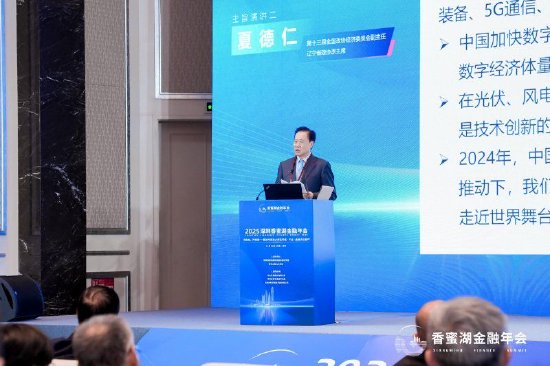
夏德仁:大湾区需加快补齐研发投入短板,以金融创新推动科技产业循环
Xin Lang Cai Jing· 2025-12-21 08:53
Core Viewpoint - The second "Shenzhen Xiangmi Lake Financial Annual Conference" emphasizes the importance of promoting a virtuous cycle among technology, industry, and finance in the Guangdong-Hong Kong-Macao Greater Bay Area as a key agenda for China's development [3][8]. Group 1: Technology-Finance Integration - The integration of technology innovation and industrial innovation is a national strategic priority, with modern finance, especially technology finance, playing a crucial role [3][8]. - Technology finance is not only a funding channel but also a risk-sharing partner for technology and industry, creating a community of shared fate where financial returns are closely linked to technological innovation outcomes [3][8]. Group 2: Recent Progress in Technology Finance - Significant progress has been made in technology finance services, with the special re-lending tool quota increasing to 800 billion yuan, and over one million technology enterprises receiving bank services [4][9]. - As of September this year, the proportion of new technology loans accounted for over 30% of all new loans, with a loan acquisition rate exceeding 50% for technology-based SMEs [4][9]. - The capital market has strengthened support, with nearly 70% of new companies listed on the Shanghai Stock Exchange in the past five years being technology innovation enterprises [4][9]. Group 3: Challenges and Recommendations - The Guangdong R&D investment intensity is projected to be 3.6% in 2024, significantly lower than Beijing's 6.58% and Shanghai's 4.37%, indicating an urgent need to address R&D shortcomings in the Greater Bay Area [4][9]. - Recommendations include improving financial products and services for the entire lifecycle of technology enterprises, developing venture capital funds, and establishing a risk-sharing mechanism involving government, enterprises, and insurance institutions [5][10]. - Encouraging pilot projects in cutting-edge areas such as smart investment advisory, digital currency, and financial AI, while enhancing the "investment-loan linkage" mechanism in commercial banks is also suggested [5][10].

深圳何以盛产“少年上市公司”?
Xin Lang Cai Jing· 2025-12-09 13:41
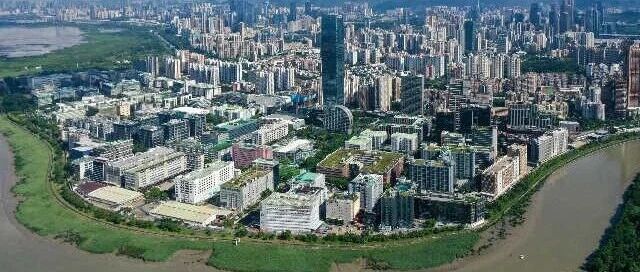
Core Insights - Shenzhen has successfully listed 121 companies within ten years of their establishment, outperforming the national average, highlighting the region's favorable business environment [1][9] - The article emphasizes Shenzhen's innovative policies and supportive ecosystem that facilitate startups in overcoming challenges and achieving growth [1][9] Group 1: Young Listed Companies - Shenzhen has produced a significant number of "young listed companies," with 121 firms achieving IPO status in under ten years, including notable names like BYD and Dazong Laser [1][3][10] - The majority of these companies are leaders in niche markets, with many being the first in their respective industries, such as the "first stock" in various sectors [3][11] Group 2: Innovation and Resource Transformation - The success of these young companies is attributed to Shenzhen's "20+8" industrial cluster, which focuses on strategic emerging industries and future industries [3][12] - Shenzhen has cultivated a large group of innovative enterprises, resulting in a robust pipeline of resources for public listings, with 347 new specialized "little giant" companies added this year [3][12] Group 3: Government Support and Policies - The Shenzhen government has implemented various supportive policies to encourage company listings, creating a nurturing environment for startups and growth-stage companies [5][13] - The city has established a comprehensive system to support businesses at different stages, from incubation to public listing, with a focus on private enterprises [5][13] Group 4: Financial Ecosystem - Shenzhen's financial ecosystem is characterized by a multi-layered and specialized capital structure, with over 1.5 trillion yuan in private equity and venture capital funds [7][15] - The city hosts regular events like "Shenzhen Venture Capital Day" to connect innovative companies with global capital, facilitating significant funding agreements [7][15] Group 5: Capital and Investment Strategies - The local government has established investment funds that have mobilized nearly 500 billion yuan, contributing to the listing of around 600 companies [8][16] - Shenzhen aims to create a "double ten thousand" framework by 2026, targeting a substantial increase in the number of investment funds and promoting early-stage investments in technology [8][16]




121家企业不满10岁即上市:深圳上市公司何以“少年感”十足?
Di Yi Cai Jing· 2025-12-09 10:07
Core Viewpoint - Shenzhen has seen a surge in young companies going public, with 121 companies listed within ten years of establishment, driven by innovation resources, supportive policies, and active financial capital [1][2][3] Group 1: Young Companies and Market Dynamics - Shenzhen has produced a significant number of "young listed companies," with 121 companies achieving this milestone, including notable firms like BYD and Dazong Laser [1][3] - Many of these companies are leaders in niche markets, with examples including BYD as the "first stock" in Chinese automotive and Dazong Laser as the "first stock" in domestic laser equipment [3] - The "20+8" industrial cluster in Shenzhen has been a primary source for new listings, reflecting both market trends favoring tech companies and Shenzhen's commitment to building an innovation ecosystem [3][4] Group 2: Innovation and Supply Chain Advantages - Shenzhen's focus on innovation has led to a large number of high-tech enterprises, with over 25,000 national high-tech companies as of 2024, the highest density in China [4] - The region's supply chain capabilities allow for rapid product development, with 90% of components available within a one-hour drive, facilitating quick transitions from design to production [4][5] - Companies like YingShi Innovation and YueJiang Robotics have relocated to Shenzhen to leverage its superior supply chain resources, significantly enhancing their operational efficiency [5][6] Group 3: Government Support and Policies - The Shenzhen government has implemented various supportive policies to foster company listings, including a comprehensive nurturing system for market entities [7][8] - As of now, Shenzhen has approximately 590 listed companies, with over 540 on A-share and Hong Kong markets, ranking among the top cities in China [7] - The government has established a one-stop service platform for companies seeking to go public, which has been emulated by other regions [8] Group 4: Financial Ecosystem and Capital Support - Shenzhen has developed a multi-layered financial ecosystem, with private equity and venture capital funds exceeding 1.5 trillion yuan, supporting around 14,000 companies [10][11] - Initiatives like "Shenzhen Venture Day" have facilitated connections between innovative companies and global capital, resulting in significant funding agreements [10][12] - The city aims to create a robust capital market that aligns with high-quality economic development, with a focus on technology-driven enterprises [12]
121家企业不满10岁即上市,深圳盛产上市“少年兵”
Di Yi Cai Jing Zi Xun· 2025-12-08 10:41
Core Viewpoint - Shenzhen has seen a surge in young companies going public, with 121 companies listed within ten years of establishment, driven by innovation resources, supportive policies, and active financial capital [2][3][4]. Group 1: Young Companies and Market Dynamics - A total of 121 companies in Shenzhen have successfully gone public within ten years, including notable firms like BYD and Dazong Laser [2][4]. - Many of these young companies are leaders in niche markets, with some being the first in their respective industries [4]. - The "20+8" industrial cluster in Shenzhen has become a primary source for new public companies, reflecting both market trends and local policy choices [5]. Group 2: Innovation and Supply Chain Advantages - Shenzhen's innovation ecosystem is characterized by a strong supply chain network, allowing rapid product development and prototyping [6][7]. - The region's "1-hour industrial circle" enables efficient procurement of components, significantly shortening the time from design to production [6]. - Companies like YingShi Innovation and YueJiang Robotics have relocated to Shenzhen to leverage its supply chain advantages [7]. Group 3: Government Support and Policies - Shenzhen's government has implemented various supportive policies to facilitate company listings, including a comprehensive nurturing system for market entities [8][9]. - The city has established a one-stop service platform for companies seeking to go public, which has been replicated nationwide [9]. - Recent measures aim to enhance the quality of listed companies and expand the pool of potential listings [10]. Group 4: Capital Market and Financial Ecosystem - Shenzhen has developed a multi-layered capital ecosystem, with over 1.5 trillion yuan in private equity and venture capital funds [11]. - The city hosts regular events like "Shenzhen Venture Capital Day" to connect innovative companies with global capital [11]. - Government investment funds have played a significant role in supporting nearly 600 companies to go public [12]. Group 5: Impact of Capital Markets on Technology Companies - The capital market in Shenzhen has effectively supported technology companies, with a significant percentage of IPOs coming from the tech sector [13]. - The continuous interaction between technology, industry, and finance in Shenzhen exemplifies a successful model for fostering innovation and growth [13].

121家企业不满10岁即上市,深圳盛产上市“少年兵”
第一财经· 2025-12-08 09:51
Core Viewpoint - Shenzhen has seen a surge in young companies going public, with 121 companies established for less than ten years successfully listing, driven by innovation resources, supportive policies, and financial capital [3][4][6]. Group 1: Young Companies and Market Dynamics - Shenzhen has produced a significant number of "young listed companies," with 121 companies achieving this milestone, including notable firms like BYD and Dazong Laser [3][6]. - Many of these companies are leaders in niche markets, with some becoming the first in their respective industries to go public [6]. - The "20+8" industrial cluster in Shenzhen is a primary source of these new listings, reflecting both market trends and the city's commitment to fostering an innovative ecosystem [6][7]. Group 2: Innovation and Resource Transformation - Shenzhen's focus on enterprise-led innovation has resulted in a large pool of innovative companies, contributing to the listing resource dividend [7]. - The city has over 25,000 national high-tech enterprises, leading the nation in density, and has a significant number of specialized "little giant" companies [7]. - The local supply chain network allows for rapid product development, with 90% of components available within an hour's drive, facilitating quick transitions from design to production [7][8]. Group 3: Policy Support - Shenzhen's government has implemented various supportive policies to nurture companies from inception to public listing, including a comprehensive cultivation system for market entities [10][11]. - The city has established a one-stop service platform for companies seeking to go public, which has been replicated nationwide [11]. - Recent measures aim to enhance the quality of listed companies and expand the pool of potential listings through targeted policies [11][12]. Group 4: Capital Market and Financial Ecosystem - Shenzhen has developed a multi-layered capital ecosystem, with private equity and venture capital funds exceeding 1.5 trillion yuan, supporting a large number of enterprises [14][15]. - The city hosts regular events like "Shenzhen Venture Capital Day" to connect innovative companies with global capital, facilitating significant funding agreements [14][15]. - Government investment funds have played a crucial role in supporting nearly 600 companies to go public, with a focus on long-term investment strategies [15][16].
121家企业不满10岁即上市:深圳何以盛产上市“少年兵”
Di Yi Cai Jing· 2025-12-08 08:09
Core Viewpoint - Shenzhen has seen a surge in young companies going public, driven by the transformation of innovation resources, supportive policies, and financial capital [1][2][3] Group 1: Young Companies Going Public - In the past week, seven Shenzhen tech companies submitted listing applications in the Hong Kong market, including companies like Ledong Robotics and Xihua Technology, many of which are under ten years old [1] - As of now, Shenzhen has 121 companies that have successfully gone public within ten years of establishment, including notable firms like BYD and Dazong Laser [1][3] - The emergence of these young companies is attributed to Shenzhen's long-term focus on high-tech industries, attracting talent and entrepreneurial ventures [2] Group 2: Resource Transformation - Many of the listed companies are leaders in their respective niche markets, with some being the first in their industries, such as BYD as the "first stock" in the Chinese automotive sector [3] - The "20+8" industrial cluster in Shenzhen has become a primary source for new public companies, reflecting both market trends and the city's commitment to fostering an innovative ecosystem [3][4] Group 3: Innovation and Supply Chain - Shenzhen has cultivated a large group of innovative enterprises, with over 25,000 national high-tech companies, the highest density in the country [4] - The city has developed a robust supply chain network, allowing for rapid product development and manufacturing, which is crucial for tech companies [4][5] Group 4: Policy Support - Shenzhen's government has implemented various supportive policies to facilitate company listings, including a comprehensive nurturing system for market entities [7][8] - The city has established a one-stop service platform for companies seeking to go public, which has been replicated nationwide [8] Group 5: Financial Capital - Shenzhen has a well-established financial ecosystem, with over 1.5 trillion yuan in private equity and venture capital, supporting around 14,000 companies [10][11] - The city hosts regular events like "Shenzhen Venture Capital Day" to connect innovative companies with global capital [10] - Government investment funds have played a significant role in promoting company listings, with over 600 companies listed due to these initiatives [11]