
创新成果转化

Search documents
光谷发布首批400项创新应用场景清单,打通创新成果转化“最后一公里”
Chang Jiang Ri Bao· 2026-02-06 01:02
Core Viewpoint - The East Lake High-tech Zone has officially released the first batch of 400 innovative application scenarios for 2026, aiming to bridge the gap in the transformation of innovative achievements and provide a platform for showcasing new technologies and products [1][2]. Group 1: Application Scenarios - The first batch of application scenarios covers five key areas: new fields and tracks, industrial transformation and upgrading, deep application in various industries, innovative social governance, and enriching people's livelihoods [2]. - The typical application scenario list includes 10 benchmark cases such as the Hubei humanoid robot innovation development application platform and the immersive smart cultural tourism project [2]. - The demand scenario list includes 120 opportunities for new technologies and products to be tested and validated in the East Lake area, focusing on system deployment and multi-party co-construction [2]. - The supply scenario list integrates regional innovation resources, featuring 270 capabilities such as semiconductor testing and robot interaction systems, promoting "excellent solutions" from the East Lake area [2]. Group 2: Implementation Measures - The East Lake High-tech Zone has introduced an implementation plan to enhance the scene innovation work system, proposing eight specific measures to address bottlenecks in scenario matching and innovation transformation [3]. - The plan includes annual selection of benchmark scenarios, with rewards for enterprises that successfully validate and promote their solutions to the national market [3]. - The policy aims to provide clear application entry points and market validation spaces for new products, addressing industry pain points effectively [3].
光谷发布400项场景清单,为创新提供“应用土壤”
第一财经· 2026-02-05 08:27
Core Viewpoint - The article discusses the launch of the first batch of 400 innovation application scenarios by Wuhan Optics Valley, aimed at bridging the gap between new technologies and their practical applications, thereby avoiding the stagnation of these technologies into "old technologies" [2]. Group 1: Innovation Application Scenarios - The innovation application scenarios focus on five key areas: new fields and tracks, industrial transformation and upgrading, deep application in industries, innovative social governance, and enriching people's livelihoods [2]. - The typical application scenarios include ten benchmark cases such as the Hubei humanoid robot innovation development platform and the immersive smart cultural tourism project [2]. Group 2: Demand and Supply Scenarios - A total of 120 demand scenarios have been identified, covering various fields including 41 new fields and tracks, 17 industrial transformations, 5 deep industry applications, 25 social governance, and 32 livelihood services [3]. - The supply scenario list includes 270 high-quality supply options, with 92 in new fields and tracks, 68 in industrial upgrades, 9 in industry applications, 34 in social governance, and 67 in livelihood services [3]. Group 3: Impact and Future Plans - The release of the three lists is seen as a bridge for enterprises to implement new technologies and products, providing clear application entry points and market validation spaces, which will significantly enhance supply-demand matching efficiency [4]. - Future plans include establishing a dynamic update and management mechanism for the three lists, promoting deeper integration of open scenarios with key industry developments to continuously optimize the innovation ecosystem in Optics Valley [4].


光谷发布400项场景清单,为创新提供“应用土壤”
Di Yi Cai Jing Zi Xun· 2026-02-05 08:17
Core Insights - The release of the first batch of 400 innovation application scenarios by Wuhan Optics Valley aims to bridge the gap between new technologies and their practical applications, addressing the challenge of crossing the "application chasm" [1] Group 1: Innovation Application Scenarios - The application scenarios focus on five key areas: new fields and tracks, industrial transformation and upgrading, deep industry applications, innovative social governance, and enriching people's livelihoods [1] - The typical application scenarios include ten benchmark cases such as the Hubei humanoid robot innovation development platform and the immersive smart cultural tourism project [1] Group 2: Demand and Supply Scenarios - A total of 120 demand scenarios have been identified, covering various fields including low-altitude economy operations and humanoid robots, with 41 in new fields, 17 in industrial transformation, and 25 in social governance [2] - The supply scenario list includes 270 high-quality supply options, with 92 in new fields and tracks, 68 in industrial upgrades, and 67 in livelihood services, aimed at promoting "Optics Valley excellent solutions" [2] Group 3: Industry Response and Future Plans - Industry representatives believe that the three lists released will effectively address common industry pain points and provide clear application entry points for new technologies and products [3] - The local government plans to establish a dynamic update and management mechanism for the three lists to continuously optimize the innovation ecosystem in Optics Valley [3]
打通创新成果转化“最后一公里”
Xin Lang Cai Jing· 2026-01-30 22:49
Group 1 - The core viewpoint emphasizes the importance of promoting collaborative efforts between industry, academia, and research to enhance technological innovation and the transformation of achievements into new productive forces [3] - Current challenges in the province include a disconnect between the supply of innovative results and industrial demand, as well as a lack of diverse cooperation models, which hinder the cultivation of new productive forces [3] - A proposal suggests strengthening modern industrial research institutes to facilitate the industrialization of innovative results, including establishing a management system led by a council and introducing top experts for decision-making support [3] Group 2 - The proposal includes establishing a cooperative mechanism between universities and local governments, implementing a joint meeting system to enhance collaboration across the entire industrial chain from results cultivation to commercial operation [3] - There is a need to improve the training system for technology managers, including enhancing evaluation and incentive mechanisms for technology transfer in universities and forming specialized teams to provide incubation services [3] - The establishment of industrial colleges is suggested to effectively connect the education chain, talent chain, industrial chain, and innovation chain, focusing on advantageous industries and future new tracks [4]
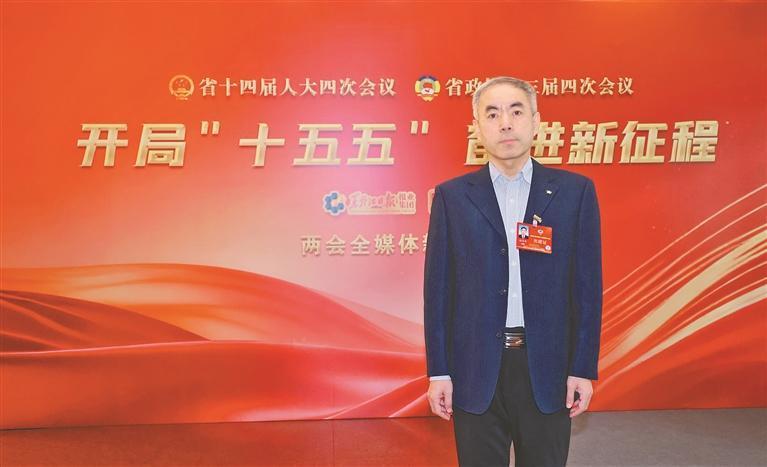
AI不只是赋能生物制造更是产业逻辑的重塑
Bei Jing Shang Bao· 2026-01-28 16:20
Core Insights - Huaxi Bio is a leading company in the biomanufacturing sector, involved in various fields including active substances, pharmaceuticals, medical aesthetics, functional skincare, and food [1] - The company emphasizes the importance of innovation in the face of increasing competition in the market for mature medical beauty biomaterials, highlighting the need for collaboration among research institutions, enterprises, and government [1][2] Group 1: Innovation and Market Transformation - The main challenge for innovative companies is the market transformation of new products, with current bottlenecks related to intellectual property protection and the lack of effective mechanisms for collaboration between researchers and enterprises [2] - The company calls for government intervention to establish rules and standards that facilitate collaboration between researchers and businesses, aiming to increase the current transformation rate of less than 10% to 30% or even 40% during the 14th Five-Year Plan period [2] Group 2: AI Integration and Industry Evolution - The arrival of AI is seen as a transformative force in the biomanufacturing industry, reshaping business logic and organizational structures, with companies needing to embrace AI to survive [2][3] - AI has also narrowed the gap between China and developed countries in the field of biotechnology, enabling a form of "equalization" in the innovation process [3]

港澳委员为大湾区支招:借力全运经验 打通科创堵点
Xin Lang Cai Jing· 2026-01-26 12:48
Group 1: Core Perspectives - The Guangdong Provincial Political Consultative Conference is focusing on multi-dimensional suggestions for high-quality development in the Greater Bay Area, emphasizing sports collaboration, industrial integration, talent cultivation, and public welfare connectivity [1][2]. Group 2: Sports Collaboration - Sports are seen as a new bond for the integration of Guangdong, Hong Kong, and Macau, with a focus on creating event IPs. The 15th National Games have established a mature cross-regional collaboration mechanism for hosting events [1]. - Suggestions include leveraging the influence of the National Games to promote sports development in the Bay Area and jointly bidding for the Asian Cup to enhance international visibility [1]. Group 3: Industrial Integration and International Cooperation - Proposals include hosting a joint football league by Guangdong, Hong Kong, and Macau, building on the successful experience of the National Games [2]. - Emphasis on complementary advantages and innovation transformation, with suggestions for Hong Kong to align with national strategies and deepen cooperation with Macau [2]. - A proposal for a cross-border pilot platform in the Greater Bay Area to facilitate the transition from research and development to production, utilizing policy benefits from specific cooperation zones [2]. Group 4: Talent Cultivation and Education - Talent cultivation and educational collaboration are highlighted, with a proposal for a youth talent collaboration plan between Guangdong and Macau, utilizing AI algorithms for job matching [2]. - The establishment of an international education city in Macau is suggested to attract world-class universities and create a talent pool for the Bay Area [3]. Group 5: Public Welfare and Connectivity - Continuous improvement in the "soft connectivity" of public services in the Bay Area is emphasized, with suggestions to enhance transportation efficiency and policy coordination [3]. - Recommendations for improving healthcare connectivity include accelerating the establishment of medical data exchange systems and promoting collaboration between medical institutions and insurance companies for cross-border medical services [3]. - Notably, a number of proposals from the Guangdong Provincial Political Consultative Conference have been transformed into specific policies to promote integration in the Greater Bay Area [3].
山东泰安:汇聚青年力量 践行国企担当
Zhong Guo Jin Rong Xin Xi Wang· 2026-01-13 13:18
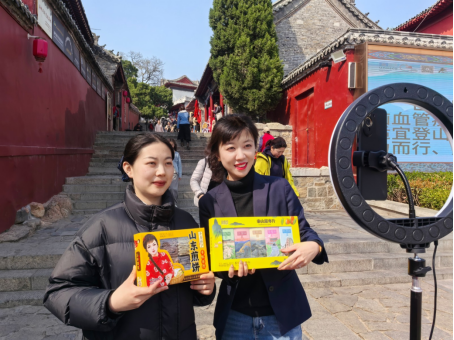
Core Viewpoint - The company, Taishan Tobacco, has actively engaged its youth team to implement innovative service strategies and community support initiatives, enhancing retail operations and contributing to local economic development [1][2][4][6]. Group 1: Youth Engagement and Service Initiatives - Taishan Tobacco has launched the "Three Hearts Service Method" to assist retail clients, providing over 117 on-site services to more than 70 elderly retailers [1] - The youth team has conducted over 100 marketing sessions in retail stores, totaling more than 500 hours of support [1] - The company has established the "Innovation Studio" and "Youth Task Force" to address business challenges and promote innovation [1] Group 2: Digital Transformation and Retail Support - The youth team has pioneered the "AI + Live Streaming" model to enhance traditional retail, integrating cultural elements to drive consumer engagement [1] - Customized marketing materials, including short video scripts and promotional posters, have been developed for over 20 retail outlets in scenic areas [1] Group 3: Community and Social Responsibility - The youth team has provided tailored support to struggling retailers, such as a supermarket facing operational difficulties, through a comprehensive assistance plan [4] - Community initiatives include the "Micro Wish" program, which supports children with disabilities and enhances local convenience stores with additional services [4][6] Group 4: Future Directions - Taishan Tobacco plans to focus on "standardized, scenario-based, and digitalized" services to optimize its service system and foster innovation [6] - The company aims to enhance its "Party Building + Youth Service" brand to contribute to high-quality development and local economic growth [6]
60项青年科创成果齐亮相,创新场景挑战赛汇集“金点子”
Xin Lang Cai Jing· 2025-12-26 12:55
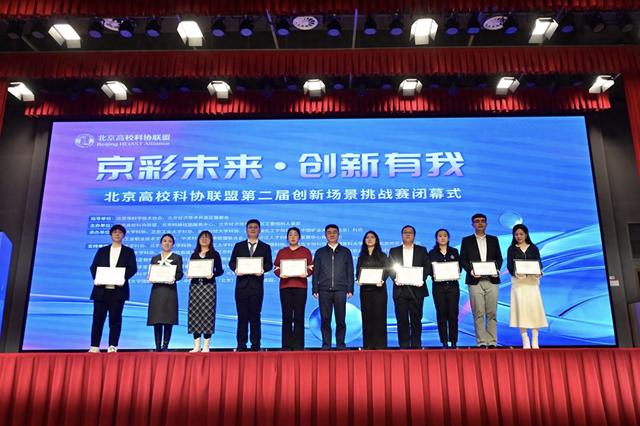
Core Insights - The "Beijing Future · Innovation is Me" second Innovation Scenario Challenge concluded on December 26, showcasing 60 innovative research ideas from six professional tracks, including future information, health, manufacturing, energy, materials, and creativity [1][3]. Group 1: Event Overview - The challenge gathered nearly 400 innovative results from 30 universities and research institutions, with a professional jury evaluating 10 outstanding achievements in each track based on industrial needs and technological strength [3]. - The event featured five matchmaking sessions, allowing participating teams to engage with representatives from relevant enterprises, industry authorities, and investment institutions for potential collaboration and application of their innovations [5]. Group 2: Notable Innovations - In the future manufacturing track, a "network-computing-control integrated intelligent open industrial control system" was highlighted, which integrates advanced technologies to achieve interconnectivity among equipment, systems, and data [3]. - The "Beidou Smart Measurement - Low-Cost Beidou Multi-Information Water Level Monitoring System" from China University of Mining and Technology (Beijing) demonstrated significant potential in hydrological monitoring, featuring a complete system architecture including hardware, software, and data processing algorithms [5].
刘庆谈创新成果转化:研发作为产业、技术作为商品
Zhong Guo Xin Wen Wang· 2025-12-16 14:14
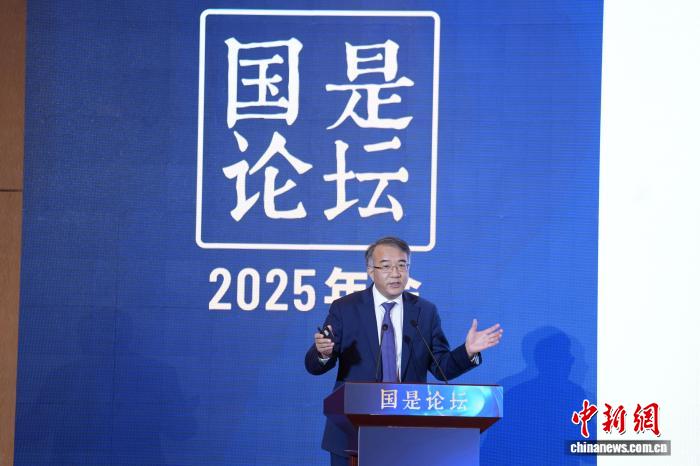
Core Viewpoint - Liu Qing emphasizes the importance of integrating technological innovation with industrial application, referring to the transformation of scientific research into marketable technology as a critical process for development [1][3]. Group 1: Platform Development - The Yangtze River Delta National Technology Innovation Center has established 110 research and development platforms with over 16,000 researchers [3]. - Most research institutes operate under a corporate mechanism, functioning as a group company that holds stakes in several small R&D firms [3]. Group 2: Resource Allocation - Liu Qing advocates for aligning innovation resources with the "real needs" of enterprises, particularly in fields such as electronic information, advanced materials, energy and environmental protection, and biomedicine [3]. - A specialized team of over 200 technical managers collaborates with companies to conduct market research, validate R&D plans, assess funding needs, and refine business plans [3]. Group 3: Innovative Financing - To address the challenges of early-stage financing for pioneering technologies, Liu Qing proposes a "拨投结合" (allocation and investment combination) model to support major innovation projects [4]. - This model involves providing initial R&D funding based on comprehensive project evaluation, which can later be converted into investment as the project gains market recognition [4]. Group 4: Bridging Global Innovation - The primary role of the Yangtze River Delta National Technology Innovation Center is to build two bridges: one from science to industry and another connecting global innovation resources to the Yangtze River Delta [4]. - The center has established 10 overseas representative offices and collaborated with 98 national strategic partner universities, facilitating over 250 international R&D collaborations [4]. Group 5: Achievements in Technology - The new R&D institution has made significant strides in overcoming critical technologies, such as single crystal blades for aircraft engines, and has nurtured semiconductor unicorn companies valued at billions [5].
中关村如何继续做创新的领头羊?
Bei Jing Wan Bao· 2025-11-12 07:45
Core Insights - Zhongguancun is recognized as a leading hub for technological innovation in China, maintaining its top position among 178 national high-tech zones, with nearly 10 trillion yuan in total revenue, accounting for about one-sixth of the national high-tech zone revenue [1] Innovation Results Transformation - In 2024, Zhongguancun's invention patent authorization per 10,000 employees reached 174.7, which is 1.8 times that of 2020, highlighting the need for effective transformation of these innovations [1] - The traditional innovation results transformation chain is evolving, requiring a shorter process that includes both concept and value validation to assess commercial viability earlier [2] Integration and Collaboration - Major industry players are beginning to vertically integrate to control the development of the industry, as seen with OpenAI's establishment of its own infrastructure [2] - New flexible research institutions are needed to bridge the gap between research and industry demands, as traditional research institutions may not align with current industry needs [2] Talent Development and Education - Zhongguancun boasts a concentration of top-tier talent due to the presence of leading universities and research institutions, which is crucial for technological innovation [4] - There is a need for educational reforms to align talent development with the actual demands of technological innovation and industry transformation [4][5] Encouraging Innovation and Risk-Taking - The importance of enterprises as innovation leaders is increasing, as they are better positioned to address market needs and connect various resources [6] - A supportive environment that encourages risk-taking and tolerates failure is essential for fostering innovation [6] Competitive Positioning - Zhongguancun is rapidly closing the gap with Silicon Valley and Cambridge in terms of talent systems, innovation atmosphere, and reform measures, particularly in the artificial intelligence sector [7]

