
持牌经营

Search documents
媒体视点 | 苦无良财经大v久矣!微信视频号规范证券基金期货等内容的创作传播
证监会发布· 2026-03-28 05:18
Core Viewpoint - The release of the "Financial Industry Convention" by WeChat Video Creation Safety Center marks a significant shift from "traffic-driven" to "responsibility-driven" content management in the financial sector on short video platforms, aiming to regulate the creation and dissemination of financial content [4] Group 1: Regulation of Financial Content - The convention will enforce strict requirements on account qualifications, content standards, and operational practices, effective from April 1, 2026 [2] - It aims to address the rise of illegal financial activities, such as unlicensed financial bloggers posing as professionals and engaging in illegal stock recommendations [2][4] - The convention establishes clear boundaries for compliant practitioners, filling a gap in the governance of financial content [4] Group 2: Account Qualification Requirements - The convention mandates that accounts claiming professional qualifications, such as "fund manager" or "insurance consultant," must complete professional or institutional certification [7] - Personal and institutional certifications will require the submission of compliance documents, with specific categories outlined for various financial professionals [7][8] - A "real-name verification" requirement ensures that the main presenter in investment-related content must be the certified individual, preventing the use of impersonation or fraudulent credentials [8] Group 3: Content Compliance and Prohibitions - The convention encourages the dissemination of objective, neutral, and fact-based financial content while prohibiting various forms of illegal stock recommendations and misleading financial practices [12][13] - Specific prohibited actions include making explicit or implicit buy/sell recommendations for individual stocks or funds, promising returns, and promoting high-risk projects like digital currencies [13] - The convention aims to eliminate practices that lead users away from the platform for private transactions, targeting the "public domain to private domain" conversion strategies used by some institutions [13][14] Group 4: Enforcement and Impact - The platform will implement a tiered response system for violations, including video restrictions, content removal, and account bans based on the severity of the infraction [14] - The convention is expected to lead to a significant reshaping of the financial content landscape, driving out unqualified bloggers and those engaging in illegal stock recommendations [14] - The focus will shift towards creators with genuine industry analysis capabilities and risk awareness, who will receive preferential treatment in terms of platform visibility and user engagement [14]

“苦无良财经大V久矣”!
第一财经· 2026-03-26 15:52
Core Viewpoint - The article discusses the implementation of the "Financial Industry Convention" by WeChat's video platform, aimed at regulating financial content creation and dissemination, addressing issues of unlicensed financial influencers and illegal stock recommendations [3][5]. Group 1: Regulation of Financial Content - The convention will take effect on April 1, 2026, and focuses on three main areas: account qualifications, content standards, and operational practices [3][5]. - It aims to close loopholes that allow unqualified individuals to pose as financial experts, thereby addressing illegal stock recommendations [7][9]. - Financial accounts claiming professional qualifications must undergo certification, including individual and institutional certifications for various financial roles [7][8]. Group 2: Content Compliance and Prohibitions - The convention delineates clear boundaries for acceptable content, encouraging the dissemination of objective, professional, and fact-based financial information while prohibiting specific practices [12][13]. - It explicitly bans the promotion of specific stocks, funds, or futures, as well as any promises of returns or misleading advertising [13][14]. - The platform will take action against accounts engaging in illegal practices, including limiting video reach, deleting content, or banning accounts based on the severity of violations [14]. Group 3: Impact on Financial Influencers - The new regulations are expected to lead to a significant reduction in unqualified financial influencers, as they will struggle to meet the certification requirements [14][16]. - The article highlights that the shift from a focus on attracting views to providing educational content will benefit creators with genuine industry analysis skills [14][19]. - Financial institutions are currently halting collaborations with unqualified influencers, indicating a shift towards compliance and responsible marketing practices [19].

推动消费金融长远健康发展
Jin Rong Shi Bao· 2025-12-08 02:43
Core Viewpoint - The 20th Central Committee of the Communist Party of China emphasizes the importance of economic construction and expanding domestic demand, positioning the consumer finance industry as a key driver for stimulating consumption and supporting economic growth [1] Group 1: Industry Development - By the end of 2024, the consumer finance industry is projected to reach an asset scale of 1.384859 trillion yuan, providing inclusive financial services to 85.43 million rural customers, thus becoming a significant "financial engine" in the strategy to expand domestic demand [1] - The industry is undergoing profound changes driven by policy guidance, technological innovation, and demand upgrades, while also facing severe challenges that require solutions during its transformation [2] Group 2: Trends in Consumer Finance - The consumer finance industry is exhibiting three major trends: 1. Policy restructuring that shifts the industry focus from "high-speed growth" to "high-quality development" [2] 2. Technological integration that enhances service innovation, breaking traditional boundaries and providing accessible credit support to underserved markets [2] 3. Demand upgrades leading to structural optimization, with consumer spending shifting towards education, healthcare, and new consumption areas, thus raising expectations for inclusivity and quality in consumer finance [2] Group 3: Challenges in Transformation - The industry faces several challenges during its critical transformation phase, including: 1. The need for clearer boundaries and compliance in business operations, as some platforms may overstep their financial roles [3] 2. The necessity to enhance the collaborative efficiency between banks and enterprises, as traditional models may hinder banks' risk control capabilities [3] 3. The requirement for improved consumer rights protection, as financial literacy among certain consumer groups remains low, leading to potential borrowing risks [3] Group 4: Strategic Directions for Development - To promote the long-term healthy development of consumer finance, the industry must adhere to licensed operations, build a new ecosystem of bank-enterprise collaboration, and strengthen consumer rights protection, focusing on inclusivity, digitalization, and quality [4] - The establishment of a comprehensive protection system for consumer rights is essential, which includes enhancing financial literacy, optimizing risk warning mechanisms, and ensuring careful design of operational processes [7] Group 5: Future Outlook - The long-term development of consumer finance is crucial for implementing the spirit of the 20th Central Committee and supporting the "14th Five-Year Plan" [9] - The industry must focus on key groups such as rural areas and new citizens, integrating into new consumption scenarios to ensure sustainable growth and contribute to the overall economic cycle [9]
最大保险代理持牌了,邮政卖保险背后:上半年代销收入超41亿元,两年降60%
3 6 Ke· 2025-11-27 04:57
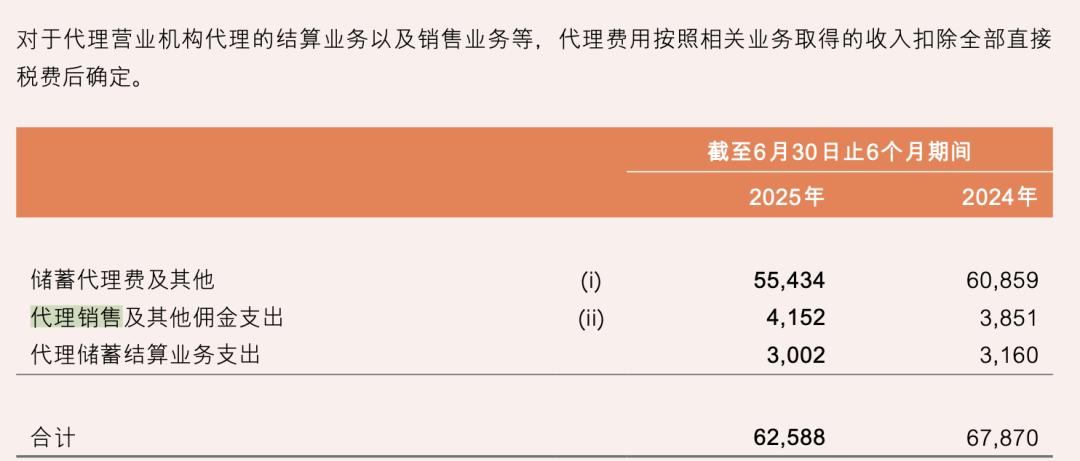
Core Insights - China Post Group has re-entered the insurance intermediary market by obtaining approval from the National Financial Regulatory Administration to operate insurance agency business, covering common property and personal insurance types [1][6] - The move comes amid a significant reduction in the number of insurance intermediaries, with China Post leveraging its extensive network of over 50,000 outlets to fill market gaps and tap into underdeveloped markets [1][7] - The reactivation of insurance agency operations is seen as a strategic response to the ongoing reshaping of the insurance intermediary sector, aiming to enhance competitive advantages in rural and county areas [1][7] Summary by Sections Insurance Agency License - China Post has received approval to operate as an insurance agent, marking its return to the insurance intermediary market after a two-year hiatus [1] - The approval follows similar licenses granted to other companies, indicating a potential shift in the regulatory landscape [1] Market Context - The insurance intermediary market has faced intense competition, leading to a significant decrease in the number of intermediaries [7] - China Post previously divested its insurance intermediary stakes, but is now re-entering the market to capitalize on the current reshaping of the industry [6][7] Financial Performance - In the first half of 2025, Postal Savings Bank reported commission expenses of 4.15 billion yuan to China Post, reflecting a year-on-year increase of 7.82% [3] - However, the commission received by China Post from Postal Savings Bank has decreased by over 60% compared to the same period in 2023 [3] Strategic Implications - Analysts suggest that China Post's re-entry into the insurance agency business is driven by compliance needs, resource integration, and strategic positioning to capture market opportunities during a period of industry consolidation [7] - The extensive network of China Post is expected to provide a competitive edge in reaching underserved markets, aligning with national financial inclusion goals [7][8] Network Advantage - As of the end of 2024, China Post operates 54,500 outlets, significantly outnumbering other major banks, which positions it favorably in the insurance market [8]

保险中介领域迎重量级玩家!中国邮政“逆向”入局背后的考量
Bei Jing Shang Bao· 2025-11-26 02:49
Core Viewpoint - China Post has been granted approval to operate insurance agency business, marking its entry into a market where many players are exiting due to stringent regulations and industry consolidation [1][4]. Group 1: Approval and Business Scope - On November 24, the Financial Regulatory Bureau approved China Post to conduct insurance agency business, allowing it to handle various types of insurance including property and life insurance [1]. - The approval signifies a strategic move for China Post, which has a vast network of over 54,000 outlets across urban and rural areas, providing a strong foundation for insurance distribution [2][3]. Group 2: Industry Context and Previous Actions - The insurance agency sector has seen a significant reduction in participants, with many agencies withdrawing from the market due to regulatory pressures [4]. - Historically, China Post had previously engaged in insurance agency activities but had seen some of its local branches voluntarily cancel their insurance agency licenses in recent years [3][4]. Group 3: Strategic Considerations - The decision to apply for a unified insurance agency license at the corporate level reflects a response to regulatory demands for licensed operations, aiming to streamline compliance and management [5][6]. - By centralizing the insurance agency operations, China Post can enhance resource allocation and avoid internal competition with its banking subsidiary, Postal Savings Bank [5][7]. Group 4: Network Utilization and Market Impact - The approval allows China Post to leverage its extensive network to enhance insurance service delivery, particularly in underserved markets such as third and fourth-tier cities [8]. - The integration of insurance services into existing postal operations is expected to improve customer access to insurance products and increase market penetration [8][9]. Group 5: Future Directions and Compliance - China Post is required to adhere strictly to insurance agency regulations and improve its management capabilities to protect consumer rights [9]. - The company aims to enhance the quality and efficiency of its insurance services, building trust and reputation in the market [9].
消费金融市场格局生变 京东持牌、阿里全场景、抖音隐现
Jing Ji Guan Cha Wang· 2025-05-26 11:55
Core Insights - The Chinese consumer finance market is undergoing a reshuffle driven by internet giants accelerating their layouts, indicating a complex competitive landscape ahead [1] Group 1: JD.com - JD.com has successfully obtained a national consumer finance license by rebranding its subsidiary to Tianjin JD Consumer Finance Co., marking it as the first platform enterprise to enter the market through equity restructuring after new regulations [1][3] - Prior to obtaining the license, JD.com operated its consumer finance business through a small loan company, which has issued a total of 66 asset-backed plans amounting to 57.29 billion [2] - The consumer finance license allows JD.com to engage in diversified financing activities, significantly enhancing its lending capacity and reducing funding costs, with an expected credit scale increase of 5-8 times [3][4] Group 2: Alibaba - Alibaba adopts a full-scenario penetration strategy, having completed financial business layouts across its core platforms, including Taobao and Xianyu, creating a comprehensive consumer finance ecosystem [5][6] - The Ant Group, under Alibaba, reported impressive financial performance in 2024, with total assets exceeding 313.75 billion, a 30.9% year-on-year increase, and net profit soaring 19 times to 3.05 billion [6][7] - Despite rapid growth, Ant Group faces increasing pressure on risk management, having transferred significant amounts of non-performing loans in recent months [7] Group 3: Douyin - Douyin's consumer finance expansion is characterized by a low-profile yet effective approach, with its lending balance surpassing 300 billion in 2023, leveraging a unique "content + finance" model [8][9] - The platform's ability to integrate payment options directly into the shopping experience enhances conversion efficiency, distinguishing its strategy from that of JD.com and Alibaba [8][9] - Douyin's credit assessment model relies on non-traditional data points, making it difficult for competitors to replicate its risk control logic, indicating a shift in competitive dimensions within the industry [9]

