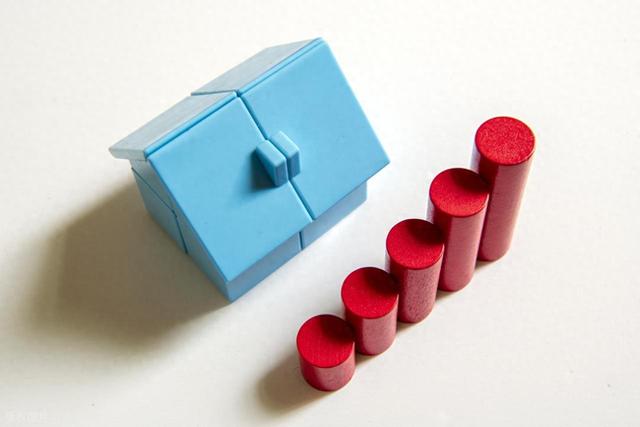
改善和稳定房地产市场预期

Search documents
房地产行业月报:全年销售面积下滑,开竣工单月降幅收窄
Zhong Guo Yin He Zheng Quan· 2026-01-19 08:24
Investment Rating - The report maintains a "Recommended" rating for the real estate industry [1] Core Viewpoints - The real estate industry is experiencing a decline in sales area, with a total of 880 million square meters sold in 2025, representing a year-on-year decrease of 8.7% [5][9] - In December 2025, the monthly sales area was 93.99 million square meters, showing a month-on-month increase of 39.88% but a year-on-year decrease of 15.60% [5] - The total sales revenue for 2025 was 839.37 billion yuan, down 12.60% year-on-year, with December's sales revenue at 88.07 billion yuan, reflecting a month-on-month increase of 44.09% but a year-on-year decrease of 23.60% [5] - The average sales price for the year was 9,527 yuan per square meter, down 0.20% month-on-month and 4.27% year-on-year [5] - The report anticipates improvements in market expectations due to policy support and effective supply management [5] Sales Summary - The total sales area for 2025 was 880 million square meters, with a year-on-year decline of 8.7% [5] - December 2025 saw a monthly sales area of 93.99 million square meters, a month-on-month increase of 39.88% but a year-on-year decrease of 15.60% [5] - The total sales revenue for 2025 was 839.37 billion yuan, with December's revenue at 88.07 billion yuan [5][9] Investment Summary - The total real estate development investment for 2025 was 827.88 billion yuan, down 17.20% year-on-year [13] - In December 2025, the monthly development investment was 41.97 billion yuan, reflecting a month-on-month decrease of 16.53% and a year-on-year decrease of 35.79% [13] - New construction area for 2025 was 58.77 million square meters, down 20.40% year-on-year, with December's new construction area at 5.313 million square meters [16] Funding Summary - Total funding for real estate companies in 2025 was 931.17 billion yuan, down 13.40% year-on-year [22] - Domestic loans accounted for 140.94 billion yuan, a decrease of 7.3% year-on-year [22] - Self-raised funds totaled 331.49 billion yuan, down 12.20% year-on-year, while prepayments and deposits were 280.89 billion yuan, down 16.20% year-on-year [22] Investment Recommendations - The report highlights several companies with strong operational management and financial advantages, including China Merchants Shekou, Poly Developments, and Longfor Group, among others [39] - It suggests focusing on quality developers like Greentown China and China Overseas Development, as well as property management leaders like Greentown Service [39]



《求是》刊文,房地产的几个罕见提法
中指研究院· 2026-01-11 01:36
Investment Rating - The report indicates a positive outlook for the real estate industry, emphasizing the importance of stabilizing market expectations and the potential for future growth [3][14]. Core Insights - The real estate sector is undergoing a significant transition, moving from a phase of rapid expansion to one focused on quality improvement and efficiency [5][10]. - The importance of the real estate industry remains high, as it is a critical component of the national economy and a major source of wealth for residents [7][14]. - There is substantial potential for growth in the real estate market, particularly in housing services, second-hand transactions, and asset management, despite a decline in overall investment [9][10]. Summary by Sections 1. Real Estate Development Stage - The industry is shifting from a phase of large-scale development to one that prioritizes quality and efficiency, indicating a fundamental change in development dynamics [5]. 2. Importance of Real Estate - The real estate sector is crucial for economic stability and social welfare, with strong linkages to various industries such as steel, cement, and home appliances [7][14]. 3. Development Potential and Space - Despite a decrease in investment, there remains significant market potential, with estimates suggesting an annual housing demand of 10 to 14.9 million units in urban areas [9][10]. 4. Measures to Improve and Stabilize Market Expectations - Policies should be decisive and aligned with market expectations, including the removal of restrictive measures and proactive risk management strategies [12][13]. - Emphasis on supply management and the expansion of real estate investment trusts (REITs) is crucial for revitalizing the market [13]. - Strengthening information monitoring and public discourse is essential to manage market expectations effectively [13][14].
专访宋丁:房地产改善预期是关键,政策需一次性给足
Nan Fang Du Shi Bao· 2026-01-08 11:32
Core Insights - The year 2026 marks the beginning of China's "14th Five-Year Plan," which outlines the development blueprint for the country until 2030, focusing on the transformation of the real estate sector towards high-quality development and the stabilization of market expectations [2][3]. Group 1: Real Estate Market Trends - The real estate industry is entering a critical transformation phase, shifting from scale expansion to quality development, with the key macro trend being the "improvement and stabilization of market expectations" [3][4]. - The emphasis on "improvement" over "stability" is crucial, as previous efforts to stabilize expectations have not achieved desired outcomes due to inadequate implementation of improvement measures [3][5]. Group 2: Policy Recommendations - Policies must be precise and implemented in a single step rather than gradually, such as the removal of purchase restrictions to boost market confidence [3][8]. - Positive media narratives are essential to reshape market sentiment and alleviate negative emotions accumulated over recent years [4][5]. - Sufficient financial support from both central and local governments is necessary to address the industry's challenges, including debt resolution and inventory reduction [5][6]. Group 3: Market Dynamics and Participation - The market recovery requires a balanced approach to supply and demand, avoiding prolonged imbalances that could hinder growth [5][6]. - Engaging the public and consumers in the real estate market is vital for creating a supportive environment for the industry's transformation [5][6]. Group 4: Urban Market Differentiation - The real estate market is experiencing significant differentiation, with structural gaps remaining despite overall market saturation, necessitating respect for market dynamics without forced interventions [6][7]. - Investment attributes of real estate must be acknowledged, particularly in major cities where demand is driven by both residential and investment needs [6][7]. Group 5: High-Quality Development Initiatives - The focus on high-quality development involves creating premium housing products, promoting green building practices, and enhancing urban renewal efforts [10][11]. - The current year is seen as a critical testing phase for high-quality development strategies, with expectations for the industry to establish a mature model for future growth [10][11].


内房股多数上扬 万科企业涨超4% 新城发展涨超2%
Zhi Tong Cai Jing· 2026-01-08 05:58
Group 1 - The core viewpoint of the article highlights the upward movement of domestic property stocks, with notable increases in companies such as Vanke Enterprises, New Town Development, R&F Properties, and China Overseas Grand Oceans Group [1] - Vanke has reached an agreement with domestic lending institutions, including Bank of China, to adjust quarterly interest payments to annual payments, with the possibility of deferring similar interest payments until September 2026 [1] - A commentary published in "Qiushi" magazine emphasizes the need to improve and stabilize expectations in the real estate market, indicating a supportive stance from authorities [1] Group 2 - According to Caitong Securities, the decline in commodity housing sales is expected to continue narrowing by 2026, with anticipated sales growth post-market recovery being a key driver for future property company valuations [1] - The structure of land reserves is crucial for sales performance, and property companies with substantial provisions for impairment and those positioned in high-value real estate markets are likely to recover valuations first [1]

求是重磅发声!改善稳定楼市预期,释放三大核心信号
Xin Lang Cai Jing· 2026-01-02 14:20
Core Insights - The article emphasizes the need for a comprehensive approach to stabilize and improve expectations in the real estate market, highlighting the importance of top-level design in ensuring a healthy development trajectory for the sector [1][3]. Group 1: Policy Signals - The first core signal indicates that policies should be implemented in a decisive manner, moving away from incremental approaches to avoid endless market-policy conflicts. This reflects a strong commitment to stabilize the market [5]. - The article suggests that future policies will be more systematic and coherent, ensuring that new and existing policies work together effectively to restore market confidence [5]. - It also highlights the importance of aligning real estate policies with broader macroeconomic strategies to prevent fragmentation [5]. Group 2: Development Model Transformation - The second core signal points to a fundamental shift in the real estate development model from "development and sales" to an integrated approach of "product-service-operation," marking the end of the previous growth cycle focused on scale [7]. - This transformation will change the competitive landscape, with a focus on product quality, operational capabilities, and service excellence rather than land acquisition and financial leverage [7]. - The article notes that policies will encourage real estate companies to hold properties and provide high-quality living services, aligning supply with evolving consumer demands [7]. Group 3: Demand Potential - The third core signal identifies two main areas for demand growth: the housing needs of new urban residents and the renovation of existing housing stock, countering the notion of dwindling demand in the real estate sector [8]. - It provides data indicating that a significant portion of urban households have inadequate living space, suggesting substantial room for improvement in housing quality [8]. - The article estimates that approximately 700 million square meters of housing will require updates annually due to depreciation, indicating a robust market for renovation and improvement [8]. Group 4: Market Outlook - The insights from the article not only clarify the short-term policy path for stabilizing the market but also establish a long-term framework for transformation, guiding various stakeholders in the real estate sector [9]. - The article suggests that while the "era of high profits" in real estate may be over, the sector still holds value as a stable income asset, particularly in areas like urban renewal and housing rentals [9]. - It concludes that the real estate industry will continue to play a crucial role in supporting the national economy and improving living standards, despite potential short-term fluctuations during the transition [10].