敏捷治理

Search documents
中国人工智能发展无需陷入美国的“竞争叙事”
Guan Cha Zhe Wang· 2025-12-09 00:05
Core Insights - The article discusses China's approach to artificial intelligence (AI) development, emphasizing a balanced strategy that combines innovation with practical application rather than blindly investing all resources into AI research [1][8]. Group 1: AI Development Strategy - China adopts a "cautious and inclusive" approach to AI, allowing for development while ensuring that governance keeps pace with technological advancements [2]. - The country has maintained a leading position in AI technology due to its adaptive governance model, which has effectively addressed emerging issues without major governance failures [2][5]. - Chinese enterprises focus on practical applications of AI, such as the "AI+" initiative, which aims to enhance various sectors including manufacturing and services, thereby creating social value [8][9]. Group 2: Modern Industrial System - The construction of a modern industrial system is crucial in light of changing international environments, requiring a balance between self-reliance and global integration [5][6]. - Emphasis is placed on enhancing the resilience of the industrial system to ensure the ability to respond to risks while leveraging global resources [6][7]. Group 3: Global AI Governance - China is actively participating in global AI governance discussions, advocating for safety principles and promoting inclusive development through open-source initiatives [9][11]. - The article highlights the fragmentation of international AI governance due to geopolitical tensions, with China supporting the establishment of a fair and effective international governance framework [11][12]. Group 4: Education and Employment Impact - The rapid development of AI and big data technologies is reshaping education and employment, necessitating a reevaluation of traditional educational models [16][18]. - AI has the potential to personalize education, moving beyond the industrial-era model of one-size-fits-all teaching [16][18]. Group 5: China's Role in Global Development - China's "14th Five-Year Plan" is seen as a key driver of global economic growth, contributing approximately 30% to global growth in recent years [20]. - The plan emphasizes international cooperation, particularly in AI and technology, which is expected to benefit developing countries significantly [21][22].


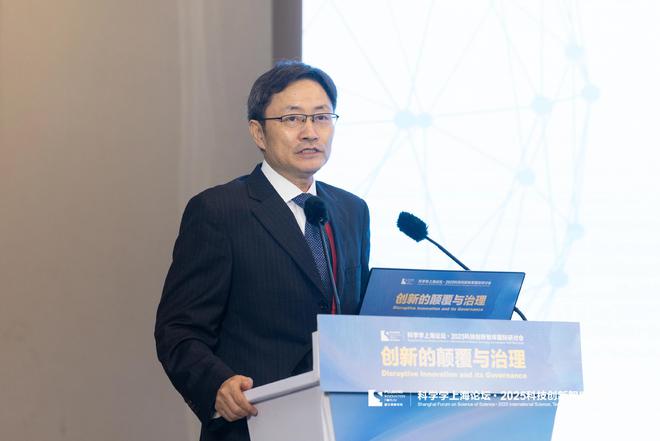
科技部原副部长李萌:工程创新成为成就颠覆性创新更重要的形式
Di Yi Cai Jing Zi Xun· 2025-06-27 10:25
Core Insights - DeepSeek has achieved a breakthrough in developing large models with lower costs while maintaining equivalent performance, prompting industry discussions on the efficiency revolution in large models [1] - Engineering innovation is seen as a crucial driver for disruptive innovation, with DeepSeek exemplifying the potential of engineering advancements in enhancing large model development [1][3] - The future of artificial intelligence will increasingly depend on the synergy between software and hardware, particularly in fields like humanoid robotics and advanced autonomous driving [1] Group 1 - The historical context of engineering innovation is highlighted, questioning why significant innovations often arise in specific locations, such as the steam engine revolution occurring in Manchester rather than London [3] - The interplay between theoretical breakthroughs and engineering optimizations is expected to lead future disruptive innovations, with both "0 to 1" and "1 to 100" processes being significant [3] - The efficiency revolution in large models is driven by a combination of architecture, strategy, and optimal software-hardware collaboration, indicating a shift from single-dimensional to multi-faceted understanding of innovation [3][4] Group 2 - DeepSeek's approach to developing large models emphasizes low computing power and cost while achieving performance equivalence, marking a shift in industry competition logic where efficiency is paramount for disruptive innovation [4] - The pursuit of energy efficiency is becoming increasingly important, suggesting that without high performance and energy efficiency, disruptive innovation may not occur [4] - Open-source initiatives are identified as essential for supporting the ecosystem of disruptive innovation [4] Group 3 - While focusing on disruptive innovation, it is crucial to consider potential disruptive harms, as current large model technologies exhibit incomplete explainability [5] - The governance of advanced AI technologies is becoming more urgent, especially as the reasoning capabilities of large models increase, leading to concerns about their compliance with instructions [5]