AI主权

Search documents
偷运核心AI技术赴美换140亿?商务部精准出击,彻底打碎黄粱梦
Sou Hu Cai Jing· 2026-02-01 11:28
Core Viewpoint - The Chinese AI unicorn attempted to relocate to Silicon Valley through a shell company in Singapore, but was halted by the Ministry of Commerce, resulting in the collapse of a $14 billion acquisition deal [1][3]. Group 1: Acquisition Attempt and Regulatory Response - The Ministry of Commerce intervened decisively, indicating that the acquisition was not just a commercial dispute but a significant regulatory issue [3][12]. - The Manus team believed that relocating their headquarters to Singapore would allow them to sever ties with China, but this was a miscalculation in the face of regulatory scrutiny [3][10]. - The acquisition was complicated by the requirement from Silicon Valley venture capital firm Benchmark, which demanded a complete separation from Chinese identity for a $75 million investment [5]. Group 2: Data and Technology Ownership - The core technology and data were developed in China, making it impossible to change the "nationality" of the technology, as it is considered "deemed export" under Chinese law [16][20]. - The Ministry of Commerce's assessment focused on whether data was being illegally exported and whether technology was being transferred without compliance [20][22]. - The case highlights the importance of data sovereignty and the principle of technology origin, which cannot be circumvented by merely changing the company's registration location [24][26]. Group 3: Implications for the Industry - The incident serves as a warning to venture capitalists that the previous model of investing in projects with the intent to sell to foreign entities is no longer viable, especially for projects involving core technology and significant data [36]. - The era of opportunistic arbitrage is over, and companies must choose between "dollar capital" and the "Chinese market," leading to a dilemma that will become the norm [38]. - The Ministry of Commerce's swift action demonstrates a commitment to protecting national interests and enforcing compliance with regulations, signaling a shift in how international acquisitions involving Chinese technology will be handled [30][34].


微软CEO重新定义AI主权:关键在控制权而非数据中心位置
Sou Hu Cai Jing· 2026-01-22 14:45
Group 1 - The core viewpoint is that the location of data centers is the least important factor in AI sovereignty, with the key being control over proprietary knowledge models [2] - Nadella emphasizes that if a company cannot embed its tacit knowledge into its controlled model weights, it lacks true sovereignty and risks leaking enterprise value [2][5] - The discussion on AI sovereignty is seen as a shift from traditional data sovereignty challenges faced by Microsoft, particularly regarding concerns from European clients about reliance on U.S. entities [2][5] Group 2 - AI sovereignty is described as the ability of economies to shape, deploy, and govern AI ecosystems based on their values, ensuring strategic control and resilience through localized investment and trusted international cooperation [3] - Nadella's perspective extends beyond national needs to corporate sovereignty, highlighting that both nations and companies have comparative advantages that need protection [3] - Regarding the current AI market bubble, Nadella states that a bubble only exists when discussions are limited to tech companies, indicating that AI technology relies on global demand rather than speculation [3][5]


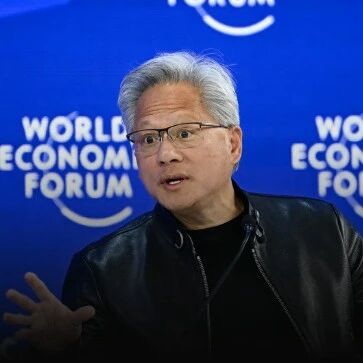
黄仁勋最新对话:几千亿只是开胃菜,AI基建还得再砸几万亿
创业邦· 2026-01-22 10:19
Core Viewpoint - The discussion emphasizes that the current investment in AI is not a bubble but rather the beginning of a massive infrastructure build-up, likening it to historical infrastructure projects like railroads and power grids [5][10][34]. Group 1: AI Infrastructure Investment - Nvidia's CEO Jensen Huang stated that the investment in AI infrastructure has only just begun, with estimates suggesting that global spending could reach $3 trillion to $4 trillion by 2030 [13][30]. - The AI infrastructure is conceptualized as a "five-layer cake," with energy at the base, followed by chips, cloud services, AI models, and finally, applications across various industries [13][41]. - Major tech companies have committed to investing over $500 billion in data centers, indicating a significant shift in R&D budgets towards AI [15][31]. Group 2: Job Creation and Economic Impact - Contrary to fears that AI will lead to job losses, Huang argues that AI is creating high-paying blue-collar jobs, with salaries for electricians and plumbers in the U.S. exceeding $100,000 [7][19]. - The healthcare sector has seen an increase in the number of radiologists, as AI takes over repetitive tasks, allowing doctors to focus on patient care [8][21]. - Huang emphasizes the importance of understanding the distinction between the "purpose" and "task" of jobs, suggesting that AI will automate tasks while enhancing the overall purpose of jobs [24][49]. Group 3: AI Sovereignty and Global Development - Huang advocates for every country to develop its own AI capabilities, viewing AI as a fundamental infrastructure akin to electricity and roads [25][28]. - He believes that developing countries can leverage AI to bridge technological gaps, using local languages and cultural data to create tailored AI solutions [28][52]. - For Europe, Huang suggests that the region should capitalize on its strong industrial base and scientific expertise to embrace "physical AI" and robotics [28][54]. Group 4: Current Market Dynamics - Nvidia's GPUs are in high demand, with rental prices increasing, indicating a robust market for AI infrastructure [30][55]. - The shift in R&D budgets towards AI is exemplified by companies like Eli Lilly, which are reallocating funds from traditional labs to AI supercomputing [31][55]. - The current investment climate is characterized by record levels of venture capital flowing into AI-native companies, with over $100 billion expected in 2025 [15][56].

中国人工智能发展无需陷入美国的“竞争叙事”
Guan Cha Zhe Wang· 2025-12-09 00:05
Core Insights - The article discusses China's approach to artificial intelligence (AI) development, emphasizing a balanced strategy that combines innovation with practical application rather than blindly investing all resources into AI research [1][8]. Group 1: AI Development Strategy - China adopts a "cautious and inclusive" approach to AI, allowing for development while ensuring that governance keeps pace with technological advancements [2]. - The country has maintained a leading position in AI technology due to its adaptive governance model, which has effectively addressed emerging issues without major governance failures [2][5]. - Chinese enterprises focus on practical applications of AI, such as the "AI+" initiative, which aims to enhance various sectors including manufacturing and services, thereby creating social value [8][9]. Group 2: Modern Industrial System - The construction of a modern industrial system is crucial in light of changing international environments, requiring a balance between self-reliance and global integration [5][6]. - Emphasis is placed on enhancing the resilience of the industrial system to ensure the ability to respond to risks while leveraging global resources [6][7]. Group 3: Global AI Governance - China is actively participating in global AI governance discussions, advocating for safety principles and promoting inclusive development through open-source initiatives [9][11]. - The article highlights the fragmentation of international AI governance due to geopolitical tensions, with China supporting the establishment of a fair and effective international governance framework [11][12]. Group 4: Education and Employment Impact - The rapid development of AI and big data technologies is reshaping education and employment, necessitating a reevaluation of traditional educational models [16][18]. - AI has the potential to personalize education, moving beyond the industrial-era model of one-size-fits-all teaching [16][18]. Group 5: China's Role in Global Development - China's "14th Five-Year Plan" is seen as a key driver of global economic growth, contributing approximately 30% to global growth in recent years [20]. - The plan emphasizes international cooperation, particularly in AI and technology, which is expected to benefit developing countries significantly [21][22].
AI竞争新阶段:“小而专”的企业机遇爆发
财富FORTUNE· 2025-10-30 13:09
Core Insights - The article discusses the shift in the AI industry from a focus on model parameters to a broader competition involving localization, AI sovereignty, and the rights of content creators [1][3]. Group 1: Localization and Niche Models - Smaller, specialized models are finding opportunities to challenge tech giants like OpenAI and Google by focusing on regional languages and cultural nuances [3]. - Arabic language, despite being the fourth most used language on the internet, only accounts for 4% of the training data in existing large models, highlighting a significant gap [3]. - Local companies can leverage high-quality data that is often proprietary and not publicly available, allowing them to address complex issues in Arabic language processing that larger models struggle with [3][4]. Group 2: AI Sovereignty - The concept of "AI sovereignty" is becoming a key agenda for many countries, necessitating a return to the technology itself for solutions [5]. - AI technology can be categorized into layers: chip layer, infrastructure layer, model layer, and intelligent agent layer, with varying degrees of feasibility for achieving sovereignty [6]. - The model layer has become more accessible due to the rise of open-source ecosystems, allowing countries to customize existing models to fit local values and cultural norms [6]. Group 3: Challenges in Chip Sovereignty - The real challenge lies in the chip layer, where high-performance chips are controlled by a few countries, making it difficult for others to achieve full sovereignty [7]. - Countries are encouraged to focus on collaboration in chip technology while concentrating on more achievable goals in the model and application layers [7]. Group 4: Regulation and Investment - Balancing innovation with regulation is crucial for the AI industry's growth, as evidenced by the recent establishment of a unified AI regulatory framework in the U.S. following the Paris AI summit [8]. - Investment opportunities are emerging in deep learning technologies, which are expected to create new industry giants by enabling startups to develop tailored solutions for specific sectors [8]. - The article concludes that the future of AI competition will likely revolve around localization, sovereignty, and fairness, with those who can navigate technological and regulatory challenges emerging as winners [8].

黄仁勋:家用 240W,这才是交给马斯克的“第一台 AI”
3 6 Ke· 2025-10-17 00:24
Core Insights - The delivery of the DGX Spark device by NVIDIA's CEO Jensen Huang to Elon Musk symbolizes a significant shift in AI technology, making powerful AI capabilities accessible to individuals rather than being confined to large data centers [3][10][45] - The collaboration between BlackRock, Microsoft, and NVIDIA to acquire Aligned for $40 billion highlights the growing investment in AI infrastructure and the importance of computational power as a core resource in the industry [3][4] Group 1: DGX Spark Device - The DGX Spark is a compact supercomputer weighing 1.2 kg and consuming only 240 watts, capable of running large AI models locally without needing cloud connectivity [11][24] - This device allows users to train, fine-tune, and deploy AI applications directly from their desktops, marking a shift from centralized cloud-based AI to personal, localized AI capabilities [6][12][33] - The integration of NVIDIA's latest technology into the DGX Spark makes it a comprehensive AI toolbox, enabling various complex tasks such as image generation and voice recognition [13][14] Group 2: AI Accessibility and Empowerment - Huang emphasizes that AI should not be a privilege of a few companies but should be as accessible as personal devices like smartphones and laptops [12][33] - The DGX Spark represents a democratization of AI, allowing individuals and smaller companies to harness AI capabilities without relying on external services [38][41] - The shift from being mere users of AI to becoming "igniters" of AI capabilities is a transformative change in how individuals interact with technology [21][22] Group 3: Cost and Efficiency - The transition from large data centers requiring up to 1 gigawatt of power to a 240-watt desktop device significantly reduces the cost and complexity of deploying AI [24][25] - Key factors contributing to this efficiency include the integration of all necessary components into one device, high operational efficiency, and the accessibility of the technology for a broader audience [26][28][30] - The reduction in AI deployment costs from millions to thousands of dollars makes it feasible for individuals and small businesses to utilize AI technology [40][41] Group 4: AI Sovereignty - Huang argues that both companies and individuals need to maintain control over their AI capabilities and data, rather than relying solely on external services [37][39] - The DGX Spark enables users to train and deploy their own AI models, ensuring that proprietary data remains secure and under their control [38][41] - This shift in AI sovereignty empowers individuals to create personalized AI solutions tailored to their specific needs [41][42] Group 5: Ecosystem Transformation - The introduction of the DGX Spark is expected to reshape the AI application ecosystem, moving from cloud-based services to localized, user-controlled applications [42][44] - Users can now customize and modify AI applications without needing to connect to remote servers, fundamentally changing the user experience [43][44] - The competition in the AI space will increasingly focus on who can provide the best local experience rather than just the most powerful models [44]

“如果没有中国,美国将独霸AI”
Guan Cha Zhe Wang· 2025-09-18 07:50
Group 1 - The 12th Beijing Xiangshan Forum opened on September 17, 2025, focusing on "Artificial Intelligence Technology Development and Governance" [1] - From the perspective of Malaysia, the global technology space is being squeezed, with fragmentation and other threats being significant concerns [1][2] - The concept of "AI sovereignty" is essential, as the current AI landscape is dominated by the US and China, with the US holding a hegemonic position in AI governance [1][2] Group 2 - China's approach to AI is fundamentally different, viewing it as an empowering tool for innovation and development rather than a mythical or demonized entity [2] - The importance of sovereignty in AI encompasses data ownership, technological capability, and intellectual property, all of which are integral to national sovereignty [2] - The development of local strategic capabilities in technology has been a long-term decision for China, dating back to the 1950s, rather than a sudden achievement [2]
印度国家级大模型上线两天仅 300 余次下载,投资人直呼“尴尬”:韩国大学生模型都有20万!
AI前线· 2025-05-26 06:46
Core Viewpoint - Sarvam AI has launched the Sarvam-M model, a 24 billion parameter mixed language model, which is considered a breakthrough in India's AI research but has received a lukewarm response in terms of downloads and usage [1][3][4]. Group 1: Model Overview - Sarvam-M is based on Mistral Small and supports 10 Indian languages, including Hindi and Bengali [1]. - The model has only achieved 718 downloads on Hugging Face, leading to criticism from industry experts [1][3]. - Comparatively, a similar model developed by two South Korean students received around 200,000 downloads, highlighting Sarvam-M's underperformance [3]. Group 2: Company Background - Sarvam AI was founded in July 2023 by Vivek Raghavan and Pratyush Kumar, with a mission to popularize generative AI in India [6]. - Kumar emphasizes the need for India to develop its own foundational AI models using local data, rather than merely adapting Western models [6][7]. - The company has raised $41 million from notable investors, with a projected valuation of $111 million by March 2025 [11]. Group 3: Performance and Criticism - Despite claims of outperforming Llama-4 Scout, Sarvam-M showed a slight decline in English knowledge assessments [7]. - Critics argue that the model lacks a substantial audience and practical utility, questioning the rationale behind its development [3][11]. - Some users have pointed out potential applications for Sarvam-M, but concerns remain about its market fit and the readiness of target users to adopt such technology [12][19]. Group 4: Broader Implications - The launch of Sarvam-M reflects a broader ambition for India to establish its own AI technology stack, but the gap between expectations and actual results raises questions about the viability of this initiative [15][19]. - The challenges of developing AI solutions tailored to India's diverse linguistic landscape are acknowledged, with a call for more focus on practical applications [18][19].