
数据要素流通

Search documents
黄丁聪代表:推动数据要素流通,激发企业创新活力
Xin Lang Cai Jing· 2026-02-06 08:36
Group 1 - The importance of data in the wave of artificial intelligence development is undeniable, but the data industry faces several challenges, including conflicts over data ownership, lack of revenue distribution mechanisms among participants, and unclear responsibilities regarding data security after utilization [1] - Huang Dingcong suggests establishing a comprehensive data element circulation support system to stimulate innovation among data and technology companies, and recommends creating normative guidelines for handling data ownership disputes [1] - There is a need to explore incentive mechanisms to encourage medium and large enterprises to promote external development and utilization of their data, as there may be societal pressure against selling data [1] Group 2 - AI and data element circulation are mutually reinforcing; AI models require vast amounts of data, while new AI applications will drive the collection of physical world behavior data, leading to new business models in the data industry [2] - Many enterprises currently rely on traditional data application models focused on statistical analysis, and there is a significant distance to achieving AI-driven data application models [2] - The expectation is for Shanghai to accelerate the circulation of data elements to better support the implementation of the "Artificial Intelligence +" national strategy [3]
黄丁聪代表:推动数据要素流通,激发企业创新活力 | 上海两会
Guo Ji Jin Rong Bao· 2026-02-06 08:21
Group 1 - The importance of data in the wave of artificial intelligence development is undeniable, but the data industry faces several challenges that need to be addressed, such as conflicts over data ownership, lack of revenue distribution mechanisms among participants in the data circulation chain, and unclear responsibilities regarding data security after development and utilization [1] - Huang Dingcong suggests establishing a comprehensive support system for data element circulation to stimulate innovation among various data and technology companies, including the introduction of normative guidelines for handling data ownership disputes and establishing a revenue distribution mechanism [1] - There is a need to explore a "due diligence exemption" mechanism to alleviate concerns regarding compliance in data circulation innovation, with hopes for Shanghai to lead in reform and innovation [1] Group 2 - AI and data element circulation are mutually reinforcing; AI models require vast amounts of data, while new AI applications will drive the collection of physical world behavior data, leading to new business models in the data industry [2] - Many companies still rely on traditional data application models focused on statistical analysis, and there is a significant distance to achieving AI-driven data application models [2] - The widespread adoption of AI is expected to accelerate the development of the data industry and facilitate the implementation of new business models [2] Group 3 - There is an expectation for Shanghai to accelerate the circulation of data elements to better promote the implementation of the "Artificial Intelligence +" national strategy [3]
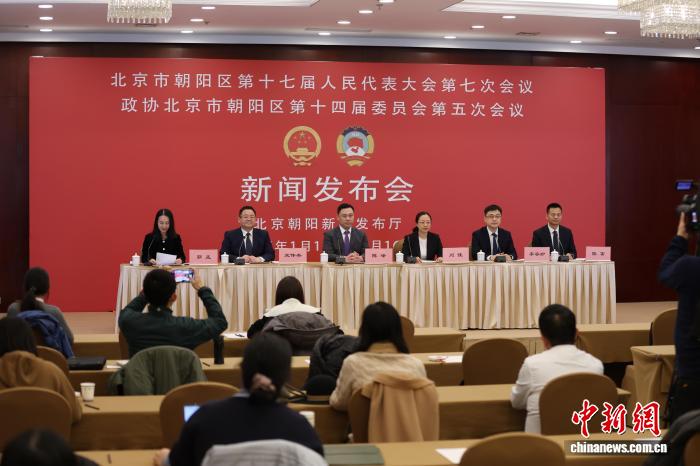
“十五五”时期朝阳区将推动建设AI全域数字之城
Bei Jing Shang Bao· 2026-01-16 13:20
Group 1 - The core objective of Chaoyang District is to establish the first national Data Business District (DBD) to enhance the national data industry cluster and improve the digital asset service ecosystem [1] - The district aims to support the Beijing International Big Data Exchange to enhance its capabilities and build leading data circulation infrastructure in China, promoting orderly data circulation and maximizing data value [1] - There will be a focus on creating benchmark scenarios and solutions for digital transformation in key sectors such as business, finance, culture, and consumption [1] Group 2 - Chaoyang District plans to optimize network infrastructure by advancing the development of high-capacity and high-quality 5G and 5G-A networks, as well as expanding 10G broadband access capabilities [2] - The district will enhance the service capacity of Beijing's digital economy computing power center, providing inclusive computing power services for government, state-owned enterprises, and AI companies [2] - The goal is to transform Chaoyang into a modern governance model for a super-large urban center, characterized by coordinated mechanisms, released data value, intelligent infrastructure, and efficient social governance [2]
聚焦北京各区两会|“十五五”时期朝阳区将推动建设AI全域数字之城
Bei Jing Shang Bao· 2026-01-16 13:09
Group 1 - The core focus of Chaoyang District is to establish the first national Data Business District (DBD) as part of the "14th Five-Year Plan," aiming to enhance the national data industry cluster and improve the digital asset service ecosystem [1] - Chaoyang District will support the Beijing International Big Data Exchange to enhance its capabilities and build leading data element circulation infrastructure, promoting orderly data circulation and maximizing data value [1] - The district aims to deepen data empowerment for industrial upgrades, creating benchmark scenarios and solutions for digital transformation in key sectors such as business, finance, culture, and consumption [1] Group 2 - Chaoyang District plans to optimize network infrastructure by advancing high-capacity and high-quality development of 5G and 5G-A networks, as well as orderly deployment of 10G broadband access capabilities [2] - The district will enhance the service capacity of Beijing's digital economy computing power center, providing inclusive computing power services for government, state-owned enterprises, and AI companies [2] - The goal is to transform Chaoyang District into a modern governance model for a super-large urban center, characterized by coordinated mechanisms, released data value, intelligent infrastructure, and improved public services [2]
北京朝阳打造全国首个数据商务区
Zhong Guo Xin Wen Wang· 2026-01-14 12:12
Core Viewpoint - Chaoyang District in Beijing is establishing the first national Data Business District (DBD) to enhance the integration of data elements with traditional industries and promote the digital economy [1][2][5] Group 1: Data Industry Development - Since the establishment of the Data Bureau, Chaoyang District has gathered 5,700 data-related enterprises, including 2,051 large-scale enterprises, employing 306,000 people in the data industry, leading in Beijing [1][2] - In the first three quarters of 2025, 2,493 core digital economy enterprises in the district achieved revenues of 435.78 billion yuan, a year-on-year increase of 10.1%, driven by high-value-added sectors [2][3] - The district has formed a relatively complete industrial chain from data collection, storage, computation, governance to application services [2][3] Group 2: Infrastructure and Technological Advancements - The construction of data infrastructure has progressed steadily, with the Beijing Digital Economy Computing Center completed, featuring over 1,000P mixed computing power [3][4] - The deployment of 5G-A networks has been completed in key areas, with over 3,000 upgraded or newly built 5G-A capable base stations [3][4] - The total length of optical cable lines in the district exceeds 110,000 kilometers, with over 650,000 gigabit users [3][4] Group 3: Future Plans and Initiatives - Looking ahead, Chaoyang District aims to deepen the integration of data into traditional business transformations and explore cross-border data flow pilot projects [5] - The district plans to enhance the capabilities of the Beijing International Big Data Exchange and build leading data element circulation infrastructure [5] - There will be a focus on optimizing network infrastructure and promoting high-capacity, high-quality development of 5G and 5G-A networks [5]

云南省筑基“硬联通”助力辐射中心建设:通道互联 开放共融
Xin Lang Cai Jing· 2026-01-13 00:14
Group 1 - The core viewpoint emphasizes that Yunnan's economic development relies on its geographical advantages and the need for open policies to enhance high-quality growth, particularly through the establishment of a radiation center towards South Asia and Southeast Asia [1] - The construction of major infrastructure projects over the past decade has significantly improved Yunnan's international connectivity, enhancing its role as a strategic hub in China's "land-sea internal and external linkage" open pattern [1][3] - The establishment of the Kunming International Data Exchange aims to facilitate data element circulation, serving as a key platform for Yunnan's digital economy and enhancing cooperation with South Asia and Southeast Asia [2][3] Group 2 - Yunnan has made substantial progress in building a modern comprehensive transportation system, which includes fully operational highways and railways, as well as an expanding aviation network, thereby supporting the radiation center's construction [3][4] - The "Golden Passage" of the China-Laos Railway has seen over 62.5 million passengers and 72.5 million tons of goods transported in four years, highlighting its effectiveness in facilitating cross-border trade [4] - The efficiency of customs clearance at ports has improved significantly, with the capacity of the Hekou Port reaching 15 million people annually, and the overall clearance time for goods reduced to under 10 minutes [5][6] Group 3 - The integration of transportation and industry in Yunnan is exemplified by the cross-border production cooperation model, which enhances the competitiveness of local agricultural products in Southeast Asian markets [6] - Yunnan's strategy of "big channels driving big openness" is expected to continue, with plans to deepen infrastructure connectivity and cooperation with South Asian and Southeast Asian countries [6]
完成首批交易!江苏数交所医药服务行业专区正式运行
Yang Zi Wan Bao Wang· 2026-01-04 10:30
Group 1 - The Jiangsu Data Exchange's medical service sector has officially launched and completed its first batch of on-site transactions, focusing on areas such as drug research and development, clinical diagnosis, and public health [1] - The platform facilitates safe, reliable, and efficient data services for upstream and downstream enterprises in the industry chain, with specific datasets related to gastroenteritis and lung cancer successfully traded [1] - Two medical technology companies from Hainan and Hebei have successfully acquired ten specialized medical datasets, enabling compliant cross-regional circulation of healthcare data elements [1] Group 2 - The purchasing companies faced challenges such as low data processing efficiency, inconsistent labeling standards, and difficulties in ensuring data quality, which the specialized datasets aim to address [2] - By procuring high-quality, standardized specialized disease datasets, companies can efficiently conduct AI model training and clinical research applications, significantly enhancing research efficiency and product accuracy [2] - The platform ensures data security, confidentiality, and integrity throughout the entire lifecycle of data transmission, storage, and usage, adhering to trusted data transaction protocols [2]
青岛数据集团“四位一体”体系领跑全国政务大模型建设
Xin Lang Cai Jing· 2025-12-28 07:00
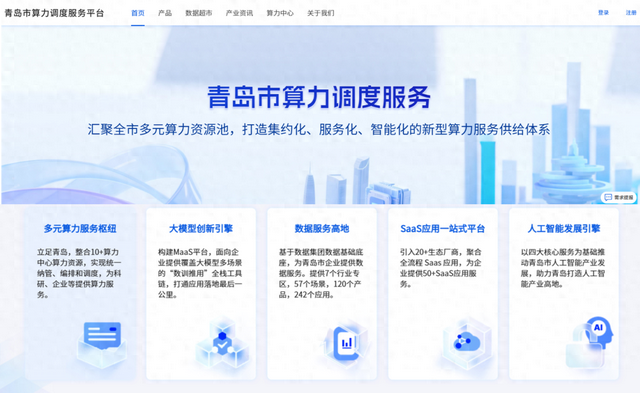
Core Insights - Qingdao Data Group, a subsidiary of Huatuo Group, is a key player in the digital economy development of Qingdao, creating a replicable model for national government AI initiatives through its "computing power-data-model-service" integrated operational system [1][9] Group 1: Computing Power - The company has established a computing power scheduling service platform that integrates diverse national computing resources, creating a one-stop platform and a full-stack empowerment system [1] - Currently, it has connected 13 computing centers with over 24,000 PFlops of computing resources, serving more than 300 enterprises, significantly lowering the innovation threshold and application costs for AI companies [1] Group 2: Data Activation - Qingdao Data Group has developed a public data operation platform that collects 5,201 public data directories, covering social data from 50 million enterprises nationwide [3] - The platform has launched nine scenario zones and 157 data products, enabling 247 application scenarios such as financial risk control and rapid claims processing, creating a sustainable data circulation ecosystem [3] Group 3: Model Development - The company has independently developed the "Tongcheng Government Large Model" to meet concentrated demands in the government sector, achieving a 93% accuracy rate in knowledge-based intelligent Q&A and a 70% efficiency improvement in rapid model construction [5] - This model supports over 50 practical scenarios, including "similar case judgment," leading the nation in government intelligence [5] Group 4: Service Implementation - Based on the government large model, Qingdao Data Group has created over 160 practical application scenarios, enhancing urban event handling efficiency by over 30% through collaborative analysis of "small algorithms + large models" [7] - The results have been promoted to over 30 cities nationwide, transforming technical capabilities into urban governance effectiveness, benefiting urban development and improving people's livelihoods [7] Group 5: Recognition and Future Plans - The company has achieved notable recognition, including four software copyrights, two patent applications, and awards such as the third prize in the 2025 National Data Element × Competition [9] - Future plans include further refining the "four-in-one" system, enhancing data supply, technical support, and scenario empowerment capabilities, aiming to be a pioneer in data value and a facilitator of urban upgrades [9]
2025飞梭链FISCO BCOS产业应用发展报告-FISCO金链盟
Sou Hu Cai Jing· 2025-12-21 17:02
Core Insights - FISCO BCOS has established itself as one of the largest and most active domestic open-source alliance blockchain ecosystems in China, gathering over 5,000 institutions and 100,000 individual developers, with 600 industry digitalization benchmark applications [1][24][20] - The value reassessment of FISCO BCOS revolves around three main logics: deep integration with the real economy, driving data infrastructure upgrades, and stimulating global financial innovation [1][27][32] Group 1: Industry Applications - The blockchain applications cover 19 major fields, with significant benchmark case results in infrastructure, cross-border services, smart governance, green low-carbon initiatives, healthcare, social welfare, rural revitalization, financial services, and more [2][43] - In the infrastructure sector, the Blockchain Service Network (BSN) has established a national digital credential system, while cross-border data verification platforms have addressed credit isolation issues, facilitating cross-border financing and talent mobility [2][8] - In the financial services sector, blockchain solutions have alleviated financing difficulties for small and micro enterprises through supply chain finance systems and regional equity platforms [2][10] Group 2: Technological Advancements - FISCO BCOS boasts a high performance of over 200,000 TPS (transactions per second) and is compatible with mainstream software and hardware, integrating privacy computing and artificial intelligence technologies [2][24] - The open-source nature of FISCO BCOS promotes multi-party collaboration, forming a trusted collaborative network across industries and regions [2][24] Group 3: Future Directions - FISCO BCOS aims to continue deepening technological development and expanding application scenarios, pushing blockchain further into production and daily life, becoming a cornerstone of the digital civilization era [2][20] - The establishment of cross-border data verification platforms, such as the Shenzhen-Singapore platform, exemplifies the practical value and demonstration effect of blockchain in enhancing economic cooperation and talent flow [28][30]

新华三与上海数交所达成战略合作
Zheng Quan Shi Bao Wang· 2025-12-17 09:28
Core Viewpoint - The strategic cooperation between Shanghai Data Exchange and Unisplendour Corporation's Xinhua San Group aims to address core challenges in the circulation of data elements, focusing on security, compliance, and ownership [1] Group 1 - The partnership will leverage Xinhua San's trusted data space solution to create a comprehensive system encompassing infrastructure, circulation mechanisms, and value realization [1] - The initiative is designed to provide practical technical support and ecological practices for the construction of a unified national data market [1] - The collaboration aims to facilitate efficient circulation and value release of data elements [1]
