数据行业

Search documents
黄丁聪代表:推动数据要素流通,激发企业创新活力
Xin Lang Cai Jing· 2026-02-06 08:36
Group 1 - The importance of data in the wave of artificial intelligence development is undeniable, but the data industry faces several challenges, including conflicts over data ownership, lack of revenue distribution mechanisms among participants, and unclear responsibilities regarding data security after utilization [1] - Huang Dingcong suggests establishing a comprehensive data element circulation support system to stimulate innovation among data and technology companies, and recommends creating normative guidelines for handling data ownership disputes [1] - There is a need to explore incentive mechanisms to encourage medium and large enterprises to promote external development and utilization of their data, as there may be societal pressure against selling data [1] Group 2 - AI and data element circulation are mutually reinforcing; AI models require vast amounts of data, while new AI applications will drive the collection of physical world behavior data, leading to new business models in the data industry [2] - Many enterprises currently rely on traditional data application models focused on statistical analysis, and there is a significant distance to achieving AI-driven data application models [2] - The expectation is for Shanghai to accelerate the circulation of data elements to better support the implementation of the "Artificial Intelligence +" national strategy [3]
黄丁聪代表:推动数据要素流通,激发企业创新活力 | 上海两会
Guo Ji Jin Rong Bao· 2026-02-06 08:21
Group 1 - The importance of data in the wave of artificial intelligence development is undeniable, but the data industry faces several challenges that need to be addressed, such as conflicts over data ownership, lack of revenue distribution mechanisms among participants in the data circulation chain, and unclear responsibilities regarding data security after development and utilization [1] - Huang Dingcong suggests establishing a comprehensive support system for data element circulation to stimulate innovation among various data and technology companies, including the introduction of normative guidelines for handling data ownership disputes and establishing a revenue distribution mechanism [1] - There is a need to explore a "due diligence exemption" mechanism to alleviate concerns regarding compliance in data circulation innovation, with hopes for Shanghai to lead in reform and innovation [1] Group 2 - AI and data element circulation are mutually reinforcing; AI models require vast amounts of data, while new AI applications will drive the collection of physical world behavior data, leading to new business models in the data industry [2] - Many companies still rely on traditional data application models focused on statistical analysis, and there is a significant distance to achieving AI-driven data application models [2] - The widespread adoption of AI is expected to accelerate the development of the data industry and facilitate the implementation of new business models [2] Group 3 - There is an expectation for Shanghai to accelerate the circulation of data elements to better promote the implementation of the "Artificial Intelligence +" national strategy [3]
五部门推进数字人才培养 职业教育如何跑出“加速度”
Zhong Guo Jing Ji Wang· 2026-01-14 00:03
Core Viewpoint - Digital talent is a key factor in the competition of the digital economy era, with a significant talent gap projected to exceed 30 million by the end of 2025 in China [1][5]. Group 1: Policy and Framework - The National Development and Reform Commission and other departments issued an opinion to strengthen the construction of data-related disciplines and digital talent teams, focusing on four dimensions: discipline construction, vocational education, academic research, and collaboration between industry and academia [1]. - The opinion emphasizes deepening the integration of industry and education, aiming to cultivate application-oriented and skilled talents who can transform data elements into real productivity [1][4]. Group 2: Industry-Education Integration - Vocational education is highlighted for its focus on practical skills, with schools encouraged to collaborate with data enterprises to develop educational programs and training bases [2][3]. - In Zhejiang, the digital economy has seen continuous double-digit growth for 11 years, with vocational schools adapting their curricula to meet industry needs, thus enhancing student employability [2]. Group 3: Challenges and Solutions - Despite initial successes in industry-education integration, the rapid evolution of digital technology poses challenges in aligning talent training with industry needs [4]. - Suggestions include establishing a national industry vocational education teaching guidance committee to better predict talent demand and adapt educational offerings accordingly [5]. Group 4: Curriculum Development - The opinion calls for the development of digital courses based on real application scenarios and the creation of practical teaching materials to meet operational needs [5]. - Schools are encouraged to continuously update their curricula to include emerging topics such as AI, ensuring alignment with industry standards and job market requirements [3][4].

我国数字经济增加值有望达49万亿元
Huan Qiu Wang· 2025-12-31 00:58
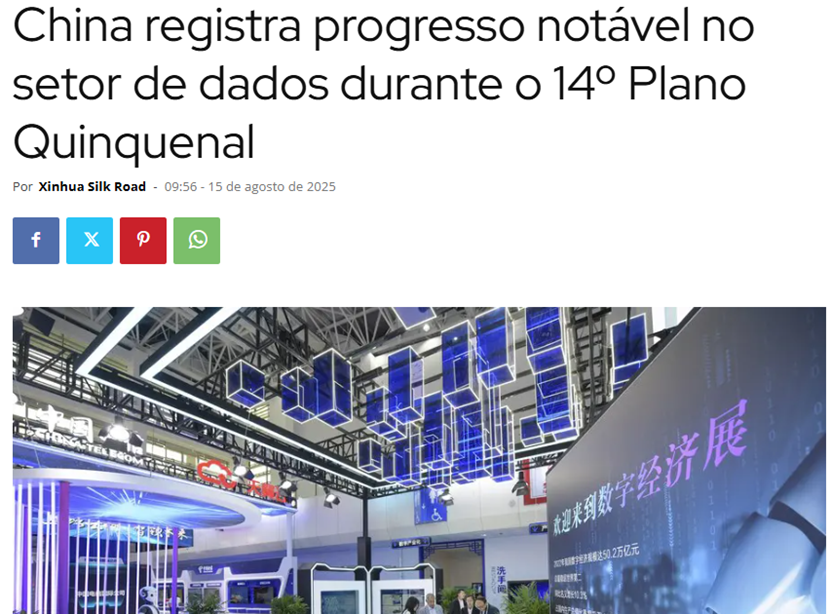
Group 1 - The core viewpoint of the article highlights the implementation of the "Digital Transformation Implementation Plan for the Automotive Industry" by the Ministry of Industry and Information Technology and other departments, which includes six major actions and 15 key tasks aimed at enhancing the digital economy in China [1][4] - By 2025, China's digital economy is expected to reach a value of 49 trillion yuan, accounting for approximately 35% of GDP, with the core digital economy industries' value projected to increase year-on-year [1] - The data industry in China has rapidly expanded during the 14th Five-Year Plan period, reaching a scale of 5.86 trillion yuan, representing a growth of 117%, with over 400,000 companies operating in this sector [1] Group 2 - As of June 2025, China has established 4.55 million 5G base stations, and the number of gigabit broadband users has reached 226 million, indicating significant advancements in digital infrastructure [4] - Continuous R&D investments have led to technological advancements in the data industry, resulting in a complete integrated circuit industry chain and the rapid growth of domestic operating systems, which now encompass over 1,200 product categories [4] - The next five-year plan period will focus on further deepening data-driven economic growth and social development, aiming to benefit the population through data [4]

多部门部署加强数字人才队伍建设
Ren Min Ri Bao· 2025-12-07 23:06
Core Viewpoint - The document outlines the Chinese government's initiative to enhance data element discipline and digital talent development, aiming to leverage data as a new productivity engine for innovation [1][2] Group 1: Data Element Discipline and Talent Development - The initiative emphasizes the importance of cultivating talent in data element disciplines as a critical mission for market-oriented data allocation reform and high-quality AI development [1] - It serves as a foundational element for advancing the planning and construction of a digital China, digital economy, and digital society [1] Group 2: Implementation Strategies - The initiative includes 12 tasks across four main areas: establishing data element disciplines guided by national strategy, promoting vocational education in the data industry driven by industrial development, supporting organized research to enrich academic studies in the data field, and facilitating collaboration among academia, industry, and application scenarios [1] - It aims to create a robust vocational education system in the data industry, involving government coordination, industry guidance, and enterprise participation [2] - The establishment of a national data vocational education teaching guidance committee is encouraged, along with the formation of regional collaborative bodies for data industry education [2]
多部门部署加强数据要素学科专业建设和数字人才队伍建设
Xin Hua Wang· 2025-12-03 12:53
Core Viewpoint - The National Development and Reform Commission, along with other governmental bodies, has issued opinions aimed at enhancing the construction of data-related academic disciplines and the development of digital talent, which is essential for fostering innovation in the data sector and promoting the integration of education, talent, industry, and innovation chains [1][2]. Group 1: Key Tasks and Strategies - The opinions outline 12 tasks across four main areas: improving data-related academic disciplines, promoting vocational education in the data industry, supporting organized research in the data field, and facilitating collaboration among academia, industry, and application scenarios [1]. - The education sector and data management departments are encouraged to strengthen the construction of data-related academic disciplines, supporting institutions to develop programs in data science, digital economy, and management [1]. - Vocational schools are advised to adjust data-related programs dynamically based on industry needs, including the introduction of courses in data collection, cleaning, labeling, compliance, and operations [1]. Group 2: Industry-Education Integration - The opinions emphasize the establishment of a coordinated system for data industry vocational education, involving government oversight, industry guidance, and enterprise participation, including the formation of a national data vocational education teaching advisory committee [2]. - Localities are encouraged to create data industry education and training ecosystems based on industrial parks, which will integrate talent cultivation, innovation, and the promotion of high-quality data industry development [2]. - Leading enterprises and high-level educational institutions are urged to collaborate in forming cross-regional industry-education integration communities, involving industry organizations, schools, research institutions, and upstream and downstream enterprises [2].
五部门就加强数据要素学科专业建设和数字人才队伍建设提出意见
Zhong Guo Xin Wen Wang· 2025-12-02 09:27
Core Viewpoint - The document outlines the "Opinions on Strengthening the Construction of Data Element Disciplines and Digital Talent Teams," aiming to enhance the development of data-related academic disciplines and the cultivation of digital talent, aligning with national strategic needs and technological advancements [1][2]. Group 1: Key Measures - The document proposes 12 key measures across four main areas to strengthen data disciplines and digital talent development [1]. - First, it emphasizes optimizing academic discipline settings and supporting tiered and categorized construction to enhance core teaching elements [1]. - Second, it focuses on promoting vocational education in the data industry by creating an integrated ecosystem of industry and education, reforming educational practices, and enriching curriculum resources [1]. - Third, it aims to support organized research in the data field by enhancing research organization, accelerating key research directions, and solidifying the scientific data foundation [1]. - Fourth, it encourages collaboration among academia, industry, and application scenarios to build typical application cases, innovate collaborative training models, and create technology innovation platforms [1]. Group 2: Implementation and Coordination - The document mandates the National Data Bureau, in collaboration with relevant ministries, to strengthen the organization and promotion of data discipline and digital talent development, establishing a regular working contact mechanism [2]. - It calls for coordinated efforts from various departments to create a conducive environment for the collaborative training of digital talent, with the National Data Bureau responsible for monitoring implementation effects and summarizing best practices [2]. - Local departments are urged to organize and implement policies effectively based on their specific circumstances to ensure the measures are realized [2].
主题论坛预告丨华为&上海数据集团“AI+数据基础设施”主题论坛
第一财经· 2025-11-23 05:04
Core Viewpoint - Data has become the core engine driving economic growth and innovation transformation, with the upcoming Global Data Ecosystem Conference 2025 focusing on opportunities and challenges in a data-driven economy [5]. Group 1: Event Overview - The fifth Global Data Ecosystem Conference will be held in Shanghai from November 25-26, 2025, themed "Connecting Data, Business, and Future - Boundless Multiplication" [5]. - The conference will gather representatives from government, industry, academia, and enterprises to discuss data-driven economic opportunities and challenges through keynote speeches, discussions, exhibitions, and project matchmaking [5]. Group 2: Forum Focus - Huawei, in collaboration with Shanghai Data Group, will host a forum titled "AI + Data Infrastructure: Unlocking the Value of Data Elements," focusing on new policy requirements, insights, solutions, and practices [5]. - The forum aims to promote data infrastructure construction, release the value of data elements, and accelerate the upgrade of traditional industries and the development of the digital economy [5]. Group 3: Agenda Highlights - The forum will feature discussions on topics such as the value transition of public data in Shanghai, the construction of new infrastructure for the new productivity era, and insights into the value of data elements supporting high-quality AI development [8][17]. - Key speakers include senior representatives from Huawei and Shanghai Data Bureau, who will share their insights on the integration of AI and data [8][12][16].