
文化产业新质生产力

Search documents
深圳微短剧产业迈入高质量发展新征程
Nan Fang Du Shi Bao· 2026-01-19 06:28
Core Insights - The establishment of the Shenzhen Micro-Short Drama Industry Association marks a significant transition for the micro-short drama industry in Shenzhen, moving towards high-quality development through resource aggregation and collaboration [1][5] Group 1: Association Formation - The association was founded with nearly a hundred member units and over a hundred industry guests present, indicating strong industry support [2] - Key organizations involved include Shenzhen Broadcasting Film and Television Group, Tencent, and ReelShort, with DataEye serving as the president unit [1][2] - The association aims to cover critical aspects of the industry chain, including IP ownership, content production, overseas platforms, technology empowerment, and traffic operation [1] Group 2: Strategic Location - The choice of Pingshan for the association's establishment is due to its rich film and television resources, including diverse shooting locations and comprehensive collaboration services [2] - Pingshan is enhancing its appeal to film crews by developing dedicated shooting scenes and has established a complete production chain with advanced facilities [2][3] - The area's strategic location within the Greater Bay Area facilitates quick access to major cities, aligning with the fast-paced production needs of micro-short dramas [2] Group 3: Industry Development - Pingshan is accelerating the construction of a 5,000 square meter "Deep Refresh Micro-Short Drama" base and a 200,000 square meter commercial space, indicating a robust future for industry development [3] - The micro-short drama sector is viewed as a key area for integrating digital technology and cultural creativity, representing a significant growth opportunity for the film industry [3] Group 4: Strategic Partnerships - Six major strategic partnerships were signed during the association's founding event, focusing on optimizing collaboration resources and providing comprehensive support for overseas expansion [4] - Collaborations include partnerships with Shenzhen Film Studio for resource integration and with DataEye to establish an industry fund to support filming base construction and project incubation [4] - Legal support services will be provided to cover intellectual property disputes and compliance consulting, ensuring a solid legal framework for overseas operations [4] Group 5: Future Outlook - The establishment of the association is seen as a rallying point for the digital cultural sector in Shenzhen and a call to build a micro-short drama industry hub in the Greater Bay Area [5] - Pingshan is expected to continue optimizing industry policies and enhancing service guarantees to support the association's role as a bridge between government and enterprises [5]
广东文化产业进化论:数智催生万亿新业态
2 1 Shi Ji Jing Ji Bao Dao· 2025-11-25 07:37
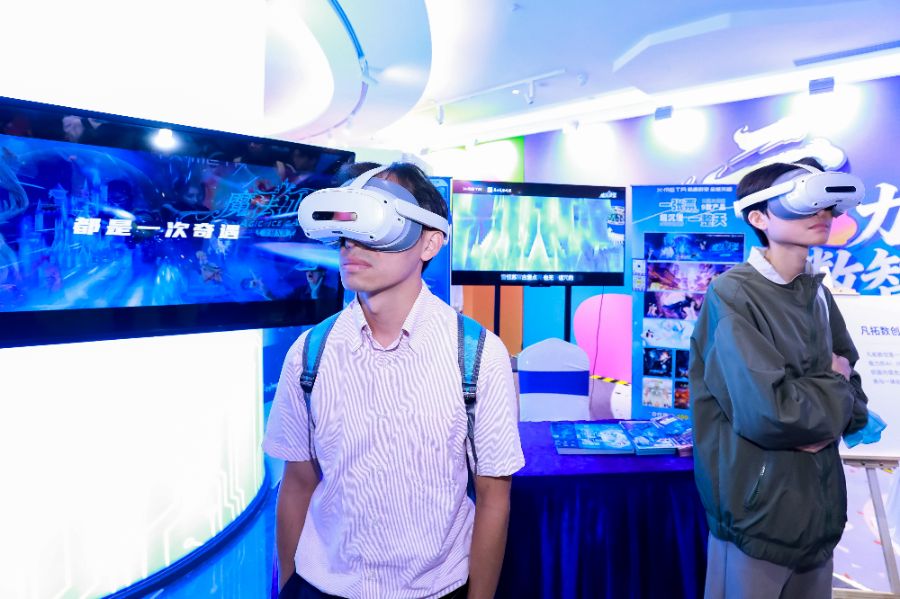
Core Insights - The integration of culture and technology in Guangdong is driving innovative development in the cultural industry, with a projected revenue of over 3 trillion yuan in 2024 [1] - The Guangdong cultural industry has maintained its position as the largest in the country for 23 consecutive years, with new business models generating significant revenue [1][4] - The 2025 Guangdong-Hong Kong-Macao Greater Bay Area Cultural Industry Investment Conference is set to further enhance the cultural industry's productivity through capital and project connections [1][6] Cultural and Technological Integration - The use of AR and VR technologies in cultural presentations, such as the virtual lion dance and immersive experiences, exemplifies the deep integration of technology in cultural expressions [2][3] - Companies like X-META are successfully creating immersive VR experiences, indicating a growing trend of technology enhancing cultural engagement [2][3] - The cultural industry is witnessing a transformation where technology companies are becoming key players in cultural innovation, leading to a reconfiguration of cultural elements [3][4] Economic Impact and Growth - The cultural new productivity in Guangdong has reached 915 billion yuan, with a growth rate of 10.5%, highlighting the economic significance of the digital creative industry [4][5] - By the third quarter of 2025, Guangdong's cultural enterprises are expected to exceed 2 trillion yuan in revenue, maintaining the highest revenue in the country [4] - Investment in cultural technology has doubled in the past five years, with significant growth in digital exhibition numbers driven by AIGC technology [5][8] Investment and Future Opportunities - The 2025 Greater Bay Area Cultural Investment Conference will serve as a platform for connecting projects with capital, focusing on AI, robotics, and future technologies in cultural applications [7][9] - The conference aims to create a continuous service platform for cultural enterprises, enhancing resource integration and fostering innovation [9] - Notable investment firms are actively seeking opportunities in the cultural sector, particularly those leveraging AIGC and metaverse technologies [9]
广东人才引力场“发威”:助推文化产业驶入“数字快车道”
2 1 Shi Ji Jing Ji Bao Dao· 2025-11-16 10:08
Core Insights - The integration of culture and technology is reshaping the cultural industry in Guangdong, creating new production capabilities and a diverse ecosystem driven by policy, technology, and enterprise [2][4][9]. Group 1: Cultural and Technological Integration - The VR experience "Magic Ice Castle" has gained popularity, showcasing the immersive potential of cultural and technological fusion [2]. - The "Cultural + Technology" integration is evident in events like the 15th National Games opening ceremony, where AR technology brought traditional culture to life [2][4]. - Companies like X-META are leveraging AI and XR technologies to create immersive experiences, indicating a shift from passive viewing to active participation in cultural narratives [3][4]. Group 2: Economic Impact and Market Growth - The cultural and technological integration is expected to generate a digital creative industry cluster worth hundreds of billions, becoming a new engine for high-quality economic development in Guangdong [6][8]. - By 2024, Guangdong's cultural industry revenue is projected to exceed 3 trillion yuan, accounting for about one-sixth of the national total [6]. - The revenue from new cultural business formats reached 915 billion yuan, growing by 10.5%, highlighting the competitive advantage in digital creativity, animation, gaming, and digital cultural manufacturing [6][7]. Group 3: Policy Support and Talent Development - Guangdong has established a systematic policy framework to support the deep integration of culture and technology, including the "Implementation Plan for Promoting the Deep Integration of Culture and Technology (2021-2025)" [9][10]. - The province's policy package emphasizes talent attraction and support, aiming to bring in high-level professionals in various cultural sectors [9][10]. - The upcoming 2025 Greater Bay Area Cultural Industry Investment Conference is expected to further enhance the integration of culture, technology, and finance, driving new opportunities for the cultural industry [10][11].


文化大家“东南飞”:一场书香盛宴折射广东文化供给力
2 1 Shi Ji Jing Ji Bao Dao· 2025-08-16 03:31
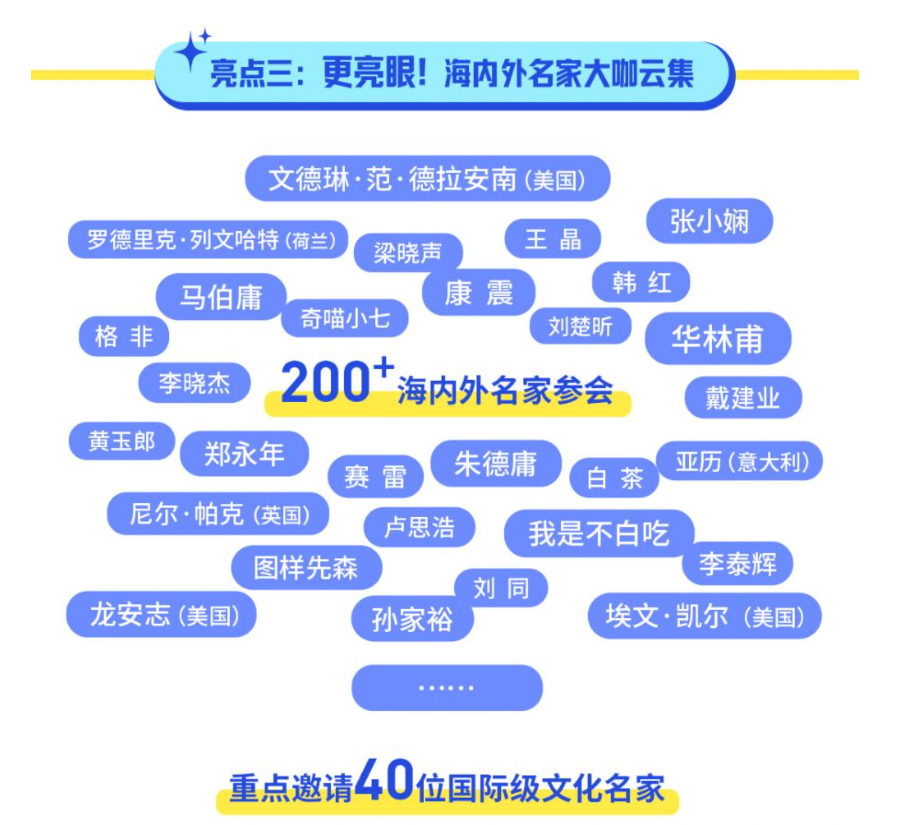
Core Insights - The 2025 South China Book Festival has attracted over 200 cultural figures from home and abroad, marking the largest gathering of its kind [1] - Guangdong has established itself as a cultural highland, leading the nation in cultural industry revenue and innovation [2][10] - The festival has evolved since its inception in 1993, becoming a significant platform for cultural exchange and international collaboration [3][5] Group 1: Cultural Significance - The South China Book Festival has been held for 32 years, showcasing a commitment to cultural promotion and internationalization [3] - The festival serves as a bridge for understanding overseas publishing trends and fostering copyright cooperation [3][5] - Notable authors and cultural figures frequently participate, enhancing the festival's reputation as a cultural hub [3] Group 2: Economic Impact - Guangdong's cultural industry generated approximately 2.5 trillion yuan in revenue in 2024, accounting for over one-sixth of the national total [2] - The new cultural economy, including digital publishing and gaming, has seen a revenue increase of 10.5% [2] - The province's GDP has consistently ranked first in the country for 35 years, providing a robust foundation for cultural investment and consumption [8] Group 3: Industry Development - Guangdong has implemented a comprehensive policy package to stimulate high-quality development in the cultural sector, covering various fields such as film and gaming [11][14] - Major film and television companies are establishing operations in Guangdong, with over 40 key domestic enterprises already present [11] - The province has allocated over 100 million yuan annually to support film production and promotion, resulting in significant box office success [13] Group 4: Future Prospects - New cultural projects and collaborations are emerging, indicating strong confidence in Guangdong's cultural industry [14] - The region is expected to continue attracting cultural enterprises and talent due to its favorable policies and market conditions [14] - The integration of technology and culture is anticipated to drive further innovation and growth in the sector [14]

创新政策打包推出,擦亮“文化广东”品牌
Nan Fang Du Shi Bao· 2025-05-22 14:24
Core Insights - Guangdong has launched a comprehensive "policy package" to promote high-quality development in the cultural industry, consisting of 87 measures across six sectors including film, performing arts, animation, online gaming, esports, and online audio-visual [1][2] - The cultural industry is recognized as a new engine for economic growth, crucial for economic restructuring and enhancing national cultural soft power [1] - Guangdong leads the nation in cultural industry scale, with projected revenue of 2.5 trillion yuan in 2024, accounting for approximately one-sixth of the national total [1] Policy Highlights - The policy package addresses weaknesses and challenges in the cultural industry, aiming to enhance quality and influence rather than just scale [2] - Specific measures include financial support for outstanding film projects, infrastructure improvements for performing arts, and initiatives to strengthen the Guangdong-Hong Kong-Macao Greater Bay Area's cultural exchange [2][3] - The package emphasizes the importance of talent cultivation and attraction, aiming to provide intellectual support for the cultural industry's development [4] Strategic Focus - The policy package is designed to cover all key areas of the cultural industry, providing targeted support measures for each sector's unique characteristics and development bottlenecks [4] - It aims to foster cultural industry clusters and optimize supply chains to reduce operational costs and enhance production efficiency [4] - The implementation of the policy is expected to stimulate market vitality, attract more social capital, and promote the scale and efficiency of the cultural industry [4]