文化产业高质量发展

Search documents
新华文轩(00811) - 海外监管公告
2026-03-26 14:54
(股份代號:811) 海外監管公告 本公告乃根據香港聯合交易所有限公司證券上市規則第13.10B條而作出。 茲載列新華文軒出版傳媒股份有限公司在上海證券交易所網站( www.sse.com.cn ) 發佈的《新華文軒出版傳媒股份有限公司2025年年度報告》《新華文軒出版傳媒股 份有限公司2025年年度報告摘要》《新華文軒出版傳媒股份有限公司第五屆董事會 2026年第四次會議決議公告》《新華文軒出版傳媒股份有限公司2025年度利潤分配 建議方案暨關於貫徹落實「提質增效重回報」專項行動的公告》《新華文軒出版傳 媒股份有限公司關於聘任本公司2026年度會計師事務所及內控審計機構的公告》 《新華文軒出版傳媒股份有限公司關於2025年度募集資金存放、管理與實際使用 情況的專項報告》《新華文軒出版傳媒股份有限公司2025年度環境、社會及管治報 告摘要》《新華文軒出版傳媒股份有限公司2025年度環境、社會及管治報告》《新 華文軒出版傳媒股份有限公司2025年度獨立董事述職報告(劉子斌)》《新華文軒 出版傳媒股份有限公司2025年度獨立董事述職報告(鄧富民)》《新華文軒出版傳 媒股份有限公司2025年度獨立董事述職報告(韓文 ...
文化消费新需求激活文化产业发展新动能
Ren Min Ri Bao· 2026-02-25 22:04
Core Viewpoint - The cultural industry is a vital component of the national economy and is increasingly recognized as a significant driver of economic growth, with emphasis on high-quality development and modernization of the cultural industry system [1] Group 1: Cultural Industry Development - The cultural industry is seen as a "sunrise industry" with strategic initiatives aimed at enhancing its modern system and market framework [1] - During the "14th Five-Year Plan" period, the cultural industry has seen improvements in its structure, scale, and efficiency, contributing to domestic demand and consumption [1] - Advanced technologies like big data and artificial intelligence are profoundly influencing cultural production methods, enhancing supply capabilities and promoting the transformation of traditional cultural formats [1] Group 2: Changing Consumer Demands - Young consumers are becoming the main force in cultural consumption, with new demand characteristics such as interactivity, personalization, and community engagement [2] - Interactive consumption demands closer connections between cultural products and consumers, leading to the expansion of immersive experiences in entertainment and exhibitions [2] - Personalized consumption is driving the popularity of custom services and culturally creative products that resonate with young people's fashion and emotional values [2] Group 3: Opportunities and Challenges - The evolving consumer demand presents both challenges and opportunities for the cultural industry, necessitating a shift from traditional production models to more interactive and personalized experiences [3] - Meeting new cultural consumption demands can stimulate enthusiasm for cultural products and services, leading to the emergence of new business models and applications [3] - The 20th National Congress of the Communist Party emphasized the need to accelerate the development of the cultural industry to meet new consumer demands [3] Group 4: Content and Innovation - Cultural enterprises are encouraged to delve into content creation by exploring historical, philosophical, and aesthetic elements, integrating them with modern technology and fashion [4] - There is a focus on leveraging local cultural characteristics to create internationally influential cultural brands [4] - Continuous investment in technological innovation is essential for enhancing the interactivity and appeal of cultural products and services [4] Group 5: Cultural Ecosystem and Talent Development - A supportive cultural ecosystem requires investment in both material resources and talent development, ensuring a comprehensive approach to nurturing cultural industry professionals [5] - Policies must be optimized to support high-quality development in the cultural sector, enhancing financial services and technological innovation [5] - Establishing effective talent selection and training mechanisms is crucial for fostering a skilled workforce that meets the evolving demands of the cultural industry [5]
黄南:51人获省工艺美术大师、民间工艺师称号
Xin Lang Cai Jing· 2026-02-07 17:44
Core Insights - Huangnan Tibetan Autonomous Prefecture has been recognized for its significant achievements in cultivating and expanding the talent pool of arts and crafts, with a total of 51 artisans and folk artists approved, ranking first among all cities and prefectures in Qinghai Province [1] - The recognition of artisans, including 4 artists awarded the title of Master of Arts and Crafts, reflects a strong commitment to enhancing the quality of the cultural industry in the region [1] - The total number of arts and crafts masters and folk artists in Huangnan has reached 1,280, indicating a robust development in the sector and the establishment of new benchmarks and teams for innovative growth [2] Summary by Categories Talent Development - Huangnan Prefecture has achieved a high approval rate of 85% for recommended candidates, with 51 out of 60 individuals successfully recognized as masters and folk artists [1] - The region has a total of 1,280 arts and crafts masters and folk artists, including 10 national masters and 58 provincial masters, showcasing a diverse and skilled workforce [2] Industry Impact - The recognition of artisans is expected to enhance the enthusiasm and engagement of arts and crafts personnel in Huangnan, contributing to the high-quality development of the cultural industry [1] - The annual training capacity for arts and crafts personnel exceeds 2,000 individuals, indicating a strong commitment to fostering talent and innovation within the industry [2]
壮大优质文化企业和品牌
Jing Ji Ri Bao· 2026-02-01 22:08
Core Viewpoint - The cultural industry in China has been optimizing its structure and expanding its scale since 2025, with significant improvements in efficiency and revenue growth, particularly in new cultural sectors [1][2]. Group 1: Industry Growth and Performance - In the first three quarters of 2025, China's cultural enterprises achieved operating revenue of 1,095.89 billion yuan, a year-on-year increase of 7.9% [1]. - Among 16 sub-sectors characterized by new cultural business models, revenue reached 488.60 billion yuan, growing by 14.1%, outpacing the overall growth of large-scale cultural enterprises by 6.2 percentage points [1]. - The rise of cultural enterprises and brands reflects a dual trend of scale expansion and quality improvement, with significant developments in digital publishing, film and animation, cultural technology, online gaming, and cultural tourism [2]. Group 2: Brand Development and Global Positioning - The emergence of phenomenon-level cultural products and super IPs, such as "Nezha: Birth of the Demon Child" and "Black Myth: Wukong," indicates rapid enhancement in China's cultural brand incubation and commercialization capabilities [2]. - Compared to developed countries, China's cultural brand development is still in its early stages, with a need for more "super IPs" and improved efficiency in IP value conversion [3]. - The cultural industry faces challenges in global market bargaining power and cultural export, often encountering a "cultural discount" [3]. Group 3: Strategic Recommendations - To strengthen quality cultural enterprises and brands, more precise and forceful measures are needed, including improving policy support and incentive mechanisms in finance, taxation, and land [3]. - Cultural enterprises should focus on high-quality creative supply by leveraging unique elements from traditional and regional cultures, while also adopting advanced concepts from global cultural enterprises [4]. - A multi-faceted communication system should be established to enhance brand building, including a new narrative framework to effectively tell the stories of Chinese cultural enterprises [4].
委员建议成立“文化产业护航中心”,降低青年创业门槛
Xin Jing Bao· 2026-01-25 04:46
Group 1 - The core viewpoint of the articles emphasizes the need for Beijing to enhance its cultural industry by fostering a high-level talent ecosystem, particularly focusing on youth innovation and entrepreneurship [1] - The cultural industry in Beijing is projected to generate over 2.3 trillion yuan in revenue by 2024, becoming a key driver of service consumption growth [1] - Youth groups are identified as a core force in cultural industry innovation, integrating traditional cultural resources with digital technology to shift from content production to service-oriented models [1] Group 2 - Challenges faced by youth in the cultural industry include a lack of pathways for IP monetization, insufficient capital, and unclear international expansion strategies [2] - The establishment of a "Cultural Project Exchange" is proposed to integrate existing platforms and create standardized trading rules, facilitating the transition from selling peripheral products to selling projects [2] - A recommendation is made to create a "Cultural Industry Support Center" to provide comprehensive services for youth entrepreneurs, including financial compliance, intellectual property protection, and international market planning [2]

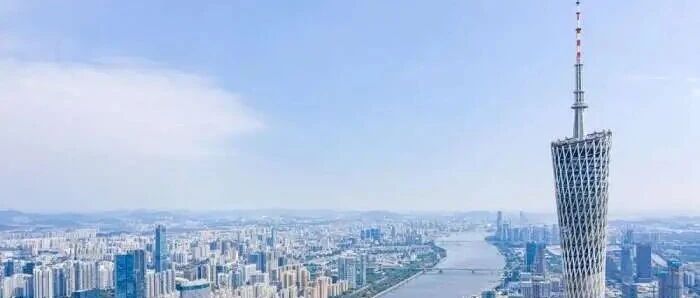
广州国际文化中心:以“书山”之姿,重塑广州的文化想象力
2 1 Shi Ji Jing Ji Bao Dao· 2026-01-23 10:58
Core Insights - The Guangzhou International Cultural Center (GICC) aims to inject new cultural momentum into the Guangdong-Hong Kong-Macao Greater Bay Area, marking a significant step in the high-quality development of the cultural industry [1][4] Group 1: Project Overview - GICC, a landmark project with a height of 320 meters and a total area of approximately 162,000 square meters, has a total investment of about 4.56 billion yuan [2] - The center is positioned as a cultural benchmark for Guangzhou, a creative industry hub in the Bay Area, and an international cultural ecological hub [2][4] Group 2: Architectural Design - The building is designed by renowned architect Francisco González Pulido, who emphasizes the integration of knowledge and cultural values into the design [2][3] - The architectural concept is inspired by the traditional Chinese cultural imagery of "mountains of books," symbolizing the pursuit of knowledge [2][3] Group 3: Cultural Ecosystem - GICC is expected to create a cultural ecosystem driven by cultural resources, extending from content production to spatial operation and industry ecology [4] - The center's unique cultural influence is seen as a core differentiator for businesses that will operate within it [4] Group 4: Industry Opportunities - The cultural industry in Guangdong has ranked first in the country for 22 consecutive years, with the cultural industry value added in the Bay Area's nine cities exceeding 6% of GDP [5] - GICC's global招商 (investment attraction) is viewed as an exploration of high-quality development in the cultural industry, leveraging Guangdong's advantages in digital technology and artificial intelligence [5]
国台办点赞广东游戏《鸣潮》在台湾走红!南都曾专访背后团队
Nan Fang Du Shi Bao· 2026-01-15 00:57
Group 1 - The game "Ming Chao" has received positive feedback from young people and gamers in Taiwan due to its deep Chinese cultural heritage, intricate storyline, and innovative gameplay [1] - The game has ranked in the top ten of the Taiwan overall charts multiple times, showcasing the innovative strength and cultural appeal of mainland Chinese games [1] - The development of cultural industries such as film and gaming in mainland China has been flourishing, gaining popularity both domestically and internationally [1] Group 2 - "Ming Chao" won the "Player's Voice" award at the 2025 TGA awards and was recognized as the Best Ongoing Impact Game by Google Play in 2025 [2] - The Guangdong government has introduced a policy package with 87 measures to promote high-quality development in the cultural industry, covering areas like online gaming and e-sports [2] - The supportive environment in Guangdong has fostered innovation and challenges for local game developers like Kuro Technology, enhancing their ability to host offline events and engage with the community [2]
激活文旅IP的生命力(延伸阅读)
Ren Min Ri Bao· 2026-01-13 23:00
Core Insights - During the "14th Five-Year Plan" period, China's cultural industry is steadily advancing towards high-quality development, with the creative transformation and innovative development of cultural tourism IP becoming key engines [1] - The integration of cultural resources and market consumption serves as a bridge, activating the cultural creative, digital content, and brand licensing industries through deep exploration and modern interpretation of cultural values [1] Group 1: Trends and Developments - Systematic, digital, and integrated approaches are emerging as new trends, with local cultures being deeply cultivated to create recognizable and emotionally connected IP systems [1] - Cities like Chongqing with "Magical Mountain City" and Xi'an with "Prosperous Tang Atmosphere" have gained popularity, leveraging landscapes and historical narratives to enhance experiential appeal [1] - Super IPs like the Forbidden City and Dunhuang continue to innovate, with cultural products, digital exhibitions, and cross-industry collaborations revitalizing excellent traditional culture [1] Group 2: Technological Empowerment and Industry Integration - The widespread application of new technologies is a highlight, facilitating the expansion of IP from physical to digital spaces, leading to the emergence of digital collectibles, online immersive performances, and metaverse projects [1] - The collaboration between cultural tourism IP and industries such as film, animation, and gaming is continuously strengthening through co-creation of stories, image licensing, and scene integration [1] Group 3: Future Outlook - Looking ahead to the "15th Five-Year Plan," the cultural tourism IP is expected to drive the cultural industry forward, requiring a foundation in cultural richness and a bold embrace of transformation [1] - Continuous efforts are needed in areas such as deepening connotations, technological leadership, cross-industry collaboration, and international expression [1] - The goal is to create a complete ecosystem encompassing creativity, products, operations, and marketing, shaping immersive, interactive, and personalized experiences in cultural tourism consumption, and promoting the "going out" of Chinese cultural tourism IP with a more vibrant IP matrix to drive industry prosperity [1]
守正创新赋能文化强市 北京文化书写“十四五”文化发展答卷
Zheng Quan Shi Bao Wang· 2026-01-07 13:45
Core Viewpoint - Beijing Culture, a publicly listed company in the film and cultural sector, is committed to social responsibility and the promotion of Chinese culture, focusing on content creation, cultural tourism integration, and international cultural outreach during the 14th Five-Year Plan period [1][3]. Group 1: Film and Television Production - The company has developed a diverse portfolio of high-quality films and television series, including successful titles like "Wolf Warrior 2," "I Am Not a Medicine God," and "The Wandering Earth" series, which have strong box office appeal and cultural significance [1]. - In the television sector, Beijing Culture has produced acclaimed series such as "Young Marshal" and "You Are More Beautiful Than Stars," which have garnered widespread attention and contributed to the "Big Drama in Beijing" cultural brand [1]. Group 2: Cultural Consumption and Events - Beijing Culture has actively responded to national policies promoting consumption by organizing over 20 major concerts featuring top domestic and international artists, creating a "concert + consumption" synergy that meets diverse cultural demands [2]. - The economic impact of these concerts is significant, with a multiplier effect of approximately 1:6.85, meaning every 1 yuan spent on concert tickets generates about 6.85 yuan in related spending on transportation, accommodation, dining, and shopping [2]. Group 3: International Cultural Outreach - The company is expanding its reach globally, with the upcoming release of "Fengshen Part II" in 2025, which aims to serve as a benchmark for Chinese cultural exports, showcasing traditional Chinese mythology and receiving positive feedback in 16 countries and regions [3]. - This film has been recognized by the Ministry of Propaganda and the National Film Administration, aligning with Beijing's goals to enhance cultural influence and promote international cultural exchange during the 14th Five-Year Plan [3]. Group 4: Future Development Strategy - Looking ahead to the 15th Five-Year Plan, Beijing Culture aims to innovate and tell contemporary Chinese stories while revitalizing traditional culture in the digital age [3]. - The company plans to leverage its film, television, and performance sectors in a synergistic manner to drive high-quality development in the cultural industry and deliver long-term commercial value [3].

中国5家企业上榜全球出版50强,南方出版传媒首次入围
21世纪经济报道· 2026-01-07 00:32
Core Viewpoint - The 2025 Global Publishing Top 50 Report has been released, with Southern Publishing Media from Guangdong making its debut on the list, alongside four other Chinese publishing groups [1][3]. Group 1: Report Overview - The report is jointly published by Bookdao (China), dpr Digital Publishing Report (Germany), Livres Hebdo (France), and Publishers Weekly (USA) [3]. - Companies listed in the ranking reported publishing revenues exceeding €150 million (approximately $180 million), focusing solely on their core publishing business [3]. Group 2: Southern Publishing Media - Southern Publishing Media Co., Ltd. was established in 2009 and went public on the Shanghai Stock Exchange in 2016, becoming the first cultural industry stock in Guangdong Province [3]. - Guangdong's cultural industry has maintained the largest scale in China for over 20 years, with the province's cultural industry revenue surpassing ¥3 trillion in 2024, accounting for about one-sixth of the national total [3]. Group 3: Cultural Industry Development in Guangdong - Guangdong has been promoting the deep integration of culture, technology, and finance, leading to a clearer path for high-quality cultural industry development [4]. - In the first three quarters of 2025, Guangdong's commercial performances reached 35,600 events, generating revenue of ¥6.356 billion, ranking first in the country [3][4]. - The province's digital publishing, animation, music, and gaming revenue scales are among the highest in the nation, supported by continuous policy incentives [4].