文物鉴定

Search documents
捐赠人对被鉴定为赝品的文物有优先处置权
Xin Lang Cai Jing· 2026-01-11 23:23
Core Viewpoint - The management of cultural relic donations in museums in China is currently flawed, particularly in areas such as relic authentication, value assessment, and donor rights protection, necessitating legislative improvements [1][2] Group 1: Current Issues - There is a lack of clear legal procedures for the authentication and value assessment of donated relics, which is required by existing laws [1] - Museums primarily rely on the "Regulations on the Collection of State-owned Museum Collections," which lacks necessary external supervision mechanisms [1] - Many museums only manage high-value relics, leaving ordinary donated relics without proper oversight [1] Group 2: Recommendations - It is suggested to grant four core rights to donors: reputation rights, right to information, visitation rights, and priority disposal rights [2] - The reputation rights entail that museums must clearly indicate donor information in all contexts involving donated relics [2] - The right to information allows donors to be informed about all matters related to their donated relics throughout the entire process [2] - The visitation rights permit donors to periodically visit their donated relics under the premise of compliance with cultural relic protection laws [2] - The priority disposal rights state that museums should unconditionally return relics identified as fakes to donors, who should have the first option for disposal [2] Group 3: Legislative Suggestions - There is a call to amend the Cultural Relics Protection Law to clarify authentication standards, procedures, and the rights and obligations of donors [2] - Establishing a third-party supervision mechanism is recommended to ensure transparency in the management of donated relics [2]
南京博物院事件中,那些关键留白
凤凰网财经· 2025-12-27 11:46
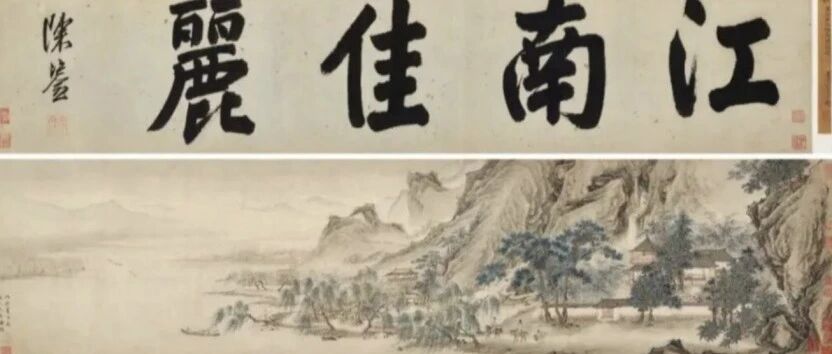
Core Viewpoint - The article discusses the controversy surrounding the re-emergence of the painting "Jiangnan Spring," which was previously considered lost and was later linked to questionable provenance and potential misconduct by museum officials [1][3][5]. Group 1: Disappearance and Reappearance of "Jiangnan Spring" - The painting "Jiangnan Spring," once lost, resurfaced after being collected by Lu Ting of Yilan Zhai in the 1990s, raising public skepticism about its provenance [1][10]. - The painting was previously deemed a forgery by experts in the 1960s, yet it gained significant recognition after being sold in the art market, leading to questions about the validity of the earlier assessments [22][24]. - The painting was estimated to be worth 88 million yuan but was withdrawn from auction due to allegations of its questionable history [8][18]. Group 2: Involvement of Key Figures - Xu Huping, the former director of the Nanjing Museum, and his son Xu Xiangjiang are closely linked to the art market, with allegations of misconduct regarding the handling of museum collections [3][32]. - Allegations surfaced that Xu Huping was involved in a scheme to misclassify valuable artworks as forgeries, allowing them to be sold at lower prices [32][34]. - The investigation into Xu Huping's actions has drawn attention to the broader issues of museum governance and the potential for conflicts of interest within the art world [40][41]. Group 3: Auction and Market Dynamics - The auction house's inability to verify the provenance of the painting "Jiangnan Spring" highlights the challenges in the art market regarding the authenticity and history of artworks [29][30]. - Other artworks from the same donation that were also deemed forgeries have appeared in auction records, suggesting a pattern of questionable transactions following their removal from the museum [28][29]. - The lack of clear documentation regarding the sale of these artworks raises concerns about the integrity of the art market and the processes involved in the sale of cultural artifacts [19][20].

一场文物事件如何推动制度“打补丁”?
Guan Cha Zhe Wang· 2025-12-22 04:52
Core Viewpoint - The dispute over the authenticity and management of the Ming Dynasty painting "Jiangnan Spring" by Qiu Ying, donated to the Nanjing Museum, has led to a lawsuit initiated by the descendants of the donor, highlighting issues in art authentication and museum management practices [1][5]. Group 1: Authenticity and Authentication Issues - The authenticity of the painting "Jiangnan Spring" is central to the dispute, with the Nanjing Museum claiming it was deemed a forgery by experts in 1961 and 1964, while the descendants contest this conclusion, citing evidence of its historical significance and previous ownership [1][2]. - The lack of a reliable scientific method for art authentication means that conclusions are often based on subjective assessments by experts, leading to varying opinions on the same artwork [2][3]. Group 2: Museum Management Practices - The Nanjing Museum's decision to remove the painting from its collection and transfer it to another institution raises questions about its authority to do so, especially without returning it to the original donor's family [5][6]. - The museum's actions appear to comply with the 1986 regulations regarding the management of museum collections, but the ambiguity in the term "proper handling" has led to operational flaws [6][7]. Group 3: Regulatory and Institutional Challenges - The existing regulations have created loopholes that have allowed for mismanagement of cultural assets, prompting the National Cultural Heritage Administration to address these issues in recent years [6][7]. - The National Cultural Heritage Administration has recognized the need for a more robust authentication system, as the current committee responsible for art authentication has not been active since 2014, leading to concerns about its effectiveness [8][9].
南博老院长日记里的庞家捐赠往事
Di Yi Cai Jing· 2025-12-21 02:49
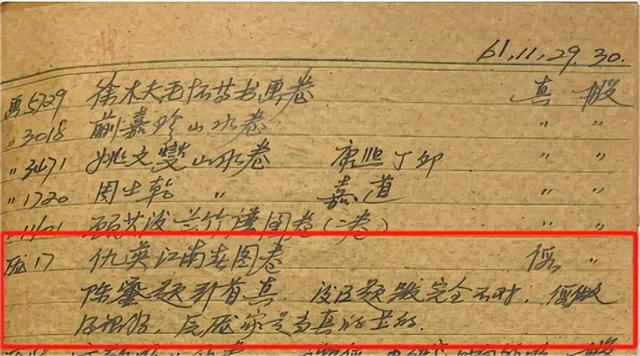
Core Viewpoint - The Nanjing Museum is currently under investigation by Jiangsu's cultural and tourism department regarding the authenticity of donated artifacts, with historical records indicating past instances of identifying forgeries among donations [1][4]. Group 1: Historical Context - In the 1960s, the Nanjing Museum, under the leadership of then-director Zeng Zhaoyi, maintained communication with the Pang family regarding their donations, which included paintings and calligraphy [1]. - Zeng's diary entries reveal that the museum received donations from the Pang family, with significant interactions recorded between 1959 and 1964 [1][3]. Group 2: Authentication Issues - A national expert group, led by Zhang Heng, identified a specific painting, "Jiangnan Spring Scroll," as a forgery in 1961, stating that it was well-crafted but not authentic [2]. - Subsequent evaluations in 1964 confirmed the painting's inauthenticity, leading to the museum's request in 1997 to reclassify certain artifacts that did not meet collection standards [2]. Group 3: Family Perspective - Pang Zenghe's daughter, Pang Shuling, asserts that the donated artifacts are genuine and of significant value, contradicting the museum's past assessments [3]. - Zeng's diary does not explicitly mention the 1961 authentication results, indicating a lack of clarity regarding the museum's stance during that period [3]. Group 4: Broader Implications - The museum's historical records indicate that other donations were also deemed forgeries, highlighting a pattern of scrutiny regarding the authenticity of donated artworks [4]. - Notably, Zeng's interactions with various collectors included discussions about the authenticity of their donations, with some identified as forgeries [4].
南京博物院藏仇英名作现身拍卖市场,最新消息
第一财经· 2025-12-19 01:12
Core Viewpoint - The recent auction of the Ming Dynasty painting "Jiangnan Spring" by Qiu Ying has sparked discussions regarding the recognition and handling of donated items by state-owned museums, as well as the protection of the rights of art donors [1] Group 1: Donation and Authentication Issues - The painting "Jiangnan Spring" was part of a donation of 137 pieces made by the family of renowned collector Pang Laichen to the Nanjing Museum in 1959, which included a receipt and inventory of the donated items [2] - Pang Shuling, the granddaughter of Pang Laichen, asserts that the museum's claim that five pieces, including "Jiangnan Spring," are forgeries has severely damaged her family's reputation [2] - The Nanjing Museum provided expert authentication records from 1961 and 1964, which concluded that "Jiangnan Spring" was a forgery [2][3] Group 2: Legal Proceedings and Claims - In June 2025, Pang Shuling and her lawyer discovered that five artworks, including "Jiangnan Spring," were missing from the museum's collection, which the museum claimed were removed due to being identified as forgeries [3] - A lawsuit was filed by Pang Shuling against the Nanjing Museum, demanding clarification on the whereabouts of the missing artworks and their return [3] Group 3: Museum's Handling of Artworks - Historical records indicate that in 1986, the Ministry of Culture established guidelines for museum collections, leading to the review and eventual removal of certain artworks from the Nanjing Museum's collection [4] - The painting "Jiangnan Spring" was officially removed from the museum's records in May 1997 and was sold in 2001 for 6,800 yuan, labeled as a "copy of Qiu Ying's landscape scroll" [4][6][8] Group 4: Legal and Ethical Considerations - The legal representatives argue that ownership of the donated items transferred to the museum upon donation, and the current laws do not obligate the museum to return items deemed forgeries [8][9] - Industry experts emphasize the importance of ensuring the legitimacy of artwork provenance, suggesting that the Nanjing Museum must provide clear evidence of compliance when the painting was removed from its collection [9] Group 5: Regulatory Response - The incident has attracted the attention of relevant authorities, who plan to establish an investigation team to look into the matter [10]
馆藏明代仇英《江南春》为何现身拍卖市场?南京博物院回应
Xin Lang Cai Jing· 2025-12-17 13:09
Core Viewpoint - The Nanjing Museum is addressing media concerns regarding the appearance of a Ming Dynasty painting by Qiu Ying in the auction market, linked to a legal dispute over a donation contract involving Ms. Pang Shuling [1] Group 1: Legal Context - Since November 2024, the museum has received two court documents related to a lawsuit concerning a "donation contract dispute" involving Ms. Pang Shuling [1] - The museum is taking the matter seriously and has initiated an investigation into the claims [1] Group 2: Historical Background - In January 1959, the museum officially received 137 paintings donated by Mr. Pang Zenghe, Ms. Pang Shuling's father [1] - The five disputed paintings mentioned in the media were identified as "forgeries" by expert groups in 1961 and 1964 [1] Group 3: Current Actions and Future Steps - The museum has disposed of the five disputed paintings in accordance with the "Museum Collection Management Measures" in the 1990s [1] - The museum is currently cooperating with the ongoing legal proceedings and will investigate the whereabouts of the disputed paintings [1] - If any illegal actions are found during the disposal process, the museum will work with relevant authorities for serious handling [1] - Further verification is needed to determine if the painting "Jiangnan Spring" appearing in the auction market is part of the donated collection [1]
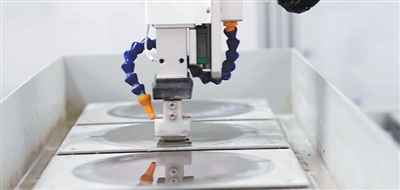
这座古陶瓷基因库,为何是许多考古人的心之所向?
Ren Min Ri Bao· 2025-10-03 02:37
Core Insights - The establishment of the ancient ceramic gene bank in Jingdezhen aims to standardize the identification and research of ancient ceramics, providing a solid foundation for academic studies and artifact authentication [1][2] Group 1: Background and Purpose - Jingdezhen, known as the "Porcelain Capital," has a rich history of ceramic production, with over 20 million kiln relics unearthed since the late 1970s, forming the basis for the gene bank's authoritative data [1] - The gene bank was created to utilize technological methods to extract information from ancient ceramics, with applications in restoring ancient societies, ancient craftsmanship, and contemporary cultural tourism [2] Group 2: Technological Collaboration and Data Collection - In June 2022, the Jingdezhen Ancient Ceramic Gene Bank collaborated with institutions like Tsinghua University and the Palace Museum to develop a knowledge graph database and 3D digital models of typical ceramic specimens [2] - The gene bank has completed the collection of over 3,000 selected samples, encompassing nearly 1.2 million pieces of ancient ceramic genetic information [2] Group 3: Practical Applications and Research Support - The gene bank has assisted in authenticating ancient ceramics, exemplified by a case where a Dutch collector identified a late Qing dynasty piece through data comparison with 17 selected ancient ceramic samples [4] - Recent collaborations with Peking University have enabled advanced research on blue-and-white porcelain from the Yuan to Qing dynasties, utilizing cutting-edge submicron technology [4] Group 4: Cultural and Creative Development - The gene bank has facilitated the reproduction of significant historical artifacts, such as the Ming Yongle blue-and-white cup, by providing detailed data to ceramic workshops [5] - The open-access nature of the gene bank allows for broader public participation in creative transformation and innovation, revitalizing ancient ceramics for modern applications [5]