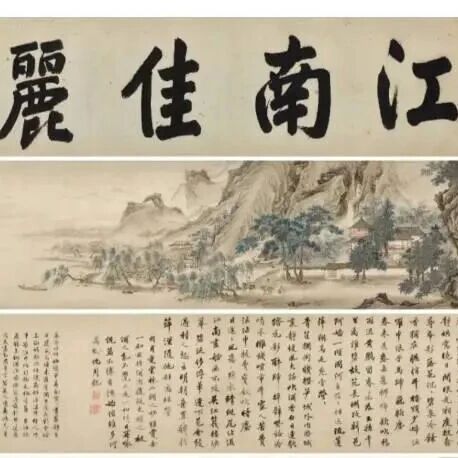
仇英《江南春》图卷

Search documents
南博藏画失踪,分明是一次恶劣的国有资产流失
Xin Lang Cai Jing· 2025-12-25 06:29
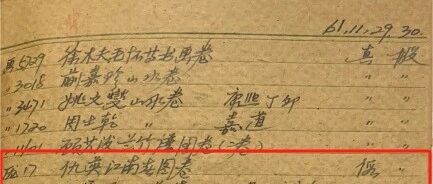
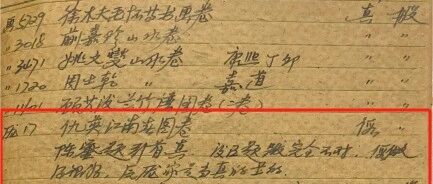
Core Viewpoint - The investigation into the valuation and handling of national movable cultural relics reveals significant discrepancies and potential corruption within the museum sector, highlighting the immense value of these assets and the risks of mismanagement [4][10][39]. Group 1: Investigation Findings - The report discusses the questionable authenticity of the "仇英江南春图卷" (Qiu Ying's "Spring in Jiangnan"), which was previously deemed a "forgery" by experts, raising concerns about the methods used for its evaluation [6][9][34]. - The artwork was sold for 6,800 yuan in 2001 after being misclassified, indicating possible manipulation in its valuation and sale [9][34]. - The investigation raises critical questions about the whereabouts of the artwork and other similar pieces after their classification as forgeries, suggesting they may have been improperly handled or concealed [10][35]. Group 2: Valuation of Cultural Relics - According to the National Cultural Heritage Administration, there are approximately 108.15 million national movable cultural relics in China, with a significant portion classified as valuable [10][36]. - The estimated value of these relics is staggering, with first-class relics valued at approximately 43,782.2 billion yuan, second-class at 13,779.8 billion yuan, and third-class at 15,430.8 billion yuan, totaling around 72,992.8 billion yuan [13][38]. - An expert estimates the total value of national movable cultural relics could range from 50 trillion to 200 trillion yuan, indicating a vast underestimation of their worth [30][39]. Group 3: Corruption and Mismanagement - The museum sector is characterized by a lack of transparency and public oversight, leading to potential corruption and misappropriation of cultural assets [39][40]. - Numerous anecdotal accounts suggest that valuable donated items have gone missing or been mismanaged, raising alarms about the integrity of cultural institutions [15][42]. - The report emphasizes the need for better accountability and public engagement in the management of national cultural relics to prevent further loss and corruption [50][52].

平佳健:一场文物事件如何推动制度“打补丁”?
Guan Cha Zhe Wang· 2025-12-22 06:57
Core Viewpoint - The dispute over the authenticity and management of the Ming Dynasty painting "Jiangnan Spring" by Qiu Ying, donated to the Nanjing Museum, has led to legal action and public debate regarding the museum's handling of cultural artifacts and the standards of art authentication [1][2]. Group 1: Authenticity Issues - The authenticity of the painting "Jiangnan Spring" is the primary point of contention, with the Nanjing Museum claiming it was deemed a forgery by experts in 1961 and 1964, while the donor's family disputes this conclusion [2][4]. - The lack of a reliable scientific method for art authentication complicates the situation, as different experts may provide conflicting opinions based on their knowledge and experience [4][5]. - Historical precedents show that art authentication has been a complex issue, with various committees established to address these challenges, yet the current system faces criticism for its outdated practices [8][10]. Group 2: Legal and Procedural Concerns - The Nanjing Museum's decision to remove the painting from its collection and transfer it to another institution raises questions about the legality and appropriateness of such actions under existing regulations [7][8]. - The museum's procedures for handling artifacts deemed not suitable for collection may not have been adequately followed, leading to potential procedural flaws [5][7]. - The ambiguity in the regulations regarding the handling of donated artifacts has contributed to the current dispute, highlighting the need for clearer guidelines in the future [8][9]. Group 3: Broader Implications for Cultural Heritage Management - The incident has sparked broader discussions about the role of art authentication and the need for a more robust system that includes input from experienced practitioners outside of formal institutions [8][10]. - The high auction price of the painting, set at 88 million RMB, has drawn significant public interest and underscores the financial stakes involved in art authentication and provenance [8].

一场文物事件如何推动制度“打补丁”?
Guan Cha Zhe Wang· 2025-12-22 04:52
Core Viewpoint - The dispute over the authenticity and management of the Ming Dynasty painting "Jiangnan Spring" by Qiu Ying, donated to the Nanjing Museum, has led to a lawsuit initiated by the descendants of the donor, highlighting issues in art authentication and museum management practices [1][5]. Group 1: Authenticity and Authentication Issues - The authenticity of the painting "Jiangnan Spring" is central to the dispute, with the Nanjing Museum claiming it was deemed a forgery by experts in 1961 and 1964, while the descendants contest this conclusion, citing evidence of its historical significance and previous ownership [1][2]. - The lack of a reliable scientific method for art authentication means that conclusions are often based on subjective assessments by experts, leading to varying opinions on the same artwork [2][3]. Group 2: Museum Management Practices - The Nanjing Museum's decision to remove the painting from its collection and transfer it to another institution raises questions about its authority to do so, especially without returning it to the original donor's family [5][6]. - The museum's actions appear to comply with the 1986 regulations regarding the management of museum collections, but the ambiguity in the term "proper handling" has led to operational flaws [6][7]. Group 3: Regulatory and Institutional Challenges - The existing regulations have created loopholes that have allowed for mismanagement of cultural assets, prompting the National Cultural Heritage Administration to address these issues in recent years [6][7]. - The National Cultural Heritage Administration has recognized the need for a more robust authentication system, as the current committee responsible for art authentication has not been active since 2014, leading to concerns about its effectiveness [8][9].
庞莱臣旧藏《双马图》也陷被拍卖疑云!后人曾起诉南京博物院
Xin Lang Cai Jing· 2025-12-19 14:22
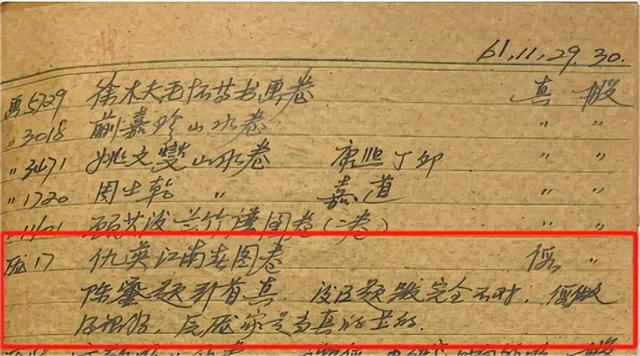
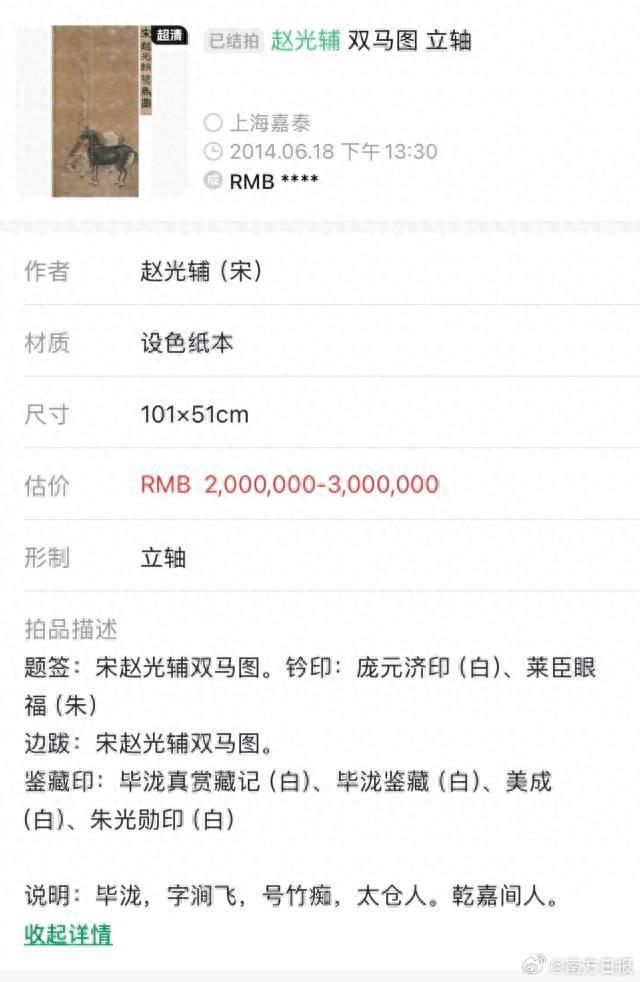
Core Viewpoint - The ongoing legal dispute between the descendants of collector Pang Laichen and the Nanjing Museum regarding the "donation contract" has garnered significant attention, particularly concerning the authenticity of artworks previously donated and later deemed "forgeries" by the museum [1]. Group 1: Legal Dispute and Artworks - The Nanjing Museum has been accused of mishandling artworks donated by Pang Laichen's descendants, including the "Jiangnan Spring" scroll and the "Double Horse" painting by Zhao Guangfu, which were later classified as "forgeries" [1][6]. - In 2024, Pang's descendants filed a lawsuit against the Nanjing Museum to ascertain the status of the donated artworks, leading to a court order for the museum to allow inspection of the original pieces by June 30, 2025 [6]. - The museum's response indicated that five artworks, including the "Jiangnan Spring" and "Double Horse," were unaccounted for and had been processed as "forgeries" [6]. Group 2: Auction Details and Artwork Provenance - The "Double Horse" painting was auctioned at the Shanghai Jiatai Auction Company on June 18, 2014, with a final sale price of 2.3 million RMB, despite its controversial status [5][7]. - The painting features seals from Pang Yuanji and Lai Chen, linking it to the Pang family, but current evidence does not conclusively prove that this auctioned piece is the same as the one donated to the museum [7]. - Historical records from the Nanjing Museum indicate that the "Double Horse" was part of a batch of artworks deemed unsuitable for collection and subsequently transferred to the provincial cultural authority for processing [5].
南京博物院藏仇英名作现身拍卖市场,最新情况!
新华网财经· 2025-12-19 02:50
Core Viewpoint - The recent emergence of the Ming Dynasty painting "Jiangnan Spring" by Qiu Ying from the Nanjing Museum's collection has sparked discussions regarding the recognition and handling of donated artifacts by state-owned museums, as well as the protection of the rights of donors [2]. Group 1: Background and Donation Details - In 1959, Pang Zenghe and his family donated 137 pieces of ancient paintings from the collection of renowned collector Pang Laichen to the Nanjing Museum, including the "Jiangnan Spring" scroll [4]. - Pang Shuling, the granddaughter of Pang Laichen, asserts that the donated artifacts are genuine and that the museum's designation of five pieces as forgeries has severely damaged her family's reputation [4][11]. Group 2: Authentication and Dispute - The Nanjing Museum conducted two rounds of expert authentication in 1961 and 1964, both concluding that the "Jiangnan Spring" scroll was a forgery [6][8]. - In June 2025, Pang Shuling discovered that five artworks, including the "Jiangnan Spring," were missing from the museum's collection, which the museum claimed were removed due to being classified as forgeries [7]. Group 3: Legal Proceedings and Claims - On November 20, 2025, Pang Shuling filed a lawsuit against the Nanjing Museum, seeking clarification on the whereabouts of the missing artworks and their return [7]. - The museum's legal representatives argue that ownership of the donated items transferred to the state upon donation, and thus, there is no obligation to return the items to the donor or their heirs [11][12]. Group 4: Market Implications and Regulatory Attention - The incident has raised concerns in the art market regarding the provenance of auction items, emphasizing the need for museums to provide clear evidence of compliance and legality when artifacts are deaccessioned [12]. - Authorities have taken notice of the situation and are forming an investigation team to look into the matter [13].
新华社:南京博物院藏仇英名作现身拍卖市场,最新追踪
Di Yi Cai Jing· 2025-12-19 01:16
Core Viewpoint - The incident surrounding the auction of the Ming Dynasty painting "Jiangnan Spring" by Qiu Ying has raised significant concerns regarding the legitimacy of art provenance and the responsibilities of museums in handling donated artifacts [1][10]. Group 1: Background of the Artwork - The painting "Jiangnan Spring" was part of a donation of 137 pieces made by the late Qing and Republican-era collector Pang Laichen's family to the Nanjing Museum in 1959 [2]. - The Nanjing Museum issued a donation receipt and documentation confirming the authenticity of the donated artworks, including "Jiangnan Spring" [2]. Group 2: Dispute Over Authenticity - The Nanjing Museum has classified five artworks, including "Jiangnan Spring," as forgeries, which has led to a legal dispute initiated by Pang Laichen's descendant, Pang Shuling [4][9]. - Expert evaluations conducted in 1961 and 1964 concluded that "Jiangnan Spring" was a forgery, which the museum used to justify its removal from the collection [2][5]. Group 3: Legal Proceedings - Pang Shuling filed a lawsuit against the Nanjing Museum, seeking clarification on the whereabouts of the five artworks deemed forgeries and demanding their return [4][9]. - The museum's legal representatives argue that ownership of the donated items transferred to the state upon donation, and thus, there is no obligation to return the items to the donor's heirs [9]. Group 4: Implications for the Art Market - The incident highlights the importance of ensuring that artworks in the auction market have a clear and legitimate provenance, as the Nanjing Museum must provide evidence of compliance when artworks are removed from its collection [10]. - The case has attracted the attention of relevant authorities, who are set to establish an investigation team to look into the matter [11].
南京博物院藏仇英名作现身拍卖市场,最新消息
第一财经· 2025-12-19 01:12
Core Viewpoint - The recent auction of the Ming Dynasty painting "Jiangnan Spring" by Qiu Ying has sparked discussions regarding the recognition and handling of donated items by state-owned museums, as well as the protection of the rights of art donors [1] Group 1: Donation and Authentication Issues - The painting "Jiangnan Spring" was part of a donation of 137 pieces made by the family of renowned collector Pang Laichen to the Nanjing Museum in 1959, which included a receipt and inventory of the donated items [2] - Pang Shuling, the granddaughter of Pang Laichen, asserts that the museum's claim that five pieces, including "Jiangnan Spring," are forgeries has severely damaged her family's reputation [2] - The Nanjing Museum provided expert authentication records from 1961 and 1964, which concluded that "Jiangnan Spring" was a forgery [2][3] Group 2: Legal Proceedings and Claims - In June 2025, Pang Shuling and her lawyer discovered that five artworks, including "Jiangnan Spring," were missing from the museum's collection, which the museum claimed were removed due to being identified as forgeries [3] - A lawsuit was filed by Pang Shuling against the Nanjing Museum, demanding clarification on the whereabouts of the missing artworks and their return [3] Group 3: Museum's Handling of Artworks - Historical records indicate that in 1986, the Ministry of Culture established guidelines for museum collections, leading to the review and eventual removal of certain artworks from the Nanjing Museum's collection [4] - The painting "Jiangnan Spring" was officially removed from the museum's records in May 1997 and was sold in 2001 for 6,800 yuan, labeled as a "copy of Qiu Ying's landscape scroll" [4][6][8] Group 4: Legal and Ethical Considerations - The legal representatives argue that ownership of the donated items transferred to the museum upon donation, and the current laws do not obligate the museum to return items deemed forgeries [8][9] - Industry experts emphasize the importance of ensuring the legitimacy of artwork provenance, suggesting that the Nanjing Museum must provide clear evidence of compliance when the painting was removed from its collection [9] Group 5: Regulatory Response - The incident has attracted the attention of relevant authorities, who plan to establish an investigation team to look into the matter [10]
“南京博物院藏仇英名作现身拍卖市场”追踪
Xin Hua She· 2025-12-18 16:30
Core Viewpoint - The recent auction of the Ming Dynasty painting "Jiangnan Spring" by Qiu Ying has sparked significant attention regarding the recognition and handling of donated items by state-owned museums, as well as the protection of the rights of art donors [1] Group 1: Donation and Provenance - The painting "Jiangnan Spring" was part of a donation of 137 pieces made by the family of renowned collector Pang Laichen to the Nanjing Museum in 1959, with official receipts provided for the donation [2] - Pang Shuling, the granddaughter of Pang Laichen, asserts that the items donated are genuine and that the museum's claim of five pieces being forgeries has severely damaged her family's reputation [2] Group 2: Disappearance and Legal Action - In June 2025, it was discovered that five artworks, including "Jiangnan Spring," were missing from the museum's collection, which the museum claimed were removed due to being classified as forgeries [3] - A lawsuit was filed by Pang Shuling against the Nanjing Museum, demanding clarification on the whereabouts of the missing artworks and their return [3] Group 3: Historical Context and Management - The Nanjing Museum's decision to classify certain artworks as unsuitable for collection dates back to a 1986 management regulation, leading to the eventual sale of "Jiangnan Spring" in 2001 for 6,800 yuan, labeled as a copy [4] - The process of determining the status of the artworks spanned several decades, during which the Pang family was unaware of the museum's actions regarding their donated items [5] Group 4: Legal and Ethical Considerations - Legal representatives argue that the ownership of the donated items transferred to the museum upon donation, and current laws do not obligate the museum to return items classified as forgeries [6] - Industry experts emphasize the importance of ensuring the provenance of artworks in the market, suggesting that the museum must provide clear evidence of compliance when items are removed from its collection [6] Group 5: Regulatory Response - The incident has garnered attention from relevant authorities, leading to the formation of an investigation team to look into the matter [7]
每经热评|查清南京博物院馆藏《江南春》流向 容不得半点拖延和敷衍
Mei Ri Jing Ji Xin Wen· 2025-12-18 13:10
Core Viewpoint - The dispute between a state-owned museum and a donor family highlights significant issues in museum management, including the handling of donated artworks and the responsibilities of museums towards donors and the public [1][2][4]. Group 1: Museum Management Issues - The case involves the disappearance of five donated ancient paintings, including a highly valued piece, from the Nanjing Museum's collection, raising questions about the museum's management and accountability [1][2]. - The Nanjing Museum claims the disputed artworks were deemed "forgeries" by an expert group in the 1960s and were disposed of in the 1990s, but lacks a clear record of their handling [1][2]. - The museum's unilateral decision to classify the artworks as forgeries and dispose of them without notifying the donor family violates ethical standards and legal obligations [2][3]. Group 2: Public Trust and Accountability - The prolonged lack of response to the donor family's inquiries has eroded public trust in the museum, emphasizing the need for transparency and accountability in the management of public assets [2][3]. - The museum's authority is derived from public trust, and any decisions regarding the disposition of artworks must be legally justified and procedurally transparent [3][4]. - The investigation into the matter should be conducted by an independent authority to ensure credibility and impartiality, as the museum cannot effectively self-audit due to previous issues [4].
江苏成立专班调查“捐给南京博物院的藏品疑被拍卖”事件,律师:即使假文物馆方也无权自行处置,建议警方介入调查
新浪财经· 2025-12-18 09:42
Core Viewpoint - The controversy surrounding the donation of paintings to the Nanjing Museum, particularly the case of the painting "Jiangnan Spring," which was later found at an auction, raises questions about the museum's handling of donated artworks and its obligations to the donors [2][5][11]. Group 1: Incident Overview - On December 17, Nanjing Museum stated that five disputed paintings had been identified as forgeries over 60 years ago and had been "disposed of" [2][5]. - The Jiangsu Provincial Department of Culture and Tourism has formed a task force to investigate the matter, promising to release formal statements based on the findings [2][4]. - The museum confirmed that all procedures regarding the identification of the disputed paintings were legally compliant and documented [2][4]. Group 2: Legal Implications - Lawyers argue that even if the paintings are deemed forgeries, the museum cannot unilaterally revoke the donation or dispose of the artworks without the donor's consent [10][11]. - According to the Law of the People's Republic of China on the Protection of Cultural Relics, donated cultural relics belong to the state, and the museum has ownership rights, which include the right to manage and display the items [11][12]. - The museum must follow specific procedures for handling items deemed not to meet collection standards, including obtaining approval from relevant authorities before disposal [12][14]. Group 3: Donor Rights - If the museum fails to fulfill its obligation to properly care for the donated items, the donor or their heirs may have the right to revoke the donation and reclaim the artworks [13][15]. - The absence of a written agreement does not negate the implied conditions of proper display and care that accompany the donation [13][15]. - The museum's inability to provide the original forgeries for verification raises further concerns about the handling of the donated artworks and potential misconduct [15].