无代码编程

Search documents
全网380万人围观!连代码都不看,4个月“烧掉”30亿Token,不懂编程的他却做出了50+个产品……
猿大侠· 2026-01-07 04:11
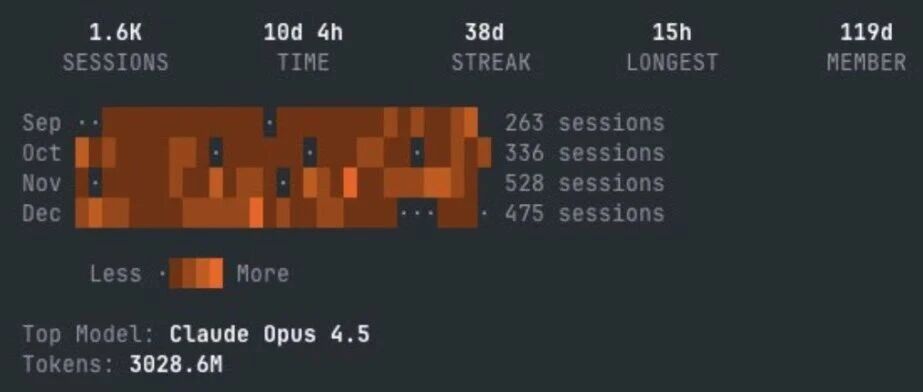
Core Insights - The article discusses the transformative impact of AI Agents on software development, highlighting how individuals with minimal coding experience can deliver functional projects in a short time frame, exemplified by Ben Tossell's achievements over four months [1][3][20] Group 1: AI Agent Collaboration - Ben Tossell utilized AI Agents to complete dozens of real projects, consuming approximately 30 billion tokens in the process [1][4] - His approach involved using a command-line interface (CLI) exclusively, which he found to provide higher capabilities and clearer visibility into the AI's processes [5][6] - The collaboration with AI allowed him to learn programming concepts and project structures without traditional coding education [10][19] Group 2: Project Development Process - Tossell's project development involved several steps: idea generation, context feeding, detailed questioning, allowing AI to execute tasks, and iterative testing [7][8] - He created various tools and projects, including a personal website, a feed aggregator, and a cryptocurrency trading bot, showcasing the versatility of AI in different applications [6][4] Group 3: Learning and Skill Development - Through his experience, Tossell gained proficiency in Bash command line and VPS usage, which enhanced his understanding of software development workflows [11][12] - He emphasized the importance of modular skill reuse, allowing him to create tools that could be utilized across multiple projects [13] - The learning process was characterized by a willingness to ask basic questions and view mistakes as opportunities for growth [16][17] Group 4: Future of Software Development - Tossell predicts a software explosion driven by AI, where many projects may be rough but will lead to a significant increase in quality offerings [20] - He encourages non-technical individuals to engage in project-based learning, emphasizing that the best way to learn coding is through hands-on experience and experimentation [21]

4个月烧掉30亿Token,这位「菜鸟」程序员做出50多个产品,360万人围观
机器之心· 2026-01-03 04:13
Core Insights - The article discusses the evolution of programming in the age of AI, emphasizing that coding is no longer a tedious process but rather an engaging experience where individuals can collaborate with AI to create their desired projects [2][7]. Group 1: New Paradigm of Programming - The traditional view of programming as a skill requiring deep technical knowledge is being challenged by the rise of AI, which allows individuals to engage in coding without extensive prior experience [2][6]. - Ben Tossell, a developer with limited coding skills, has utilized AI to process 30 billion tokens, demonstrating that the ability to navigate systems is more important than traditional coding skills [3][7]. - The concept of "vibe coding" is introduced, which suggests that programming can be approached with a more intuitive mindset, similar to the no-code movement [6][32]. Group 2: Practical Applications and Projects - Tossell has successfully redesigned his personal website and completed around 50 projects using AI, showcasing the practical benefits of this new coding paradigm [10][11]. - He primarily works through a command-line interface (CLI), which he finds more efficient than graphical user interfaces, allowing for a clearer view of the coding process [13][20]. - Tossell emphasizes the importance of end-to-end testing in his projects to catch bugs early, indicating a shift in focus towards quality assurance in the development process [18]. Group 3: Learning and Adaptation - Tossell's approach to learning programming has shifted from traditional methods to a system-thinking perspective, allowing him to understand the components of projects more effectively [27]. - The article highlights the importance of asking fundamental questions to deepen understanding, which has helped Tossell break down barriers in his coding journey [30][25]. - The flexibility of AI tools enables rapid prototyping and iteration, allowing developers to experiment without significant emotional or financial investment [34][35]. Group 4: Future of Programming - The article posits that the future of programming lies in collaboration with AI, where individuals can focus on providing context and prompts rather than mastering complex syntax [24][36]. - Tossell believes that anyone with a desire to explore technology can engage in programming, as the barriers to entry have been significantly lowered [36]. - The rapid feedback loop facilitated by AI tools is expected to lead to an explosion of innovative projects, transforming the landscape of software development [35].
“人人都是程序员”的梦该醒了!AI 编程“大逃杀”:Cursor 或成创业公司唯一“幸存者”,“60 分开发者”撑起最后防线
AI前线· 2025-12-10 08:27
Core Insights - The article discusses the rapid rise and subsequent decline of "Vibe Coding," a trend in AI programming tools that gained significant attention in 2023, highlighting the challenges of user retention and the sustainability of such platforms [3][5][12]. User Engagement Trends - User traffic for major products has significantly decreased, with Lovable's traffic dropping from 35 million to under 20 million, a nearly 50% decline. Other products like Bolt.new and Vercel v0 also experienced substantial decreases of 27% and 64% respectively [4][5]. - The CEO of Bolt.new acknowledged high user churn rates across platforms, emphasizing the need for sustainable business models to retain users [5]. Market Dynamics - The initial hype around AI programming tools was driven by capital investment, leading to inflated valuations and user numbers. However, as interest wanes, a return to realistic valuations is anticipated [5][12]. - Lovable, which claimed to have 35 million monthly active users, is criticized for attracting a user base primarily composed of non-developers, such as product managers and students, rather than professional developers [12][19]. Product Differentiation - Two distinct paths in AI coding tools are emerging: "asynchronous agent-based vibe coding" and "human-led serious engineering collaboration." The latter is more likely to gain long-term acceptance from professional developers [10][14]. - Tools like GitHub Copilot and Cursor focus on integrating into existing workflows, providing assistance rather than complete solutions, which may lead to better user retention [10]. Future Outlook - The article suggests that the future of Vibe Coding may be limited to niche markets, while more sustainable growth is likely to be found in tools designed for professional users and backed by robust infrastructure [24]. - The concept of "vibe working," where AI organizes data for users without requiring technical knowledge, is identified as a potential area for growth, although it remains uncertain if current companies can pivot successfully to this model [25][27].

AI公司创始人现跑路迪拜,80%收入烧广告、假账骗投资人,微软都被坑:硅谷的第一个AI大泡沫出现了
3 6 Ke· 2025-09-01 07:54
Core Insights - Builder.ai, once a leading AI startup valued at $1.5 billion, has filed for bankruptcy due to inflated sales figures and mounting debts, leading to the resignation of its CEO [3][19] - The company spent 80% of its revenue on marketing rather than product development, which contributed to its downfall [10][21] - Allegations of financial misconduct and misrepresentation of AI capabilities have surfaced, drawing comparisons to other failed tech startups [13][23] Company Overview - Builder.ai was founded by Sachin Dev Duggal, who aimed to simplify software development for businesses without requiring programming skills [5][6] - The company gained significant attention and investment, totaling $450 million, particularly after the rise of AI technologies like ChatGPT [7][18] - Despite its initial success, Builder.ai's actual revenue was significantly lower than reported, with discrepancies of $1.15 billion in FY2023 and $1.66 billion in FY2024 [18][19] Financial Mismanagement - The company faced severe cash flow issues, with debts including $85 million owed to Amazon and $30 million to Microsoft [4][18] - Internal investigations revealed that Builder.ai's revenue was grossly exaggerated, leading to a loss of investor confidence [19][21] - The current CEO, Manpreet Ratia, has stated that Builder.ai should serve as a cautionary tale for investors and executives [3][18] Marketing Strategy - Builder.ai's marketing strategy focused heavily on promoting its AI capabilities, spending approximately $42 million on marketing in 2024, which was 80% of its revenue [10][21] - The company participated in major tech events to showcase its AI project management tool, "Natasha," which was marketed as simplifying app development [9][10] - Despite the marketing efforts, the actual product development and delivery were criticized for being inefficient and heavily reliant on manual labor [21][22] Industry Context - The rise of AI technologies has led to a surge in investments in AI startups, but also an increase in scrutiny and allegations of fraud within the sector [23][25] - Builder.ai's collapse highlights the risks associated with overhyping AI capabilities without delivering tangible results [23][24] - The situation reflects a broader trend in Silicon Valley where companies may leverage AI terminology to attract funding, regardless of their actual technological capabilities [23][25]

AI公司创始人现跑路迪拜!80%收入烧广告、假账骗投资人,微软都被坑:硅谷的第一个AI大泡沫出现了!
AI前线· 2025-09-01 06:56
Core Viewpoint - Builder.ai, once a leading AI startup valued at $1.5 billion, has faced a dramatic downfall due to inflated sales figures and mounting debts, leading to its bankruptcy filing in Delaware [4][5][24]. Group 1: Company Background and Growth - Builder.ai was founded by Sachin Dev Duggal, who aimed to simplify software development for businesses without requiring programming skills [7]. - The company initially did not emphasize its AI capabilities, but after significant funding in 2018, it began to market itself as an AI-driven platform [7][8]. - The launch of ChatGPT in late 2022 catalyzed investor interest, resulting in a total investment of $450 million from various investors, including Qatar Investment Authority and SoftBank [9]. Group 2: Financial Mismanagement and Decline - The company's board discovered that Builder.ai's reported revenues were significantly exaggerated, with actual revenues for FY2023 being only $42 million against reported figures of $157 million [23]. - By 2024, the discrepancy widened further, with reported revenues of $217 million but actual revenues of just $51 million [23]. - The company faced severe cash flow issues, leading to unpaid debts of $85 million to Amazon and Microsoft [5][23]. Group 3: Marketing and Operational Strategies - Builder.ai spent approximately 80% of its revenue on marketing rather than product development, with promotional expenses reaching $42 million by 2024 [11][10]. - The company aimed to make software creation as easy as ordering food, promoting its AI project management tool "Natasha" at various tech conferences [12][10]. - Despite claims of AI capabilities, internal documents revealed that much of the work was performed by human contractors rather than AI technology [25][26]. Group 4: Legal and Ethical Concerns - Allegations surfaced regarding the company maintaining two sets of financial records, one for investors and another for internal use, raising concerns about transparency [17]. - Former executives compared Builder.ai to Theranos, suggesting it operated on misleading claims about its technology [17]. - The company's practices of underpaying contractors and misrepresenting its AI capabilities led to significant backlash from former employees [26][25].

速递|告别996!百度秒哒掀起"开发革命",说话就能生成代码的时代来了
Z Finance· 2025-03-24 09:50
Core Viewpoint - Baidu's "MiaoDa" platform, the first conversational application development platform in China, has officially launched, aiming to democratize AI application development and make intelligent agents accessible to everyone [2]. Group 1: Platform Features - MiaoDa combines "no-code programming + multi-agent collaboration + multi-tool invocation," fundamentally changing traditional development processes [1]. - Users can generate complete functional code by simply describing their needs in natural language, achieving a development experience of "3 minutes to generate + 1 hour for iteration" [1]. - The platform includes a "smart agent collaboration matrix" with over ten vertical domain agents, allowing users to dynamically adjust strategies and behaviors based on task requirements [1]. Group 2: Integration and Support - MiaoDa integrates various third-party tools and services, enabling seamless connections with different data sources and tools, thus providing full-link support from demand to deployment [1].