
春节民俗

Search documents
70余万人到市属公园“寻味”新春
Xin Lang Cai Jing· 2026-02-21 23:23
Group 1 - The core point of the articles highlights the significant increase in visitor numbers to city parks during the Spring Festival, with a total of 717,300 visitors recorded on the fifth day of the new year [1] - The top three parks by visitor numbers were identified as Temple of Heaven, Summer Palace, and Jingshan Park, indicating their popularity among tourists [1] - Various parks featured unique food markets and cultural performances, enhancing the festive atmosphere and providing visitors with diverse experiences [1][2] Group 2 - In Xiangshan Park, visitors enjoyed a "Pine Forest Market" where they could taste local delicacies and observe modern cooking technology, such as an AI pancake machine [1] - The performances included traditional activities like stilt walking and lion dances, which attracted families and added to the cultural richness of the park experience [2] - The combination of traditional and modern elements in park decorations and activities provided a fresh and engaging experience for visitors [2]
全国春节“村晚”示范展示点里品民俗
Xin Lang Cai Jing· 2026-02-21 21:23
Group 1 - The article highlights the festive atmosphere in Benquanzhuang Village, Ninghe District, where families engage in traditional New Year celebrations, showcasing a strong sense of community and cultural heritage [1] - The village successfully re-entered the list of the Ministry of Culture and Tourism's "Spring Festival Village Evening" demonstration points for 2026, following its previous selection in 2025, indicating a recognition of its cultural significance [1] - Various traditional performances such as stilt walking, lion dances, and dragon dances were featured, creating an engaging and lively environment for both residents and visitors [1] Group 2 - The New Year market was bustling with activity, offering a variety of local snacks, specialty agricultural products, and festive items, contributing to the vibrant local economy [1] - The performances and market activities attracted significant participation from villagers, with many capturing the moments on their phones, reflecting the integration of modern technology with traditional celebrations [1] - The overall event was characterized by a strong sense of joy and community spirit, effectively preserving the authentic flavor of the New Year celebrations [1]
六马贺春·龙马精神|随兔爷跨马寻龙,用水墨画出京韵中国年
Xin Lang Cai Jing· 2026-02-15 11:37
Core Viewpoint - The article highlights the launch of the AIGC series short film "Dragon Horse Spirit," which showcases traditional Chinese aesthetics through ink painting, celebrating the Chinese New Year and Beijing culture [1] Group 1 - The short film "Dragon Horse Spirit" combines the cultural symbols of the Rabbit and the Horse, representing Beijing's cultural heritage [1] - It features a journey through the streets of Beijing, where the characters encounter the Chinese Dragon, symbolizing strength and vitality [1] - The film integrates elements of Peking opera and other cultural aspects, enhancing the festive atmosphere of the Spring Festival [1]
备年货赏民俗 各地张灯结彩迎新春
Yang Shi Wang· 2026-02-07 11:55
Group 1 - The article highlights the festive atmosphere as the Spring Festival approaches, with people preparing for the holiday by purchasing goods and enjoying traditional customs [1] - Various local markets are bustling with activity, showcasing a wide range of agricultural products and traditional foods, such as fried oil cakes and traditional snacks, which symbolize prosperity and happiness [1] - Flower markets in southern regions are thriving, with diverse offerings like orchids and narcissus, attracting many visitors who are eager to buy flowers for the New Year [1] Group 2 - Cultural events and performances are taking place, including dragon and lion dances, as well as local operas, which enhance the festive spirit and engage the community [1] - In Beijing, the Modekou New Year Lantern Festival features stunning light displays that blend historical elements with modern artistic expressions, providing a unique experience for visitors [2] - Other cities like Hubei and Shanghai are also hosting lantern festivals that incorporate traditional craftsmanship and innovative technology, creating interactive and immersive experiences for attendees [2]
邀你“马上入川” 共度锦绣安逸年
Xin Lang Cai Jing· 2026-02-04 21:36
Core Viewpoint - The Sichuan Provincial Culture and Tourism Department announced a series of initiatives for the upcoming Spring Festival, including nearly 3,000 cultural and tourism activities and the distribution of over 30 million yuan in consumption vouchers to enhance the travel experience for visitors and locals [3][8]. Group 1: Cultural and Tourism Activities - Sichuan will launch nearly 3,000 cultural and tourism promotional activities during the Spring Festival, covering various forms such as art exhibitions, music performances, intangible cultural heritage markets, and rural temple fairs [6][7]. - The province aims to create a unique "Sichuan flavor" experience by integrating local customs and astronomical science into the festival activities, particularly targeting youth engagement through educational tourism [6][9]. - Major cities like Chengdu will host significant themed events, including the 55th International Panda Lantern Festival and various cultural exhibitions, to enhance the festive atmosphere [6][7]. Group 2: Consumption Vouchers and Incentives - Sichuan has already distributed 100,000 free tickets to national scenic spots and will issue over 30 million yuan in tourism consumption vouchers during the Spring Festival, covering diverse spending areas such as attractions, accommodations, dining, and cultural performances [8][9]. - Specific promotions include discounted tickets for certain demographics and free entry to various attractions, aimed at stimulating tourism spending [8][9]. Group 3: Regional Product Offerings - The province has tailored regional tourism products to meet diverse visitor needs, including ski resorts in the western plateau, cultural experiences in the southern region, and wellness retreats in central and northern Sichuan [9]. - Efforts are being made to enhance the overall travel experience by promoting new consumption scenarios that integrate dining, accommodation, and entertainment, alongside digital tourism innovations [9].

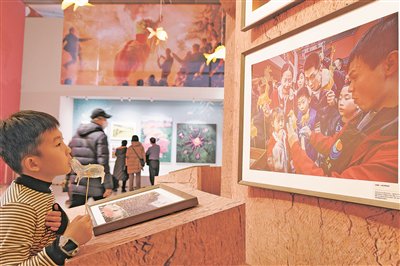
400余幅作品定格大江南北“中国年”
Xin Lang Cai Jing· 2026-01-29 16:41
Core Viewpoint - The "Chinese New Year - Spring Festival Theme Photography Exhibition and Huangyan Cultural Tourism Exhibition" showcases the rich traditions and customs of the Spring Festival across China, highlighting the vitality and transmission of intangible cultural heritage in contemporary life [1]. Group 1: Exhibition Overview - The exhibition opened on January 26 at the China Intangible Cultural Heritage Museum and features over 400 selected photographs from nearly 40,000 submissions by the China Folk Photography Association [1]. - It systematically outlines the complete customs from the end of the year to the beginning of spring, using key dates such as "Laba," "Little New Year," "New Year's Eve," "Beginning of Spring," "Lantern Festival," and "February 2" as a timeline [1]. Group 2: Featured Works - The exhibition includes diverse representations of Spring Festival traditions and customs from various regions and ethnic groups, capturing both the essence of heritage and the warmth of family reunions [1]. - Notable works include Yao Maoxiang's "Miao Township Drum Rhythm: Double Shadows Leaping to Celebrate Laba," which depicts the national intangible cultural heritage of "Xiangxi Miao Drum Dance," and Liu Weiqing's "Grandma's New Year Red Envelope," which illustrates the blend of traditional customs with modern digital practices [1]. Group 3: Exhibition Duration and Organizers - The exhibition is co-hosted by the China Intangible Cultural Heritage Museum and the China Folk Photography Association and will be on display until March 20 [1].
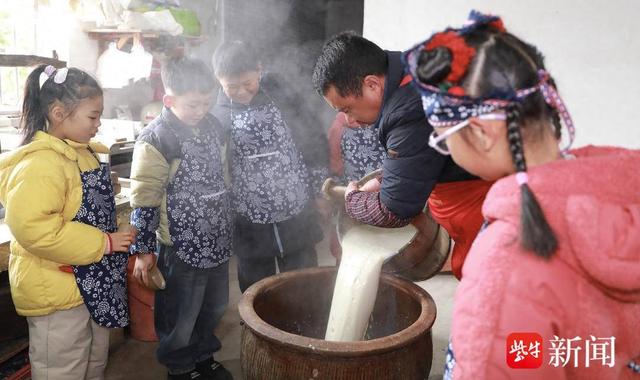
一天加工两三百斤豆子,句容百年豆腐坊撑起农家春节 “福” 味
Xin Lang Cai Jing· 2026-01-29 14:39
Core Viewpoint - The article highlights the traditional practice of tofu making in Jiangsu's rural areas, particularly in the context of the upcoming Spring Festival, emphasizing its cultural significance and the joy it brings to both locals and visiting children [2][4]. Group 1: Tofu Making Process - The tofu making process involves multiple steps including soaking beans, grinding, boiling, adding coagulant, and pressing, each requiring skill and patience [6]. - The traditional tofu workshop, run by Zhu Zhaoyang, has been passed down for over a century and experiences a peak in orders from farmers before the Spring Festival [6]. Group 2: Cultural Significance - Tofu, phonetically similar to the word for "blessing" in Chinese, is considered a lucky food for the Spring Festival, symbolizing good fortune and happiness [6]. - The workshop operates from early morning until late at night, processing two to three hundred pounds of beans daily during the peak season [6]. Group 3: Community Engagement - Local children participate in the tofu making experience, learning about traditional customs and enjoying the freshly made soy milk and tofu, which enhances their understanding of cultural heritage [4]. - The event fosters a sense of community and connection to agricultural practices, as families engage in the preparation of traditional foods for the New Year [2].
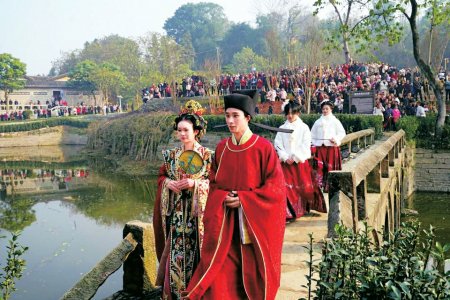
大寒迎年,藏着哪些讲究?
Xin Hua She· 2026-01-18 08:57
Group 1 - The core idea of the article revolves around the cultural significance of "Dahan" (the Great Cold) and its connection to the Chinese New Year, emphasizing that Dahan serves as a traditional marker for the approach of the New Year [1][2] - Dahan is the last of the 24 solar terms, occurring around January 20 each year, and its proximity to the Chinese New Year varies, with the earliest New Year falling on January 21 and the latest on February 19 in the 21st century [1] - The phrase "after Dahan, it's New Year" reflects the deep-rooted cultural belief that Dahan signifies the start of the New Year celebrations, regardless of the actual date of the New Year [1] Group 2 - The anticipation of "Nianwei" (the flavor of the New Year) is highlighted, which encompasses the joy, harmony, and culinary delights associated with the New Year festivities [2] - During Dahan, especially after the eighth day of the twelfth lunar month, families across urban and rural areas begin preparations for the New Year, including discussions about visiting relatives and friends [2] - The New Year is portrayed as a significant event for the Chinese people, characterized by traditional decorations, festive meals, and the warmth of homecoming [2]