豆腐脑

Search documents
神山村里过大年
Xin Lang Cai Jing· 2026-02-17 22:48
Group 1 - The article highlights the increasing popularity of Shenshan Village in Jiangxi during the Spring Festival, attracting a large number of tourists, particularly from outside the local area [1] - Various traditional activities are taking place in the village, including calligraphy, paper-cutting, and making glutinous rice cakes, which are drawing significant visitor engagement [2] - The presence of local artisans and cultural performances, such as the lion dance, enhances the festive atmosphere and showcases the village's cultural heritage [2] Group 2 - Visitors are motivated to learn about the historical significance of Shenshan Village, particularly its connection to revolutionary martyrs, with families bringing offerings to honor them [3] - The article emphasizes the importance of passing down the "red gene" and understanding the sacrifices made for the current way of life, as demonstrated by a visitor who brought traditional food to commemorate local heroes [3]
古集新韵乡情切
Xin Lang Cai Jing· 2026-02-15 22:17
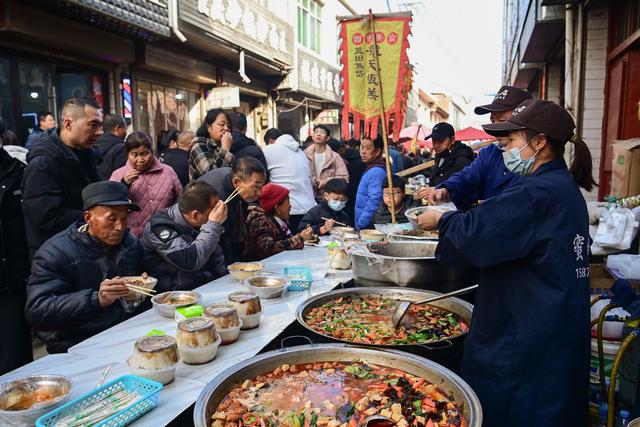
Core Insights - The traditional market in Hemudu Town, Yuyao City, is experiencing a vibrant atmosphere as it continues its centuries-old tradition, showcasing local delicacies and crafts during the festive season [1][2] Group 1: Market Atmosphere - The market is adorned with festive decorations, including red couplets and various Chinese knots, creating a lively and celebratory environment [1] - Vendors are offering a wide range of traditional foods and goods, such as local sausages, dried mushrooms, and handmade bamboo products, reflecting the local culture and craftsmanship [1][2] Group 2: Vendor Experiences - Long-time vendors, like Rong Xin from Anhui and Kong Erqiu from Jiangsu, highlight their dedication to their craft, with many having established a loyal customer base over the years [2] - The market serves as a vital hub for local residents and visitors from surrounding areas, providing a one-stop shop for New Year goods, especially for those who may not be familiar with modern technology [2] Group 3: Community Engagement - The market attracts a diverse crowd, including elderly residents who reminisce about the past and appreciate the convenience of modern transportation to access the market [2] - The market administrator notes the significant turnout, with over 60 stalls participating in the last major market day before the New Year, indicating strong community engagement and participation [2]
新春走基层|陕西蓝田焦岱大集:百年烟火赶新潮
Xin Lang Cai Jing· 2026-02-15 16:55
Core Insights - The focus of the article is on the thriving rural market of Jiaodai, which has transformed into a popular destination for tourists, with over 40% of visitors coming from outside the region, and daily foot traffic reaching tens of thousands [1][9]. Group 1: Market Dynamics - Jiaodai market, historically a trade hub, has seen a significant increase in visitors, particularly during the festive season, reflecting a broader trend of rural revitalization and cultural tourism [1][9]. - The market features a variety of local delicacies, with vendors like Wu's beef gaining national recognition, leading to increased orders from distant provinces such as Hubei and Sichuan [3][5]. - The market's appeal is enhanced by the presence of live streaming, which has helped vendors promote their products and attract a diverse clientele, including international visitors [5][9]. Group 2: Economic Impact - The Jiaodai market supports over 1,500 businesses and provides employment for more than 3,000 people, contributing significantly to the local economy [9]. - The local government plans to invest in infrastructure improvements, including street renovations and enhanced facilities, to further boost the market's attractiveness and operational efficiency [9].

白塔飘升烟火气 市集焕新再升级
Xin Lang Cai Jing· 2026-02-12 20:33
Core Insights - The article highlights the recent upgrade of the Bai Ta Market in Shenyang, which aims to enhance the local community's living experience and promote regional economic development [3][4][6]. Group 1: Market Features - Bai Ta Market covers an area of 6,000 square meters and operates without road restrictions, allowing for extended business hours from 11:00 AM to 12:30 PM, catering to local residents' schedules [4][6]. - The market features 389 unique stalls offering fresh produce, local specialties, and products from surrounding areas, emphasizing the connection between urban and rural economies [5][6]. Group 2: Community Engagement - The market provides discounts for low-income households, veterans, and disabled individuals, fostering an inclusive environment and supporting over 10 special group vendors [6][7]. - The market's management emphasizes a people-centered approach, aiming to enhance service quality and operational efficiency while integrating cultural and tourism elements into the market experience [7]. Group 3: Future Development - Plans for further development include optimizing convenience services, improving management standards, and promoting a blend of culture and tourism with community welfare as the core focus [7].
唤醒年味记忆的望花大集
Xin Lang Cai Jing· 2026-02-04 20:31
Core Insights - The article highlights the vibrant atmosphere of the Wanghua Market in Shenyang, which has become a significant cultural landmark for experiencing traditional Chinese New Year customs [1][3]. Group 1: Market Dynamics - The Wanghua Market has over 300 fixed stalls and additional mobile vendors, attracting more than 10,000 visitors on peak days during the New Year season [2]. - The market's popularity is rooted in a long-standing agricultural trading tradition in Northeast China, making it a key location for purchasing New Year goods [1][3]. Group 2: Cultural Significance - The market serves as a nostalgic space for locals, evoking memories of childhood and traditional New Year celebrations, with a variety of foods that are integral to the holiday experience [3][4]. - Young consumers have increasingly become the main demographic at the market, with many using social media to share their experiences, thus enhancing the market's appeal as a trendy destination [3][4]. Group 3: Visitor Experience - Visitors express a strong emotional connection to the market, often returning for the authentic flavors and festive atmosphere that remind them of their childhood [4]. - The market combines shopping for New Year goods with cultural experiences, creating a lively environment filled with joy and nostalgia [4].
一天加工两三百斤豆子,句容百年豆腐坊撑起农家春节 “福” 味
Xin Lang Cai Jing· 2026-01-29 14:39
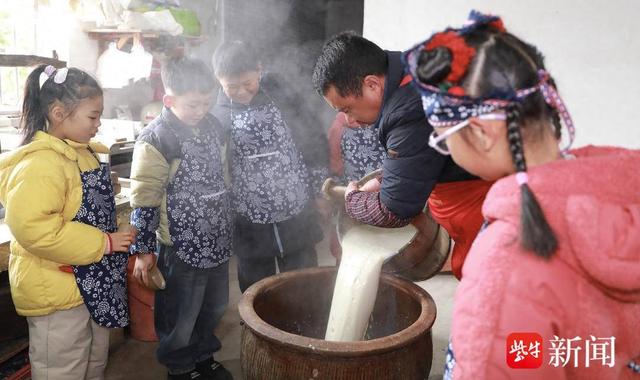
Core Viewpoint - The article highlights the traditional practice of tofu making in Jiangsu's rural areas, particularly in the context of the upcoming Spring Festival, emphasizing its cultural significance and the joy it brings to both locals and visiting children [2][4]. Group 1: Tofu Making Process - The tofu making process involves multiple steps including soaking beans, grinding, boiling, adding coagulant, and pressing, each requiring skill and patience [6]. - The traditional tofu workshop, run by Zhu Zhaoyang, has been passed down for over a century and experiences a peak in orders from farmers before the Spring Festival [6]. Group 2: Cultural Significance - Tofu, phonetically similar to the word for "blessing" in Chinese, is considered a lucky food for the Spring Festival, symbolizing good fortune and happiness [6]. - The workshop operates from early morning until late at night, processing two to three hundred pounds of beans daily during the peak season [6]. Group 3: Community Engagement - Local children participate in the tofu making experience, learning about traditional customs and enjoying the freshly made soy milk and tofu, which enhances their understanding of cultural heritage [4]. - The event fosters a sense of community and connection to agricultural practices, as families engage in the preparation of traditional foods for the New Year [2].
乐山市首届彩灯嘉年华·年货电商季举行
Xin Lang Cai Jing· 2026-01-26 03:34
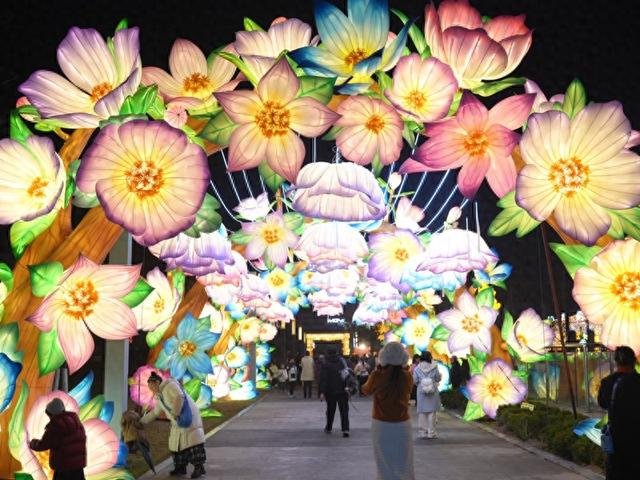
Core Points - The first Lantern Carnival in Leshan, themed "Visit the Lantern Festival, Shop for Good Goods," commenced on January 23 at Baolian Square, featuring nearly twenty sets of intangible cultural heritage lanterns that integrate Leshan's cultural essence into light and shadow design [1][4]. Group 1: Event Highlights - The "Ma Yue Fu Lai" lantern set, designed in the shape of a fiery steed, conveys wishes for good fortune in the New Year [4]. - The "Haitang He Chun" lantern set incorporates the city flower, the begonia, showcasing its beauty through light [4]. - The "Chuang You Jiu Feng" lantern set reflects local cultural tourism characteristics, allowing visitors to experience the scenic beauty of Leshan through light [4]. - The "Leshan Cuisine" lantern set vividly presents local delicacies such as "Bo Bo Ji" and "Dou Fu Nao" [4]. - A giant "Qi Fu Shu" lantern set combines the concept of blessings with modern lighting technology, becoming a popular photo spot for visitors [4]. Group 2: Integration of E-commerce - The carnival innovatively integrates "lanterns + e-commerce," with the "Leshan City Selection Comprehensive Pavilion" serving as a core hub for traffic and consumer conversion [4]. - Leading streamers form a live broadcast matrix to promote the lantern festival and Leshan cultural products, including "Leshan Good Goods" [4]. - Visitors can enjoy a convenient shopping service by scanning QR codes, allowing for offline experiences and online orders with home delivery [4]. Group 3: Additional Activities - The event will run until March 8, with opening hours at 17:00 on weekdays and 16:00 on weekends and holidays, featuring daily lighting at 18:30 [5]. - During the Spring Festival, various programs such as themed parades, national trend performances, dialect comedy, and robot dance will be held, creating an interactive atmosphere for all ages [5].
雅集 | 我世界里的第一位“大女主”
Xin Lang Cai Jing· 2026-01-17 15:40
Core Viewpoint - The narrative emphasizes the importance of home-cooked meals and the deep emotional connections tied to food, particularly through the lens of a mother's love and culinary skills [2][3][15] Group 1: Culinary Skills and Traditions - The protagonist's mother showcases exceptional culinary skills, particularly in making tofu from scratch, highlighting the labor-intensive process and the use of fresh, local ingredients [3][5] - The mother’s ability to create various dishes from simple ingredients, such as transforming leftover soybean pulp into multiple recipes, reflects resourcefulness and creativity in cooking [3][5] Group 2: Family and Emotional Bonds - The narrative illustrates the strong emotional ties between family members, particularly through shared meals and the mother's nurturing role, which creates lasting memories of comfort and warmth [2][5][15] - The mother's actions, such as providing food for a less fortunate neighbor, demonstrate compassion and a sense of community, reinforcing the values of kindness and empathy [13][14] Group 3: Cultural Context and Values - The story is set in a rural context where traditional values, such as hospitality and generosity, are prevalent, showcasing a lifestyle that emphasizes community and familial support [12][14] - The mother's character embodies the qualities of a "big female lead," representing strength, resilience, and the ability to navigate life's challenges with grace and determination [15]

近乡情更切
Xin Lang Cai Jing· 2026-01-10 00:53
Group 1 - The article reflects on the emotional journey of returning home, highlighting the nostalgia associated with the changes in transportation and road conditions over time [1][2] - The narrative emphasizes the significance of familiar landmarks, such as the uncle's breakfast shop, as markers of home and connection to childhood memories [2][3] - The reunion with family members, particularly the uncle and aunt, showcases the warmth and joy of familial bonds, enhanced by the traditional food that symbolizes deep-rooted cultural ties [3]
北京打工族:我赚的钱只敢在河北花
3 6 Ke· 2025-11-24 04:24
Core Insights - The article highlights a shift in consumer behavior among Beijing residents, who are increasingly seeking more affordable options in nearby regions like Hebei, leading to a change in the commercial landscape within Beijing itself [1][11][27] Group 1: Consumer Behavior Shift - Many Beijing residents are opting for weekend trips to Hebei, where they can enjoy significantly lower prices for dining and entertainment compared to Beijing [2][10] - The experience of traveling to Hebei is described as a "life-saving" measure for those feeling financially strained in Beijing, with reports of substantial savings on meals and activities [1][6][11] - The trend reflects a broader movement where consumers are prioritizing value and affordability over luxury experiences, as seen in the decline of high-end dining and shopping in Beijing [19][20][27] Group 2: Impact on Beijing's Commercial Landscape - The once-bustling shopping centers in Beijing, such as SKP, are experiencing a noticeable decline in foot traffic and sales, indicating a shift in consumer spending habits [13][14][18] - High-end brands are struggling to maintain their customer base, with reports of closures and reduced sales figures in luxury retail [18][19] - The closure of long-standing establishments like the Beijing Parkson department store further illustrates the challenges faced by traditional retail in adapting to changing consumer preferences [18][19] Group 3: Emerging Trends in Dining and Entertainment - Affordable dining options are gaining popularity, with consumers gravitating towards budget-friendly restaurants rather than high-end establishments [20][26] - The rise of local, inexpensive food options reflects a shift in consumer values, where practicality and enjoyment take precedence over status [22][26] - The entertainment sector is also adapting, with a surge in live performances and events that cater to a younger audience, indicating a vibrant but evolving market [23][25]