智能网联汽车辅助驾驶

Search documents
L3级辅助驾驶落地在即 相比L2有何区别?
Xin Lang Cai Jing· 2025-12-26 06:42
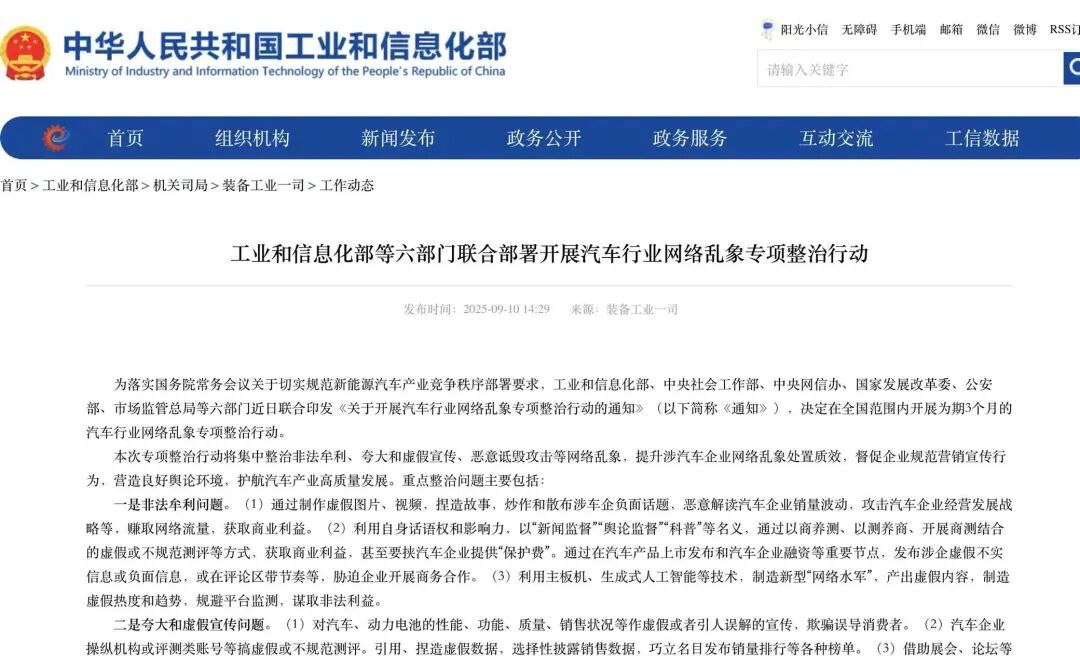
Core Viewpoint - The approval of L3 conditional autonomous driving for Changan Deep Blue and Arcfox models marks a significant advancement in China's autonomous driving technology, transitioning from "assisted driving" to "conditional driving" [1] Classification of Driving Automation Levels - China's driving automation levels are defined by the standard "Automotive Driving Automation Classification" (GB/T 40429-2021), which categorizes driving automation from Level 0 to Level 5 based on the execution capability of dynamic driving tasks [1] - Level 2 (Partial Automation) requires the driver to monitor the environment continuously, while Level 3 (Conditional Automation) allows the system to perform all dynamic driving tasks under specific conditions, with the driver needing to take over only when requested [4][5] Technical Differences Between L2 and L3 - L2 relies on a combination of cameras and millimeter-wave radar with processing power typically ≤100 TOPS, while L3 requires a more advanced setup with laser radar and multi-sensor fusion, demanding processing power ≥500 TOPS [8] - L3 systems feature dual-loop control and redundancy in braking systems, enhancing safety by ensuring functionality even if a single hardware component fails [10] Legal and Responsibility Framework - The key distinction between L2 and L3 is the shift in responsibility; L2 is "human-led, system-assisted," while L3 is "system-led, human fallback," clarifying liability during system activation and takeover requests [11] - Recent regulations from the Ministry of Industry and Information Technology outline the approval and operational rules for L3/L4 autonomous vehicles, establishing a legal framework for responsibility allocation [13] User Experience and Safety - L3 offers significant improvements in user experience, allowing drivers to disengage from constant monitoring under certain conditions, with manufacturers bearing liability in case of accidents [14] - Testing data indicates that L3 systems have a lower takeover rate compared to L2, with a response time of at least 10 seconds for drivers to take control when requested [14] Challenges and Future Outlook - Despite initial approvals, widespread adoption of L3 technology faces challenges including technical validation, regulatory refinement, and user education [15] - The government plans to expand L3 pilot programs and enhance related legal frameworks to promote the development of the autonomous driving industry [15]

超11万辆SU7标准版被召回,小米回应
Guan Cha Zhe Wang· 2025-09-19 07:37
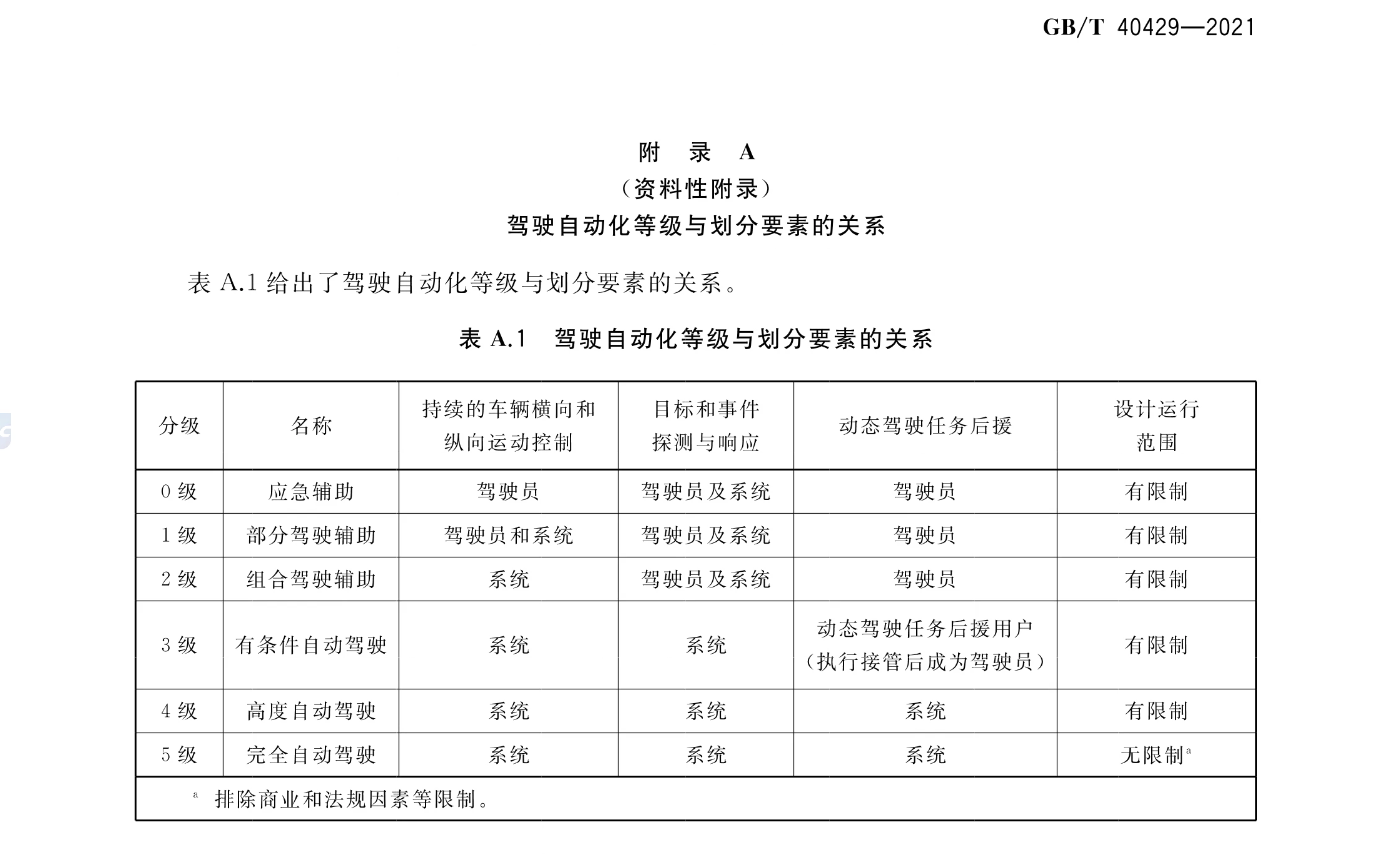
Core Viewpoint - Xiaomi Auto Technology Co., Ltd. has announced a recall of 116,887 units of its SU7 standard version electric vehicles due to potential safety risks associated with the L2 highway navigation assistance feature [1][5]. Group 1: Recall Details - The recall affects vehicles produced between February 6, 2024, and August 30, 2025, specifically targeting certain conditions where the vehicle may inadequately recognize, warn, or respond to extreme scenarios, increasing the risk of collision [1][5]. - Xiaomi will implement a free software upgrade via Over-The-Air (OTA) technology to address the identified safety issues [1][5]. Group 2: Software Upgrade Features - The OTA upgrade aims to enhance the reliability of the driving assistance features, including optimizing speed control strategies and introducing a dynamic speed function for smoother navigation [5]. - The upgrade specifically targets the performance of the SU7 standard version's driving assistance system, improving its handling on highways and urban expressways, as well as enhancing the vehicle's ability to identify and navigate around large vehicles [5]. Group 3: Product Specifications - The Xiaomi SU7 is the company's first mass-produced vehicle, available in standard, Pro, and Max configurations, with the standard version equipped with the "Xiaomi Pilot Pro" driving assistance system [6]. - The standard version features a pure vision driving system powered by an NVIDIA Drive Orin-N chip with a computing power of 84 TOPS, while the Pro and Max versions utilize dual Orin chips with a total computing power of 508 TOPS [6]. Group 4: Regulatory Context - The recall comes shortly after the Ministry of Industry and Information Technology sought public opinion on new national standards for intelligent connected vehicles, which include safety requirements for various driving assistance functions [7][8]. - The new standards emphasize testing capabilities in construction zone environments, which are relevant to recent incidents involving the SU7 model [8][12].

六部门出手!3个月整治汽车网络乱象,AI水军、虚假测评是重点
Guo Ji Jin Rong Bao· 2025-09-10 11:42
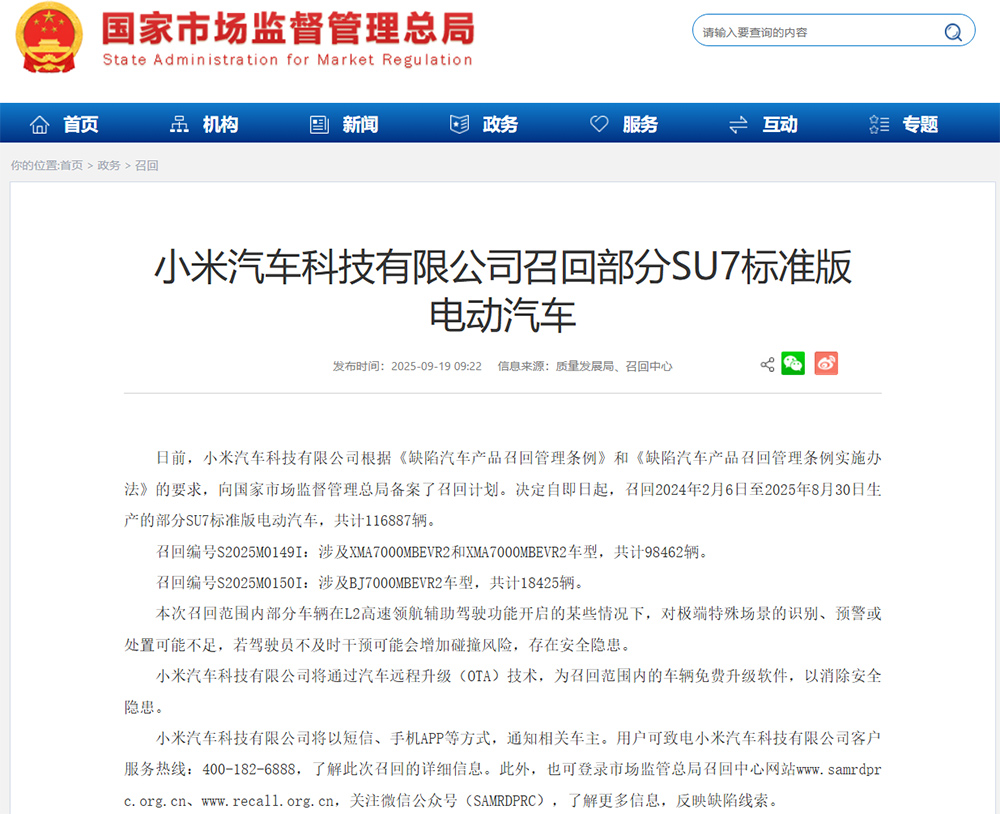
Core Viewpoint - The Chinese government has initiated a three-month special action to rectify online chaos in the automotive industry, focusing on illegal profit-making, exaggerated and false advertising, and malicious attacks against competitors, aiming to enhance the quality of network disorder management and promote high-quality development in the automotive sector [1][9]. Group 1: Key Issues to be Addressed - Illegal profit-making includes creating false images and videos, distorting sales data, and using threats to extract "protection fees" from automotive companies [3]. - Exaggerated and false advertising involves misleading consumers about the performance and quality of vehicles and batteries, as well as manipulating evaluation accounts to present false data [4][5]. - Malicious attacks target competitors through defamation, orchestrating negative campaigns, and leveraging online influencers to spread false information [7]. Group 2: Industry Context - The automotive industry reported revenues of 41,283 billion yuan in the first five months of the year, a year-on-year increase of 7%, while profits fell by 11.9% to 1,781 billion yuan, resulting in a profit margin of only 4.3%, which is lower than the average of 5.7% for downstream industrial enterprises [11]. - The competitive landscape has intensified, leading to irrational competition and practices such as price wars, which have pressured companies to cut R&D spending and compromise product quality [11]. - Recent incidents, such as the Xiaomi SU7 high-speed accident, have prompted a reevaluation of smart driving technologies and the need for stricter regulations on advertising claims related to autonomous driving features [13][14].