未盈利生物科技公司上市

Search documents
从北交所到港交所,未盈利药企普祺医药寻路资本市场
Bei Jing Shang Bao· 2026-02-09 13:05
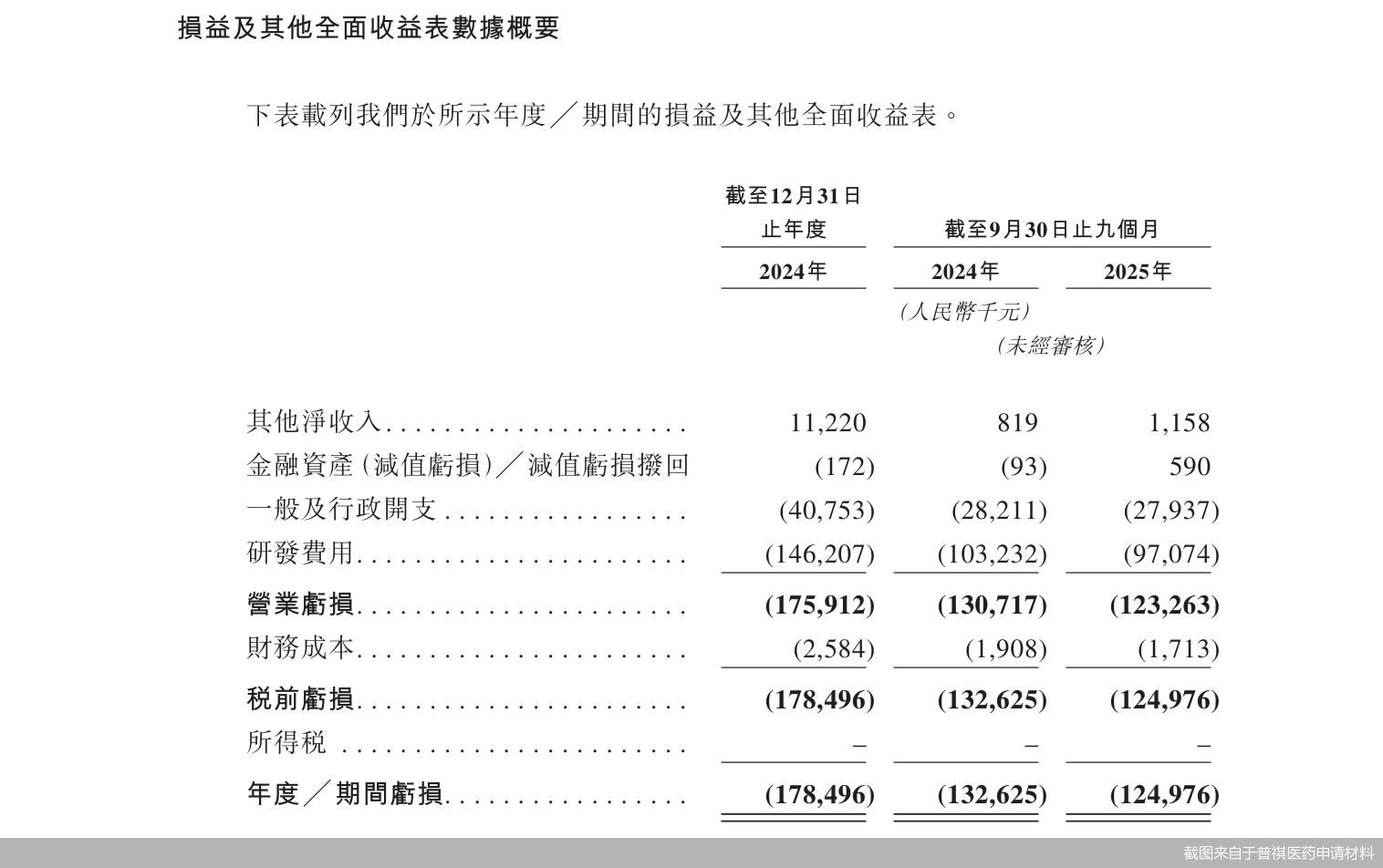
Core Viewpoint - Beijing Puxi Pharmaceutical Technology Co., Ltd. has submitted a listing application to the Hong Kong Stock Exchange after withdrawing its IPO application from the Beijing Stock Exchange, reflecting a strategic shift for unprofitable biotech companies in the current market environment [1][3][6] Company Overview - Puxi Pharmaceutical, established in 2016, focuses on the field of immune inflammation, with its core product being Pumeixin (PG-011) [3][6] - The company has not yet launched any products, with its core product currently in various stages of clinical trials [1][3] Financial Performance - The company reported a cumulative loss exceeding 300 million yuan from 2024 to the first three quarters of 2025, with a net loss of 178.496 million yuan for 2024 and 125 million yuan for the first three quarters of 2025 [2][6] - Puxi Pharmaceutical's revenue was zero for 2022 and 2023, with only 47,200 yuan in revenue from other business activities in 2024 [5][6] Strategic Shift - The decision to switch from the Beijing Stock Exchange to the Hong Kong Stock Exchange is seen as a pragmatic adjustment due to the more stringent review process for unprofitable companies on the former [1][6] - The Hong Kong Stock Exchange's Chapter 18A is designed for unprofitable biotech companies, offering lower listing thresholds and faster access to capital [1][6] Product Development - Pumeixin has two formulations: a gel for atopic dermatitis and a nasal spray for allergic rhinitis, both of which are in advanced clinical trial stages [7][8] - The gel has completed Phase III trials for adults and adolescents, while the nasal spray is in Phase III trials for adults [7] Commercial Collaboration - Puxi Pharmaceutical has signed an exclusive commercialization agreement with Jichuan Pharmaceutical, allowing the latter to market Pumeixin nasal spray in China for up to 1 billion yuan [8][9] - This partnership is expected to provide essential funding and leverage Jichuan's commercial expertise to expedite market entry for Puxi's products [9]

今年港股IPO数量破百 科技板块成市场引擎
Zheng Quan Shi Bao· 2025-12-12 18:00
Core Insights - The Hong Kong IPO market has shown a strong recovery, with the listing of JD Industrial marking the 100th new stock in 2025, highlighting the market's resilience and attractiveness as an international financial center [1] Group 1: IPO Market Performance - In 2025, the Hong Kong IPO market raised over 270 billion HKD, significantly surpassing the previous year's figures and marking the second highest fundraising level in five years [2] - The Hong Kong Stock Exchange (HKEX) is projected to lead globally in fundraising with approximately 36 billion USD (about 280.8 billion HKD) in 2025, outpacing the New York Stock Exchange's expected 20.5 billion USD [2] - Eight new stocks raised over 10 billion HKD each, with CATL leading at 41.006 billion HKD, setting a record for the largest IPO globally this year [2] Group 2: Large IPOs and Sector Contributions - Large IPOs have been a key driver of the Hong Kong market's resurgence, with over 20 A-share companies expected to debut in Hong Kong, raising over 170 billion HKD collectively [3] - The average fundraising size has increased by 137% compared to last year, reaching the second highest level in five years, with industrial and retail sectors dominating [3] Group 3: Technology Sector Dominance - Technology-related companies have emerged as the main force in the IPO wave, particularly those under Chapter 18A (unprofitable biotech companies) and Chapter 18C (specialized technology companies) [3] - In 2025, 14 companies listed under Chapter 18A, a 250% increase from 2024, focusing on innovative fields such as cancer treatment and gene editing [4] Group 4: Market Outlook and Predictions - Major institutions are optimistic about the 2026 IPO market, predicting 150 to 200 new listings and fundraising exceeding 300 billion HKD [6] - UBS forecasts that the Hong Kong market will maintain its position as the top fundraising venue, with several large IPOs expected in January [6] Group 5: Recommendations for Companies - Companies planning to go public are advised to embrace technology and build integrated financial governance systems to ensure data transparency and compliance with regulatory standards [7]


【锋行链盟】港交所IPO基础发行架构
Sou Hu Cai Jing· 2025-09-26 01:09
Core Viewpoint - The Hong Kong Stock Exchange (HKEX) is recognized as a major global financial center, known for its market-oriented, international, and flexible IPO listing system, which attracts various types of enterprises for financing [2][4]. Group 1: Participants in IPO - The IPO process at HKEX involves multiple stakeholders, including regulatory bodies, issuers, sponsors, underwriters, and intermediary institutions [2]. - Key participants include: - Regulatory bodies such as the Hong Kong Securities and Futures Commission (SFC) overseeing market fairness and intermediary behavior [2]. - Issuers, which are companies seeking to go public and must meet HKEX listing requirements [2]. - Sponsors, who are licensed brokers responsible for due diligence and compliance [2]. - Underwriters, typically major international investment banks or Chinese brokers, handling share sales and pricing [2]. Group 2: Types of Issuance Structures - HKEX supports diverse listing structures to meet different enterprise needs, including: - H-shares for domestic companies listed overseas [2]. - Red-chip companies for foreign-registered firms with primary operations in mainland China [2]. - Weighted Voting Rights (WVR) structures allowing certain shareholders enhanced voting power [2][5]. - The introduction of Chapter 18A allows unprofitable biotech companies to list under specific conditions, focusing on R&D investment and clinical trial progress [5]. Group 3: Core Process of IPO - The typical IPO process at HKEX spans 6-12 months, with key stages including: - Preliminary preparation (3-6 months) [3]. - Submission and hearing (3-4 months) [3]. - Roadshow and pricing (1-2 weeks) [3]. - Issuance and listing (within 1 week) [3]. Group 4: Post-Issuance Regulation and Lock-Up Period - Post-issuance, companies must adhere to continuous disclosure requirements and face lock-up periods for major shareholders [6]. - Lock-up periods typically last 6 months for controlling shareholders and executives, with potential extensions [6]. - Price stabilization mechanisms may be employed by underwriters within 30 days post-listing to mitigate stock price volatility [6].

★港交所推出科企专线应时应势
Zheng Quan Shi Bao· 2025-07-03 01:56
Group 1 - The Hong Kong Stock Exchange (HKEX) has launched a dedicated listing channel for technology and biotech companies, described as "hands-on service" by the CEO [1] - This channel provides specialized guidance for companies preparing for their IPOs, helping them understand and meet listing requirements more efficiently [1] - A significant breakthrough of this channel is the option for companies to submit their IPO applications confidentially, reducing risks associated with early disclosure of sensitive information [1] Group 2 - HKEX's recent reforms aim to solidify Hong Kong's position as the preferred listing platform for emerging and innovative companies [2] - Since 2018, the number of new economy companies has surged in the Hong Kong market, transforming it from a traditional focus on real estate, finance, and energy [2] - In 2024, Hong Kong's new stock fundraising is projected to reach HKD 88 billion, ranking fourth globally, with over 80% of this amount contributed by technology companies, particularly in biotech and AI [2]