
机制B

Search documents
3000倍超购换来首日暴跌近50%,翰思艾泰-B何以成为打新“陷阱”?
Zhi Tong Cai Jing· 2025-12-23 11:57
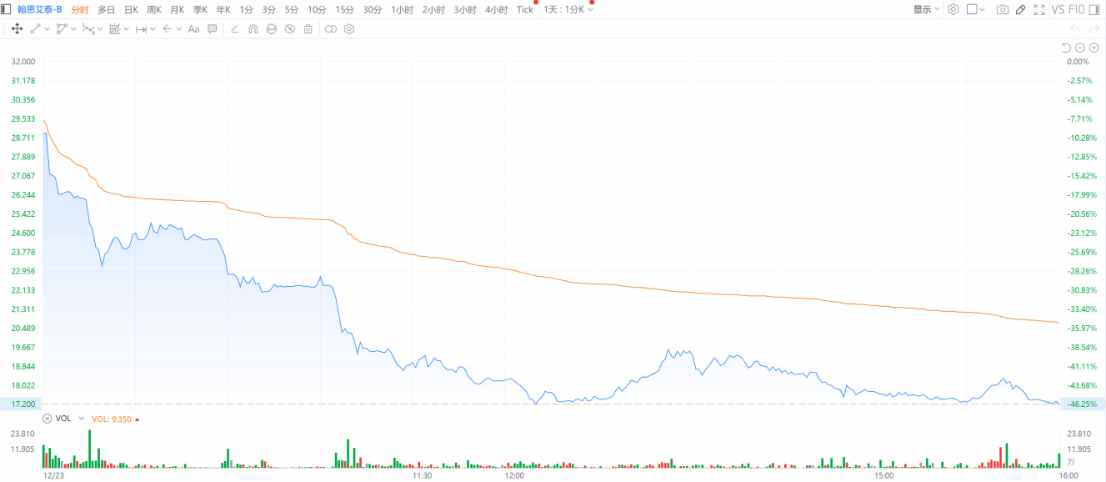
Core Viewpoint - The recent IPOs of two biotech companies, Huazhang Biotechnology and Hansai Aitai, faced significant declines on their debut trading days, indicating a bearish sentiment in the market for innovative drug companies, despite their initial hype and strong subscription rates [1][3][9]. Group 1: IPO Performance - Huazhang Biotechnology's stock fell nearly 30% on its first trading day, while Hansai Aitai's stock opened at 28.9 HKD, down 9.69% from its issue price of 32 HKD, and closed at 17.20 HKD, marking a 46.25% drop [1][3]. - Hansai Aitai's stock experienced a maximum intraday decline of 46.25%, failing to recover significantly by the end of the trading day [1][3]. Group 2: Subscription and Issuance Details - Hansai Aitai's global offering consisted of 18.32 million shares, with a public offering that was oversubscribed by 3074.09 times, resulting in a final allocation of 183.21 million shares, approximately 10% of the total offering [4][5]. - The final issue price was set at the upper limit of the range at 32 HKD, raising a net amount of 531 million HKD [5][6]. Group 3: Market Sentiment and Strategy - Both companies were initially viewed as "big meat" in the market due to their innovative drug offerings, yet their first-day performances fell short of expectations, reflecting a potential shift in investor sentiment towards unprofitable biotech firms [3][9]. - The adoption of the "Mechanism B" strategy, which favors institutional and cornerstone investors, did not yield the expected price stability for either company, as evidenced by their poor debut performances [9][10]. Group 4: Financial Performance and Valuation - Hansai Aitai reported losses of 85.16 million HKD, 117 million HKD, and 87.43 million HKD for the years 2023, 2024, and the first eight months of 2025, respectively [14]. - The company's post-IPO valuation reached 43.52 billion HKD, significantly higher than its pre-IPO valuation of approximately 16.15 billion HKD, raising concerns about its market valuation relative to industry averages [14].

港股打新亏钱!4只新股集体破发,明基医院跌近50%创纪录
第一财经· 2025-12-22 13:42
Core Viewpoint - The recent collective decline of four new stocks on their debut in the Hong Kong market is attributed to multiple factors, including tightening liquidity and a mismatch between high valuations and fundamental performance [2][4]. Group 1: New Stock Performance - Four new stocks listed on December 22, 2025, experienced significant declines on their first trading day: Mingji Hospital down 49.46%, Impression Dahongpao down 35.28%, Huazai Bio down 29.32%, and Nanhua Futures down 24.17% [2][6]. - This trend of new stocks underperforming is not isolated; over half of the 17 new stocks listed in December 2025 have also seen their prices drop on the first day [4]. - In contrast, the overall performance of new stocks throughout 2025 was strong, with 76 out of 102 new listings seeing price increases, and 16 stocks achieving over 100% cumulative gains [5]. Group 2: Market Environment - The Hong Kong stock market is facing a weakening liquidity environment, with average daily trading volume dropping below 200 billion HKD and southbound capital inflows significantly decreasing [2][7]. - Southbound capital net inflow for December 2025 was only 21.91 billion RMB, a stark contrast to previous months where inflows often exceeded 100 billion RMB [8]. Group 3: Factors Behind Weakness - Internal factors contributing to the weak liquidity include new regulations for public funds that may lead to net selling of Hong Kong stocks, as many funds are overexposed compared to their benchmarks [9]. - The high demand for funds in the Hong Kong market is also influenced by a backlog of over 300 companies waiting to go public, which adds pressure to the existing liquidity [9]. Group 4: Individual Stock Fundamentals - Mingji Hospital's high valuation is under scrutiny, with a price-to-earnings (PE) ratio of approximately 29.8, compared to the average PE of 17 for private hospitals in Hong Kong. Its revenue and profit have also declined year-on-year [11][12]. - Impression Dahongpao has similarly reported a decrease in profit, with figures of 42.86 million RMB and 10.23 million RMB for 2024 and the first half of 2025, respectively [12]. Group 5: IPO Mechanism Changes - The introduction of "Mechanism B" for IPOs allows issuers to set a lower limit on the public offering portion, which can lead to smaller trading volumes and potentially reduce mispricing risks. However, it may also hinder companies with high valuations from recovering through retail investor participation [13].

定价过高认购遇冷致暗盘大跌,“机制B”也难救明基医院?
Zhi Tong Cai Jing· 2025-12-19 16:44
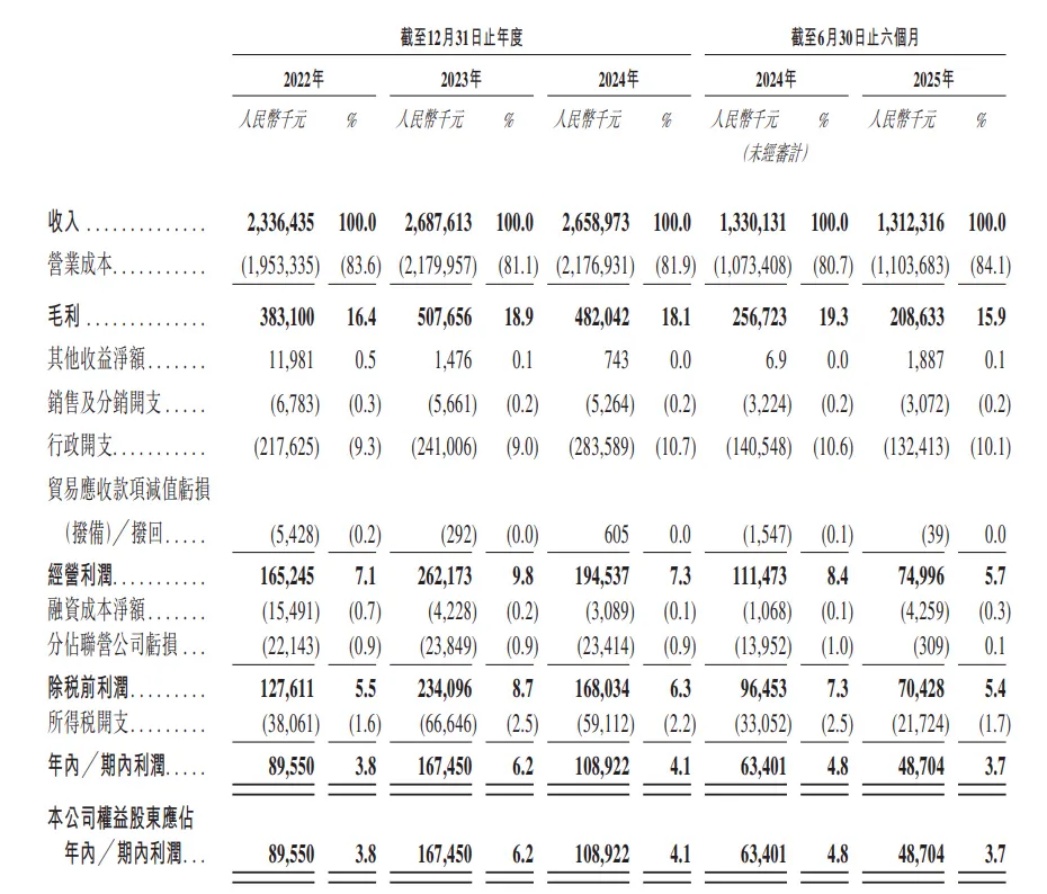
Core Viewpoint - Ming Kee Hospital is set to list on the Hong Kong Stock Exchange after multiple attempts, with its IPO expected to take place between December 12 and December 22, 2023, despite previous setbacks due to compliance and operational issues [1][2]. Company Overview - Ming Kee Hospital is a private profit-oriented general hospital group in mainland China, operating two hospitals in Nanjing and Suzhou, with a valuation of approximately $375 million after the last round of equity transactions [2]. Financial Performance - For the years 2022 to 2024, the company's revenue is projected to be RMB 2.336 billion, RMB 2.688 billion, and RMB 2.659 billion respectively, with net profit expected to rise from RMB 89.55 million in 2022 to RMB 168.03 million in 2023, before declining to RMB 108.92 million in 2024 [3][5]. - In the first half of 2023, the hospital reported revenue of RMB 1.312 billion, with a net profit of only RMB 49 million, reflecting a year-on-year decline of over 23% [3][5]. Market Position - Ming Kee Hospital ranks as the largest private profit-oriented general hospital group in East China and seventh nationwide, holding a market share of 0.4% [3]. Operational Challenges - The fluctuation in net profit is attributed to the current medical insurance payment policies, particularly the DRG payment system, which has led to a decrease in average patient spending per hospitalization [4]. Growth Strategy - To overcome growth bottlenecks, Ming Kee Hospital plans to expand its operational scale, with plans to add at least 1,800 beds across its two hospitals over the next six years [5]. IPO Structure and Market Response - The company is utilizing the new IPO allocation mechanism "Mechanism B," which allows for a predetermined allocation of shares to public offerings, with 10% allocated for public sale and 90% for international placement [7][8]. - The IPO price range is set between HKD 9.34 and HKD 11.68, aiming to raise up to HKD 780 million, but the high valuation has led to lukewarm market reception, with the stock trading below the IPO price shortly after listing [10].
牛!中金在手的香港IPO储备项目已超100家
Xin Lang Cai Jing· 2025-11-12 09:36
Core Viewpoint - The Hong Kong capital market is experiencing a strong recovery, with the IPO market achieving its best performance in three years, driven by significant foreign investment and a robust pipeline of projects for future listings [1][2][4]. Group 1: IPO Market Performance - The total IPO financing in Hong Kong has surpassed $30 billion, a significant increase from $10 billion last year and less than $6 billion two years ago [1]. - A+H share listings have emerged as the dominant force, with 17 A+H IPOs contributing over $18 billion, accounting for 60% of the total market financing [1]. - Key sectors driving this financing include technology and high-end manufacturing, highlighting the market's support for critical areas of the real economy [1]. Group 2: Foreign Investment Participation - Foreign capital has played a crucial role in the IPO recovery, with cornerstone investments in Hong Kong IPOs reaching $12 billion, of which foreign investment accounts for 42% [2]. - Notably, international long-term investors and sovereign funds have become more active, with examples like CATL's Hong Kong international placement where foreign funds made up over 60% [2]. Group 3: Market Mechanisms and Trends - The new IPO mechanism introduced in August has invigorated the market, allowing for a fixed public subscription ratio of 10%-60%, which has increased institutional investor allocations and reduced selling pressure [3]. - Since the implementation of the new rules, 22 out of 25 new stocks have opted for the new mechanism, with 21 of them seeing price increases on their first trading day [3]. Group 4: Future Outlook and Project Pipeline - The sustainability of the IPO market's strong performance is supported by a solid pipeline of over 100 reserve projects, including plans from leading A-share companies to list in Hong Kong [4]. - The ongoing trend of companies returning to Hong Kong from the U.S. is providing additional support to the market, helping to alleviate potential delisting risks [3][4]. Group 5: M&A Market Dynamics - The M&A market is also thriving, with a reported 52 Chinese-related M&A projects this year, totaling $54.8 billion, capturing a 14% market share [5]. - There is a noticeable shift in M&A targets from traditional Western markets to Southeast Asia and regions along the Belt and Road, focusing on smaller projects valued below $300 million [5][6].

机制A还是机制B?港股打新逻辑焕新
Shang Hai Zheng Quan Bao· 2025-10-30 18:38
Core Insights - Four new Hong Kong stocks listed on October 28, all closing with gains, including Dipu Technology up 150.56% and Bama Tea up 86.7% [1] - The new IPO rules effective from August introduced a "choose one" mechanism for public subscription, with Mechanism A increasing the maximum allocation from 20% to 35%, while Mechanism B allows issuers to set a fixed public offering percentage between 10% and 60% without a reallocation mechanism [1][2] - Mechanism B has become the preferred choice for most new listings, typically setting the public offering at 10%, which gives institutional investors more influence during the pricing phase [2] Mechanism Analysis - Mechanism B's fixed allocation leads to scarcity for retail investors, often resulting in oversubscription and strong buying momentum on the first trading day, driving stock prices up [2] - Among 22 new stocks using Mechanism B, 21 saw price increases on their first trading day, with the only exception being Guanghetong, which fell 11.72% on its debut [2] - Guanghetong's pricing was perceived as insufficiently attractive due to its pressured short-term performance, despite securing significant backing from cornerstone investors [3] Market Dynamics - The volatility of newly listed stocks indicates that relying solely on supply-demand imbalances to boost prices is not sustainable [3] - For instance, Jinye International Group surged 330% on its first day but subsequently dropped 74.88% over the following weeks, highlighting the risks associated with low public offering percentages amid high demand [3] - The shift in the Hong Kong IPO market is moving from "blind arbitrage" to a focus on fundamental value and market sentiment [3] Regulatory Perspective - The Hong Kong Stock Exchange's new IPO rules aim to enhance the robustness of pricing and allocation mechanisms while balancing the needs of various investors [4] - A healthy and mature new stock market is envisioned as a cycle of reasonable pricing by issuers, rational decision-making by investors, and responsible underwriting by underwriters [4]
