机器人即服务

Search documents
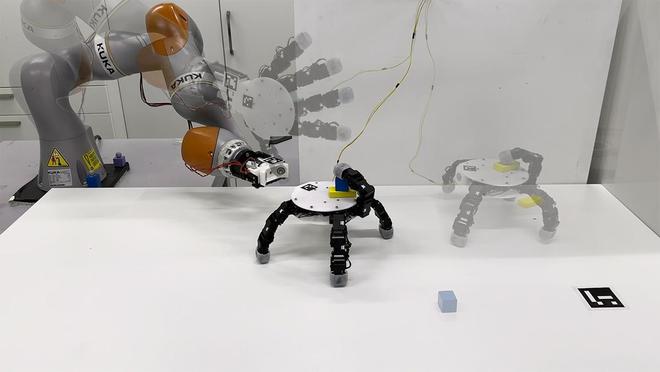
“巧手机器人”实现双面抓握与自主爬行
Huan Qiu Wang Zi Xun· 2026-01-21 01:30
Core Insights - A new "clever robotic hand" developed by the École Polytechnique Fédérale de Lausanne (EPFL) can replicate 33 human hand grasping motions and has advanced capabilities such as autonomous crawling and dual-sided grasping [1][3] - This detachable robotic hand can handle objects beyond conventional size limits and process multiple targets continuously, indicating significant application potential in industrial automation, service assistance, and field exploration [1][4] Group 1 - The design of robotic hands has been inspired by human hand structure, but traditional designs face limitations due to asymmetrical shapes and single-sided grasping, which restrict efficiency in narrow spaces and multi-object operations [3] - The research team developed two symmetrical robotic hand versions (five-finger and six-finger), both with a palm diameter of 16 cm, enhancing operational flexibility and adaptability through dual-sided grasping [3] - The robotic hand can detach from its base and move autonomously, demonstrating the ability to continuously grasp up to three different objects and reliably reattach to a robotic arm while holding items [3] Group 2 - The detachable and mobile nature of this robotic hand represents a technological shift towards "robotics as a service" and flexible manufacturing systems, providing new solutions for tasks in complex, unstructured environments [4] - Potential applications include disaster rescue operations in debris and simultaneous handling of various-shaped packages in warehousing and logistics [4] - Future research may explore its autonomous decision-making and collaborative capabilities in dynamic environments, advancing robotic systems towards greater intelligence and adaptability [4]


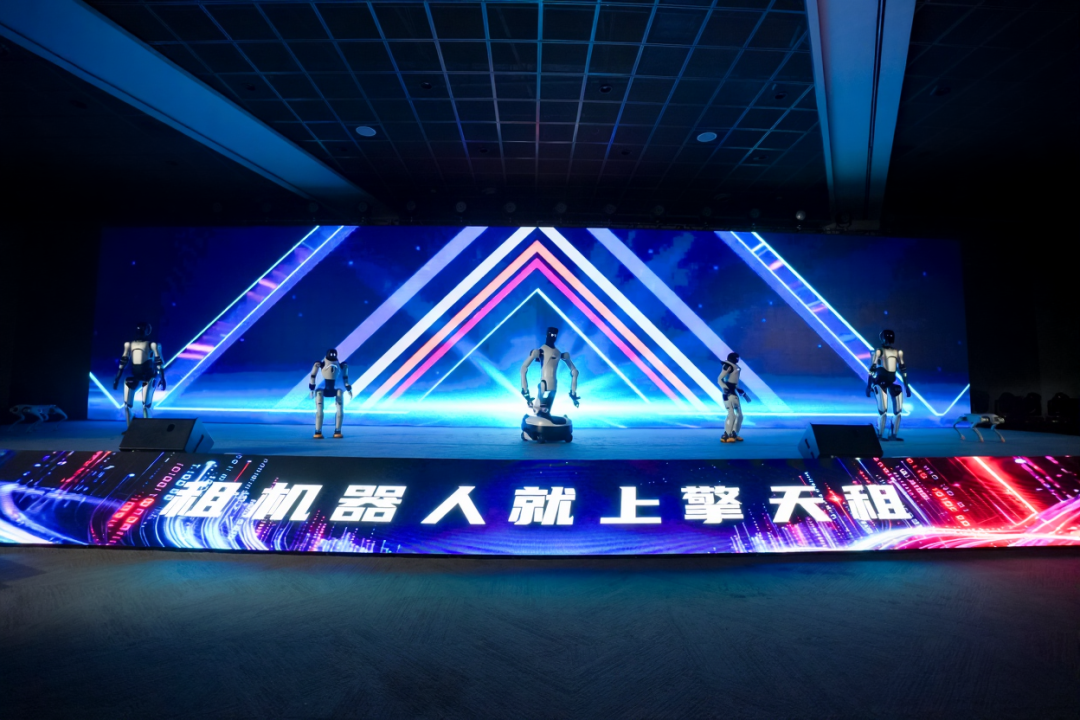
机器人租赁时代爆发:「擎天租」种子轮融资,三周斩获20万用户
Xin Lang Cai Jing· 2026-01-15 14:10
Core Insights - The article highlights the emergence of "Qingtian Rental," the world's first robot rental platform, aimed at addressing the high costs associated with humanoid robots, which can exceed hundreds of thousands of dollars, making them inaccessible for many businesses [1][3][10] Group 1: Company Overview - "Qingtian Rental" was officially launched on December 22, 2025, in Shanghai, initiated by leading companies in the embodied intelligence sector, including Zhiyuan Robotics and Feikuo Technology [3][10] - The platform employs a "shared rental + platform scheduling" model, transforming high-cost robot products into on-demand, standardized service capabilities, thus overcoming barriers to robot adoption [3][10] Group 2: Growth and Expansion - The platform has experienced rapid growth, with over 200,000 registered users within three weeks and an average of over 200 rental orders per day [5][10] - Recently, "Qingtian Rental" announced the completion of its seed round financing, led by GL Ventures, with participation from several investment firms. The funds will be used for national market expansion, technology optimization, and collaboration with local governments and industry ecosystems [5][11] Group 3: Market Validation and Partnerships - The rental model has been validated across various high-frequency scenarios, with partnerships established with well-known brands such as Meiyijia, Haidilao, and Mixue Bingcheng, where robots are utilized for store traffic, brand events, and operational activities [6][12] - The platform has also reported a surge in order demand during the New Year period, indicating market acceptance of the robot rental model [6][12] Group 4: Future Strategy - The chairman of "Qingtian Rental," Jiang Qingsong, proposed a "1234 strategy" aiming to connect with over 10 robot manufacturers, develop 200 premium service providers, gather 3,000 content creators, and serve 400,000 rental customers by 2026 [8][14] - The platform plans to expand its service network to 200 cities nationwide, making robot services as readily available as utilities like water and electricity [8][14]
特斯拉业绩电话会,马斯克带给机器人产业链的惊喜与担忧
Ge Long Hui· 2025-10-23 10:26
Core Viewpoint - Tesla's Q3 earnings report has elicited mixed reactions from analysts, with Morgan Stanley expressing a generally acceptable view while Goldman Sachs conveyed disappointment, particularly regarding key performance indicators and delays in the Optimus robot timeline [1][2]. Financial Performance - Tesla's Q3 results were close to market expectations, with a strong free cash flow and a reduction in inventory levels to just 10 days of supply [1]. - Automotive business revenue accounted for 75% of total income, while service/other and energy businesses saw year-over-year growth of 25% and 44%, respectively, indicating a diversification of revenue sources [1]. AI and Robotics Strategy - Elon Musk dedicated 80% of the earnings call to discussing AI and robotics, signaling a strategic shift towards building a "real-world AI" ecosystem [2]. - Tesla's robot strategy is structured in three phases: short-term reliance on automotive revenue, mid-term synergy between FSD and Optimus technology, and long-term subscription models for "robots as a service" [2]. Technical Challenges - The development of the Optimus robot faces significant engineering challenges, particularly in achieving human-like dexterity and AI capabilities [3]. - The V3 version of Optimus has made progress, with the number of hand actuators increasing from 28 to 31, but still requires substantial advancements in AI training data and energy efficiency [3]. Production Timeline - Tesla has provided a clear production roadmap for the Optimus robot, with the GEN3 version expected to be showcased in Q1 2026 and mass production of one million units targeted by the end of 2026 [5]. - The credibility of this timeline is supported by Tesla's active factory audits and supply chain development in multiple countries [5]. Industry Impact - The announcement of mass production has triggered significant reactions within the supply chain, benefiting precision transmission companies and torque sensor manufacturers while pressuring traditional industrial robot firms [6]. - Tesla's potential vertical integration strategy could disrupt existing supply chains, as the company may develop core components in-house, leading to uncertainty for smaller suppliers [6]. Future Outlook - The market is divided on Tesla's long-term valuation, with optimistic projections suggesting a significant market for humanoid robots, while cautious analysts highlight risks related to technology and regulatory challenges [7][8]. - Key milestones to watch include the unveiling of the V3 prototype in early 2026 and the ramp-up of production capacity by 2030, alongside monitoring of tariff impacts and developments in the domestic robotics sector [9].

特斯拉业绩电话会,马斯克带给机器人产业链的惊喜与担忧
格隆汇APP· 2025-10-23 09:36
Core Viewpoint - Tesla's Q3 earnings report has elicited mixed reactions from the market, with Morgan Stanley viewing the results as acceptable while Goldman Sachs expresses disappointment due to key indicators falling short of expectations [2][4]. Financial Performance - Tesla's Q3 results were close enough to market expectations to maintain consensus, with a strong free cash flow and inventory levels reduced to just 10 days of supply [2]. - Revenue from automotive business accounted for 75%, while service/other businesses and energy business saw year-on-year growth of 25% and 44%, respectively, indicating a diversification of revenue sources [2]. AI and Robotics Strategy - Elon Musk spent 80% of the earnings call discussing AI and robotics, indicating a strategic shift towards building a "real-world AI" ecosystem with FSD algorithms, Dojo supercomputing, and Optimus robots [4]. - The robot strategy is structured in three phases: short-term reliance on automotive business, mid-term synergy between FSD and Optimus, and long-term subscription model for "robots as a service" [4]. Technical Challenges - The development of the Optimus robot faces significant engineering challenges, particularly in achieving human-like dexterity and AI capabilities [5][6]. - The V3 version of Optimus has made progress, with the number of hand actuators increasing from 28 to 31, but still requires substantial advancements in AI training data and energy efficiency [6]. Production Timeline - Tesla has provided a clear production roadmap for the Optimus robot, with plans to showcase the GEN3 version in Q1 2026 and achieve a production capacity of one million units by the end of 2026 [8]. - The credibility of this timeline is supported by Tesla's active factory audits and supply chain development in multiple countries [8]. Industry Impact - The announcement of a million-unit production capacity is expected to significantly impact the supply chain, benefiting precision transmission companies and torque sensor manufacturers while pressuring traditional industrial robot manufacturers [9]. - Tesla's potential vertical integration strategy may disrupt existing supply chains, as the company aims to self-source key components like motors and reducers [9]. Future Outlook - The market is divided on Tesla's long-term valuation, with optimistic projections suggesting a $500 billion market for humanoid robots by 2028, while cautious analysts highlight risks related to technology and policy [12]. - Key challenges include validating demand, reducing production costs from $50,000 to below $20,000, and establishing an ecosystem similar to Apple's App Store for developers and applications [12].