
订阅模式

Search documents
Woodson Capital Loads Up On Sirius XM Stock, Buying 1.2 Million Shares
Yahoo Finance· 2026-03-04 23:32
Company Overview - Sirius XM is a leading provider of subscription-based satellite radio and digital audio entertainment services in the United States, offering a diversified portfolio that includes music, sports, news, and talk content [6] - The company operates a subscription-based model, generating revenue primarily through subscription fees and advertising, and distributes content via satellite and digital platforms to consumers, automakers, and retailers [8] - Sirius XM leverages a robust distribution network to maintain a strong presence in the in-car and streaming audio markets, supported by exclusive content partnerships and integrated vehicle connectivity [6] Financial Metrics - Sirius XM reported a total revenue of $8.56 billion and a net income of $805 million for the trailing twelve months (TTM) [4] - The company has a dividend yield of 5.11% and its stock price was $21.29 as of market close on February 13, 2026 [4] Recent Developments - On February 17, 2026, Woodson Capital Management, LP disclosed a new position in Sirius XM, acquiring 1,200,000 shares valued at approximately $23.99 million [2][7] - This new stake represents 3.33% of Woodson Capital Management's reportable 13F assets under management (AUM) [7] - As of February 16, 2026, Sirius XM's shares had decreased by 19.48% over the past year, underperforming the S&P 500 by 31.28 percentage points [7] Market Challenges - Sirius XM has faced challenges from competition in the streaming market and has seen a decline in new car sales, which is a key sales channel for the company [9] - The stock has lost about 20% of its value over the previous year and nearly two-thirds of its value over the last five years, despite significant holdings by Berkshire Hathaway [10]

【Omdia趋势洞察】生成式AI如何重塑可穿戴设备市场
Canalys· 2026-02-10 01:01
Group 1 - The wearable device market is reaching a critical turning point in 2026, driven by generative AI, which is transforming products from "passive recording" to "intelligent companionship," redefining the value of data and altering industry competition logic [2][3] - The market is witnessing a shift with the accelerated development of new forms such as smart rings and AI glasses, where a multi-device ecosystem becomes key, providing experiences with enhanced situational awareness through cross-device collaboration [3][4] - Software and services are emerging as the most important differentiators, with generative AI enabling "interpretation capabilities" that promote proactive health management, personalized exercise recommendations, and new subscription-based experiences [3][4] Group 2 - Generative AI is upgrading wearable devices from data recording tools to intelligent partners, creating new value through multi-device ecosystems like smart rings and AI glasses [4] - There is a critical transition from "data collection" to "intelligent interpretation," emphasizing the importance of software, services, and subscription models as core competitive advantages [4]


大行评级|里昂:腾讯音乐回调后提供入市机会,重申“跑赢大市”评级
Ge Long Hui· 2026-01-19 07:37
Core Viewpoint - Tencent Music's stock price has underperformed the market year-to-date due to concerns over increased competition, adjustments in expectations regarding the resumption of K-pop concerts in mainland China, and potential impacts from heightened antitrust activities on its acquisition of Ximalaya [1] Group 1 - The stock price has retraced 38% from its peak on September 17 of the previous year, indicating a significant decline [1] - The company is believed to have a sustainable subscription model and competitive products built around fan and artist connections, suggesting that the market may have overreacted [1] - The report maintains an "outperform" rating with target prices of $23.7 for US shares and HK$92.1 for Hong Kong shares, indicating a favorable risk-reward level at current prices [1]
涉及万亿薪酬的决定,马斯克为何将FSD从买断制变为订阅制?
Feng Huang Wang· 2026-01-15 00:54
Core Viewpoint - Tesla CEO Elon Musk announced a shift from a one-time purchase model to a subscription model for the Full Self-Driving (FSD) system, which is linked to his performance-based compensation plan that could yield up to $1 trillion [1][2]. Group 1 - The change to a subscription model for FSD will take effect after February 14, with users only able to subscribe monthly instead of making a one-time purchase [1][3]. - Musk's performance targets include achieving 10 million active FSD subscriptions, a goal set by Tesla's shareholders as part of his $1 trillion compensation plan [2][3]. - The subscription model is favored by investors for its potential to provide stable, recurring revenue, contrasting with the volatility of one-time purchases [3].

美图公司20251125
2025-11-26 14:15
Summary of Meitu Company Conference Call Company Overview - **Company**: Meitu - **Industry**: Image processing and entertainment software Key Points and Arguments 1. **Response to AI Challenges**: Meitu enhances product precision and stability through image data accumulation and personal image archives, increasing user engagement to counter AI challenges [2][5][11] 2. **Market Expansion**: The company actively expands into Southeast Asia, Northeast Asia, and Western markets, collaborating with Alibaba to create new growth opportunities [2][5] 3. **Positioning**: Meitu positions itself as a lifestyle and entertainment tool rather than a pure efficiency tool, attracting users by providing enjoyment, participation, and a sense of achievement [2][5] 4. **User Engagement**: The company has a complex workflow for image editing, which includes various steps that enhance user retention and satisfaction, differentiating it from purely AI-driven solutions [2][9][10] 5. **Subscription Growth**: Since 2018, Meitu's subscription revenue has grown at a compound annual growth rate (CAGR) of 85%, with the paid user rate increasing from 0.8% in 2020 to 5.5% in the first half of 2025 [2][13] 6. **Future Projections**: By 2030, Meitu expects its monthly active users (MAU) to grow from 280 million in 2025 to 500 million, with a projected paid user rate of 13% [3][14] 7. **Revenue Forecast**: For the first half of 2025, total revenue is expected to reach 4 billion RMB, with a net profit guidance of 940 million RMB for the year [3][15][16] 8. **Valuation**: Meitu's current valuation is below 30 times earnings, but with a growth rate of over 45%, it is expected to achieve a higher valuation multiple, targeting a market value of approximately 49 billion RMB or 50 billion HKD [3][17] Additional Important Insights 1. **B2B and B2C Segmentation**: Meitu differentiates between consumer (C-end) lifestyle applications and business (B-end) productivity tools, with significant growth potential in overseas markets for C-end applications [2][11] 2. **Local Adaptation**: The company has strong capabilities in developing localized features that resonate with regional aesthetics, particularly in Northeast Asia [2][10] 3. **SaaS Market Dynamics**: The impact of AI on the software industry is complex, with B-end SaaS companies like Meitu maintaining control over data and entry points, reducing the risk of being overtaken by AI [3][5] 4. **User Experience**: The GUI (Graphical User Interface) is emphasized as more effective for high-precision tasks compared to natural language interfaces, which can be ambiguous [6][8][9] This summary encapsulates the essential insights from the conference call, highlighting Meitu's strategies, market positioning, and future growth potential in the face of evolving technological challenges.
“三费”普降的货拉拉香港再递招股书
3 6 Ke· 2025-10-30 04:35
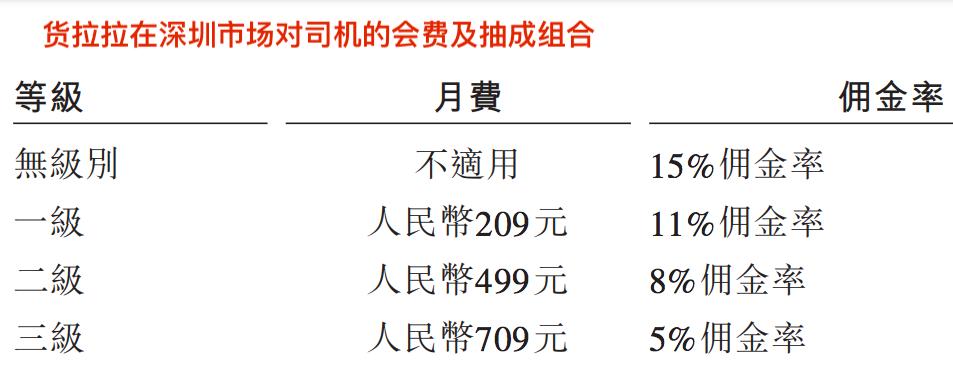
Core Viewpoint - Huolala has submitted its prospectus to the Hong Kong Stock Exchange again, indicating its urgency to complete the IPO process amidst a competitive landscape where rivals have already gone public [1][2]. Company Overview - Huolala operates as a light-asset platform similar to Didi in the ride-hailing sector, benefiting from high gross margins as it does not own the trucks or employ drivers directly [2][5]. - The company has a membership model for drivers, where higher membership levels correspond to lower commission rates, incentivizing experienced drivers to pay more for better terms [3][5]. Financial Performance - The revenue from driver fees and commissions constituted 54.7% of total revenue in 2022, decreasing to 44.9% by mid-2025, indicating a shift towards diversifying revenue streams [5][10]. - The total revenue for Huolala is projected to grow from $990.048 million in 2022 to $1.536903 billion in 2024, with significant contributions from various service categories [6][11]. Market Dynamics - The domestic market is characterized by a labor buyer's market, with a surplus of drivers, which supports the subscription model for revenue generation [10]. - Huolala's gross transaction value (GTV) in the domestic market is expected to rise from $6.208 billion in 2022 to $9.444 billion in 2024, reflecting growth in completed orders and service demand [11]. Cost Management - The company has successfully reduced its expense ratios across marketing, research and development, and administrative costs, which has improved profitability, with a projected net profit of $430 million in 2024 [13][15]. - The reduction in marketing expenses is attributed to decreased subsidies and a shift towards a more established market position, allowing for cost optimization [15]. International Expansion - Huolala is expanding its operations internationally, targeting Southeast Asia and Latin America, where it has a simplified revenue structure and higher monetization rates compared to the domestic market [8][12]. - The international market's revenue contribution is approaching 10% of total income, indicating a growing trend that enhances the company's narrative for capital markets [12]. Technological Integration - The company is exploring artificial intelligence applications for dynamic pricing and order matching, which could enhance operational efficiency and competitiveness in the logistics sector [12][16].
Udemy(UDMY) - 2025 Q3 - Earnings Call Transcript
2025-10-29 22:00
Financial Data and Key Metrics Changes - Consolidated subscription revenue grew 8% year over year, now accounting for 74% of total revenue, an increase of 600 basis points from the previous year [4][17] - Total revenue for Q3 reached $196 million, exceeding guidance, with adjusted EBITDA margin improving to 12% from 6% year over year [16][21] - GAAP net income was approximately $2 million, a significant improvement from a loss of $25 million in Q3 2024 [21][22] Business Line Data and Key Metrics Changes - Udemy Business segment revenue increased 5% year over year, generating $7 million in net new ARR, totaling $527 million in ARR [4][17] - Consumer segment revenue reached $63 million, with subscription revenue up 43% year over year, now accounting for 19% of the segment's revenue [19][20] Market Data and Key Metrics Changes - Strong performance noted in technology, manufacturing, and financial services sectors, with a total net dollar retention rate of 93% and 97% for large customers [18][22] - The consumer segment's strategic pivot to subscription products is supported by compelling unit economics, with subscription products delivering an LTV to CAC ratio well above three times [20] Company Strategy and Development Direction - The company is focused on accelerating subscription revenue growth and transforming its business model to a subscription-first approach [4][25] - Udemy aims to be a lifelong learning solution, integrating AI to enhance learning experiences and career advancement [10][15] - The strategy includes partnerships with organizations like Pearson and Indeed to enhance certification journeys and improve conversion rates [14][31] Management's Comments on Operating Environment and Future Outlook - Management highlighted the pressure on L&D budgets due to AI transformation, emphasizing the need for effective ROI demonstration [39][40] - The company expects consolidated subscription revenue growth in 2026 to approach double digits, with a focus on building a predictable, higher-value business [24][25] Other Important Information - The company has a strong balance sheet with $372 million in cash and marketable securities, and free cash flow generation of $12 million [22] - The company is investing in product differentiation and partnerships to enhance its offerings in the AI and LLM space [55][56] Q&A Session Summary Question: Can you elaborate on the initiatives for accelerating the transition to consumer subscription? - Management discussed various digital marketing strategies to improve customer acquisition and retention, including optimizing the shopping cart and reactivating existing customers [29][30] Question: How is the net new pipeline progression for Udemy Business heading into Q4? - Management expressed confidence in the pipeline, noting improvements in expansion deals and stable gross dollar retention despite challenges from COVID-era contracts [33][34] Question: What is the current state of L&D budgets and how does it impact Udemy? - Management noted that L&D teams are under pressure to do more with less, but Udemy's comprehensive solutions are positioned to capture increased demand [39][40] Question: What are the expectations for profitability and net new ARR growth? - Management indicated confidence in achieving high single-digit net new ARR growth in Q4, supported by a robust pipeline and improved deal sizes [44][45] Question: How is Udemy addressing instructor churn due to lower revenue share? - Management emphasized commitment to the instructor community and efforts to create new revenue streams for instructors through coaching and enhanced tools [69][70] Question: Any thoughts on acquiring traffic through AI platforms? - Management acknowledged the importance of being part of the evolving AI landscape but emphasized a focus on building a distinctive consumer experience rather than rushing into partnerships [71][72]

特斯拉业绩电话会,马斯克带给机器人产业链的惊喜与担忧
格隆汇APP· 2025-10-23 09:36
Core Viewpoint - Tesla's Q3 earnings report has elicited mixed reactions from the market, with Morgan Stanley viewing the results as acceptable while Goldman Sachs expresses disappointment due to key indicators falling short of expectations [2][4]. Financial Performance - Tesla's Q3 results were close enough to market expectations to maintain consensus, with a strong free cash flow and inventory levels reduced to just 10 days of supply [2]. - Revenue from automotive business accounted for 75%, while service/other businesses and energy business saw year-on-year growth of 25% and 44%, respectively, indicating a diversification of revenue sources [2]. AI and Robotics Strategy - Elon Musk spent 80% of the earnings call discussing AI and robotics, indicating a strategic shift towards building a "real-world AI" ecosystem with FSD algorithms, Dojo supercomputing, and Optimus robots [4]. - The robot strategy is structured in three phases: short-term reliance on automotive business, mid-term synergy between FSD and Optimus, and long-term subscription model for "robots as a service" [4]. Technical Challenges - The development of the Optimus robot faces significant engineering challenges, particularly in achieving human-like dexterity and AI capabilities [5][6]. - The V3 version of Optimus has made progress, with the number of hand actuators increasing from 28 to 31, but still requires substantial advancements in AI training data and energy efficiency [6]. Production Timeline - Tesla has provided a clear production roadmap for the Optimus robot, with plans to showcase the GEN3 version in Q1 2026 and achieve a production capacity of one million units by the end of 2026 [8]. - The credibility of this timeline is supported by Tesla's active factory audits and supply chain development in multiple countries [8]. Industry Impact - The announcement of a million-unit production capacity is expected to significantly impact the supply chain, benefiting precision transmission companies and torque sensor manufacturers while pressuring traditional industrial robot manufacturers [9]. - Tesla's potential vertical integration strategy may disrupt existing supply chains, as the company aims to self-source key components like motors and reducers [9]. Future Outlook - The market is divided on Tesla's long-term valuation, with optimistic projections suggesting a $500 billion market for humanoid robots by 2028, while cautious analysts highlight risks related to technology and policy [12]. - Key challenges include validating demand, reducing production costs from $50,000 to below $20,000, and establishing an ecosystem similar to Apple's App Store for developers and applications [12].

LifeVantage (NasdaqCM:LFVN) Conference Transcript
2025-10-20 22:32
LifeVantage Conference Call Summary Company Overview - **Company Name**: LifeVantage (NasdaqCM: LFVN) - **Industry**: Direct Selling, Nutraceuticals - **Headquarters**: Near Salt Lake City, Utah - **Years in Business**: 16 years - **Active Customers and Consultants**: Approximately 132,000 globally - **Geographic Presence**: Products sold in about 20 countries, with 80% of revenue from North America [2][4] Financial Performance - **Fiscal Year Ended June 30**: - Revenue: $229 million, up 14% year-over-year [3] - EBITDA: Just under $10 million [3] - **Revenue Model**: 70% of revenue is subscription-based, with a 30-day consumption model for products [2][11] - **Balance Sheet**: - Cash: Approximately $20 million - No debt - Working capital: $24 million [15] Product Portfolio - **Core Products**: - Protandim Nrf2: Flagship product, accounts for 50% of revenue, clinically proven to reduce oxidative stress by 40% in 30 days [6] - TrueScience Liquid Collagen: Increases collagen production by 100% [7] - MindBody GLP-1 System: Natural alternative to synthetic drugs, proven to increase GLP-1 production by over 200% [9] - P84 (from LoveBiome acquisition): Focused on gut microbiome [11] - **Market Potential**: - GLP-1 market projected to grow from $19 billion to $88 billion [10] - Gut health market projected to reach $32 billion [11] Strategic Initiatives - **Acquisition**: Acquired LoveBiome to enhance product offerings and geographic reach [5][11] - **Compensation Plan**: Modernized to attract both traditional business builders and micro-influencers, allowing earnings of up to 40% on product sales [12] - **E-commerce Development**: Partnership with Shopify to enhance customer experience [13][17] Growth Opportunities - **Geographic Expansion**: Underrepresented in Europe and Asia, presenting significant growth opportunities [4][20] - **Product Innovation**: Continuous investment in product development and operational efficiencies [14][17] - **Subscription Model**: Provides consistent revenue stream, reducing volatility [20] Shareholder Returns - **Stock Buyback Program**: $60 million plan, with $17 million remaining for future repurchases [18] - **Dividends**: Regular increases in dividend payouts since introduction [19] Market Positioning - **Health Conscious Consumer Base**: Products cater to a growing trend of proactive health management [19][20] - **Competitive Advantage**: Strong foundation with patented, science-backed products supported by clinical studies [22] Conclusion - LifeVantage is positioned for sustained growth through strategic acquisitions, product innovation, and a strong subscription model, while also focusing on expanding its international presence and enhancing its compensation plan to attract new sales representatives [20][22]

苹果前CEO发声:OpenAI成苹果AI时代劲敌
Sou Hu Cai Jing· 2025-10-13 04:45
Core Insights - John Sculley, former CEO of Apple, stated that OpenAI has become Apple's first real competitor in decades, emphasizing that artificial intelligence is not a particularly strong area for Apple [1][3] Group 1: Apple's Position in AI - Apple's performance in the AI race is lagging compared to competitors like OpenAI, Google, Amazon, and Meta, which are continuously updating their products [3] - Apple's plans to upgrade its AI assistant Siri faced delays earlier this year, marking a significant setback in product launches [3] Group 2: Future Leadership and Business Model Shift - Speculation surrounds the potential retirement of current CEO Tim Cook, with Sculley suggesting that whoever succeeds him must lead Apple from an application-centric era to an agent-centric era [3] - In the agent-centric era, intelligent agents will replace many applications and autonomously complete complex tasks, posing a significant challenge to Apple's existing business model [3] - Sculley believes that AI-driven intelligent agents will help knowledge workers automate cumbersome workflows, prompting more tech companies to shift towards subscription-based business models, which he views as more advantageous than the current application-centered model [3] Group 3: Collaboration with OpenAI - Notably, former Apple design chief Jony Ive recently appeared at OpenAI, where the company acquired his device startup for over $6 billion earlier this year [4] - Ive aims to develop devices that address issues arising from smartphones and tablets since their inception, and Sculley recognizes his capabilities, suggesting that his collaboration with OpenAI CEO Sam Altman could lead to breakthroughs in the field of large language models [4]

