民主社会主义

Search documents
俞凤:美国Z世代对社会主义好感度为何上升
Xin Lang Cai Jing· 2026-01-27 23:08
Core Viewpoint - The increasing affinity of the American Z generation towards socialism is reshaping political dynamics in the U.S., with significant implications for future elections and policy preferences [1][2]. Group 1: Historical Context - Interest in socialism among American youth is a recurring phenomenon linked to socio-economic pressures, seen in historical periods such as the Progressive Era and the Great Depression [2]. - Past youth movements were characterized by organized efforts within socialist parties and unions, focusing on issues like labor rights and public health [2]. Group 2: Current Trends - The Z generation's recognition of socialism is more widespread and visible compared to previous generations, utilizing social media for direct political expression [3]. - There is a notable deorganization and detheorization in the current socialist movement among youth, with many identifying as socialists without formal organizational ties [3][4]. Group 3: Political Goals - Unlike historical youth movements that aimed to overthrow capitalism, the Z generation views socialism as a means to advocate for reforms within a democratic framework, such as free education and improved social welfare [4][6]. - The lack of a cohesive ideological foundation among contemporary youth socialists limits their potential for significant political transformation [4][5]. Group 4: Societal Influences - The decline of labor unions and leftist political organizations has hindered the Z generation's ability to internalize socialist ideologies through collective action [5]. - The influence of social media has facilitated emotional and value-based political identities, making socialism more of a label than a comprehensive political theory [5][6]. Group 5: Implications - The enthusiasm for socialism among the Z generation signals a collective dissatisfaction with the current capitalist system, which may lead to adjustments in the existing socio-economic order rather than fundamental political change [6].
马姆达尼宣誓就任纽约新任市长
Xin Hua She· 2026-01-02 00:31
Core Points - The article reports the inauguration of Zohrahn Mamdani as the new mayor of New York City, marking him as the first Muslim mayor in the city's history [1] - Mamdani emphasizes his commitment to a governance agenda focused on safety, affordability, and prosperity, addressing the high cost of living for New Yorkers [1] - His self-identification as a "democratic socialist" has drawn significant attention and criticism, particularly from Republican opponents [1] Background Information - Zohrahn Mamdani was born in Uganda in 1991 and is of Indian Muslim descent; he immigrated to New York and became a U.S. citizen [1] - He was elected to the New York State Assembly in 2020 and won the mayoral election as a Democratic candidate in November of the previous year [1]
美国顶尖法学家论“榨取时代”
财富FORTUNE· 2025-12-25 13:06
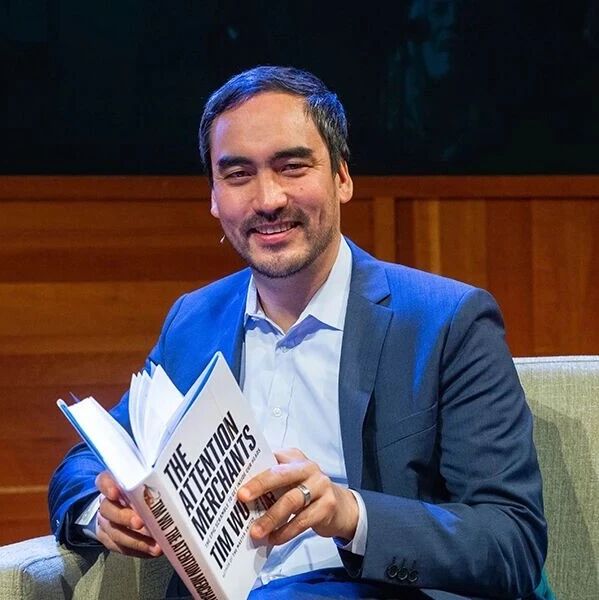
Core Viewpoint - The modern American capitalism has devolved into a system characterized by the accumulation of market power and extraction, leading to a profound sense of economic resentment across the nation [2][3]. Group 1: Shift in Corporate Goals - The core issue is the shift in corporate objectives from creating quality products that people want to buy to seeking control over others and extracting value from them [3]. - This shift is attributed to a lack of discipline, where companies are allowed to lower the quality of products and services without facing consequences [3][6]. - The trend challenges the fundamental ideals of American progress, particularly in the technology sector, which is expected to drive improvements [3][4]. Group 2: NFL as a Model - The NFL serves as a clear example of a market structure that maintains discipline and does not allow for the degradation of quality, ensuring that even the worst teams have opportunities to compete [4][5]. - The NFL's mechanisms, such as salary caps and drafts, promote fairness and balance, contrasting with the MLB, which suffers from distorted spending and resource misallocation [5]. Group 3: Economic Model and Wealth Distribution - The current economic model focuses on accumulating market power and extraction, leading to a redistribution of wealth upwards [6]. - Industries that once supported the middle class are being suppressed, while a few high-return sectors, including concentrated intermediaries and certain parts of finance and technology platforms, are favored [6]. Group 4: Attention Economy and Internet Neutrality - Tim Wu's contributions include the concept of "net neutrality," which mandates that internet service providers must treat all content equally, a significant victory as relevant laws remain effective [7]. - His earlier work on the "attention economy" highlighted how human attention has become a commodity that is increasingly exploited [8]. Group 5: Political Engagement and Economic Discourse - Wu reflects on his time in the Biden administration, expressing a desire for more action on children's privacy issues, noting the strong influence of large tech companies on politics [9][10]. - He engages in economic debates within leftist circles, indicating a tension regarding economic issues and expressing concern over the current political climate fueled by economic resentment [10][11].

隔空叫板数月后,特朗普与新任纽约市长首会场面令人意外
Huan Qiu Wang· 2025-11-22 08:25
Core Viewpoint - The meeting between President Trump and newly elected New York City Mayor Mamdani marks a significant shift in their previously adversarial relationship, with both leaders expressing mutual respect and a willingness to collaborate [1][2][4]. Group 1: Meeting Dynamics - Trump praised Mamdani, stating he could surprise many conservatives and expressed a desire to help him make New York stronger and safer [2][3]. - Mamdani reciprocated by appreciating Trump's approach to set aside differences and seek consensus [2][4]. - The meeting included light-hearted interactions, with both leaders showing a willingness to overlook past criticisms [4][5]. Group 2: Political Context - Trump had previously opposed Mamdani's election, labeling him negatively and threatening to cut federal funding to New York if he won [3][4]. - Following the meeting, Trump retracted his earlier threats, indicating a desire for cooperation [4]. - The meeting serves as a political opportunity for both, with Mamdani gaining visibility and Trump addressing voter concerns about rising living costs amid dissatisfaction with his administration [5][6].
治理美国最大都市,应对白宫政治施压,纽约新市长面临艰难考验
Huan Qiu Shi Bao· 2025-11-06 22:36
Core Points - The newly elected Mayor of New York City, Mamdani, emphasizes the beginning of his governance and the challenges ahead, stating he will work diligently for the citizens [1][3] - Mamdani has proposed ambitious plans including free public transportation, expanded government-funded childcare services, and housing development projects [3] - The political landscape is tense, with Mamdani needing to navigate a divided city and potential federal funding threats from President Trump [3][4] - Trump's criticism of Mamdani links him to the broader Democratic agenda, reflecting Republican concerns about the implications of the election results [4][6] - Wall Street's initial concerns about Mamdani's election are easing, with some business leaders expressing support despite previous opposition [5] - Mamdani's victory is seen as a historic moment, but it also poses a direct test of his leadership capabilities in managing a complex urban environment [6] Group 1 - Mamdani's commitment to serving the citizens and forming a capable government [1][3] - His ambitious plans for public services and housing [3] - The challenges of maintaining public services in a divided city [3][4] Group 2 - Trump's response to Mamdani's election and its implications for federal funding [4] - The reaction of Wall Street and business leaders to Mamdani's victory [5] - The historical significance of Mamdani's election and the challenges he faces [6]
民主社会主义者马姆达尼发起“让纽约免受特朗普政策影响”运动!特朗普:准备将联邦资金作为对抗民主党人的工具
Ge Long Hui· 2025-11-06 09:18
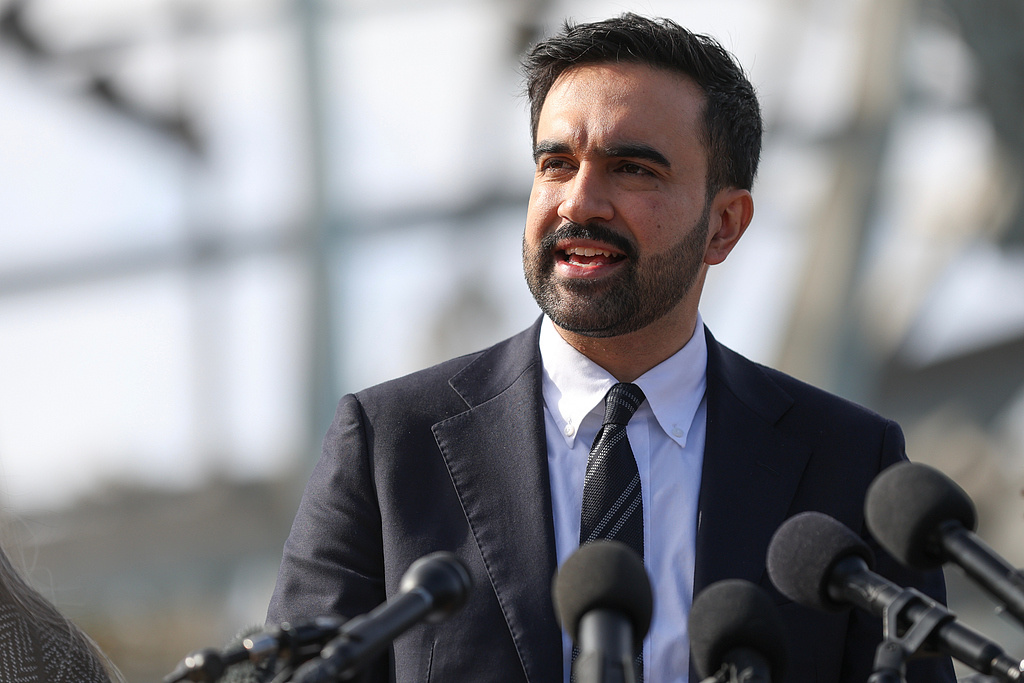
Core Viewpoint - Zoran Mamdani's election as New York City Mayor represents a significant political shift, with his commitment to reducing living costs and opposing Donald Trump's policies being central to his platform [3][6][14]. Group 1: Election Results and Political Context - Mamdani won the election with over 50% of the votes, while his main opponent, Andrew Cuomo, received just over 40% [3]. - The Republican Party views Mamdani as a major opponent, framing his policies as representative of a shift towards radical socialism within the Democratic Party [3][4]. - House Speaker Mike Johnson stated that Mamdani's victory would have national implications, solidifying the Democratic Party's shift towards a more radical agenda [4]. Group 2: Challenges Ahead - Mamdani faces significant challenges in securing federal funding, as Trump has indicated a willingness to cut financial support to New York City [5][6]. - The incoming mayor's commitment to maintaining New York as a "sanctuary city" may lead to conflicts with the federal government over immigration enforcement [6][10]. - Mamdani's lack of extensive political experience raises concerns among Democratic leaders, who are wary of his rapid rise and potential policy proposals [10][12]. Group 3: Policy Commitments - Mamdani has pledged to implement policies such as freezing rent for regulated apartments, providing free public transportation, and establishing city-owned grocery stores [14]. - His campaign's focus on lowering living costs resonated strongly with voters, contributing to his electoral success [13][14]. - The mayor-elect's ability to secure funding for his initiatives may be challenged by his narrow victory margin, which could weaken his negotiating position [14].
印度裔民主社会主义者当选纽约市长,对美国意味着什么
首席商业评论· 2025-11-06 03:57
Core Viewpoint - The election of 34-year-old Indian Muslim Zohrahn Mamdani as the 111th mayor of New York City marks a significant shift in the political landscape, representing a new wave of diverse leadership and the rise of democratic socialism in American politics [5][12][22]. Group 1: Mamdani's Background and Political Journey - Mamdani's upbringing in a multicultural environment and his family's immigrant history have shaped his understanding of social issues and his political ideology [7][11]. - His education at Bowdoin College and involvement in social activism laid the groundwork for his political career, emphasizing the need for systemic change [9][11]. - Mamdani's rise from grassroots activism to state legislator reflects a commitment to addressing the needs of low-income and immigrant communities [13][15]. Group 2: Political Platform and Policies - Mamdani's political agenda focuses on addressing income inequality, proposing a 2% "fair tax" on individuals earning over $1 million, which could generate $9 billion annually [15][22]. - He advocates for raising the minimum wage to $25 per hour, implementing rent freezes, and providing free public transportation to alleviate financial burdens on low-income residents [15][16]. - His policies are seen as radical yet resonate with the struggles of marginalized communities, positioning him as a voice for the underprivileged [15][27]. Group 3: Election Dynamics and Voter Support - The changing demographics of New York's electorate, particularly among younger voters, played a crucial role in Mamdani's victory, with a 43-point lead among voters under 45 [16][18]. - Mamdani's ability to garner cross-ethnic support, aided by ranked-choice voting, allowed him to appeal to a broad coalition beyond his immediate community [18][19]. - The missteps of his opponent, former Governor Cuomo, and the backlash against Trump’s support for Cuomo inadvertently boosted Mamdani's campaign [19][21]. Group 4: Implications for American Politics - Mamdani's election signifies the increasing political influence of the Indian-American community and the potential for immigrant descendants to ascend to significant political positions [22][26]. - The rise of democratic socialism within the Democratic Party, as exemplified by Mamdani's platform, indicates a shift towards more progressive policies in major urban centers [26][29]. - His victory highlights the deepening societal divisions in the U.S., with potential challenges ahead in implementing his policies amid opposition from traditional power structures [27][29].
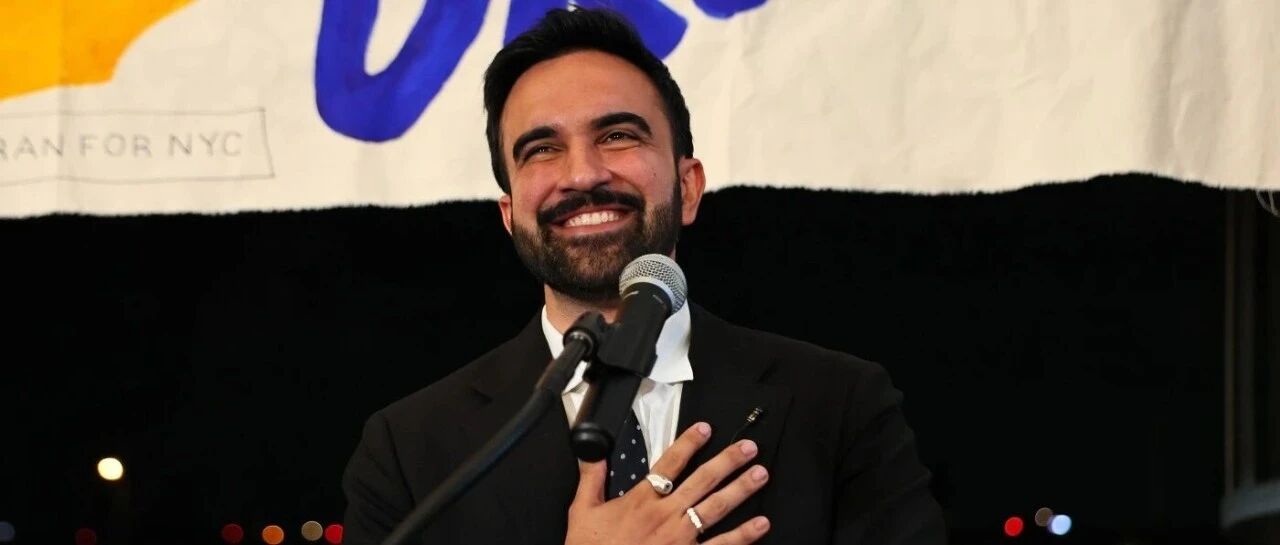
“民主社会主义者”当选“资本主义首都”市长,美国民主党何去何从?
Huan Qiu Shi Bao· 2025-11-05 23:53
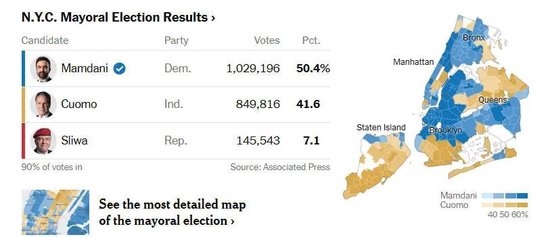
Core Points - The election of Mamdani, a self-identified "democratic socialist," as mayor of New York City has significant implications for the Democratic Party and reflects a growing distrust in capitalism among Americans [1][2][3] - Mamdani's victory is seen as a potential blueprint for the Democratic Party to regain support among working-class voters, but it also raises concerns about further polarization within the party and the country [5][6][10] Group 1: Election Results and Context - Mamdani won the mayoral election with 50.4% of the vote, defeating former Governor Cuomo [2] - His rise is linked to a broader leftist movement within the Democratic Party, particularly the Democratic Socialists of America (DSA), which has gained traction since the 2008 financial crisis [3][4] Group 2: Public Sentiment and Economic Concerns - A Gallup poll indicated that while 54% of Americans view capitalism positively, this figure has decreased by about 7 percentage points over the past 15 years, with only 42% of Democrats holding a favorable view of capitalism [4] - The wealth disparity highlighted by figures such as the top 1% owning as much wealth as the bottom 93% has contributed to a growing discontent with the current economic system [3][4] Group 3: Implications for the Democratic Party - Mamdani's election has sparked debates about the future direction of the Democratic Party, with many voters feeling disconnected from the party's establishment [5][6] - His policies, which include tax increases on the wealthy and rent freezes, resonate with working-class voters but may alienate moderate Democrats and business interests [6][10] Group 4: Challenges Ahead - Mamdani faces significant challenges in governing New York City, including managing powerful unions and various stakeholders, which may test his political agenda [9][10] - The potential for increased division within the Democratic Party is a concern, as many establishment figures remain cautious about embracing Mamdani's leftist approach [8][9]
【环时深度】“民主社会主义者”当选“资本主义首都”市长,美国民主党何去何从?
Huan Qiu Shi Bao· 2025-11-05 22:57
Core Points - The election of Mamdani, a self-identified "democratic socialist," as the mayor of New York City has significant implications for the Democratic Party and reflects a growing distrust in capitalism among Americans [1][3][4] - Mamdani's victory is seen as a potential blueprint for the Democratic Party to regain support among working-class voters, but it also raises concerns about further polarization within the party [7][8][10] Group 1: Election Results and Context - Mamdani won the election with 50.4% of the votes, defeating former Governor Cuomo, marking a significant shift in New York City's political landscape [3][4] - The Democratic Socialists of America (DSA) have gained prominence since the 2008 financial crisis, advocating for policies that limit the influence of capital and promote wealth redistribution [4][6] Group 2: Public Sentiment and Political Implications - A Gallup poll indicates that while 54% of Americans view capitalism positively, this figure has decreased by 7 percentage points over the past 15 years, with only 42% of Democrats holding a favorable view of capitalism [5][6] - The rise of leftist sentiments among younger voters, with 62% of 18-29-year-olds expressing favorable views of socialism, highlights a generational shift in political ideology [5][6] Group 3: Future of the Democratic Party - Mamdani's election has sparked debates about the future direction of the Democratic Party, with many questioning whether his leftist approach can unify the party or exacerbate divisions [7][10] - Some Democratic leaders express concern that Mamdani's radical policies may alienate moderate voters and hinder the party's chances in upcoming elections [10][11] Group 4: Socioeconomic Issues - Mamdani's campaign focused on addressing socioeconomic issues, such as homelessness and economic inequality, resonating with voters who feel neglected by traditional political structures [4][8] - The election results reflect a broader trend of increasing political polarization in the U.S., with Mamdani's victory seen as both a potential solution and a source of further division [12]
“社会主义者”当上纽约市长,叫板特朗普:知道你在看
Guan Cha Zhe Wang· 2025-11-05 14:54
Core Points - The election of 34-year-old Democrat candidate Zohrahn Mamdani as the new mayor of New York City marks a significant political shift, as he identifies as a "democratic socialist" and has garnered over 50% of the votes, defeating former governor Cuomo [1][3][4] - Mamdani's victory is historic, making him the youngest mayor in New York City since the 19th century, the first Muslim mayor, and the first South Asian mayor, as well as the first naturalized immigrant to hold the position since the 1970s [3][4] - The election saw a record voter turnout, with over 2 million participants, the highest since 1969, reflecting widespread support for Mamdani among voters dissatisfied with rising living costs and political scandals [4][12] Election Context - Mamdani's campaign was characterized by a strong focus on issues affecting the working class, and he received significant backing from the Democratic Socialists of America (DSA), which described his win as a victory for the working class [4][10] - The DSA has seen substantial growth, increasing its membership from under 5,000 in 2015 to over 80,000, indicating a rising interest in democratic socialist ideas across the U.S. [9][10] - Mamdani's agenda includes proposals for free city bus services, rent stabilization, and the establishment of city-run supermarkets, alongside a commitment to protect immigrant rights against federal actions [9][10] Political Dynamics - The election results are seen as a setback for the Trump administration, with Mamdani directly challenging Trump's immigration policies and asserting that New York will remain a city built and driven by immigrants [7][10] - Trump's endorsement of Cuomo may have inadvertently boosted Mamdani's support among anti-Trump voters, as many viewed Mamdani as a counter to Trump's influence [12][13] - The campaign faced accusations of anti-Semitism and Islamophobia, but these attacks did not significantly hinder Mamdani's support, particularly among minority communities [12][13]