
民生导向

Search documents
你是自己的第一作者
Xin Lang Cai Jing· 2025-12-30 17:06
Core Insights - The article reflects on the rapid changes and significant events that have shaped the world over the past 25 years, highlighting the acceleration of technological advancements and the disruption of established norms and values [2][3][4]. Group 1: Technological Advancements - The emergence of generative artificial intelligence, along with advancements in biomedicine, quantum communication, and brain-machine interfaces, signifies a transformative period in human technology [3]. - These advancements are leading to a "surge" in scientific and technological achievements, suggesting a potential elevation of human civilization to a new level [3]. Group 2: Societal and Economic Challenges - The acceleration of change brings both excitement and anxiety, particularly regarding the future and the stability of established norms [4]. - The article discusses the structural challenges facing the economy, including shifts in industry structure, debt rates, and external environments, which require new development models [4]. Group 3: Individual and Collective Action - The article emphasizes the importance of individual action in addressing societal anxieties and improving expectations, suggesting that change must come from proactive choices rather than reliance on external factors [5][6]. - It highlights the need for individuals across various sectors to engage actively in shaping their futures, reinforcing the idea that personal agency is crucial in navigating the complexities of modern life [5][6].


第一财经新年致读者:你是自己的第一作者
第一财经· 2025-12-30 06:46
Core Viewpoint - The article reflects on the rapid changes and disruptions experienced over the past 25 years, emphasizing the dual themes of "acceleration" and "disruption" in various fields, particularly in technology and societal structures [4][5]. Group 1: Acceleration and Disruption - The emergence of generative AI technologies, such as ChatGPT, alongside advancements in biomedicine, quantum communication, and brain-machine interfaces, signifies a transformative phase in human technological achievements [4][5]. - The acceleration of human progress is likened to a boiling point that could elevate civilization to a new dimension, while the disruption challenges established norms and moral foundations in global governance and social order [5]. Group 2: Economic and Structural Challenges - The new quarter-century presents challenges related to industrial structure, debt rates, birth rates, and external environments, necessitating a reevaluation of development models [5]. - The article discusses the need for either macroeconomic policies to ensure stability or deeper reforms to unlock potential, highlighting the importance of addressing structural issues through comprehensive reforms [5][6]. Group 3: Individual Response and Agency - Individuals are encouraged to confront the mixed feelings of excitement and anxiety brought about by rapid changes, emphasizing the importance of proactive choices and actions in shaping one's future [6][7]. - The article posits that every small improvement in individual circumstances contributes to a larger collective force, underscoring the significance of personal responsibility and agency in navigating the complexities of the modern world [7].

第一财经新年致读者:你是自己的第一作者
Di Yi Cai Jing· 2025-12-30 05:42
Group 1 - The core sentiment of the current era is characterized by "acceleration" and "disruption," driven by advancements in generative AI, biotechnology, quantum communication, and other fields, indicating a significant shift in human technological achievements [2][3] - The economic landscape is facing structural challenges due to new variables such as changes in industry structure, debt rates, birth rates, and external environments, necessitating a reevaluation of development models [3][4] - The need for reform and proactive individual actions is emphasized as essential for addressing structural issues and improving expectations, which can stabilize confidence in the market [4][5] Group 2 - The interplay of excitement and anxiety in economic fields reflects the dual nature of globalization and industry security, as well as the impact of AI on employment and public welfare [3] - The importance of individual agency in shaping one's future is highlighted, suggesting that personal choices and actions are crucial in navigating the complexities of the current era [5][6] - The metaphor of the "reed flower" symbolizes resilience and beauty, representing the broader narrative of the Chinese economy and its people, emphasizing the enduring spirit amidst challenges [6]
宏观点评:四中全会公报点评-20251024
Minmetals Securities· 2025-10-24 06:44
Policy Focus - The "14th Five-Year Plan" emphasizes high-quality development across multiple dimensions, including industry, technology, and security, with a focus on building a modern industrial system[2] - The average annual growth rate required to meet the 2035 goals is estimated to be around 4.5% to 5%[8] Investment Efficiency - The meeting highlights the importance of investment efficiency over scale, shifting the macro policy focus from "total expansion" to "structural optimization"[3] - Future investments will align with industrial upgrades and human capital accumulation to enhance overall productivity and economic growth quality[11] Foreign Trade Stability - The emphasis on "opening up" has been elevated from ninth to fifth place, reflecting a shift in policy focus towards enhancing foreign trade resilience amid global uncertainties[3] - The goal is to strengthen multilateral cooperation and regional connections to mitigate external shocks, such as U.S. tariffs[11] Marine Development and Protection - The meeting introduces a focus on "marine development and protection," indicating a transition from resource exploitation to comprehensive governance of marine economies[4] - This shift aims to promote marine renewable energy and ecological protection, which are crucial for national security and economic growth[12] Importance of Livelihood - The meeting prioritizes improving people's livelihoods and emphasizes the goal of common prosperity, indicating potential reforms in fiscal and social security systems[4] - Policies will increasingly focus on childcare, healthcare, education, and housing stability to alleviate pressures from demographic changes and economic fluctuations[13]
“度”量中国这五年:从民生答卷感知中国“温度”
Zhong Guo Xin Wen Wang· 2025-10-15 09:10
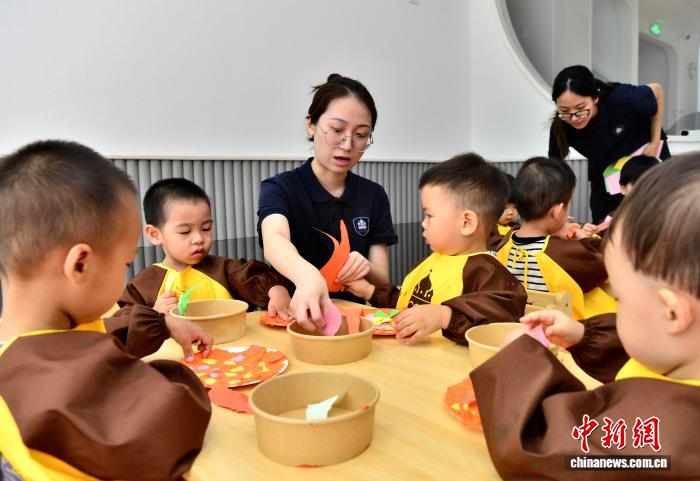
Core Insights - The article highlights the significant improvements in China's social welfare and economic conditions during the "14th Five-Year Plan" period, emphasizing the government's focus on enhancing the quality of life for its citizens [1][5]. Economic Growth and Employment - China's economy has reached new heights, with urban employment consistently increasing by over 12 million jobs annually since the start of the "14th Five-Year Plan" [1]. - The per capita disposable income of rural residents rose from 17,131 yuan in 2020 to 23,119 yuan in 2024, reflecting an average annual growth rate of nearly 8% [1]. Social Security and Welfare - The country has established the world's largest education, healthcare, and social security systems, maintaining a coverage rate of over 95% for compulsory education, basic pension, and basic medical insurance [1]. - The scope of unemployment and work injury insurance has expanded, and social assistance for vulnerable groups has become more precise and efficient [2]. Child and Elderly Care - The proportion of nursing care beds for the elderly has increased to 64.6%, and over 300 cities have established comprehensive childcare service centers to address the challenges of caring for the elderly and children [2]. Housing and Healthcare Improvements - Over the past five years, more than 240,000 old urban residential communities have been renovated, benefiting over 40 million households and 110 million people [4]. - The establishment of over 100 national regional medical centers has improved access to high-quality medical services for residents in central and western regions [4]. Policy Focus and Financial Commitment - The government's policies are centered around the well-being of the people, with a significant emphasis on listening to public opinion and directing fiscal resources towards social welfare [5]. - During the "14th Five-Year Plan," nearly 10 trillion yuan has been allocated to the social welfare sector, marking the highest proportion of social welfare indicators in any five-year plan to date [5]. Future Outlook - The chief economist of China Galaxy Securities anticipates that during the "15th Five-Year Plan," there will be a continued shift in fiscal spending from physical investments to human capital, with increased investment in education, healthcare, and housing [6]. - The commitment to improving living standards and social welfare is expected to persist, ensuring that the "temperature" of life in China remains warm for its citizens [7].
持续增强发展动力和社会活力
Jing Ji Ri Bao· 2025-10-05 01:35
Group 1 - The central political bureau meeting emphasized the need to continuously enhance development momentum and social vitality, which will have a profound impact on China's economic and social development in the long term [1] - Strong development momentum and social vitality are essential for a country's modernization, with China's economy showing steady progress and stable employment providing a solid foundation for high-quality development [1] - To address the challenges posed by the evolving global landscape, it is crucial to eliminate obstacles and ensure the smooth flow of resources, thereby accelerating the release of vitality [1] Group 2 - China's technological innovation is entering a highly active phase, with significant advancements in artificial intelligence and quantum computing, indicating a need for improved innovation capabilities and high-level openness to attract quality production factors [2] - The majority of China's private enterprises are small and medium-sized, facing operational difficulties and weak confidence, necessitating government support to create a stable development environment [2] - The ultimate goal of development is to benefit the people, which requires a focus on improving living standards and reducing disparities in income and regional development [2] Group 3 - Despite the complex international environment and domestic economic adjustments, China's economic foundation remains stable with strong advantages and potential, indicating a long-term positive development trend [3] - It is essential to proactively respond to uncertainties in the environment by maintaining a consistent focus on development and addressing key issues continuously [3]
强化“五个导向” 推动“十五五”规划高质量编制
Ren Min Wang· 2025-06-15 00:50
Core Viewpoint - The "14th Five-Year Plan" is a critical period for implementing the strategy of building a modern socialist country, emphasizing the importance of high-quality planning and execution to achieve the goals set by the 20th National Congress of the Communist Party of China [1][2]. Group 1: Strategic Orientation - The strong country strategy is a key driver for economic and social development, with multiple goals outlined in the 20th National Congress report, including education, technology, talent, culture, and sports [2]. - The "14th Five-Year Plan" must maintain strategic determination, adapting to changing circumstances while aligning with central decision-making [3]. Group 2: Quality Orientation - High-quality development is the primary task for building a modern socialist country, requiring a shift from rapid growth to quality improvement in economic structures and growth drivers [4]. - The focus on quality must be integrated into the planning and policy-making processes to ensure effective economic progress [4]. Group 3: Reform Orientation - Reform is essential for high-quality development, with over 300 important reform tasks outlined to be integrated into the "14th Five-Year Plan" [5]. - The goal is to establish a high-level socialist market economy by 2035, providing a solid foundation for modernization [5]. Group 4: People's Livelihood Orientation - The focus on people's livelihoods is crucial, addressing the growing demands for better education, healthcare, housing, and elderly care [7]. - The government aims to boost economic circulation through consumption while ensuring that development benefits the populace, reflecting a commitment to shared prosperity [7]. Group 5: Systemic Orientation - A systemic approach is necessary for the "14th Five-Year Plan," emphasizing the integration of various planning elements and ensuring coherence across different levels of governance [8]. - The plan should facilitate collaboration between central and local authorities, aligning with broader national strategies and reform tasks [8].
2025年两会系列报告之一:政策总量篇:扩内需兴科创,稳发展惠民生
Guoyuan Securities· 2025-03-13 04:13
Investment Rating - The report does not explicitly provide an investment rating for the industry Core Insights - The government work report emphasizes a "steady progress" approach while introducing innovative policies to address current economic challenges, focusing on employment, income growth, and consumption stimulation [3][17] - The fiscal policy is set to be more proactive, with a deficit rate exceeding 4% for the first time, indicating a shift towards prioritizing policy effectiveness over strict fiscal balance [4][33] - The report highlights the importance of boosting domestic demand, particularly consumption, as a primary driver of economic growth [5][55] Summary by Sections Policy Direction and Economic Outlook - The government work report maintains a "steady progress" tone while addressing the need for innovative policy measures to tackle economic challenges, including insufficient effective demand and consumer spending [3][17] - Key economic targets for 2025 include a GDP growth of around 5%, urban unemployment rate of 5.5%, and a CPI increase of approximately 2% [20][21] Fiscal Policy Enhancements - The fiscal policy will see a significant increase in spending, with a total budget of 29.7 trillion yuan, marking a 4.4% increase from the previous year [41] - The report indicates a total new government debt of 11.86 trillion yuan, representing about 8.4% of nominal GDP, which is an increase of 2.9 trillion yuan from the previous year [41][42] Consumer Demand and Economic Growth - The government aims to enhance consumer demand through targeted fiscal measures, including a 30% increase in special bonds aimed at consumption, particularly in the "old for new" consumption scheme [57][58] - The report emphasizes the need to improve social security systems to reduce consumer concerns and stimulate spending [56][59] Technological Innovation and Productivity - The report underscores the importance of technological innovation, with a focus on funding, talent, and policy coordination to support the development of new productive forces [6][67] - The establishment of a national venture capital fund is planned to mobilize approximately 1 trillion yuan for hard technology sectors [67]