
气候变化南南合作

Search documents
太阳能点亮海岛村落
Xin Lang Cai Jing· 2026-01-30 10:25
Core Viewpoint - The "African Light Belt" project, initiated by China, aims to provide solar energy solutions to address electricity shortages in Africa, particularly benefiting over 5,000 households in São Tomé and Príncipe by 2025 [12][17]. Group 1: Project Overview - The "African Light Belt" project was announced at the first African Climate Summit in September 2023, focusing on photovoltaic technology assistance and clean energy infrastructure development [12]. - The project plans to deliver 3,100 solar home systems to São Tomé and Príncipe by June 2025, with the first beneficiaries already experiencing improved living conditions [12][14]. - The project has already installed solar photovoltaic systems for over 200 households in São Tomé and Príncipe, with plans to cover 924 households across 37 communities by May 2025 [14][19]. Group 2: Impact on Local Communities - The installation of solar panels has significantly improved the quality of life for residents, allowing them to use appliances like televisions and radios, and reducing reliance on noisy and expensive diesel generators [14][16]. - In Colonia Village, the solar systems have enabled families to enjoy electricity for the first time, enhancing their daily activities and overall happiness [14][19]. - The project also aims to address the energy needs of agricultural activities, thereby increasing household incomes and encouraging young people to return to their communities [18][19]. Group 3: Technical Training and Collaboration - Chinese technical teams are providing on-site training for local engineers on installation and maintenance of solar systems, ensuring sustainability and local capacity building [18]. - The project includes knowledge transfer initiatives, where African officials and technicians are invited to China for training, enhancing their skills in renewable energy technologies [18]. - The collaboration between China and São Tomé and Príncipe exemplifies South-South cooperation in addressing climate change and energy challenges [18][19].


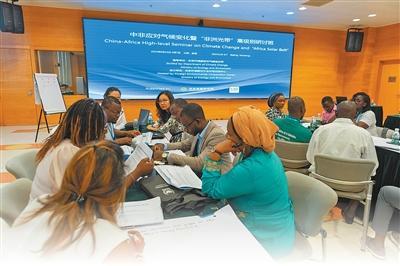
“非洲光带”项目落户圣多美和普林西比——太阳能点亮海岛村落
Ren Min Ri Bao· 2026-01-30 01:08
Core Viewpoint - The "African Light Belt" project, initiated by China, aims to provide solar power solutions to address the electricity shortage in São Tomé and Príncipe, significantly improving the quality of life for local residents [1][5][7]. Group 1: Project Overview - The "African Light Belt" project will assist nearly 50,000 households in Africa, with São Tomé and Príncipe receiving 3,100 solar photovoltaic systems by June 2025 [1]. - The project focuses on providing off-grid solar power systems to remote areas, ensuring stable and affordable electricity supply [2][3]. Group 2: Impact on Local Communities - The installation of solar systems has allowed families to use appliances like televisions and radios, enhancing their daily lives and reducing reliance on noisy and expensive diesel generators [3]. - Over 200 households in São Tomé and Príncipe have already benefited from the solar power systems, with plans to cover 924 households across 37 communities by May 2025 [3][5]. Group 3: Economic and Social Development - The project is expected to stimulate local economies by enabling residents to engage in productive activities, such as using electric tools for crafts, which can increase household incomes [4][6]. - Improved electricity access is anticipated to boost tourism in São Tomé and Príncipe, as reliable power is crucial for the hospitality industry [6]. Group 4: Technical and Educational Support - Chinese technical teams are providing on-site training for local engineers on installation and maintenance of solar systems, ensuring sustainability and local capacity building [6]. - The project emphasizes the importance of renewable energy in meeting the diverse developmental needs of African nations, beyond just household electricity [6].
中国积极践行多边主义、推动气候变化南南合作——为全球气候治理注入更多稳定性和确定性
Ren Min Ri Bao· 2025-11-20 00:03
Core Points - The COP30 conference in Brazil highlights China's commitment to green and low-carbon development, showcasing various sustainable products and technologies [1][2] - China has submitted its 2035 Nationally Determined Contribution (NDC) targets, which include ambitious goals for reducing greenhouse gas emissions and expanding renewable energy capacity [1][2] - International representatives emphasize the importance of China's role in global climate governance and the need for collaboration with China to achieve climate goals [2][6] Group 1: China's Contributions to Climate Action - China has introduced a historic NDC that includes absolute reduction targets for greenhouse gas emissions across all economic sectors [1][2] - The country aims to increase its wind and solar power capacity to over six times the 2020 levels by 2035, targeting 3.6 billion kilowatts [1] - China's carbon market is developing steadily, with both mandatory and voluntary markets, providing valuable lessons for other nations [3] Group 2: International Cooperation and Support - China is actively involved in South-South cooperation, launching flagship projects like the "Clean Stove" initiative to assist developing countries in reducing carbon emissions [4][5] - The country provides technological support and renewable energy solutions to nations like Brazil and Antigua and Barbuda, enhancing local economies and promoting sustainable practices [5][6] - Various international leaders stress the necessity of multilateralism and collaboration with China to effectively address climate change challenges [6][7] Group 3: Technological Innovation and Economic Impact - China's technological innovations have significantly lowered the costs of clean energy technologies, facilitating the energy transition [2] - The promotion of distributed solar products in developing countries is creating economic opportunities and improving living standards [5] - China's commitment to green infrastructure and climate resilience is recognized as a vital contribution to global efforts against climate change [7]
中国积极践行多边主义、推动气候变化南南合作—— 为全球气候治理注入更多稳定性和确定性
Ren Min Ri Bao· 2025-11-14 22:31
Core Viewpoint - The news highlights China's significant contributions to global climate change efforts, showcasing its advancements in green technology and commitment to multilateral cooperation in addressing climate challenges [1][6]. Group 1: China's Climate Initiatives - China has submitted its 2035 Nationally Determined Contribution (NDC) targets, which include absolute reduction goals for greenhouse gas emissions across all economic sectors, marking a historic expansion [2][3]. - The country aims to achieve over six times the installed capacity of wind and solar power by 2035 compared to 2020 levels, targeting 3.6 billion kilowatts [2]. - China's carbon market is steadily developing, encompassing both mandatory and voluntary markets, providing valuable lessons for other nations [3]. Group 2: International Cooperation and Support - China is actively providing support to developing countries through initiatives like the "Clean Stove" flagship project, which aims to reduce carbon emissions and pollution from cooking [4][5]. - The country has signed agreements to assist nations like Antigua and Barbuda with photovoltaic materials, promoting access to low-cost electricity for low-income households [5]. - China's collaboration with countries such as Brazil and Malawi emphasizes its role as a reliable partner in climate-resilient infrastructure development [7]. Group 3: Multilateralism and Global Leadership - The concept of multilateralism is a recurring theme at COP30, with representatives acknowledging China's leadership in fostering international cooperation on climate issues [6][7]. - China's commitment to multilateralism is seen as crucial for addressing global challenges, with its actions contributing positively to the climate governance process [6][7]. - The collaborative efforts between China and other nations reflect a shared goal of achieving climate-related objectives through unity and cooperation [6].
为全球气候治理注入更多稳定性和确定性
Ren Min Ri Bao· 2025-11-14 22:03
Core Points - The COP30 conference in Brazil highlights China's commitment to green and low-carbon development, showcasing various sustainable products and technologies [1] - China has submitted its 2035 Nationally Determined Contribution (NDC) targets, which include absolute reduction goals for greenhouse gas emissions and ambitious renewable energy development plans [2] - International representatives acknowledge China's significant role in global climate governance and its technological innovations that lower clean energy costs [2][3] - China is actively involved in South-South cooperation, providing support and technology to developing countries to help them reduce carbon emissions [4][5] - The emphasis on multilateralism at COP30 reflects the need for global cooperation in addressing climate change, with China being recognized for its leadership in this area [6][7] Group 1 - The COP30 conference showcases China's green low-carbon development initiatives, including sustainable products made from recycled materials [1] - China has set a historic 2035 NDC target that includes absolute greenhouse gas reduction goals and aims for a sixfold increase in wind and solar power capacity by 2035 [2] - International figures emphasize the importance of collaboration with China in achieving climate goals, highlighting its technological advancements in renewable energy [2][3] Group 2 - China is launching flagship projects like the "Clean Stove" initiative to assist developing countries in reducing emissions and pollution [4] - The cooperation between China and countries like Antigua and Barbuda in solar energy projects demonstrates China's commitment to supporting low-income households [5] - The multilateral approach advocated by China is seen as crucial for effective climate action, with various countries recognizing its leadership role [6][7]
王毅:团结应对全球气候变化
Xin Lang Cai Jing· 2025-05-28 14:54
Core Viewpoint - China expresses its commitment to global climate governance and support for Pacific island nations in addressing climate change challenges [1] Group 1: Climate Change Initiatives - China emphasizes the importance of unity in combating global climate change and expresses regret over certain major countries' withdrawal from the Paris Agreement [1] - The Chinese government has provided significant assistance to Pacific island nations, including energy-efficient air conditioners and solar photovoltaic systems, to enhance their capacity to respond to climate change [1] - A new initiative will be announced to deepen cooperation with Pacific island nations on climate change, including a commitment to invest new funds and implement 100 "small but beautiful" climate change projects over the next three years [1] Group 2: Disaster Resilience and Marine Protection - China supports Pacific island nations in protecting marine ecosystems and addressing issues such as rising sea levels, coastal erosion, and marine disasters [1] - The Chinese government is willing to share early warning technologies to assist island nations in disaster prevention and reduction [1] - China will continue to utilize cooperation mechanisms such as the China-Pacific Island Countries Climate Change Center and disaster reduction centers to contribute to the efforts of island nations in combating climate change [1]