
碳排放管理

Search documents
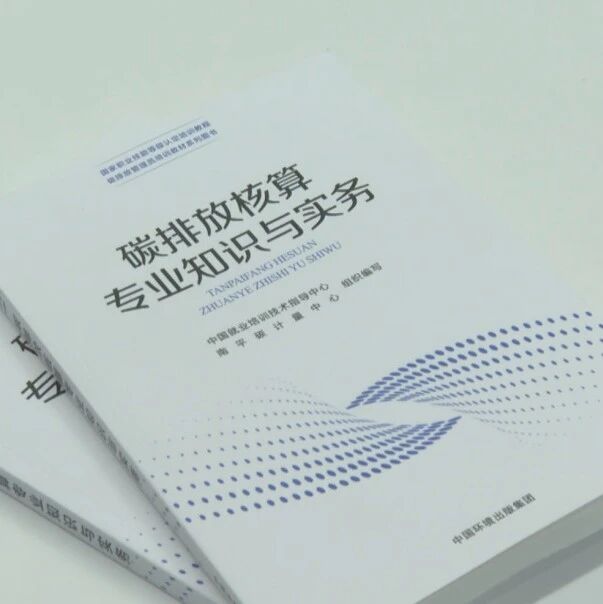
全国首本《碳排放管理员培训教材》发布
中国能源报· 2026-03-20 11:06
Core Viewpoint - The first national "Carbon Emission Manager Training Textbook" has been officially released, aiming to standardize training in carbon emission management and provide a reliable learning path for professionals in the field [1][3]. Group 1 - The textbook was developed by the Human Resources and Social Security Ministry's China Employment Training Technical Guidance Center in collaboration with the Nanping Carbon Measurement Center [1]. - The initiative to compile the textbook began in December 2024, with the goal of addressing the lack of unified standards and varying quality in the current training market [3]. - The publication of the textbook will directly support vocational skills training for carbon emission managers, providing essential materials for standardized training [3].

医疗卫生行业ESG白皮书
荣续智库· 2026-03-02 09:20
Investment Rating - The report does not explicitly provide an investment rating for the healthcare industry. Core Insights - The healthcare industry is crucial for safeguarding public health and is undergoing a necessary sustainable upgrade in response to environmental pressures, demographic changes, and rising public expectations for healthcare quality and equity [5][6]. - The introduction of ESG (Environmental, Social, and Governance) principles is seen as a key driver for addressing systemic issues within the healthcare sector, including high energy consumption, waste management, and governance challenges [5][6]. Summary by Sections Section 1: Overview of the Healthcare Industry - The healthcare industry encompasses various institutions that provide medical services, including hospitals, community health centers, and specialized public health organizations [16][17]. - By 2030, the total scale of the health service industry in China is expected to reach 16 trillion RMB, reflecting the urgent need for improved healthcare quality and enhanced health security [17][18]. Section 2: Core ESG Issues in the Healthcare Industry - **Accessibility of Healthcare Services**: The distribution of medical resources and the protection of patient rights are critical issues that need to be addressed to enhance the accessibility of healthcare services [11][33]. - **Carbon Emission Management and Green Healthcare Transition**: The healthcare sector contributes significantly to global carbon emissions, with hospitals being energy-intensive facilities. Strategies for energy management and reduction of carbon footprints are essential [42][43]. - **Management of Medical Waste**: Hospitals generate various types of waste, including hazardous and infectious waste, which require effective management systems to mitigate environmental impacts [47][48]. Section 3: ESG Case Studies - **Metropolitan Hospital**: This institution has implemented sustainable practices to address environmental challenges, focusing on energy efficiency and waste management [65][66]. - **Apollo Hospital**: The hospital has initiated projects aimed at reducing energy consumption and carbon emissions by over 20% through innovative technologies and practices [92][94].
果链巨头碳排增32% 11家A股ESG强信披电子业缺考
2 1 Shi Ji Jing Ji Bao Dao· 2026-02-26 08:58
Core Viewpoint - The A-share ESG reporting deadline is approaching, with 471 companies required to submit their reports by April 30, 2025, highlighting the urgency for compliance in the electronic industry [1] Group 1: ESG Reporting and Performance - In the last reporting season, the disclosure rate for ESG reports among companies was 95%, with the electronic sector showing a disclosure rate of 82.81% for 2024 [1] - Among the 28 companies that failed to disclose their ESG reports, 11 are from the electronic sector, indicating a significant lag in this area [1] - The top three revenue-generating companies in the electronic sector—Industrial Fulian, Luxshare Precision, and BOE Technology—have all disclosed their ESG reports for 2024, showcasing a trend of "leading head and lagging tail" within the industry [1] Group 2: Carbon Emissions and Management - Luxshare Precision reported a 32.49% increase in total greenhouse gas emissions for 2024, while Industrial Fulian and BOE Technology saw decreases of 19.53% and 3.36%, respectively [2][4] - The increase in Luxshare Precision's emissions is attributed to expansion activities, including a $208.5 million investment in new product lines [5] - The electronic industry faces significant challenges in carbon management due to its high energy consumption and complex supply chains, necessitating a collaborative approach among leading companies [6][11] Group 3: Supply Chain and ESG Challenges - The electronic industry's long and complex supply chain complicates carbon emission management, requiring collaboration among leading firms to achieve substantial reductions in Scope 3 emissions [11] - Industrial Fulian has committed to having 30 core suppliers use 100% renewable energy by the end of 2024, while Luxshare Precision has set specific carbon reduction targets for its supply chain [11][12] - The industry struggles with data management and disclosure, as many companies face challenges in collecting and verifying ESG data across their supply chains [13]


2025上市公司碳排放排行榜暨双碳领导力榜
Cai Jing Wang· 2025-12-26 14:51
Core Insights - The total carbon emissions of the top 100 listed companies in China for 2024 are projected to be 5.134 billion tons, a decrease of 2.7 million tons compared to 2023, indicating a potential peak in emissions [1][6][11] - The disclosure rate of carbon emissions among these companies has increased from 43% in 2021 to an expected 80% by 2025, reflecting a growing awareness and commitment to carbon reduction [1][5][23] Group 1: Carbon Emissions Overview - The carbon emissions of the top 100 listed companies in 2024 are 5.134 billion tons, which is a 0.52% decrease from 5.161 billion tons in 2023 [6][11] - The top ten companies account for approximately 38% of the total emissions, highlighting the concentration of emissions among a few major players [2][6] - The threshold for inclusion in the carbon emissions ranking has decreased to 10.3128 million tons in 2024, down from 11.5329 million tons in 2023, indicating a reduction in emissions intensity among leading high-carbon companies [6][11] Group 2: Industry Emission Trends - The power industry remains the largest contributor to carbon emissions, accounting for approximately 2.29 billion tons in 2024, maintaining a significant share of the total emissions [15] - The cement industry follows with emissions of about 770 million tons, continuing a downward trend for four consecutive years [15] - The steel industry has seen a notable decrease in emissions, returning to levels close to those of 2022, with emissions around 580 million tons [15][18] Group 3: Carbon Efficiency Metrics - The average carbon efficiency of the top 100 companies in 2024 is 0.399 million yuan per ton, remaining stable compared to 0.40 million yuan per ton in 2023 [20][21] - The carbon efficiency has improved by 10.83% from 2021 to 2024, indicating a positive trend in decoupling economic output from carbon emissions [20] - Seven industries have shown improvements in carbon efficiency, with the chemical industry achieving the most significant increase, reaching 0.39 million yuan per ton, the highest in three years [20][21] Group 4: Disclosure and Transparency - In 2024, 80 companies disclosed their carbon emissions data, an increase from 65 in 2023, achieving the highest disclosure rate in four years [23] - The disclosure rate for the power industry is 77.42%, while the cement industry leads with 85.71%, consistently above the average [26] - A-share companies have seen a significant rise in disclosure rates, from 16.67% in 2021 to 70.97% in 2024, indicating improved transparency in carbon reporting [26][27]





埃信华迈张译戈:管控企业要将碳排放视同有形资产管理好
Mei Ri Jing Ji Xin Wen· 2025-11-24 07:52
Core Viewpoint - The announcement by the Shanghai Environment and Energy Exchange indicates that the national carbon emissions trading market is approaching its launch, with a clear coverage scope that includes various high-pollution industries beyond the power sector [1] Group 1: National Carbon Market - The national carbon market will gradually include eight high-pollution and high-emission industries during the 14th Five-Year Plan period, such as petrochemicals, chemicals, non-ferrous metals, building materials, steel, paper-making, and civil aviation, in addition to the power industry [1] - The power industry is highlighted as having a solid data foundation, which is a crucial prerequisite for participation in the national carbon market [1] Group 2: Corporate Management and Transition - Companies are advised to manage carbon emissions as tangible assets, necessitating the enhancement of internal capabilities, including the establishment of regulations and appointing dedicated personnel [1] - There is an emphasis on actively exploring low-carbon technologies and energy-saving modifications to promote low-carbon transformation and green development within the industry [1]
中国积极践行多边主义、推动气候变化南南合作—— 为全球气候治理注入更多稳定性和确定性
Ren Min Ri Bao· 2025-11-14 22:31
Core Viewpoint - The news highlights China's significant contributions to global climate change efforts, showcasing its advancements in green technology and commitment to multilateral cooperation in addressing climate challenges [1][6]. Group 1: China's Climate Initiatives - China has submitted its 2035 Nationally Determined Contribution (NDC) targets, which include absolute reduction goals for greenhouse gas emissions across all economic sectors, marking a historic expansion [2][3]. - The country aims to achieve over six times the installed capacity of wind and solar power by 2035 compared to 2020 levels, targeting 3.6 billion kilowatts [2]. - China's carbon market is steadily developing, encompassing both mandatory and voluntary markets, providing valuable lessons for other nations [3]. Group 2: International Cooperation and Support - China is actively providing support to developing countries through initiatives like the "Clean Stove" flagship project, which aims to reduce carbon emissions and pollution from cooking [4][5]. - The country has signed agreements to assist nations like Antigua and Barbuda with photovoltaic materials, promoting access to low-cost electricity for low-income households [5]. - China's collaboration with countries such as Brazil and Malawi emphasizes its role as a reliable partner in climate-resilient infrastructure development [7]. Group 3: Multilateralism and Global Leadership - The concept of multilateralism is a recurring theme at COP30, with representatives acknowledging China's leadership in fostering international cooperation on climate issues [6][7]. - China's commitment to multilateralism is seen as crucial for addressing global challenges, with its actions contributing positively to the climate governance process [6][7]. - The collaborative efforts between China and other nations reflect a shared goal of achieving climate-related objectives through unity and cooperation [6].
油田有了“碳管家”
Jing Ji Ri Bao· 2025-10-11 22:10
Core Viewpoint - The article highlights the growing importance of carbon emission monitoring in the context of China's "dual carbon" goals, emphasizing the need for skilled professionals in this field and the significant career opportunities it presents [1][4]. Group 1: Carbon Emission Monitoring and Professional Development - The role of carbon emission monitors has been recognized as a new profession by the Ministry of Human Resources and Social Security, with a projected talent gap of 550,000 to 1,000,000 professionals during the 14th Five-Year Plan period [1]. - The article features a case study of a skilled carbon emission monitor, Rong Rong, who demonstrated exceptional technical abilities and a strong commitment to her work, ultimately winning a bronze medal in a national competition [1][2]. - Rong Rong's dedication to understanding complex monitoring processes and her meticulous approach to data verification have established her as an expert in the carbon monitoring field [2][3]. Group 2: Industry Initiatives and Green Transformation - Jilin Oilfield is actively pursuing green transformation by developing natural gas and renewable energy projects while implementing carbon capture, utilization, and storage (CCUS) initiatives to enhance oil recovery and reduce carbon emissions [4]. - The company has adopted rigorous monitoring practices, with professionals like Rong Rong playing a crucial role in ensuring accurate data collection and analysis, which supports effective carbon management [4][5]. - The development of a standardized carbon audit report template by Rong Rong is expected to streamline carbon auditing processes across the remaining seven oilfields, enhancing operational efficiency and compliance with new expert requirements [5][6]. Group 3: Future Directions and Responsibilities - Rong Rong is now focusing on the carbon footprint area, viewing it as both a professional challenge and a societal responsibility, emphasizing the importance of data-driven decision-making for the green transition of traditional energy companies [6]. - The article underscores the collective effort of professionals in the oil industry to balance energy security with environmental responsibilities, highlighting the critical role of accurate carbon monitoring in achieving sustainable development goals [3][4].
北京深化标准对接机制,12场对接促成国家标准需求超300项
Xin Jing Bao· 2025-10-11 08:18
Group 1 - The event held in Beijing focused on enhancing partnerships to promote sustainable development, releasing three key outcomes related to standardization efforts [1] - Since the beginning of the year, Beijing has organized 12 specialized matching activities with over 400 enterprises and nearly 30 national standard committees participating, addressing various sectors including AI, medical equipment, and logistics [1] - Over 300 national standard formulation demands have been initiated, with more than 60 enterprises establishing preliminary cooperation intentions with standard committees during the matching process [1] Group 2 - Since January 2025, Beijing has promoted over 1,000 national standard projects in areas such as urban sustainable development and carbon emission management, and has released over 800 national standards in key sectors like communication and logistics [2] - The release of the "Beijing Service Industry Standardization Case Collection" and "Beijing High-Quality Group Standard Case Collection" provides over 30 service industry cases and 14 group standard cases, offering replicable and promotable practices for enterprises [2]
三行业超千家企业入场 全国碳市场扩容激活绿色新动能
Shang Hai Zheng Quan Bao· 2025-09-24 19:48
Core Insights - The national carbon market in China is experiencing significant growth, with over 1,300 new key emission units added, leading to an increase in total greenhouse gas emissions by approximately 3 billion tons, now covering over 60% of the national CO2 emissions [1] - As of August 2025, the cumulative trading volume in the national carbon market reached 696 million tons, with a total transaction value of 47.826 billion yuan [1] - The market is becoming more active, with a 44% increase in daily trading volume compared to the previous compliance cycle, and a total transaction value of 18 billion yuan in 2024, the highest since the market's inception [2] Market Activity - The inclusion of the steel, cement, and aluminum industries has led to 1,277 new trading accounts being opened by key emission units as of August 2025 [2] - The trading willingness among key emission units has increased, with total buy and sell orders in the market rising by 232% year-on-year [2] - The average closing price of carbon credits was 69.30 yuan per ton as of August 2025, maintaining a reasonable range despite a global decline in carbon prices [2] Green Transition - The carbon market has played a crucial role in reducing carbon intensity in the power sector, which decreased by 10.8% from 2018 to 2024 [3] - A total of 564 key emission units in the power sector have achieved surplus quotas, amounting to 58.25 million tons, translating to approximately 4 billion yuan in revenue based on the average closing price [3] Policy Support - The central government has issued a comprehensive policy document aimed at advancing the national carbon market, with goals to cover major industrial sectors by 2027 and establish a robust trading system by 2030 [4] - The People's Bank of China is enhancing the green finance system to support the transition to a low-carbon economy [4] Data Governance - The establishment of a refined management process is seen as a key indicator of the maturity of the carbon market's data governance system [5] - Recommendations include developing cross-border carbon trading management measures to support international trading [5]
中建二局等申请碳排放影响因素及减排路径研究方法及系统专利,实现碳排放控制的精细化和阶段化管理
Sou Hu Cai Jing· 2025-08-16 05:23
Group 1 - The State Intellectual Property Office of China has published a patent application titled "A Research Method and System for Carbon Emission Influencing Factors and Reduction Pathways" by China Construction Second Engineering Bureau Installation Engineering Co., Ltd., Beijing Urban Construction Group Co., Ltd., and China Construction Second Engineering Bureau New Type Prefabricated Building (Hebei) Co., Ltd. The application date is April 2025 [1] - The patent involves a method for carbon emission management, which includes generating a carbon emission influence matrix based on influencing factors, standardizing the matrix, calculating a comprehensive influence matrix, and determining reduction pathways through hierarchical analysis [1] - The invention aims to achieve refined and phased management of carbon emission control by designing reduction pathways for different stages [1] Group 2 - China Construction Second Engineering Bureau Installation Engineering Co., Ltd. was established in 1988, located in Beijing, with a registered capital of 500 million RMB. The company has participated in 2,325 bidding projects and holds 838 patents [2] - Beijing Urban Construction Group Co., Ltd. was founded in 1993, also in Beijing, with a registered capital of 750 million RMB. The company has invested in 117 enterprises and participated in 5,000 bidding projects, holding 1,976 patents [2] - China Construction Second Engineering Bureau New Type Prefabricated Building (Hebei) Co., Ltd. was established in 2022 in Langfang, with a registered capital of 10.38158 million RMB. The company holds 3 patents and 1 administrative license [2]