
气候外交

Search documents
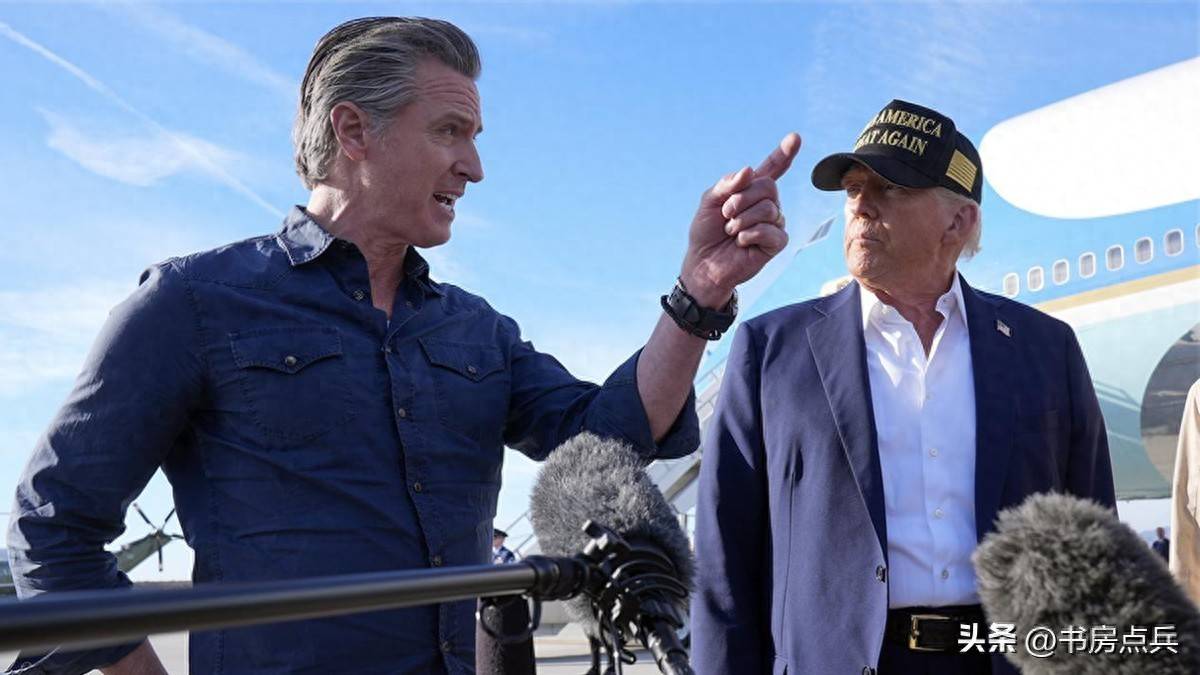
向石油下跪,把美国未来卖给中国?纽森为啥跟特朗普又杠上了
Sou Hu Cai Jing· 2026-02-18 10:08
Core Viewpoint - The recent confrontation between California Governor Gavin Newsom and former President Donald Trump highlights a significant clash over energy policy and climate diplomacy, with Newsom taking a proactive stance in clean energy collaboration with the UK, while Trump criticizes him for overstepping federal authority [1][3][5]. Group 1: Energy Policy and Climate Diplomacy - Newsom signed a clean energy cooperation agreement with the UK, focusing on offshore wind and clean energy technologies, which he claims will open California's market to British companies [3][5]. - Trump's response was to label Newsom a "loser" and criticize his actions as undermining U.S. interests, reflecting a stark contrast in their approaches to climate policy [5][6]. - Newsom's comments suggest that Trump's policies favor fossil fuels and hinder the U.S. from competing in the global renewable energy market, particularly against China [6][8]. Group 2: Political Implications - Newsom's aggressive stance against Trump is part of a broader strategy to position himself as a leading Democratic candidate for the 2028 presidential election, aiming to enhance his national profile [10][11]. - The exchange between Newsom and Trump serves as a precursor to the upcoming election, with Newsom attempting to portray himself as a global leader capable of countering Trump's influence [10][11]. - The UK government’s response indicates a cautious approach, emphasizing the importance of federal relationships while engaging with individual states like California [11].

欧美憋不住了,要对中国先下手为强,高市早苗很得意,小算盘很响
Sou Hu Cai Jing· 2026-01-09 09:22
Group 1 - The global geopolitical landscape is intensifying as major powers in Europe, America, and Asia target China through economic, diplomatic, and security pressures to gain strategic advantages [1][25] - Japan's new Prime Minister, Sanae Takaichi, has adopted a right-wing nationalist stance, which has led to a significant deterioration in Sino-Japanese relations and sparked domestic and international controversy [3][21] - The European Union has implemented an expanded carbon border adjustment mechanism, effectively imposing tariffs on key industrial products like cement and steel, which are crucial to China's manufacturing sector [5][7] Group 2 - The EU's carbon tariff policy, while presented as a green transition initiative, serves to protect its own industries amid economic stagnation and declining manufacturing competitiveness [5][27] - China's Ministry of Commerce has expressed strong concerns over the EU's discriminatory and targeted approach, emphasizing that green development should be a collaborative global goal [7][9] - The United States is employing a dual strategy of security pressure regarding Taiwan while maintaining economic ties with China, reflecting a complex approach to global governance [11][15] Group 3 - Japan's provocative actions include military cooperation with the Philippines and deepening economic and military ties with Taiwan, which are seen as attempts to assert its influence in the region [23][25] - Russia has responded to Japan's provocations with military exercises in the disputed Northern Territories, highlighting the geopolitical tensions in the region [25] - The combined pressures from Europe, America, and Japan on China appear formidable, yet their internal constraints and differing agendas may hinder a unified front [25][29] Group 4 - China's responses to the EU's carbon tariffs and Japan's statements on Taiwan demonstrate its confidence and strategic flexibility in navigating complex global challenges [29][31] - The current geopolitical dynamics present both challenges and opportunities for China, suggesting that maintaining strategic initiative could turn pressure into leverage [31]

英媒:中国在COP30中扮演更重要角色
Huan Qiu Wang· 2025-11-16 23:13
Group 1 - The absence of the United States at the COP30 climate summit marks a significant shift in global climate diplomacy, with China emerging as a key leader in addressing climate change [1][2] - China's presence at COP30 is highlighted by the prominent "China Corner," where executives from major Chinese clean energy companies present their visions for a green future, indicating a shift from the U.S. role in climate negotiations [1][2] - The leadership of China in renewable energy and electric vehicles is solidifying its position in climate diplomacy, as noted by the Director-General of the International Renewable Energy Agency [1][4] Group 2 - Chinese companies, including CATL, State Grid, Trina Solar, and BYD, are actively participating in COP30, showcasing their advancements in clean energy technology and electric vehicles [3][4] - The involvement of Chinese firms in the climate summit reflects their significant role in producing and investing in low-carbon technologies, which is seen as a form of political leadership [4] - The praise from COP30 officials for China's leadership in clean energy technology underscores the country's commitment to supporting global climate governance and assisting other nations [3][4]
法国前总理法比尤斯:COP30能否成功取决于三个“I”
Guo Ji Jin Rong Bao· 2025-10-20 07:50
Core Insights - Climate change is a significant challenge affecting global economic, social, and political orders, influencing global governance structures [1] - The 10th anniversary of the Paris Agreement highlights the ongoing efforts to balance climate goals with geopolitical considerations [1] Group 1: Climate Change Impacts - Climate change is expected to lead to increased natural disasters, rising sea levels, population displacement, species extinction, and heightened global poverty, which will profoundly affect society, the world economy, and geopolitical relations [2] - By 2050, it is projected that 1 billion people living at elevations below 10 meters will be impacted by climate change, exacerbating issues such as malnutrition, increased infant mortality rates, housing shortages, power shortages, and lack of educational resources [2] Group 2: Paris Agreement Goals - The Paris Agreement sets targets to limit global temperature rise and aims for carbon neutrality by the second half of this century, emphasizing the principle of "common but differentiated responsibilities" (CBDR) due to varying development levels among countries [2] Group 3: Success Factors of COP21 - The success of the 2015 COP21 is attributed to three key factors: Science (the role of the scientific community in understanding climate data), Society (the collective efforts of organizations, individuals, and businesses), and States (the willingness of major countries to cooperate on climate action) [3] - Political consensus and a cooperative attitude were crucial for the achievement of the Paris Agreement [3] Group 4: Future Challenges for COP30 - The upcoming COP30 in Brazil in November 2025 will depend on three key factors: Implementation (turning commitments into tangible progress), Inclusion (broadening participation from civil society and local groups), and Innovation (highlighting the importance of legal and institutional tools in advancing climate responsibility) [4] - China is playing an increasingly active role in this evolving process [4] Group 5: Importance of Climate Diplomacy - Climate diplomacy is essential due to the global nature of climate challenges, which transcend borders, disciplines, and generations [4] - Multilateralism is necessary to address climate change, and close cooperation between China and Europe is vital despite existing differences [4]