汽车出海2.0时代

Search documents
车市告别顺风时代
2 1 Shi Ji Jing Ji Bao Dao· 2025-12-31 13:58
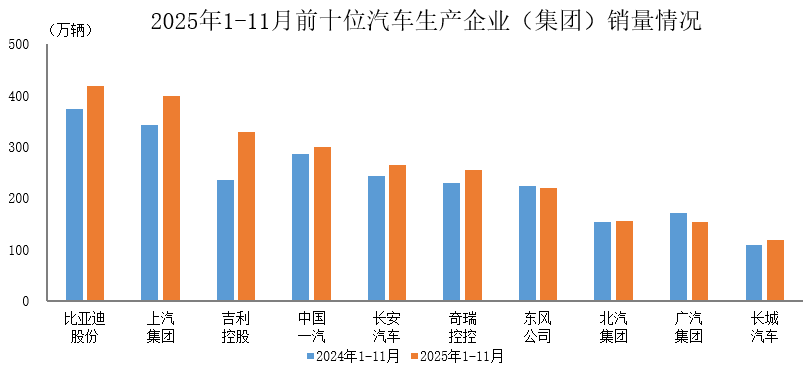
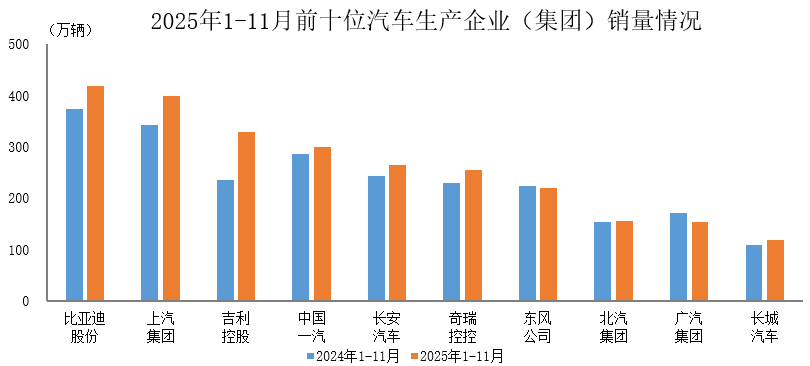
Core Insights - The Chinese automotive market is at a historic crossroads, with increasing penetration of new energy vehicles (NEVs) and a shift in market dominance, marking the end of the era of broad market growth and the beginning of a multi-dimensional competition focused on technology, ecology, and globalization [1] Market Performance - In November 2025, retail sales of passenger vehicles in China reached 2.225 million units, a year-on-year decline of 8.1% and a month-on-month decline of 1.1% [2] - The retail sales of fuel vehicles fell by 22% year-on-year, while pure electric models saw a 9.2% increase, pushing the NEV retail penetration rate to 59.3%, which further rose to 62.3% by mid-December [3] Competitive Landscape - The competition in the NEV sector has shifted from growth to a focus on existing market share, with companies now competing on technology iteration, ecosystem building, and organizational efficiency [5] - BYD's domestic sales in November 2025 were 348,300 units, down 26.81% year-on-year, indicating increased competitive pressure and a need for technological advancement [5] - Chery's wholesale sales in November 2025 reached the top three among NEV manufacturers, with a year-on-year growth of 54% and a market share of 6.5% [6] Export Dynamics - Chinese automotive exports surpassed 700,000 units in November 2025, marking a transition to a more localized production and ecosystem output model in the global market [4][10] - From January to November 2025, China exported 6.343 million vehicles, a year-on-year increase of 18.7%, with NEV exports doubling and becoming a key driver of overseas growth [9] Strategic Shifts - Companies are adopting diverse strategies for international expansion, with BYD focusing on localized production and ecosystem integration, while Chery emphasizes high-value market penetration through technology [10][11] - New entrants like NIO and Li Auto are facing challenges in their unique business models, while Leap Motor is validating its differentiated survival path through vertical integration and cost control [9] Policy Implications - The adjustment of the new energy vehicle purchase tax policy in 2026 is expected to compel companies to enhance cost control and supply chain optimization [14] - The automotive industry is anticipated to shift from a "policy-driven" growth model to a "value-driven" one, emphasizing high-quality transitions [15] Future Outlook - The market is expected to see a modest growth of around 3% in 2026, with NEV penetration continuing to rise but at a slower pace [15][16] - Companies are preparing for intensified competition by focusing on product iteration, technological implementation, and cost optimization in both domestic and international markets [17][18]




车市告别顺风时代
21世纪经济报道· 2025-12-31 13:52
Core Viewpoint - The Chinese automotive market is at a historic crossroads, transitioning from a growth phase to a competitive landscape characterized by technology, ecology, and globalization, as evidenced by the rising penetration of new energy vehicles (NEVs) and intensified competition among manufacturers [1][2]. Market Dynamics - The retail volume of fuel vehicles decreased by 22% year-on-year, while pure electric vehicles saw a 9.2% increase, pushing the NEV retail penetration rate to 59.3% in November 2025, further rising to 62.3% by mid-December [2]. - The market has shifted from a phase of broad growth to one of intense competition, where companies must focus on technological advancement, ecosystem development, and operational efficiency [4]. Competitive Landscape - BYD, once a dominant player, experienced a 26.81% decline in domestic sales in November 2025, highlighting the pressures from increased competition and the need for continuous technological innovation [4]. - Chery achieved significant growth, with a 54% year-on-year increase in NEV wholesale sales in November 2025, marking its entry into the top three NEV manufacturers [5]. - Traditional automakers like SAIC are rapidly transforming, narrowing the sales gap with BYD, indicating a shift in competitive dynamics [5]. Global Expansion - Chinese automotive exports reached 634.3 million units from January to November 2025, a year-on-year increase of 18.7%, with NEVs becoming a core driver of this growth [9]. - The export strategy has evolved from a trade-focused approach to a more integrated model involving localized production and ecosystem collaboration [9][10]. Policy Changes and Market Outlook - Key policy adjustments, including changes to the new energy vehicle purchase tax, are expected to drive companies to enhance cost control and supply chain optimization [15]. - The market is anticipated to see modest growth in 2026, with a focus on high-quality transitions rather than mere volume expansion, as companies adapt to new competitive realities [16]. Strategic Focus - Companies are expected to concentrate on product iteration, technological implementation, and cost optimization in the domestic market, while also enhancing localization and ecosystem output in overseas markets [17][18]. - The ability to establish a technological and ecological moat domestically, along with a sustainable operational framework internationally, will be crucial for companies navigating the upcoming competitive landscape [18].
风停帆转:车市告别“顺风时代”,打响技术与出海“体系战”
2 1 Shi Ji Jing Ji Bao Dao· 2025-12-25 08:24
Core Insights - The Chinese automotive market is at a historic crossroads, transitioning from a growth phase to a competitive landscape characterized by technology, ecology, and globalization [1] - The penetration rate of new energy vehicles (NEVs) has reached 62.3%, marking a significant shift in market dominance [3] - The competition has intensified, moving from volume-driven growth to a focus on technology iteration, ecological construction, and organizational efficiency [5] Market Performance - In November 2025, retail sales of passenger vehicles in China were 2.225 million units, a year-on-year decline of 8.1% and a month-on-month decline of 1.1% [2] - Retail sales of fuel vehicles fell by 22% year-on-year, while pure electric models grew by 9.2%, pushing the NEV retail penetration rate to 59.3% [3] Competitive Landscape - BYD's domestic sales in November 2025 were 348,300 units, down 26.81% year-on-year, indicating increased competitive pressure [5] - Geely's NEV sales exceeded 1.5 million units in the first 11 months of 2025, achieving a penetration rate of 60.5% [6] - Chery's NEV sales reached 116,800 units in November, a year-on-year increase of 50.1%, marking a historical high [6] Export Dynamics - China's automotive exports surpassed 700,000 units in November 2025, with NEV exports doubling year-on-year [9] - BYD's overseas sales in November were 132,000 units, a 297% increase, with a target of over 1.6 million overseas sales in 2026 [10] - Chery's exports in November were 136,700 units, a year-on-year increase of 30.3%, indicating strong international demand [11] Strategic Shifts - The automotive industry is transitioning from a trade-oriented export model to a more integrated approach involving localized production and ecosystem collaboration [9] - Companies like NIO and Leap Motor are adopting unique strategies for international expansion, focusing on user-centric models and cost control [12][9] Policy Implications - The adjustment of the new energy vehicle purchase tax in 2026 will require companies to enhance cost control and supply chain optimization [14] - The new regulatory guidelines aim to address excessive competition and promote a shift towards high-quality development in the industry [14] Future Outlook - The market is expected to see a modest growth of around 3% in 2026, with NEV penetration continuing to rise but at a slower pace [15] - Companies are focusing on product iteration, technological implementation, and cost optimization to prepare for intensified competition [16][17]