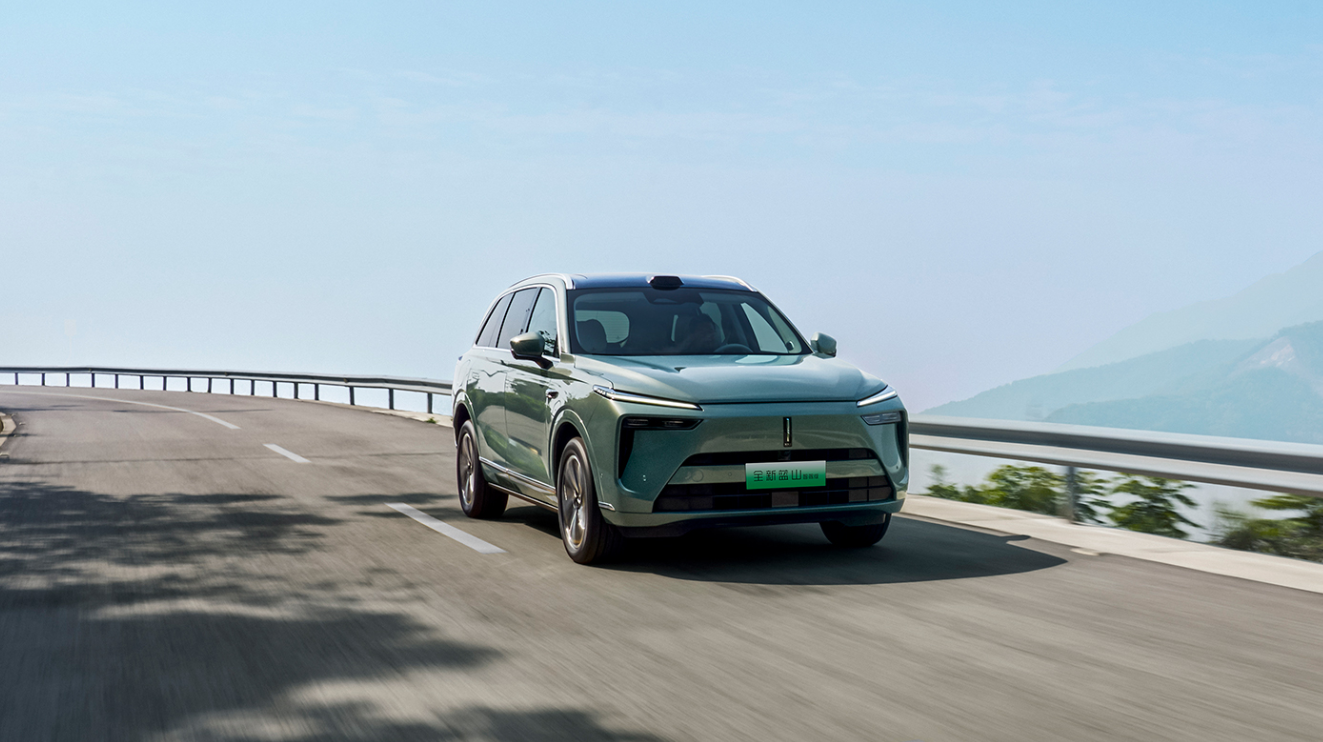
汽车直营模式

Search documents
独家丨长城魏牌重回品牌公司,销售渠道将直营、代理并行
晚点Auto· 2026-01-30 12:48
Core Viewpoint - Great Wall Motors is undergoing a transformation, particularly focusing on the high-end brand WEY, with significant organizational adjustments and a shift towards a dual sales model combining direct sales and dealership channels [3][5][7]. Group 1: Organizational Changes - The WEY brand has been restructured into a brand company and renamed WEY Brand, with operational units set up by model: Gaoshan, Lanshan, Mocha, and "DE" [3][5]. - The new CEO of WEY, Zhao Yongpo, is implementing a strategy that emphasizes model-based operations rather than brand-centric operations, aligning with industry trends towards integration [6][10]. - The total number of employees in WEY exceeded 5,000 by the end of last year, with central staff now consolidated in the Great Wall headquarters [6][10]. Group 2: Sales Channel Strategy - Starting in February, the Lanshan model will enter dealership channels, utilizing a proxy model similar to that of Xiaomi and Zeekr, allowing for price control and avoiding inventory burdens on dealers [5][7]. - The dual sales model aims to unify brand image and pricing while ensuring efficient customer feedback mechanisms, mirroring strategies employed by Tesla and other new energy vehicle companies [8][12]. - The company plans to open approximately 100 new direct sales stores this year, while also reducing the number of hypermarket stores [5][10]. Group 3: Market Performance and Brand Positioning - In 2025, WEY's sales are expected to rebound significantly, with a total of 102,000 vehicles sold, marking an 86% year-on-year increase, primarily driven by the Lanshan and Gaoshan models [10][11]. - Despite the growth, WEY's sales account for less than 10% of Great Wall's total sales of 1.324 million vehicles, indicating a need for clearer brand positioning and recognition [10][11]. - The brand has experienced strategic shifts in focus, moving from "light luxury" to "smart hybrid" and now to a family-oriented market, which has contributed to brand confusion [10][11]. Group 4: Leadership and Future Directions - The new leadership under CEO Feng Fuzhi aims to rebuild the brand's strength through direct engagement with customers and a focus on product development driven by consumer demand [11][13]. - The company is transitioning to a model that balances cost and scale by integrating more partners into its sales strategy, moving away from high-cost direct sales alone [13][14]. - The new CEO Zhao Yongpo, with over 20 years of experience, is expected to leverage his background in technology and product development to enhance WEY's market position [13][14].


长城魏牌再度换帅,哈弗总经理赵永坡接任后能否改变局面
Jin Rong Jie· 2025-12-22 09:20
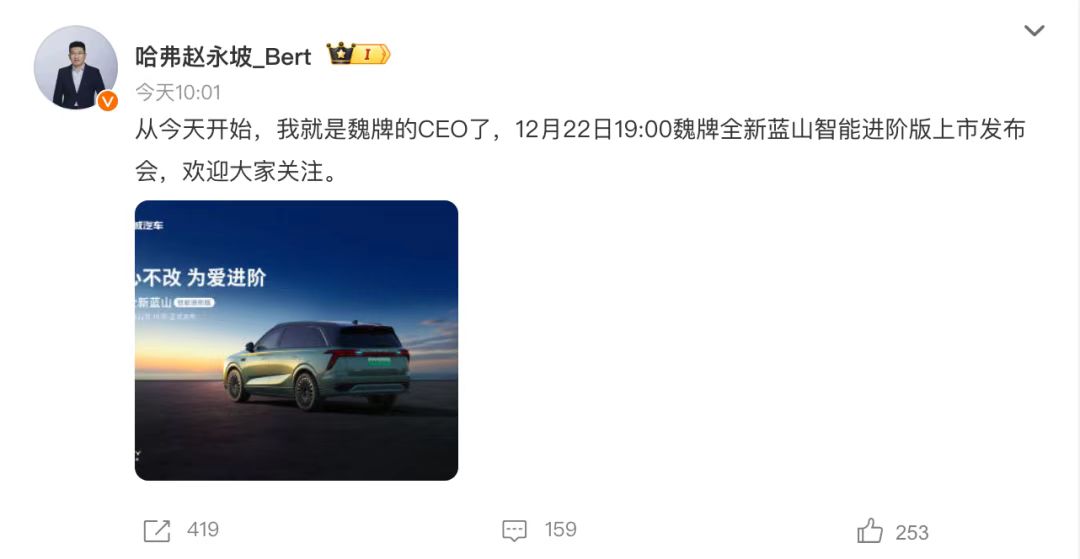
Core Viewpoint - Great Wall Motors' premium brand Wey has announced a leadership change, with Zhao Yongpo becoming the new CEO, marking the ninth CEO since the brand's establishment in 2016. The future of Zhao's tenure will depend on Wey's subsequent development [1]. Group 1: Leadership Change - Zhao Yongpo, previously the general manager of Haval, has taken over as CEO of Wey, indicating a significant shift in leadership as the brand seeks to improve its market position [1][5]. - Feng Fuzhi, the former CEO, implemented a direct-to-consumer (DTC) model and a new channel strategy called "Great Wall Smart Choice," which helped boost sales significantly during his tenure [3][5]. Group 2: Sales Performance - Under Feng's leadership, Wey's sales showed remarkable growth, with July sales reaching 10,045 units (up 263.29% year-on-year), August at 8,028 units (up 167.51%), September at 11,026 units (up 63.23%), October at 12,699 units (up 95.79%), and November at 12,763 units (up 81.14%) [3]. - For the first 11 months of 2023, Wey's cumulative sales reached 89,000 units, representing a 93% increase year-on-year, making it the fastest-growing brand within the Great Wall system [3]. Group 3: Market Comparison - Despite Wey's rapid growth, it still lags behind competitors such as Lynk & Co, which sold 316,744 units (up over 22.1%), and Lantu, which delivered 146,351 units (up over 80%) in the same period [5]. - The frequent changes in leadership, with an average tenure of 12 months per CEO, reflect underlying sales anxieties and a lack of strategic continuity for the brand [5][7]. Group 4: Future Challenges - Zhao Yongpo faces the challenge of ensuring strategic continuity and differentiating the brand in the high-end market, as previous leadership changes have led to inconsistent strategic directions [7][8]. - The success of Wey in the high-end market will depend on its ability to maintain a coherent strategy and effectively implement its channel transformation [8].
中国汽车流通协会副会长王都:汽车金融市场渗透率,预计将逐步回落至50%左右
Mei Ri Jing Ji Xin Wen· 2025-12-03 13:28
Core Viewpoint - The recent cessation of "high interest and high rebate" practices by several banks marks a necessary step towards the normalization of the automotive finance market, as it reflects the need for sustainable profitability for banks and a rational pricing system for consumers [1][2][3]. Group 1: Automotive Finance Market - The "high interest and high rebate" model is part of the automotive industry's chaos, where dealers struggle to profit from car sales and resort to high rebates from loans and insurance, leading to hidden financing costs for consumers [2]. - The automotive finance penetration rate previously surged to around 70% due to high interest incentives, but is expected to gradually decline to approximately 50% as policies tighten and market self-regulation increases [4]. - The essence of automotive finance should be to serve the real economy, focusing on reasonable interest rates and flexible products to lower consumer purchase barriers and enhance their willingness to buy [5]. Group 2: Industry Trends and Changes - The authorized dealership model remains the mainstream in the automotive sales industry, despite the rapid rise of direct sales models from new car manufacturers [6][7]. - The gradual reduction of subsidies for new energy vehicles (NEVs) is seen as an inevitable trend, with expectations that NEV penetration will steadily increase to 54% to 55% this year [8]. - Traditional dealers are entering a phase of structural adjustment, facing challenges such as network contraction and cash flow pressure, leading to a potential elimination of some manufacturers and dealers in the coming years [9].
坦克撤出、专卖魏牌,长城直营启动变革 | 电厂
Xin Lang Cai Jing· 2025-09-29 10:58
Core Viewpoint - Great Wall Motors is transitioning its "Great Wall Smart Selection" stores nationwide to "Weipai New Energy Direct Stores," focusing solely on Weipai brand vehicles and withdrawing the Tank models from direct sales channels [1][4][7] Group 1: Company Strategy - The transition aims to establish Weipai as the only direct sales brand under Great Wall, enhancing its presence in the high-end market while addressing the challenges faced by traditional dealerships [1][4] - The new CEO of Weipai, Feng Fuzhi, indicated that the Tank models would return to dealerships, allowing Weipai to focus on direct sales, which is seen as a solution to connect with high-end users [4][9] - Great Wall's sales data shows a significant increase in new car sales, with 115,600 units sold in August, marking a 22.33% year-on-year growth, and Weipai's sales reaching 8,028 units, up 167.51% [1][9] Group 2: Market Dynamics - The dual sales model, combining direct sales and dealership sales, has led to conflicts of interest, as dealerships can offer lower prices through external financing incentives, impacting direct store sales [6][7] - Great Wall's strategy to balance the interests of direct stores and dealerships is crucial, as the latter has a long-standing relationship with the company, complicating the transition to a direct sales model [6][7] Group 3: Financial Performance - Great Wall's net profit for the first half of 2025 dropped significantly by 36.39% to 3.581 billion, attributed to increased expenses, particularly in expanding direct sales channels [9][12] - Despite a 2.52% increase in sales volume to 568,900 units, revenue growth was only 0.99%, indicating a decline in the profitability of high-end models [9][12] Group 4: Brand Development - Weipai is positioned as a key brand for Great Wall's high-end strategy, with plans to increase the number of direct stores from 430 to over 600 by the end of the year, aiming for a total of 1,000 stores [10][12] - The brand has faced challenges, including consumer price concerns and delays in product launches, which are common issues for new entrants in the high-end market [12][13] Group 5: Industry Trends - The recovery of the traditional fuel vehicle market is beneficial for Great Wall, with a reported 13.5% year-on-year increase in sales of traditional fuel passenger vehicles in August [13] - Great Wall's strategy to maintain a balance between fuel and electric vehicles allows for greater flexibility in adapting to market changes [13]

魏牌商业化总经理离职
Mei Ri Jing Ji Xin Wen· 2025-08-13 12:21
Core Viewpoint - The departure of Chen Jia, the commercial general manager of the WEY brand under Great Wall Motors, highlights the challenges in balancing the direct sales and dealership channels, which have been causing internal conflicts within the company [1][2]. Group 1: Management Changes - Chen Jia has confirmed his resignation, which was acknowledged by an internal source at WEY [1]. - Chen Jia was primarily responsible for the marketing system construction, focusing on bridging the commercial and service standards between direct stores and dealers [1]. Group 2: Sales Performance - WEY's sales have seen significant growth, with July sales exceeding 10,000 units, representing a year-on-year increase of 263.29% [2]. - Cumulatively, WEY's sales for the first seven months reached 44,500 units, marking a year-on-year growth of 96.8% [2]. Group 3: Channel Strategy - The company aims to expand its direct sales network from 430 to over 600 stores by the end of the year, covering 200 cities [2]. - The overlapping product offerings between direct sales and dealership channels have led to internal competition, creating conflicts such as price wars [3]. Group 4: Operational Challenges - The current average monthly sales volume of WEY is around 6,000 units, raising concerns about sustaining high investments in the direct sales system [4]. - Other traditional automakers are also exploring direct sales models, but typically only for low-volume models due to high labor costs and digitalization requirements [4].
魏牌商业化总经理离职,销量快速增长背后:长城直营模式仍面临挑战
Mei Ri Jing Ji Xin Wen· 2025-08-12 08:31
Group 1 - The departure of Chen Jia, the General Manager of Weipai's commercialization, has been confirmed, raising concerns about the challenges in balancing the direct sales and dealer channels [1][2] - Weipai's sales have seen significant growth, with July sales exceeding 10,000 units, representing a year-on-year increase of 263.29%, and cumulative sales for the first seven months reaching 44,500 units, up 96.8% [2] - The conflict between the direct sales model and the dealer network has become more pronounced, as overlapping products lead to competition rather than cooperation, resulting in potential internal price wars [2][3] Group 2 - Weipai plans to increase the number of direct sales stores from 430 to over 600 by the end of the year, expanding its coverage to 200 cities [1] - The current direct sales model requires high manpower costs and a certain level of digitalization, which poses challenges for traditional car manufacturers [3] - Balancing the interests of direct sales and dealer channels remains a critical test for Weipai's management [3]