
油气管网公平开放

Search documents
北京大学能源研究院副院长杨雷、研究员孙慧解读《油气管网设施公平开放监管办法》
Zhong Guo Dian Li Bao· 2025-10-17 14:15
Core Viewpoint - The introduction of the "Regulatory Measures for Fair and Open Supervision of Oil and Gas Pipeline Facilities" marks a significant reform aimed at enhancing the fairness and openness of oil and gas pipeline infrastructure, thereby promoting market-oriented reforms in the oil and gas industry and optimizing resource allocation [1][9]. Industry Development Background and Situation - Since the implementation of the fair and open regulatory system for oil and gas pipeline facilities in 2014, the establishment of the National Oil and Gas Pipeline Group in 2019 has led to a significant increase in the number of active shippers from 5 to over 200, enhancing the efficiency of oil and gas infrastructure usage [2]. - A competitive natural gas market system is rapidly forming, characterized by diversified upstream supply, efficient midstream transportation, and competitive downstream sales [2]. Key Contents of the Regulatory Measures - The scope of fair and open pipeline access has been further clarified, excluding certain internal pipelines and emphasizing the inclusion of pipelines that facilitate gas delivery to users [4]. - The principle of fairness and non-discrimination in pipeline access has been reinforced, removing previous conditions that limited service provision based on existing user agreements [5]. - Service standards for fair and open pipeline access have been optimized, including a reduction in response time for service requests from 15 to 5 working days [6]. - The measures encourage the active participation of pipeline operators in establishing user registration and service application processes, enhancing transparency and information disclosure [6][7]. Future Direction for the Industry - The regulatory measures are expected to play a crucial role in further market-oriented reforms, emphasizing the importance of contracts and the need for standardized service agreements [9]. - There is a focus on ensuring transparency and information disclosure, which are critical for market operation, with further details on frequency and granularity of information sharing to be developed [9]. - The unification of systems and rules is aimed at promoting the formation of a national market, facilitating the establishment of a cohesive national pipeline network [9].



油气管网新规出台让连接资源和市场“大动脉”发生哪些变化?一文了解
Yang Shi Wang· 2025-10-17 09:37
Core Viewpoint - The newly released "Regulatory Measures for Fair and Open Access to Oil and Gas Pipeline Facilities" aims to break monopolies and create a fair competitive environment for various market participants starting from November 1 [1][3]. Group 1: Regulatory Changes - The new regulations will require pipeline operators to provide oil and gas transportation and storage services to eligible users in a fair and non-discriminatory manner [3][5]. - This marks the first time that oil and gas pipeline regulation has been established as a "departmental regulation" and introduces unified standards for fair access [3][5]. - The introduction of administrative penalties for discriminatory practices or monopolistic behavior is a significant breakthrough in the regulatory framework [3][5]. Group 2: Market Impact - The new measures will allow private enterprises that previously faced barriers to access the oil and gas transportation market, thereby increasing pipeline utilization rates and reducing transportation costs [5][7]. - The integration of various gas sources, including imported LNG, coalbed methane, and coal-to-gas, into a unified national network will enhance flexibility in resource allocation [5][7]. - Overall, the implementation of these regulations is expected to lead to more stable and transparent energy supply [7].
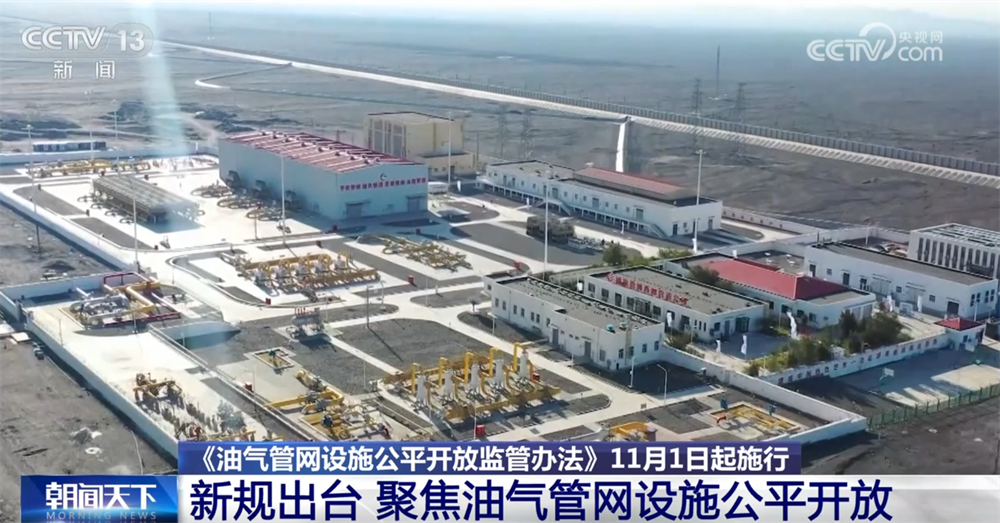
我国首个油气部门规章《油气管网设施公平开放监管办法》发布 民企使用油气管网设施将更加便利
Yang Guang Wang· 2025-10-17 00:41
Core Viewpoint - The release of the "Regulatory Measures for Fair Access to Oil and Gas Pipeline Facilities" marks the first departmental regulation in China's oil and gas pipeline supervision, aiming to enhance market competition and promote the participation of private enterprises in the sector [1]. Group 1: Regulatory Framework - The new regulatory measures establish standardized service processes for fair access to oil and gas pipelines, including user registration, service acceptance, and information disclosure [1]. - The measures introduce administrative penalties for violations of fair access, enhancing the enforcement of regulations in the sector [1]. Group 2: Market Impact - The regulatory measures are expected to stimulate the construction of an oil and gas market system, increasing competitive vitality in both upstream and downstream markets [1]. - The number of private enterprise users of oil and gas pipeline facilities is projected to exceed 740 by the end of this year, representing a year-on-year growth of 30% [1]. Group 3: Energy Security - The measures will facilitate the entry of diverse oil and gas resources into the main pipeline network, allowing for flexible allocation through a unified national network [1]. - This initiative is anticipated to significantly enhance China's energy security capabilities [1].