
流量内卷

Search documents
外卖大战烧钱千亿元:没有赢家的“内卷”
证券时报· 2025-12-05 00:23
Group 1 - The core viewpoint of the article is that the fierce competition among the three major platforms in the food delivery sector has resulted in significant financial losses, with a combined loss of nearly 80 billion yuan, indicating that there are "no winners" in this battle [1] - Meituan reported its largest loss since going public, Alibaba's operating profit plummeted by 85%, and JD's net profit was halved, highlighting the unsustainable nature of the current growth model driven by heavy subsidies and marketing [1] - Despite the losses, the competition has accelerated user habit formation and expanded instant retail from food delivery to a broader range of categories, with JD's active users surpassing 700 million and Alibaba's growth in various business lines [1] Group 2 - The article reflects on the strategic choices of Chinese tech companies, contrasting their focus on short-term delivery efficiency with the long-term investments made by overseas tech giants in AI and other advanced technologies [2] - While companies like Alibaba and Meituan have made some investments in AI, their overall contributions to foundational technologies and global breakthroughs remain insufficient compared to their spending in the local delivery market [2] - The "ceasefire" in the food delivery war signals a need for rationality, urging Chinese tech firms to redirect resources towards hard technology and innovation that will determine long-term competitiveness [2]


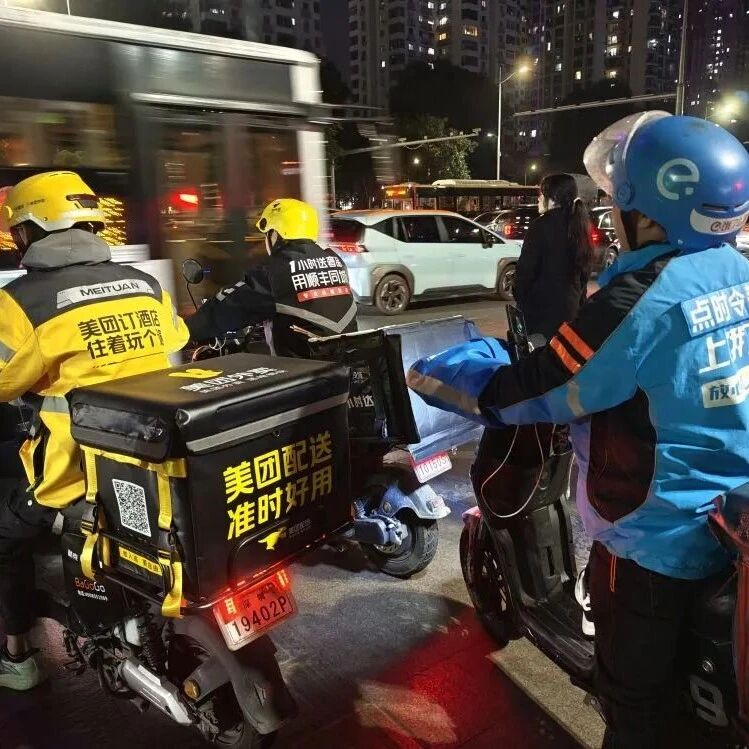
外卖大战烧钱千亿元:没有赢家的“内卷”
Zheng Quan Shi Bao· 2025-12-04 17:42
Core Insights - The fierce competition among Meituan, Alibaba, and JD Group in the food delivery sector has resulted in a combined loss of nearly 80 billion yuan in the third quarter, highlighting the high cost of the subsidy war [1] - Despite the apparent short-term benefits for consumers, the platforms are facing a challenging situation of simultaneous growth and losses, with significant financial implications [1] Financial Performance - Meituan reported its largest loss since going public, while Alibaba's operating profit plummeted by 85%, and JD's net profit was halved [1] - The three companies invested hundreds of billions in subsidies and marketing to capture market share but failed to achieve sustainable profit growth [1] Market Dynamics - The competition has accelerated user mindset formation and consumption habits, expanding instant retail from food to a broader range of categories [1] - JD's food delivery efforts helped it surpass 700 million annual active users, while Alibaba's initiatives through Taobao Flash and Hema Fresh contributed to business growth [1] Operational Efficiency - Intense competition has forced platforms to optimize operational efficiency and service systems, with Meituan maintaining a lead in high-ticket orders and Alibaba focusing on fulfillment efficiency and user experience [1] - These changes signify a necessary transition from extensive expansion to refined operations within the industry [1] Strategic Reflection - The ongoing investment in food delivery contrasts with global tech giants like Google and Microsoft, which are focusing on AI and cloud computing, indicating a strategic lag in China's tech industry [2] - While Chinese tech giants have made some advancements in AI, their investments in foundational technologies and global breakthroughs remain insufficient compared to their spending in local delivery services [2] Future Challenges - The temporary "ceasefire" in the food delivery war signals a return to rationality, but the real challenge lies in whether Chinese tech companies can convert this rationality into sustained investment in hard technology and frontier innovation [2] - The significance of the food delivery battle should extend beyond market share redistribution to a collective reflection on development models, urging companies to move beyond "traffic competition" to a "technology-driven" approach [2]
美团闪购推全套增长解决方案,称将为电商品牌“流量内卷”提供针对性解法
Xin Lang Ke Ji· 2025-10-30 12:09
Core Insights - Meituan has launched a comprehensive growth solution called "Brand Official Flag Lightning Warehouse" aimed at e-commerce brands lacking offline channels and mature fast-moving consumer goods (FMCG) brands, as well as retailers across various industries [1] - The solution addresses the issue of e-commerce brands being trapped in traditional platform traffic competition and lacking channel expansion opportunities, allowing brands to achieve lower costs, stronger brand recognition, larger scale, and more stable repurchase rates [1] - Over a hundred brands, including Sony PlayStation, Proya, Logitech, Kingston, and L'Oreal, have already joined the "Brand Official Flag Lightning Warehouse," enabling consumers in major cities to shop at these brands' official flagship stores on Meituan [1] Industry Developments - Meituan plans to introduce multiple digital tools aimed at enhancing circulation efficiency and accelerating product innovation for mature FMCG brands [1] - The company will invest more research and development resources to provide digital infrastructure and AI-assisted instant retail management tools to various retail businesses [1] - Notable domestic and international brands such as Yili, Qingdao Beer, Pepsi, Sofy, and Procter & Gamble have engaged in deep cooperation with Meituan's related business segments [1]

浙江工商大学伍蓓:从“流量内卷”转向“价值创造”的破局之道
Sou Hu Cai Jing· 2025-09-11 03:41
Core Viewpoint - The platform economy is currently facing challenges such as "low-price competition" and "subsidy wars," necessitating a comprehensive investigation to promote healthy development in the sector [1]. Group 1: Investigation and Analysis - The "anti-involution" investigation action initiated by the Digital Economy New Media & Think Tank aims to address the issues within the platform economy [1]. - The investigation involves collaboration with experts from various fields, including professors, analysts, and investors, to deeply analyze the "involution-style" competition in the platform economy [8][24]. Group 2: Characteristics of Involution in Platform Economy - Involution in the platform economy manifests in three main aspects: 1. Homogeneous price wars leading to a sharp decline in industry profit margins, creating a dilemma for merchants [13]. 2. Rising customer acquisition costs, with some sellers spending up to 35% of sales on advertising while conversion rates decline [13]. 3. Loss of brand value due to over-reliance on low-price strategies, resulting in poor supply chain quality and insufficient innovation [13]. Group 3: Solutions to Break the Involution - The platform economy must shift from a "traffic algorithm" to an "industry algorithm," focusing on digitalizing industry capabilities and improving supply chain efficiency [15]. - The proposed solutions include: 1. **Technical Drive**: Emphasizing innovation and increasing investment in emerging technologies like big data and AI [16]. 2. **Integrated Development**: Enabling platforms to empower small and medium-sized enterprises by lowering digitalization barriers and fostering collaborative models [17]. 3. **Global Openness**: Expanding international markets and establishing trade standards to facilitate cross-border data flow and compliance [19]. Group 4: Focus Areas of the Investigation - The investigation will focus on various types of platforms, including: 1. Retail e-commerce platforms such as JD.com, Taobao, Pinduoduo, and Douyin [30]. 2. Local life (instant retail) platforms like Meituan and Ele.me [30]. 3. Cross-border e-commerce platforms including Amazon and SHEIN [30]. 4. Ride-hailing platforms such as Didi and Cao Cao [30]. 5. Online travel platforms like Ctrip and Qunar [30].

破解线上流量内卷
Shen Zhen Shang Bao· 2025-05-19 06:37
Group 1 - The core viewpoint of the articles highlights the launch of the 26SS 后浪 SHOWROOM, which aims to bridge the gap between independent brands and physical stores through a closed ecosystem and strict channel control, addressing the systemic trust crisis in the industry [1][2] - The second season of the private ordering event will take place from October 20 to 23, building on the success of the first season, which achieved 500 million orders with a 100% renewal rate [1] - The event will feature three main components: static exhibitions, fashion shows, and forums, focusing on deep connections between independent designer brands and physical commerce to tackle the challenges of traffic competition [1] Group 2 - 后浪 SHOWROOM employs three strategies: exclusive product assurance, scenario-based storytelling, and traffic feedback to create a "secure product pool" for physical buyers, aiming to restore confidence in the industry [2] - The vision of 后浪 extends beyond a single ordering event, seeking to establish long-term trust between designers and physical stores by addressing industry pain points and reshaping the industry's value system [2] - The initiative emphasizes the importance of returning to the essence of design, trust in transactions, and a symbiotic ecosystem to navigate through cycles and thrive against the odds [2]