消费级人工智能

Search documents
新股前瞻|绿联科技:市占率超20%,全球消费级NAS龙头冲刺“A+H”
智通财经网· 2026-02-05 02:29
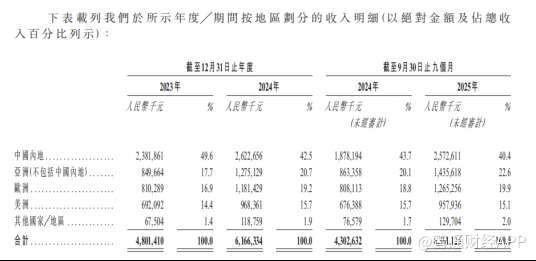
Core Viewpoint - The global technology consumer electronics market is transitioning from "single-function" to "full-scenario adaptation," driven by the rise of remote work, increased demand for personal data storage privacy, and the need for convenient charging solutions during travel. This shift presents new development opportunities and capital layout windows for leading companies in the sector [1]. Company Overview - Ugreen Technology, established in 2012, is a technology consumer electronics brand that covers various daily application scenarios through four main product categories: charging creative products, smart office products, smart audio-visual products, and smart storage products. The company operates in over 180 countries and regions, with a growing share of overseas market revenue, projected to reach 59.6% by the third quarter of 2025 [2][4]. Financial Performance - Ugreen's revenue for 2023 and 2024 is projected to be 4.801 billion yuan and 6.166 billion yuan, respectively, reflecting year-on-year growth of 25.3% and 28.4%. For the first three quarters of 2025, revenue is expected to reach 6.361 billion yuan, a 47.8% increase year-on-year. Net profit for the same periods is also on the rise, with 3.94 billion yuan in 2023 and 4.6 billion yuan in 2024, showing growth rates of 19.3% and 17% respectively [6][8]. Product Performance - Ugreen's four core product lines have shown stable growth since 2023. The charging creative products category, which includes chargers and power banks, generated 2.954 billion yuan in revenue for the first three quarters of 2025, marking a 44.7% year-on-year increase and accounting for 46.4% of total revenue. The smart storage products category has experienced the most significant growth, with a revenue increase of 166.9% year-on-year [7][8]. Market Trends - The global market for technology consumer electronics is expected to grow steadily, with the overall market size projected to increase from $35.38 billion in 2020 to $54.8 billion in 2024, reflecting a compound annual growth rate (CAGR) of 11.6%. By 2029, the market size is anticipated to reach $102.59 billion, with a CAGR of 13.4% from 2024 to 2029 [9][11]. Competitive Landscape - Leading brands with mature supply chains and R&D capabilities are expected to continue to dominate the market, squeezing out smaller white-label manufacturers. China's complete industrial chain system positions it as a global innovation center, capable of rapid market response and efficient mass production, which benefits companies like Ugreen [11][12]. Strategic Initiatives - Ugreen's upcoming listing on the Hong Kong Stock Exchange is a crucial step in its capital market strategy, allowing the company to leverage both A-share and H-share platforms for domestic and international growth. This dual approach aims to enhance brand recognition and attract global capital for R&D, branding, and overseas expansion [12].

新股前瞻|绿联科技(301606.SZ):市占率超20%,全球消费级NAS龙头冲刺“A+H”
智通财经网· 2026-02-05 02:26
Core Viewpoint - The global technology consumer electronics market is transitioning from "single function" to "full scene adaptation," driven by the rise of remote work, increased demand for personal data storage privacy, and the need for convenient charging solutions during travel. This shift presents new development opportunities and capital layout windows for leading companies in the sector [1]. Company Overview - Ugreen Technology, established in 2012, is a technology consumer electronics brand that covers various daily application scenarios through four main product categories: charging creative products, smart office products, smart audio-visual products, and smart storage products. The company operates in over 180 countries and regions, with a growing share of overseas market revenue, projected to reach 59.6% by the first three quarters of 2025 [2][4]. Financial Performance - Ugreen's revenue for 2023 and 2024 is projected to be 4.801 billion yuan and 6.166 billion yuan, respectively, reflecting year-on-year growth of 25.3% and 28.4%. For the first three quarters of 2025, revenue is expected to reach 6.361 billion yuan, a 47.8% increase year-on-year. Net profit for the same periods is also showing positive growth trends [6][7]. Product Performance - The four core product lines of Ugreen have shown stable growth since 2023. The charging creative products category, which includes chargers and power banks, generated 2.954 billion yuan in revenue during the first three quarters of 2025, accounting for 46.4% of total revenue and growing by 44.7% year-on-year [7][8]. Market Trends - The global market for technology consumer electronics is expected to grow steadily, with the overall market size projected to increase from $35.38 billion in 2020 to $54.8 billion in 2024, representing a compound annual growth rate (CAGR) of 11.6%. By 2029, the market size is anticipated to reach $102.59 billion, with a CAGR of 13.4% from 2024 to 2029 [9][11]. Competitive Landscape - Leading brands with mature supply chains and R&D capabilities are expected to continue to dominate the market, squeezing out smaller white-label manufacturers. China's complete industrial chain system positions it as a global innovation center, enhancing Ugreen's growth potential in the technology consumer electronics sector [11][12]. Strategic Development - Ugreen's upcoming listing on the Hong Kong Stock Exchange is a crucial step in its capital market strategy, allowing the company to leverage both A-share and H-share platforms for domestic and international growth. This dual approach aims to enhance brand recognition and attract global capital for R&D, branding, and overseas expansion [12].
绿联科技:市占率超20%,全球消费级NAS龙头冲刺“A+H”
Zhi Tong Cai Jing· 2026-02-05 02:25
Core Viewpoint - The global technology consumer electronics market is transitioning from "single function" to "full scene adaptation," driven by the rise of remote work, increased demand for personal data storage privacy, and the need for convenient charging solutions during travel. This shift presents new development opportunities and capital layout windows for leading companies in the sector [1]. Company Overview - Ugreen Technology, established in 2012, is a technology consumer electronics brand that covers various daily application scenarios through four main product categories: charging creative products, smart office products, smart audio-visual products, and smart storage products. The company operates in over 180 countries and regions, with a growing overseas market revenue share projected to reach 59.6% by the third quarter of 2025 [2][4]. Financial Performance - Ugreen's revenue for 2023 and 2024 is projected to be 4.801 billion yuan and 6.166 billion yuan, respectively, reflecting year-on-year growth rates of 25.3% and 28.4%. By the third quarter of 2025, revenue is expected to reach 6.361 billion yuan, with a year-on-year growth of 47.8%. Net profit for the same periods is forecasted to be 393.7 million yuan, 460.5 million yuan, and 466.8 million yuan, with growth rates of 19.3%, 17%, and 45.8% respectively [6][8]. Product Performance - The core product lines of Ugreen have shown stable growth since 2023. The charging creative products category, which includes chargers and power banks, generated 2.954 billion yuan in revenue in the first three quarters of 2025, accounting for 46.4% of total revenue and growing by 44.7% year-on-year. The smart storage products category exhibited the most significant growth, with revenue reaching 726 million yuan, a year-on-year increase of 166.9% [5][7]. Market Trends - The global market for technology consumer electronics is expected to grow steadily, with the overall market size projected to increase from $35.38 billion in 2020 to $54.8 billion in 2024, representing a compound annual growth rate (CAGR) of 11.6%. By 2029, the market size is anticipated to reach $102.59 billion, with a CAGR of 13.4% from 2024 to 2029 [9][11]. Competitive Landscape - Ugreen is positioned to benefit from a competitive landscape where leading brands with mature supply chains and R&D capabilities are squeezing out long-tail white-label manufacturers. The company leverages China's complete industrial chain, which allows for rapid market response and efficient production, thus enhancing its competitive edge in the global market [11][12]. Strategic Initiatives - Ugreen's upcoming listing on the Hong Kong Stock Exchange is a strategic move to enhance its capital market presence and support its global expansion. The dual listing on A-shares and H-shares will enable the company to deepen its domestic market presence while increasing international visibility and attracting global capital for R&D, branding, and overseas expansion [12].

千问App上新了免费“AI家教”,作业帮们该接招了
Xin Lang Cai Jing· 2025-12-03 13:20
Core Insights - Qianwen App has launched a significant product update on December 3, introducing the Qwen3-Learning model and core features like photo-based Q&A and homework correction, marking its full entry into the education sector as an "AI tutor" [1][4][11] - The app aims to differentiate itself by focusing on "process presentation" in its Q&A feature, providing step-by-step explanations and breaking down core knowledge points, which enhances the learning experience [2][7] - The app's homework correction accuracy for objective questions is nearing 100%, while it has developed a dynamic scoring system for subjective questions, collaborating with teachers to provide detailed feedback and class performance reports [8][10] Market Positioning - The education AI market is competitive, with existing products like ShuaShuaTi and others transitioning from traditional question-matching to AI-driven solutions, often requiring subscription fees for advanced features [3][9] - Qianwen App plans to adopt a "free forever" model for its services, aiming to make educational AI accessible to all, particularly in under-resourced areas, which could help it surpass traditional user growth limitations [4][10] - The app's initial launch saw over 10 million downloads in its first week, setting a record for the fastest-growing AI application globally, indicating strong market interest [11] User Engagement Strategy - The app targets the K12 education segment but plans to expand its offerings to cover a broader range of educational needs, from elementary to university courses, and various examinations [10][11] - With competitors like Doubao and DeepSeek already achieving around 100 million monthly active users, Qianwen App's success in the education vertical is crucial for increasing its user base [5][11] - The focus on education as a critical need that spans both home and school environments positions Qianwen App to leverage its technology across multiple verticals once it establishes a foothold in the education sector [5][11]

阿里全面进军消费级AI,千问APP上线公测
Bei Jing Ri Bao Ke Hu Duan· 2025-11-17 09:59
Core Insights - Alibaba officially launched the "Qwen" project on November 17, aiming to enter the AI to C (consumer-level AI) market with the public beta of the Qwen APP [1] - The Qwen APP is based on the open-source model Qwen3 and is designed to compete with top global products like ChatGPT, with Alibaba's management viewing it as a "future battle of the AI era" [1] - Alibaba has invested 380 billion yuan in AI infrastructure and aims to increase the energy consumption scale of its cloud data centers tenfold by 2032 [1] Group 1 - The Qwen APP is now available on major app stores and will soon launch an international version to compete for overseas users [1] - The Qwen series of models has surpassed competitors like Llama and Deepseek, achieving over 600 million downloads globally [1] - The flagship model Qwen3-Max has outperformed international competitors such as GPT-5 and Claude Opus 4, ranking among the top three globally [1] Group 2 - Qwen is rapidly capturing the Silicon Valley market, with Airbnb's CEO stating the company relies heavily on Qwen due to its superior speed and performance compared to OpenAI's models [2] - Alibaba's AI development is seen as progressing through three stages: "learning human," "assisting human," and "surpassing human," with the current focus on "Agentic AI" [2] - The Qwen APP aims to be a personal AI assistant capable of both intelligent conversation and practical tasks, with plans to integrate various life scenarios such as maps, food delivery, ticket booking, and shopping [2]
抢滩消费级AI市场!阿里自研AI眼镜开启预售、补贴后最低3699元,新聊天机器人挑战ChatGPT
Hua Er Jie Jian Wen· 2025-10-23 12:29
Core Insights - Alibaba is accelerating its entry into the consumer-grade AI market by launching its first self-developed AI glasses and a new generation of chatbots, aiming to challenge the dominance of Meta's smart glasses and OpenAI's ChatGPT in their respective fields [1][6] Product Launch - The Quark AI glasses were made available for pre-sale on October 24, starting at 4,699 yuan, with discounts for VIP members bringing the price down to 3,699 yuan [1] - The glasses are powered by Alibaba's self-developed Qwen large language model and Quark AI assistant, featuring hands-free calling, music playback, and real-time translation [1] - The AI Chat Assistant, a new chatbot mode within the Quark app, is supported by the latest Qwen3 model, offering text and voice conversations, image editing, and AI writing capabilities [1][5] Hardware and Features - The Quark AI glasses are equipped with dual flagship chips, Qualcomm AR1 and Hengxuan BES2800, and feature dual optical displays with adjustable viewing distances [2] - The glasses support rapid photo capture, super night scene, ultra-clear video, and dual stabilization features, with a battery system allowing for "infinite endurance" [2] Competitive Landscape - This product marks Alibaba's first foray into the wearable device sector, directly competing with Meta's smart glasses and Xiaomi's recently launched AI glasses [4] - The glasses include customized services from Alibaba's ecosystem, such as Gaode navigation, Alipay's secure payment, and travel reminders from Fliggy [4] Strategic Shift - The launch of these consumer-focused AI products indicates a strategic shift for Alibaba, which has been increasingly focusing on consumer-grade AI this year [6] - Alibaba has been actively releasing updated models and aims to leverage its cloud computing business to sell these technologies to enterprise clients, while also establishing a competitive edge in the consumer AI market [6]


消费级人工智能革命不会是技术层面的,而是情绪层面的。
3 6 Ke· 2025-07-13 00:06
Core Insights - The future winners in the AI space will be companies that are sensitive to user emotions and adept at cultural embedding and behavior shaping [3][8] - The rapid development of artificial intelligence is shifting focus from technical aspects to user interface, branding, and emotional resonance [3][5] Industry Trends - The cost of tokens has decreased significantly, with OpenAI reducing prices by over 90% since 2020, making it easier for developers to create consumer-grade AI applications [3] - The next phase of AI is expected to focus on consumer applications that are intuitive, culturally adaptive, and seamlessly integrated into daily life [3][5] Consumer Behavior - Consumers prioritize whether AI can enhance their daily lives rather than the technical specifications of the models [4][5] - The opportunity lies in creating interfaces that not only respond to commands but also anticipate user context, leading to a new form of interaction [5][9] Product Development - Emerging products like Rewind.ai and Rabbit's R1 are attempting to redefine user interfaces beyond traditional screens and keyboards, indicating a shift towards a more integrated digital experience [6] - The evolution of consumer-grade AI will likely face initial failures, but successful teams will combine cultural insights with technological advantages [9] Brand Trust - Trust, ease of use, and relevance are critical for the widespread adoption of consumer-grade AI, contrasting with the more straightforward evaluation of enterprise AI [7][8] - The most beloved AI products in the next five years will likely lack traditional interfaces and will prioritize brand trust over technical prowess [8][9]