
渐进式路线

Search documents
地平线配股融资58亿港元,加码Robotaxi与全球化布局
Tai Mei Ti A P P· 2025-09-28 15:52
Core Viewpoint - Horizon is accelerating its entry into the Robotaxi sector by raising approximately HKD 58 billion through a share placement, aiming to invest in new fields, particularly Robotaxi, while also expanding overseas and enhancing R&D capabilities [3][5][6]. Financing Details - Horizon plans to raise around HKD 58 billion through a "old shares first, new shares later" placement, issuing 639 million new shares at a price of HKD 9.99 per share, which is a 5.75% discount from the previous closing price of HKD 10.60 [3][4]. - The total amount raised is expected to be approximately HKD 63.4 billion, making it one of the largest single financings in recent years for the company [3]. Investment Focus - The funds will be allocated to invest in new areas such as Robotaxi, expand overseas operations, enhance R&D for advanced driving solutions, and make strategic investments in upstream and downstream partners [5][6]. - Horizon believes that the current market conditions present a good opportunity for financing, allowing for the attraction of new investors and strengthening its capital structure [5]. Industry Context - The Robotaxi market is anticipated to experience explosive growth, with projections estimating a market size of USD 40 to 45.7 billion by 2030, reflecting a compound annual growth rate (CAGR) exceeding 60% [6]. - Major players like Tesla, Waymo, and Baidu have made significant advancements in their Robotaxi operations, indicating a shift from technology validation to large-scale implementation [6][7]. Strategic Partnerships - Horizon has entered into a strategic partnership with Hello Chuxing, where Horizon will serve as the "technology base company" to develop L4 autonomous driving software and hardware for Hello's Robotaxi fleet [8]. - The first mass-produced Robotaxi fleet from Hello is expected to reach a scale of 10,000 units by 2026 and over 50,000 units by 2027, creating a fully autonomous and commercially viable operation [8]. Competitive Landscape - The industry has seen a surge in interest and activity in the Robotaxi sector, particularly following Tesla's successful deployment of its Robotaxi fleet in Texas, which has influenced optimism across the market [10][11]. - Horizon is adopting a gradual approach similar to Tesla's, focusing on building a solid L2 foundation before advancing to L4 capabilities, which is seen as a more effective path to achieving full autonomy [11][12]. Market Position - Horizon has established partnerships with over 40 global automotive brands, with plans for mass production of its HSD technology, aiming for a target of 10 million units in the next 3 to 5 years [12]. - The company holds a 33.97% market share in the domestic autonomous driving computing solutions sector, positioning itself as a leading supplier among Chinese brands [12]. Future Outlook - Horizon's founder has emphasized the company's long-term goal of achieving L4 autonomy, with the entry into the Robotaxi market seen as a critical step in this journey [13]. - The competitive landscape is expected to evolve, with fewer players remaining as the market matures, focusing on product quality, organizational capability, and rapid iteration [13].

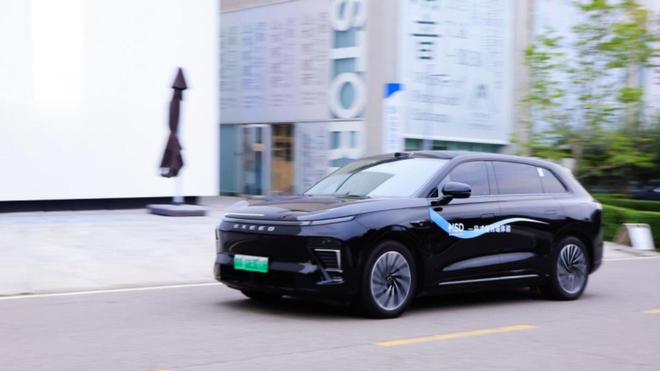
渐进式路线筑基 地平线机器人携手哈啰切入Robotaxi主航道
Zheng Quan Ri Bao Zhi Sheng· 2025-09-12 06:09
Core Insights - Horizon Robotics and Hello signed a strategic cooperation agreement to develop an end-to-end L4 autonomous driving core system for Robotaxi operations, aiming to accelerate urban deployment and commercialization [1][3] Group 1: Strategic Partnership - The partnership leverages strong financial backing from investors like Ant Group and CATL, providing robust funding and a large user base to support scalable commercial applications [3] - Hello's first mass-produced Robotaxi model, "HR1," was globally unveiled, with plans for mass production by 2026, targeting over 10 cities and a fleet of 10,000 vehicles, and aiming to deploy over 50,000 vehicles by 2027 [3] Group 2: Technology and System Capabilities - Horizon Robotics will provide a complete core capability system for L4 autonomous driving, including key components like the Journey 6P chip and HSD urban auxiliary driving system, designed for high computational redundancy and integration efficiency [3][4] - The company is transitioning from a hardware and software provider to a technology infrastructure platform builder, enhancing its role in the industry and creating new growth opportunities and valuation models [5] Group 3: Development Approach - Horizon Robotics adopts a "gradual approach" starting from L2 driving assistance, utilizing real-world data to iteratively improve safety and regulatory strategies, which contrasts with the high-cost and unstable experience of a leapfrogging approach directly to L4 [4] - The gradual approach allows for the accumulation of real road data and alignment with evolving regulatory environments, facilitating market entry and expansion [4]

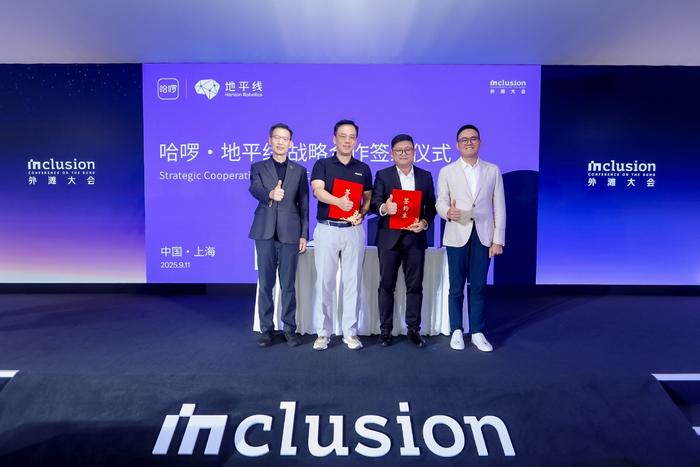
地平线与哈啰达成战略合作 加速Robotaxi商业化进程
Zheng Quan Shi Bao Wang· 2025-09-12 05:10
Core Insights - Horizon and Hello signed a strategic cooperation agreement to develop low-cost, high-safety, and reliable intelligent driving technology for Robotaxi operations [1] - The collaboration marks a significant step in Horizon's strategic layout, enabling L2 to L4 scenarios in intelligent driving [1] - The Robotaxi service market in China is projected to reach a potential scale of $183 billion by the late 2030s, with approximately 4 million Robotaxis expected to be operational nationwide [1] Group 1: Technology and Collaboration - Horizon has built a technology foundation suitable for Robotaxi deployment, leveraging its full-stack technology and mass production experience [2] - The Zhencheng 6P provides 560 TOPS of computing power, with a modular system capable of achieving over 1,000 TOPS, meeting the demands for multi-sensor fusion and large model applications [2] - The collaboration aims to optimize the core software and hardware systems of Robotaxi, reducing development cycles and integration costs [2] Group 2: Business Model and Market Strategy - Hello's Robotaxi business is supported by investments from Hello, Ant Group, and CATL, facilitating large-scale commercial applications [3] - The first mass-produced Robotaxi model, HR1, was unveiled, with plans for mass production in 2026 across over 10 cities, targeting a fleet of 10,000 vehicles [3] - Two main technical routes for L4 autonomous driving are identified: a leapfrogging route focusing on regulatory compliance and a progressive route driven by user experience [3] Group 3: Industry Perspectives - The progressive route, represented by companies like Tesla and Horizon, emphasizes speed and iterative development from L2 to L4 capabilities [4] - Horizon's president stated that a solid L2 foundation is essential for achieving L4, advocating for a data-driven approach to expand operational design domain (ODD) boundaries [4] - The approach aims to significantly reduce per-vehicle investment and enhance return on investment (ROI) [4]
特斯拉(TSLA.US)Robotaxi试水在即 奥斯汀10辆Model Y上路
智通财经网· 2025-06-20 12:47
Core Viewpoint - Tesla plans to launch a pilot program for its autonomous taxi service in Austin, Texas, starting as early as June 22, deploying approximately 10 Model Y SUVs for road testing, despite previous delays from CEO Elon Musk [1] Group 1: Technology and Operations - Tesla's autonomous taxi service will utilize a "remote operation" technology, which involves a professional team for remote monitoring and intervention, showcasing a unique technical path in the autonomous driving sector [1] - The operational model contrasts with Waymo's approach, which emphasizes vehicle autonomy with human intervention only when necessary, highlighting a mixed decision-making process [2] - Tesla's initial operations will be limited to specific safe areas in Austin, avoiding complex intersections, and will include remote monitoring personnel [2] Group 2: Industry Challenges and Regulatory Environment - The remote operation model faces scrutiny regarding its reliability, especially as the scale of testing vehicles increases, with experts warning about the risks of network instability and communication interruptions [2] - Local Democratic lawmakers in Austin have urged Tesla to delay the project until new autonomous driving regulations take effect in September, citing concerns over public safety and trust [2] - The global autonomous taxi industry is still in the geographic fencing testing phase, and Tesla's approach may provide a new paradigm for commercial exploration, although balancing technology feasibility, operational efficiency, and public safety remains a core challenge [2]
