生物医药产业

Search documents
居民增收计划、养老金上涨、支持AI开源社区……45个关键词读懂2026政府工作报告
经济观察报· 2026-03-05 09:11
Economic Growth - The GDP growth target for 2026 is set at 4.5% to 5%, reflecting a pragmatic policy approach and considering both internal and external pressures on the economy [4][5] - The adjustment in the growth target aims to balance quality and reasonable growth, laying a foundation for high-quality economic development [5] Fiscal Policy - The proposed deficit rate for 2026 is around 4%, with a deficit scale of 5.89 trillion yuan, an increase of 230 billion yuan from the previous year [7] - Public budget expenditure is expected to reach 30 trillion yuan for the first time, with a focus on optimizing expenditure structure to support consumption and improve living standards [9][10] Tax and Financial Reforms - The government plans to advance tax and financial system reforms, including increasing the proportion of state-owned capital returns and enhancing local tax systems [12] - The emphasis on zero-based budgeting aims to optimize fund allocation and improve the efficiency of fiscal spending [12] Employment and Income - The urban survey unemployment rate target is set at around 5.5%, reflecting the need for policies to stabilize employment amid structural pressures [18] - The government aims to synchronize resident income growth with economic growth, emphasizing measures to increase income for low-income groups and improve social security systems [20][22] Environmental Goals - The target for reducing carbon dioxide emissions per unit of GDP is set at around 3.8%, aligning with the goal of achieving carbon peak by 2030 [26][27] - The shift from energy consumption control to carbon emission control reflects the need for a more precise approach to managing carbon emissions [27][28] State-Owned Enterprise Reforms - The government plans to implement a systematic approach to deepen state-owned enterprise reforms, focusing on optimizing the layout of state-owned capital and structural adjustments [29][30] - The emphasis on improving the modern enterprise system aims to enhance corporate governance and promote market-oriented reforms [31] Open Economy - The government intends to further expand high-level opening-up, focusing on service sector liberalization and enhancing international cooperation [35][36] - The approach aims to balance reform depth with security, promoting a competitive and fair business environment [36] Agricultural and Rural Development - The government is set to promote agricultural insurance development and enhance comprehensive disaster prevention capabilities in agriculture [59] - Policies will focus on improving rural elderly care services and implementing long-term care insurance systems to address the challenges of an aging population [45][47] Capital Market Stability - Measures to stabilize the stock market include comprehensive policies to enhance market confidence and promote active trading [54] - The government aims to improve the mechanism for long-term capital entering the market, ensuring a stable and healthy capital market [63] Innovation and Technology - The government plans to cultivate emerging and future industries, encouraging state-owned enterprises to lead in opening application scenarios for new technologies [69][70] - Support for artificial intelligence and open-source community development is expected to drive innovation and commercialization in various sectors [75]

让患者用上更多新药好药
Xin Hua Ri Bao· 2026-02-13 21:39
Core Insights - The meeting held in Jiangsu aimed to facilitate communication between key hospitals and pharmaceutical companies to accelerate the implementation of innovative drugs and support high-quality development in the pharmaceutical sector [1] Group 1: Innovative Drug Development - Jiangsu's local pharmaceutical companies have consistently ranked first in the number of innovative drugs included in the national medical insurance directory, with 41 drugs expected to be approved by 2025, accounting for over one-third of the national total [1] - Among these, 21 are significant Class 1 innovative drugs, with 18 being original research drugs developed in Jiangsu, highlighting the province's core competitiveness in pharmaceutical innovation [1] Group 2: Economic Impact - The biopharmaceutical industry in Jiangsu has reached nearly 500 billion yuan in output value, maintaining its position as the leading province in the country [2] - The sales revenue of Zhengda Tianqing Pharmaceutical Group reached 22.5 billion yuan last year, contributing 2.18 billion yuan in taxes to Jiangsu [2] Group 3: Policy Support and Market Access - The Jiangsu government is actively creating platforms for communication to eliminate barriers for innovative drugs entering hospitals, which is crucial for enhancing clinical application [4] - By 2025, it is projected that 399 out of 406 national negotiated drugs will be sold and used in designated medical institutions in Jiangsu, with over 80% of the sales amount coming from these institutions [4] Group 4: Future Initiatives - Jiangsu plans to introduce an artificial intelligence application plan for the biopharmaceutical cluster this year, aiming to cultivate 1-2 industry models and gather typical AI-enabled solutions [7] - The province will also implement a budget policy that allows for separate budgeting for innovative drugs included in the national medical insurance directory, alleviating financial concerns for hospitals [7]
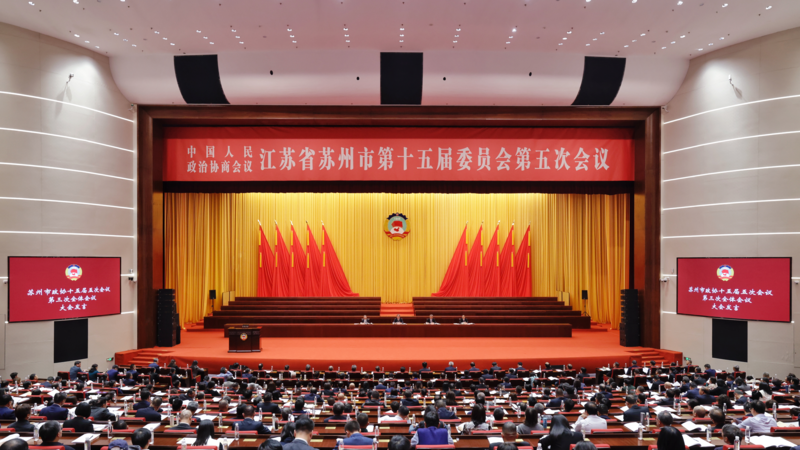
苏州市政协十五届五次会议举行第三次全体会议
Su Zhou Ri Bao· 2026-01-23 23:39
Group 1 - The meeting of the Suzhou Municipal Political Consultative Conference emphasized the importance of gathering wisdom and suggestions from various sectors to address key issues for the city's development [2][3] - A total of 38 proposals were submitted by members, focusing on themes such as accelerating the integration of technological and industrial innovation, promoting the development of private enterprises, and enhancing the capabilities of the high-speed rail north station [2] - The proposals reflect a strong concern for the development of Suzhou and the well-being of its citizens, showcasing the members' commitment to high-quality development during the "15th Five-Year Plan" period [3][5] Group 2 - The Secretary of the Suzhou Municipal Committee, Fan Bo, responded positively to the suggestions, highlighting their relevance and operational feasibility [3] - Fan Bo called for the transformation of these suggestions into actionable strategies to drive development, emphasizing the need for continuous learning and improvement among committee members [3][5] - The meeting underscored the importance of maintaining a correct political direction and fostering collaboration among members to achieve consensus and positive energy for the city's growth [3][5]
烟台市政协十四届四次会议以来,提案全部办复
Qi Lu Wan Bao· 2026-01-19 00:39
Core Insights - The report highlights the proposal work of the Yantai Municipal Political Consultative Conference since the fourth session of the 14th committee, with a total of 857 proposals submitted, of which 696 were officially registered [1] Proposal Categories - Proposals related to the development of ice and snow sports, passenger evacuation at Yantai Station, and improving resident health records accounted for 44.5% of the total [1] - Proposals focusing on the development of digital energy storage, venture capital, and the biopharmaceutical industry made up 33.2% [1] - Proposals aimed at creating urban特色名片, enhancing cultural exports, and leveraging the value of the Wang Yirong Memorial Hall constituted 13.1% [1] Proposal Resolution Status - By the end of 2025, all proposals are expected to be addressed, with 657 proposals (94.4%) already resolved or adopted [1] - 33 proposals (4.7%) are included in plans or are set to be adopted, while 6 proposals (0.9%) are currently difficult to implement due to policy or condition limitations [1]
【建议收藏】重磅!2025年厦门市生物医药产业链全景图谱(附产业政策、产业链现状图谱、产业资源空间布局、产业链发展规划)
Qian Zhan Wang· 2026-01-16 03:11
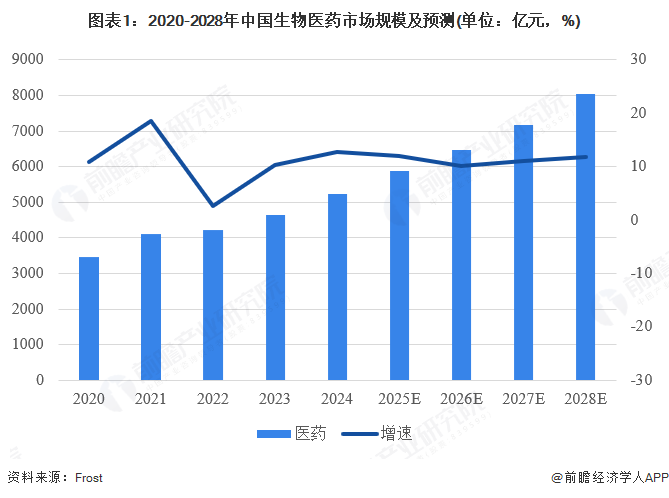
Core Insights - The biopharmaceutical industry in China is a strategic emerging industry, crucial for public health, technological innovation, and enhancing national pharmaceutical autonomy. The market size is projected to grow from CNY 4,210 billion in 2022 to CNY 8,000 billion by 2028, with an annual growth rate stabilizing between 10%-12% [1][2][23]. Industry Overview - In 2020, the biopharmaceutical market in China was valued at CNY 3,457 billion, increasing to CNY 4,100 billion in 2021, representing an 18.6% year-on-year growth. However, growth slowed to 2.68% in 2022, with a slight increase to CNY 4,210 billion [1][2]. - The industry is segmented into upstream (raw materials and medical devices), midstream (drug synthesis and production), and downstream (drug distribution). Biopharmaceuticals and chemical drugs have higher profit margins, with biopharmaceutical companies reporting gross margins of 80%-86% [2][4]. Xiamen Biopharmaceutical Industry - Xiamen is a key hub for biopharmaceutical industry development, recognized as a national strategic emerging industry cluster. The local government has implemented various supportive policies since 2016, focusing on innovation and industrialization [6][9]. - The industrial output value of Xiamen's biopharmaceutical sector reached CNY 1,045.87 billion in 2022, with a slight decline to CNY 847 billion in 2023, and is projected to stabilize around CNY 840 billion in 2024 [17][18]. Policy Environment - Xiamen's government has introduced multiple measures to support the biopharmaceutical industry, including financial incentives for R&D and commercialization, with significant rewards for new drug development and medical device innovation [9][26]. - The city aims to establish a CNY 100 billion venture capital fund and enhance the entire process from R&D to clinical application by 2025 [23][26]. Future Outlook - By 2025, Xiamen plans to significantly increase the number of registered biopharmaceutical companies, with projections indicating over 2,200 registered firms, marking a notable rise from previous years [18]. - The city aims to develop a CNY 700 billion biopharmaceutical industry chain, supported by specialized parks and a focus on various sub-sectors, including biopharmaceuticals and medical devices [23][26].




特稿丨古巴生物制药产业在封锁下艰难突围
Xin Hua She· 2026-01-14 04:13
Core Insights - Cuba's biopharmaceutical industry has made significant progress despite the long-standing U.S. blockade, focusing on public health needs and integrating research, production, and commercial aspects [1][2] - The blockade has led to severe shortages of raw materials and equipment, causing persistent drug shortages, which the Cuban government is attempting to mitigate through international cooperation and supply chain diversification [1][3] Investment and Development - The Cuban government has heavily invested in human capital and scientific development, establishing a biopharmaceutical system that has gained international recognition for its contributions to public health [1][2] - The establishment of the Biopharmaceutical Group in 2012 has consolidated over 40 biotechnology and pharmaceutical companies, improving quality standards and resource efficiency [2] Challenges and Shortages - The U.S. blockade has resulted in a 95% reliance on imported raw materials for drug production, with equipment failures contributing to 5% of production halts [3] - As of 2025, 69% of the essential drug list is affected by the blockade, with 364 out of 651 drugs in short supply, representing 56% of the total [3] International Cooperation - To counteract the pressures of the blockade, Cuba is deepening international cooperation, with Latin America being the primary export market and Africa emerging as a new growth area [4] - Collaborative projects, such as those announced at the St. Petersburg International Economic Forum, aim to develop drugs for aging and cancer, enhancing Cuba's biopharmaceutical capabilities [4][5] Future Prospects - Cuba's recent accession as a BRICS partner country is expected to provide new avenues for financing, technology support, and market diversification, potentially alleviating the constraints imposed by the U.S. blockade [5]
2天收获2个IPO,联想之星实现开门红
投中网· 2026-01-09 01:50
Core Viewpoint - Lenovo Star's early-stage technology projects are now yielding results, with multiple IPOs on the horizon, marking a concentrated period of success for the firm in the high-tech investment landscape [2][5]. Group 1: Recent IPOs - Lenovo Star celebrated two significant IPOs within two days: Rebio Biotech (6938.HK) and Precision Medical (2675.HK), with Rebio's stock price rising over 23% on its debut, achieving a market capitalization exceeding HKD 11.8 billion [3][5]. - The firm has been a long-term supporter of Rebio Biotech, investing in two rounds since 2015, showcasing its commitment to nurturing early-stage companies [5][11]. Group 2: Investment Strategy and Success - Lenovo Star's success is attributed to its systematic approach to investing in cutting-edge technology and healthcare since 2010, leveraging its ties to the Chinese Academy of Sciences and Lenovo Holdings [6][10]. - The firm emphasizes a long-term investment philosophy, focusing on early-stage biotech companies, which has resulted in a high investment accuracy rate [6][11]. - The company has maintained a comprehensive research coverage of the biopharmaceutical industry, continuously optimizing its investment strategies based on the evolving landscape [11][12]. Group 3: Leadership and Innovation - Rebio Biotech, led by Dr. Liang Zicai, has established itself as a leader in the small nucleic acid drug sector, with a robust R&D platform and innovative delivery technology [9][10]. - Dr. Liang's extensive background in molecular biology and his previous entrepreneurial ventures have positioned Rebio Biotech as a pioneer in the industry [8][9]. Group 4: Future Outlook - Lenovo Star is poised to continue its focus on the biopharmaceutical sector, with an emphasis on high-quality, cost-effective medical solutions, and is adapting its investment strategy to align with emerging trends in the healthcare market [12][13].

跃升“十四五”科技成就|八闽大地科创硕果累累
Ke Ji Ri Bao· 2025-12-24 03:15
Group 1: Hydrogen Energy Development - Fujian has prioritized the hydrogen energy industry as a key strategic direction for green energy development, establishing innovation laboratories and conducting forward-looking research since 2019 [2][3] - The hydrogen storage and transportation technology is a critical challenge for the hydrogen industry, with Fuzhou University leading efforts to develop ammonia as an efficient hydrogen storage carrier [2] - A hydrogen industry working group has been established in Fujian to address urgent technical issues and promote collaborative breakthroughs across the entire hydrogen value chain [3] Group 2: Technological Innovation Platforms - Fujian supports the establishment of high-level scientific innovation platforms led by private enterprises to enhance the integration of technology and industry [4] - The Ningde Times Innovation Laboratory, co-built with the Ningde municipal government, has accelerated the development of new battery technologies, enabling rapid product launches [4][5] - Ningde Times has invested over 80 billion yuan in R&D, employing over 20,000 personnel and holding more than 43,000 patents, positioning itself as a leader in the global new energy sector [5] Group 3: Biopharmaceutical Industry Focus - Fujian has made significant strides in the biopharmaceutical sector, exemplified by the launch of the domestically developed nine-valent HPV vaccine, which enhances accessibility for women [6][7] - The establishment of the Xiang'an Innovation Laboratory aims to facilitate the transformation of biopharmaceutical innovations into practical applications, improving the success rate of technology transfer [7] - Fujian's government has implemented targeted policies to strengthen the biopharmaceutical innovation ecosystem, focusing on health needs and enhancing the overall industry chain [6][7]

八闽大地科创硕果累累
Huan Qiu Wang· 2025-12-23 10:24
Group 1: Innovation in Hydrogen Energy - Fujian has prioritized the development of the hydrogen energy industry, establishing innovation laboratories and conducting forward-looking research since 2019 [2][3] - Fuzhou University has made significant breakthroughs in hydrogen storage and transportation, creating a new low-temperature catalyst for ammonia decomposition, which represents a disruptive innovation in hydrogen storage methods [2] - The establishment of Fujian University Zijin Hydrogen Energy Technology Co., Ltd. marks the first major industrial innovation platform for "ammonia-hydrogen" energy in China, successfully developing the country's first ammonia-hydrogen fuel cell power station and a hydrogen fuel cell bus [2] Group 2: Support for Technological Innovation Platforms - Fujian supports the establishment of high-level technological innovation platforms led by private enterprises, addressing the shortage of such platforms and promoting deeper integration of industry and academia [4] - The provincial government offers a one-time reward of up to 10 million yuan for approved national-level technological innovation platforms, fostering continuous industry innovation [4] - The rapid development of new products by CATL, such as the world's first sodium battery and a 9MWh energy storage system, is attributed to the establishment of the CATL Innovation Laboratory in collaboration with the local government [5] Group 3: Development of the Biopharmaceutical Industry - Fujian has focused on the biopharmaceutical industry, recently launching the first domestically developed nine-valent HPV vaccine, significantly improving vaccine accessibility [6][7] - The establishment of the Xiang'an Innovation Laboratory aims to accelerate the transformation of biopharmaceutical innovations into practical applications, enhancing the success rate of technology transfer from early research to production [7] - The Fujian Provincial Science and Technology Department plans to optimize the organization of major technological innovations and strengthen the supply of high-quality technology to promote the transformation of scientific achievements into productive forces [7]
广式“加速器”四招助力新药研制
Nan Fang Du Shi Bao· 2025-12-15 23:09
Core Insights - The article discusses the establishment and significance of the National Key Laboratory for Bioactive Molecules and Drugability Optimization, which aims to enhance the biopharmaceutical industry in Guangdong Province, a key area for future competitiveness in China [3][4]. Group 1: Laboratory Overview - The laboratory, led by Professor Ye Wencai, includes over 150 researchers, with more than 40 being national-level talents, and aims to create a world-class source for innovative drug transformation [5]. - It was officially approved for construction in March 2023, addressing challenges in original innovation for major diseases and enhancing China's pharmaceutical technology strength [4][5]. Group 2: Research and Development Methodology - The laboratory employs a unique research paradigm based on "phenotype" or "phenotype + target" for drug development, leveraging China's rich resources in traditional Chinese medicine and natural drugs [6]. - This approach allows for the direct screening of active ingredients from traditional medicine and their optimization based on target confirmation, significantly improving the success rate of new drug development [6][7]. Group 3: Technological Innovations - The laboratory has established a complete technical chain from discovery to evaluation, including strategies for efficient discovery of bioactive molecules, optimization of lead compounds, and advanced manufacturing techniques [7][8]. - Key technologies developed include a new strategy for directional discovery of natural compounds, optimization techniques for drugability, and the establishment of various large animal disease models for research [7][8]. Group 4: Industry Impact and Collaboration - The laboratory's research pipeline covers multiple drug development areas, including tissue repair, anti-tumor, anti-viral, and neurological diseases, with several new drugs already approved for market [9][10]. - It has positively influenced over 30 biopharmaceutical companies, incubated four listed companies, and contributed over 20 billion yuan in new value to related enterprises in the past five years [10]. Group 5: Recommendations for Industry Development - To promote high-quality development in Guangdong's biopharmaceutical industry, it is recommended to strengthen source innovation, support long-term investments, and fill gaps in the industrial chain [11]. - The establishment of a talent mechanism that attracts interdisciplinary professionals and a results-oriented evaluation system is crucial for enhancing research and development [11].