
电商合规

Search documents
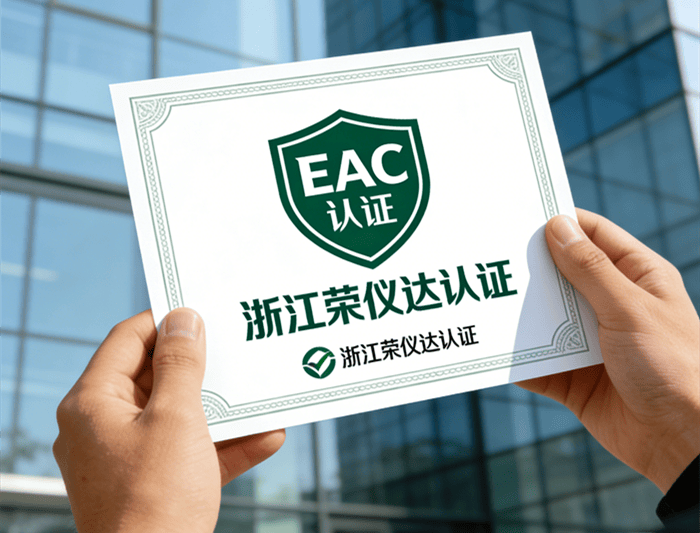
2026年俄罗斯电商平台EAC认证核心新规
Sou Hu Cai Jing· 2026-01-09 11:12
Core Viewpoint - The new EAC certification regulations in Russia, effective from January 1, 2026, will significantly enhance compliance requirements for e-commerce, focusing on responsibility, testing standards, labeling, and platform obligations [1][5]. Group 1: Certification Changes - The new regulations require non-EAEU companies to appoint a registered legal entity in Russia as the EAC certificate holder, changing the previous model where foreign companies could apply directly [1]. - The certification process will see extended timelines: the compliance declaration (DoC) for low-risk products will increase from 7-10 working days to 10-15 days, while the certificate of conformity (CoC) for high-risk products will extend from 15-20 days to 20-30 days [2]. - The EAC mark will have stricter compliance requirements, including a new dynamic encrypted QR code, with non-compliant products being banned from e-commerce platforms [2][4]. Group 2: Testing and Compliance Requirements - Sample testing must be conducted on randomly selected samples from production batches, and only EAEU-recognized laboratories can perform tests, adhering to GOST ISO/IEC 17025:2019 standards [3]. - The environmental testing requirements have been upgraded, with high-low temperature cycling tests increasing from 300 to 500 cycles, and salt spray testing duration extended from 48 hours to at least 96 hours [3]. - A lifetime joint liability mechanism will hold the certificate holder responsible for product safety throughout its lifecycle, including issues like quality defects and false certifications [3]. Group 3: E-commerce Platform Obligations - E-commerce platforms will bear compliance audit responsibilities starting September 2026, with major platforms like Ozon and Wildberries implementing AI verification mechanisms [5]. - Platforms must display a certification query link on product pages with EAC certification, and failure to do so will incur fines of 10,000 rubles per day [7]. - Platforms are required to verify the authenticity of EAC certificates and compliance of marks before allowing products to be sold [7]. Group 4: Transition and Compliance Recommendations - Companies should plan for a 6-8 month certification update cycle to avoid delays in product listings due to extended processes [7]. - It is advisable to select authorized Russian legal entities as certificate holders and clearly define responsibilities in contracts [7]. - A comprehensive traceability system should be established to retain production, quality inspection, and sales records for 10 years post-certification expiration [7].

日本电商新规倒计时!卖家不这样做,产品恐遭全面下架!
Sou Hu Cai Jing· 2025-12-24 11:28
Core Viewpoint - The new regulations from Japan's Ministry of Economy, Trade and Industry (METI) will significantly impact cross-border sellers, requiring them to appoint a "domestic manager" in Japan for compliance with product safety standards, effective December 25 [1][5]. Group 1: Regulatory Changes - The revised product safety regulations target overseas companies selling in Japan, covering popular categories such as baby products, home appliances, and gas equipment [1]. - Sellers must register a "designated importer" and appoint a domestic manager who has a physical office in Japan and is proficient in Japanese [4]. - Failure to comply will result in products being forcibly removed from e-commerce platforms [5]. Group 2: Market Context - Japan's e-commerce market is projected to exceed $200 billion by 2025, maintaining its position as the third-largest globally [10]. - The market has seen significant growth due to high internet penetration and evolving consumer shopping habits, attracting global giants like TikTok Shop, which achieved daily sales of over 100 million yen shortly after entering the market [10]. Group 3: Compliance and Future Outlook - The Japanese government is tightening regulations to combat counterfeit products and regulatory evasion, with potential changes to tax exemptions for low-value imports expected in 2026 [12]. - Cross-border sellers must prioritize compliance to avoid risks of product delisting and ensure sustainable operations in the Japanese market [15].

管控升级!亚马逊多项新规调整,卖家要注意哪些变动?
Sou Hu Cai Jing· 2025-12-17 10:20
Group 1 - Amazon is adjusting its rules and compliance checks as the year-end approaches, prompting sellers to stay updated on changes to avoid impacts on their accounts and ASIN sales permissions [1] - A large number of non-toy sellers have been mistakenly delisted due to system misclassification as children's toys, requiring compliance documentation by February 25, 2026, or face removal risks [3] - Amazon will terminate the "shared inventory" model by the end of March 2026, allowing for independent inventory management and reducing the risk of negative feedback from shared products [4] Group 2 - Amazon has upgraded its holiday-themed front-end layout to enhance gift visibility and guide user shopping behavior as Christmas approaches [6] - A compliance countdown for Japanese sellers has begun, with new product safety laws effective December 25, requiring local management personnel for compliance [9] - Amazon is updating its EPR compliance policy, with a critical compliance deadline of December 31 for several European countries, where failure to comply may lead to increased costs and penalties [11] Group 3 - Sellers on Amazon US must submit updated W-8 tax forms by December 30, 2025, or risk account suspension and product removal, with a lowered sales threshold for compliance [12] - New products such as walkers must undergo direct verification by a third-party testing institution starting December 3, 2025, to avoid delisting [15] - Amazon is tightening registration requirements for new sellers in 2026, with stricter capital and revenue thresholds for entry [18] Group 4 - Amazon has launched a new tool called "Product Performance Spotlight," which uses AI to monitor and optimize ASIN performance metrics [19] - The "Overseas Purchase" project has been launched on Amazon Japan, allowing US sellers to test the Japanese market with FBA products, reducing expansion risks [18]

French prosecutor opens probe on Ebay over suspicion of sale of illicit goods
Reuters· 2025-11-25 12:14
Core Viewpoint - The French prosecutor's office has initiated an investigation into eBay for allegedly facilitating the sale of illicit goods on its platform, confirming previous reports [1] Group 1 - The investigation is focused on eBay's marketplace operations and the potential sale of illegal items [1] - This action reflects increasing scrutiny on e-commerce platforms regarding their responsibility in monitoring and regulating the sale of goods [1]


因涉嫌违法 成都快购科技被市场监管总局立案调查
Xi Niu Cai Jing· 2025-09-24 06:28
Group 1 - The State Administration for Market Regulation has announced an investigation into Chengdu Kuaigou Technology Co., Ltd. for suspected violations of the E-commerce Law of the People's Republic of China [2] - The live e-commerce sector plays a significant role in innovation, consumer promotion, and job creation, but faces issues such as false marketing and counterfeit goods due to complex legal relationships [5] - The investigation aims to enforce platform responsibilities and protect consumer rights, with the results to be made public [5] Group 2 - Chengdu Kuaigou was established on October 31, 2019, with a registered capital of 50 million yuan, and is a wholly-owned subsidiary of Beijing Kuaishou Technology Co., Ltd. [7] - The company primarily operates the e-commerce platform "Kuaishou Xiaodian," providing services for supplier and service provider onboarding, as well as live broadcast base entry [7]

涉嫌违反《电子商务法》被立案调查,成都快购回应:积极配合调查
Xin Jing Bao· 2025-09-19 13:14
Core Viewpoint - The State Administration for Market Regulation has initiated an investigation into Chengdu Kuai Gou Technology Co., Ltd. for suspected violations of the E-commerce Law, aiming to enhance compliance and protect consumer rights [1] Company Summary - Chengdu Kuai Gou Technology Co., Ltd. was established on October 31, 2019, and is wholly owned by Beijing Kuaishou Technology Co., Ltd. [1] - The company has stated that it will actively cooperate with the regulatory investigation and use this opportunity to improve compliance and fulfill its social responsibilities [1] Industry Summary - The investigation is part of a broader effort by the State Administration for Market Regulation to enforce platform responsibilities and protect the rights of consumers and small businesses in the live e-commerce sector [1] - The regulatory body will conduct the investigation fairly and justly according to the E-commerce Law, with results to be announced to the public [1]