
癌症药物研发

Search documents
默沙东前功勋高管坐镇,癌症药研发新星Eikon Therapeutics(EIKN.US)冲刺美股IPO
智通财经网· 2026-01-10 07:04
Group 1 - Eikon Therapeutics has officially submitted its IPO application to raise funds for its advanced drug pipeline, aiming for a listing in early 2026 [1] - The company plans to list on the NASDAQ under the ticker symbol "EIKN," with major underwriters including JPMorgan, Morgan Stanley, Bank of America, and Cantor Fitzgerald [1] - Eikon is led by former Merck executives Roger Perlmutter and Roy Baynes, who previously contributed to the development of pembrolizumab, the highest-grossing cancer therapy globally [1] Group 2 - Founded in 2019, Eikon has secured substantial funding, raising $350.7 million in a Series D round led by Lux Capital, Foresite Capital, Soros Fund Management, and accounts advised by T. Rowe Price [2] - As of September 30 last year, the company reported cash, cash equivalents, and short-term investments totaling $375.9 million [2] - The IPO application follows a trend of several companies, including Bob's Discount Furniture, Forgent Power Solutions, and Veradermics, also planning to go public in early 2026 [2]
默沙东洽谈收购癌症药物开发商,交易价格或高达320亿美元
Xin Lang Cai Jing· 2026-01-10 00:48
Group 1 - Merck is in negotiations to acquire cancer drug developer Revolution Medicines for a price between $28 billion and $32 billion, with the deal potentially being the largest in the pharmaceutical industry in three years [3][4] - Following the news, Revolution Medicines' stock surged nearly 16% in after-hours trading, indicating strong market interest in the potential acquisition [3] - Other major pharmaceutical companies are also monitoring Revolution Medicines, suggesting the possibility of competing bids, which adds uncertainty to the outcome of the negotiations [3] Group 2 - If the acquisition is successful, Merck is expected to gain access to the experimental drug Daraxonrasib, which is in late-stage clinical trials and has received FDA fast track designation [4] - Daraxonrasib targets various mutations of the RAS gene, which are common drivers of several cancers, including pancreatic, lung, and colorectal cancers [4] - Analysts from Mizuho Securities project that the global risk-adjusted sales of Revolution Medicines' RAS inhibitor portfolio could exceed $10 billion by 2035 [4]


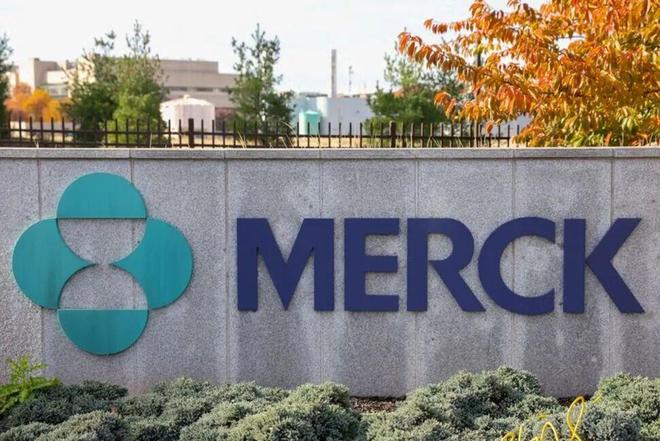
癌症药物开发商Revolution(RVMD.US)盘后大涨!传获默沙东(MRK.US)洽谈收购 交易价格或达320亿美元
Zhi Tong Cai Jing· 2026-01-09 01:16
Group 1 - Merck (MRK.US) is in talks to acquire Revolution Medicines (RVMD.US), with a potential deal price between $28 billion and $32 billion, which would be one of the largest pharmaceutical transactions since Pfizer's $43 billion acquisition of Seagen at the end of 2023 [1] - Following the news, Revolution Medicines' stock surged over 15% in after-hours trading [1] - AbbVie (ABBV.US) was also reported to be in "deep" negotiations to acquire Revolution Medicines, potentially valuing the company at over $20 billion, but AbbVie later denied these negotiations [1] Group 2 - Revolution Medicines is developing RMC-6236 (Daraxonrasib), a key asset that is an oral targeted drug aimed at treating cancers driven by RAS gene mutations [2] - Daraxonrasib targets common oncogenic RAS mutations, including G12X, G13X, and Q61X, which are significant drivers of major cancers such as pancreatic ductal adenocarcinoma (PDAC), non-small cell lung cancer (NSCLC), and colorectal cancer (CRC) [2] - Currently, Daraxonrasib is undergoing evaluation in four global Phase 3 clinical trials, including three studies focused on PDAC and one on locally advanced or metastatic RAS-mutant NSCLC, with key results expected to be announced in the summer of this year [2] Group 3 - The RASolute304 clinical trial, which is a global, open-label Phase 3 study, aims to assess the safety and efficacy of Daraxonrasib in resectable PDAC patients who have undergone surgery and completed chemotherapy [3] - The trial plans to enroll approximately 500 patients with oncogenic RAS mutations who have completed tumor resection and perioperative chemotherapy, evaluating whether Daraxonrasib can improve disease-free survival compared to observation alone [3] - Industry research indicates that the market for pancreatic cancer treatment drugs could expand tenfold to over $3 billion by 2035, driven by Daraxonrasib [3] Group 4 - Typically, January sees an uptick in pharmaceutical mergers and acquisitions as life sciences companies gather at the annual JPMorgan Healthcare Conference, which is considered a breeding ground for M&A activity [4] - Revolution Medicines' drug development pipeline makes it an attractive acquisition target, although any transaction would come with execution risks and high valuation premiums [4] - Merck's key cancer drug Keytruda is set to lose patent protection by the end of this decade, and the potential acquisition of Revolution Medicines could provide Merck with the experimental drug Daraxonrasib [4]
艾伯维(ABBV.US)否认洽谈收购癌症药物开发商Revolution(RVMD.US)
智通财经网· 2026-01-08 06:53
Group 1 - AbbVie (ABBV.US) is not in negotiations to acquire Revolution Medicines (RVMD.US), which led to a decline of over 6% in Revolution Medicines' stock after the announcement [1] - Prior to this announcement, Revolution Medicines' stock had surged over 28% due to reports of AbbVie potentially valuing the acquisition at over $20 billion [1] Group 2 - Revolution Medicines is developing RMC-6236 (Daraxonrasib), a key asset that is an oral targeted drug aimed at treating cancers driven by RAS gene mutations [2] - Daraxonrasib targets common oncogenic RAS mutations, including G12X, G13X, and Q61X, which are significant drivers of major cancers such as pancreatic ductal adenocarcinoma (PDAC), non-small cell lung cancer (NSCLC), and colorectal cancer (CRC) [2] - Currently, Daraxonrasib is being evaluated in four global Phase 3 clinical trials, including three studies focused on PDAC and one on locally advanced or metastatic RAS-mutant NSCLC [2] Group 3 - The RASolute304 clinical trial, which is a global, open-label Phase 3 study, aims to assess the safety and efficacy of Daraxonrasib in resectable PDAC patients who have undergone surgery and completed chemotherapy [3] - The trial plans to enroll approximately 500 patients with oncogenic RAS mutations who have completed tumor resection and perioperative chemotherapy, evaluating whether Daraxonrasib can improve disease-free survival compared to observation alone [3] - Industry research indicates that the pancreatic cancer treatment market could expand tenfold to over $3 billion by 2035, driven by Daraxonrasib, which is expected to receive FDA approval as early as 2026 [3]

Arcus Revamps Cancer Pipeline Following Trial Miss, Prioritizes Kidney Drug
Benzinga· 2025-12-12 18:35
Core Insights - Arcus Biosciences has announced the discontinuation of the Phase 3 STAR-221 study due to futility, following a recommendation from the Independent Data Monitoring Committee after an interim analysis of overall survival [1][2]. Study Discontinuation - The STAR-221 study evaluated the combination of anti-TIGIT antibody domvanalimab and anti-PD-1 antibody zimberelimab with chemotherapy against nivolumab plus chemotherapy for untreated patients with advanced gastric and esophageal cancers [2]. - The interim analysis revealed that the domvanalimab-based combination did not improve overall survival compared to nivolumab plus chemotherapy, with a similar safety profile and no new safety findings [3]. Future Directions - Arcus will focus its R&D efforts on casdatifan, a potential best-in-class HIF-2α inhibitor, which has shown strong single-agent activity in over 120 late-line clear cell renal cell carcinoma (ccRCC) patients in the ARC-20 Phase 1/1b study [5]. - Key milestones for casdatifan include additional analyses in early 2026, more mature combination data by mid-2026, and potential initiation of a Phase 3 trial in late 2026 [6][7]. Oncology Pipeline - Arcus is advancing quemliclustat, a small-molecule CD73 inhibitor, with the Phase 3 PRISM-1 trial in first-line metastatic pancreatic ductal adenocarcinoma having completed enrollment earlier this year, with results expected in 2027 [8]. Immunology and Inflammation Pipeline - The immunology and inflammation portfolio includes several oral small-molecule programs, with two candidates expected to enter clinical trials in the near future [10][11].


麓鹏制药IPO:研发取得阶段性成果估值不增反降 赛道竞争激烈商业化价值兑现难
Xin Lang Cai Jing· 2025-12-11 07:24
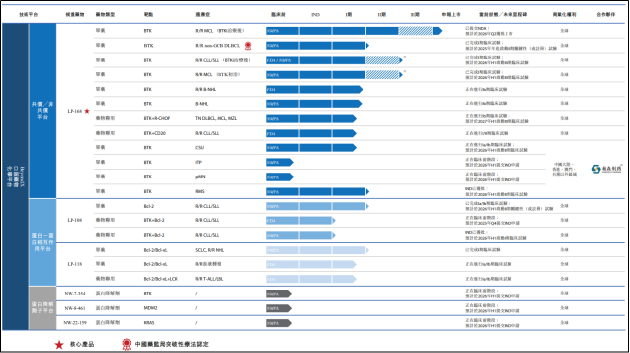
Core Viewpoint - Lupu Pharmaceutical Co., Ltd. has submitted its listing application to the Hong Kong Stock Exchange, with CITIC Securities as the sole sponsor. The company focuses on drug design, discovery, clinical development, and commercialization for cancer and autoimmune diseases, with a product pipeline that includes six major candidates. The core product, LP-168, is the first covalent and non-covalent dual mechanism BTK inhibitor in clinical trials for treating relapsed/refractory mantle cell lymphoma (R/R MCL) and is currently at the NDA stage. However, the company faces multiple challenges in value realization due to intense competition and the presence of strong competitors with established advantages [1][10]. Financial Performance - The company has no main business revenue as its products have not yet been commercialized. From 2023 to the first half of 2025, the company generated other income of CNY 25.536 million, CNY 12.072 million, and CNY 6.774 million, with over half coming from government subsidies, totaling CNY 30.697 million over three and a half years. Net profits for the same periods were -CNY 159 million, -CNY 3.385 million, and CNY 35.9 million. The company achieved book profits in 2024 and the first half of 2025 mainly due to a significant increase in "fair value change of preferred shares" in its financial statements, which resulted from a decrease in overall company valuation [2][11][12]. - The post-investment valuation of the company peaked at USD 420 million during the 2023 Pre-B round financing but fell to USD 311.25 million in the 2025 B round, with the per-share cost dropping from USD 23.19 to USD 10.69 [12]. Research and Development - The company has seen a decline in R&D spending, with expenditures of CNY 168 million and CNY 150 million in 2023 and 2024, respectively. In the first halves of 2024 and 2025, R&D spending was CNY 69.6 million and CNY 53.2 million, showing a year-on-year decrease in the last two reporting periods [3][13]. - The company’s core operations continue to incur cash burn, with net cash outflows of CNY 134.2 million, CNY 113.4 million, and CNY 47.4 million in 2023, 2024, and the first half of 2025, respectively [3][12]. Competitive Landscape - The market for BTK inhibitors is highly competitive, with six approved or NDA-submitted BTK inhibitors already in the market. Established products like ibrutinib and zanubrutinib have been included in China's national medical insurance directory, solidifying their standard treatment status and creating significant pricing barriers [7][17]. - LP-168, as a latecomer, must demonstrate its efficacy and safety in head-to-head or real-world studies to capture market share. It also faces potential price reductions due to medical insurance negotiations, which could severely impact its pricing power and profit margins [9][20]. Product Pipeline - Lupu Pharmaceutical has established a product pipeline that includes six major candidates, with three core assets in the new drug application and clinical stages: LP-168, LP-108, and LP-118. LP-168 is currently the only covalent and non-covalent dual mechanism BTK inhibitor in clinical trials for R/R MCL, with its NDA stage indicating significant development progress [4][14].
Why Johnson & Johnson's Share Price Is Popping This Month
Yahoo Finance· 2025-11-19 17:24
Core Insights - Johnson & Johnson's stock price has increased over 7% since the beginning of November, driven by strong third-quarter results that exceeded Wall Street expectations [1] - The company reported nearly 7% sales growth year-over-year, reaching $24 billion, and adjusted earnings per share rose 15.7% to $2.80, surpassing consensus estimates [1] - J&J raised its full 2025 revenue growth guidance to 5.7% over 2024, indicating management's optimism [1] Business Strategy - J&J plans to spin off its slow-growing orthopedics group within two years, focusing instead on its faster-growing cardiovascular and surgery businesses [2] - The acquisition of Halda Therapeutics for $3.05 billion aims to enhance J&J's oncology portfolio, particularly in prostate cancer treatments [4] Market Response - The market reacted positively to the Halda acquisition announcement, as the biotech has a promising drug in early-stage trials for metastatic prostate cancer [7] - J&J's oncology and immunology drugs face competition, particularly from AbbVie, making the acquisition strategically important [5] Industry Context - The expiration of the patent for J&J's immunology drug Stelara highlights the urgency for the company to renew its drug pipeline through acquisitions [6] - Prostate cancer is a significant health concern, with new diagnoses expected to reach 1.7 million globally by 2030, underscoring the importance of J&J's new drug developments [9]

百济神州高开逾3% 百赫安联合百泽安与化疗的3期临床研究取得积极结果
Zhi Tong Cai Jing· 2025-11-18 01:34
Core Viewpoint - BeiGene (06160) experienced a significant increase in stock price, rising by 3.53% to HKD 223.2, with a trading volume of HKD 11.96 million, following the announcement of positive results from the Phase III HERIZON-GEA-01 study [1] Group 1: Study Results - The HERIZON-GEA-01 study evaluates the efficacy and safety of the HER2-targeted bispecific antibody, Zhenidamab, either as a monotherapy or in combination with the PD-1 inhibitor, Tislelizumab, for first-line treatment of HER2-positive locally advanced or metastatic gastroesophageal adenocarcinoma (GEA) [1] Group 2: Market Outlook - CITIC Securities (601066) noted that BeiGene's Zebutini is experiencing continuous growth, leading to an upward revision of the annual performance guidance [1] - The company anticipates that the overseas growth of BTK will exceed expectations, along with the launch of PD-1 in the EU, Japan, and other countries, contributing to further commercialization of key pipelines such as BCL-2, BTK CDAC, and CDK4 [1] - The firm maintains a "Buy" rating on BeiGene [1]
美能源部携手AMD(AMD.US)打造两台AI超级计算机 加速核能、癌症药物等科学突破
智通财经网· 2025-10-27 16:03
Group 1 - The U.S. Department of Energy has signed a $1 billion collaboration agreement with Advanced Micro Devices (AMD) to develop two next-generation AI-driven supercomputers aimed at solving major scientific challenges, including nuclear energy, cancer treatment, and national security [1][2] - The first supercomputer, named "Lux," is expected to be operational within six months and will utilize AMD's latest MI355X AI accelerator cards, along with AMD CPUs and networking chips, designed in collaboration with HPE, Oracle, and Oak Ridge National Laboratory (ORNL) [1][2] - The second supercomputer, "Discovery," will feature enhanced performance using the AMD MI430 AI chip, with a target delivery date of 2028 and operational status by 2029, representing a significant leap in computational power [2] Group 2 - The new supercomputing systems will be hosted by the Department of Energy, with private companies responsible for providing equipment and capital expenditures, indicating a public-private collaboration model [2] - The AI capabilities of the Lux supercomputer are expected to be three times that of existing supercomputers, highlighting the advancements in computational speed and agility that AMD aims to bring to the U.S. AI strategy [1]

Why Genmab Stock Popped on Friday
The Motley Fool· 2025-10-03 21:29
Core Viewpoint - Analysts have raised their price targets for Genmab following the company's acquisition of Merus for $8 billion, leading to a significant increase in the stock price [1][2]. Group 1: Analyst Upgrades - Two analysts increased their price targets for Genmab, contributing to a more than 4% rise in the company's shares [1]. - H.C. Wainwright's Raghuram Selvaraju raised his price target from $36 to $40 per share while maintaining a buy recommendation [2]. - Truist Securities' Asthika Goonewardene raised his price target from $46 to $49 per share, citing similar reasons for the upgrade [4]. Group 2: Acquisition Details - Genmab announced the acquisition of Dutch peer Merus, valued at $8 billion, which is a key factor in the analysts' positive outlook [2]. - The acquisition includes petosemtamab, an investigational cancer drug that has shown solid performance in clinical trials and is in the later stages of development [3]. Group 3: Future Expectations - Analysts expect results from petosemtamab's clinical trials to be available soon, with potential readouts as early as next year [4].
