
白酒消费需求

Search documents
“i茅台”连续4天秒空 茅台批发价再度跌破1499元
Di Yi Cai Jing· 2026-01-04 02:52
Core Viewpoint - The wholesale price of 2025 Flying Moutai has dropped below 1499 yuan per bottle, indicating a downward trend in the market following the release of "i Moutai" at the same price, which has been quickly sold out. The long-term impact on the industry remains to be observed [1][2][3]. Group 1: Price Trends - The wholesale price of 2025 Flying Moutai fell below 1499 yuan per bottle on January 4, down approximately 100 yuan from the previous week [1][2]. - The last time the wholesale price dropped below 1499 yuan was in early December 2025, after a sudden release of Moutai to the market [2]. - As of January 3, the wholesale price for 2025 Flying Moutai was between 1500 and 1510 yuan per bottle, while on January 4, it was reported at around 1499 yuan for scattered bottles and 1505 yuan for boxed bottles [2]. Group 2: Market Demand and Consumer Behavior - The rapid sell-out of "i Moutai" suggests strong consumer demand, with over 100,000 users purchasing the product in the first three days [2][6]. - Some industry insiders believe that the buyers are primarily genuine consumers rather than resellers, indicating a real demand for Moutai [3][5]. - However, there are concerns that the overall liquor consumption market is weak, which may not accurately reflect true consumer demand [6]. Group 3: Industry Implications - "i Moutai" is seen as a strategy for Moutai to regain pricing power from middlemen and increase direct sales revenue [6]. - The introduction of "i Moutai" at a lower price point is expected to impact competitors like Wuliangye and Guojiao 1573, as Moutai's price reduction could shift consumer preferences [7]. - The reduction in price and availability of Moutai may lead to increased pressure on middlemen, as their profit margins continue to shrink [6].


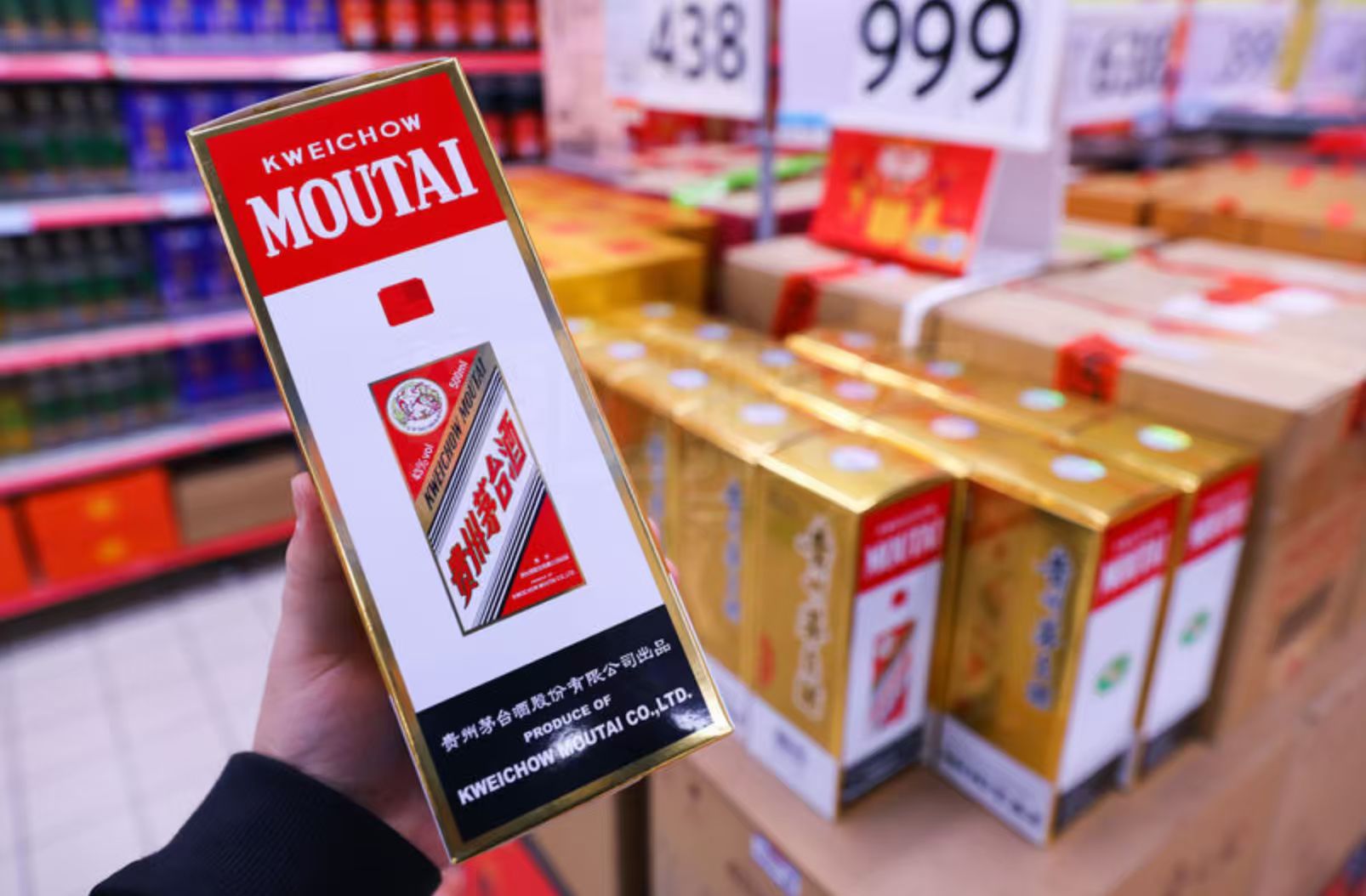
罕见主动控价!飞天茅台价格“V字反转”再反转……
Guo Ji Jin Rong Bao· 2025-12-15 12:26
Core Viewpoint - Guizhou Moutai has implemented a series of price control strategies in response to the wholesale price of its flagship product, Flying Moutai, dropping below 1499 yuan, marking a significant shift in its pricing policy [1][3]. Price Control Strategies - From December 13 to 14, Guizhou Moutai announced it would stop supplying all Moutai products to distributors by the end of the year, except for those with completed prepayments [1]. - The company plans to significantly reduce the quotas for non-standard products like 15-year and 1-liter Flying Moutai in the coming year, shifting to a market-driven supply model based on demand [1]. - East Wu Securities reported that Moutai's growth focus for next year will be on three core products: Moutai 1935, Flying Moutai, and Premium Moutai, targeting price bands of 600 yuan, 1500 yuan, and 2000 yuan respectively [1]. Market Reaction - Following the announcement of price control measures, the wholesale price of Flying Moutai rebounded from a low of 1485 yuan to 1570 yuan, indicating a short-term recovery in pricing [3]. - However, the overall market sentiment remains cautious, with concerns that the lack of significant improvement in white liquor consumption and ongoing industry adjustments may hinder Moutai's return to previous high premium pricing [4]. Financial Performance - In the first three quarters of the year, Guizhou Moutai reported revenue of 130.9 billion yuan, a year-on-year increase of 6.32%, and a net profit of 64.63 billion yuan, also up 6.25%, marking the lowest growth rates in nearly 11 years [5]. - To boost market confidence, the company announced a substantial interim dividend of over 30 billion yuan, with a distribution of 23.957 yuan per share (tax included) scheduled for December 18 [5].
德阳白酒报价:醇香背后的价格密码
Sou Hu Cai Jing· 2025-09-26 04:56
Core Viewpoint - The pricing of Baijiu in Deyang is influenced by a complex interplay of raw material costs, production processes, consumer demand, and brand value, reflecting the city's drinking habits and market dynamics [1][7]. Raw Material Costs - The price of glutinous sorghum, a key ingredient for high-quality Baijiu, has increased from 3.8 yuan per jin last year to 5.2 yuan per jin this year, a rise of over 36%, which directly raises the production costs of pure grain solid-state fermented Baijiu [3]. - For locally produced strong-flavor Baijiu, the price for a 500ml bottle typically exceeds 180 yuan when made from local glutinous sorghum, while those made from ordinary northeastern sorghum can be as low as 70 yuan, creating a price difference of nearly 1.6 times [3]. - The price of auxiliary materials like wheat and rice is also sensitive to fluctuations, with a drought last summer causing a 1200 yuan per ton increase in the price of some mid-to-low-end Baijiu, which was reflected in the market within two months [3]. Production Complexity - Traditional Daqu strong-flavor production involves multiple steps, including "continuation of fermentation, solid-state fermentation, and solid-state distillation," taking up to 45 days, resulting in a base cost of 60 yuan per jin, with market prices generally above 200 yuan per bottle [4]. - In contrast, liquid-state Baijiu, which uses edible alcohol for blending, has a production cycle of only 3 days, with 500ml bottles often priced below 40 yuan [4]. Aging and Brand Value - The aging process significantly affects pricing, with "three-year aged" strong-flavor Baijiu priced 50% higher than newly brewed products, and "five-year aged" premium versions can exceed 800 yuan due to enhanced flavor from esterification during aging [4]. - National high-end brands maintain stable prices around 1300 yuan per bottle for their core products, with brand premium accounting for over 70% of the price [4]. - Regional strong brands offer mid-range products priced between 120-350 yuan per bottle, becoming popular choices for weddings and business gatherings, with annual price fluctuations around 12% [4]. Consumer Demand and Market Segmentation - The wedding market favors "red bottle celebratory versions," with 500ml bottles priced between 90-200 yuan, while business dinners focus on mid-to-high-end products priced above 300 yuan, which include costs for packaging and brand marketing [5]. - Daily consumption favors products priced between 60-150 yuan per bottle, while bulk purchases of high-proof bulk liquor are stable at 18-30 yuan per jin, with prices potentially increasing by up to 10% before the Spring Festival due to heightened demand [5]. Market Dynamics - Prices for mid-to-low-end Baijiu typically rise by 8%-12% in the two months leading up to the Spring Festival due to concentrated demand, followed by a gradual price adjustment post-festival [5]. - Local festivals and events can cause temporary price increases for custom Baijiu, which return to normal after the events conclude [5]. - Imported Baijiu prices are more affected by exchange rates and tariffs, with a specific Scottish whisky increasing by 15% over six months due to the appreciation of the pound, while logistics cost reductions from the China-Europe Railway have led to a 10% decrease in some imported vodka prices [5].
