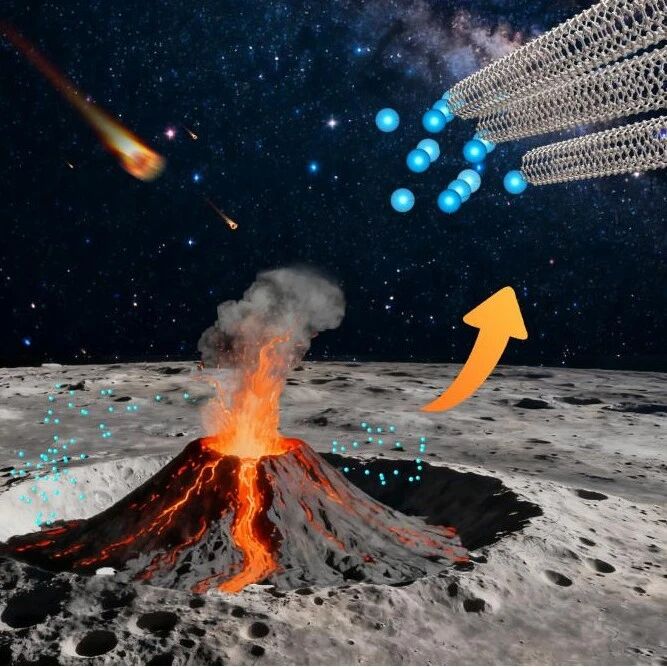
石墨碳

Search documents
嫦娥六号月壤研究成果上新,专家讲述发现过程
Ren Min Ri Bao· 2026-02-03 03:12
Core Insights - The research team has successfully analyzed lunar soil samples from the Chang'e 6 mission, revealing the presence of naturally formed single-walled carbon nanotubes and graphite carbon, which alters the understanding of the Moon's environment and its ability to generate fine carbon nanostructures [1][2] Group 1: Research Achievements - The core research objective for the Chang'e 6 lunar soil samples was to systematically analyze the unique nanostructures of carbon within the samples [1] - The team utilized advanced microscopy and analytical techniques to capture clear images and dynamic videos of the carbon structures, marking the first international confirmation of these findings [1] - A comparison between lunar surface samples and those from the far side indicated a higher number of carbon structural defects in the far side samples, suggesting asymmetry in material composition and evolutionary processes between the two sides of the Moon [1] Group 2: Challenges and Innovations - The primary challenge faced was to present clear nanostructures under a transmission electron microscope while preventing damage from high-energy electron beams [2] - The team adopted a dual approach of optimizing instrument parameters and enhancing efficiency in sample preparation and observation to minimize observation time [2] - The successful results were attributed to collaborative efforts, theoretical research foundations, and expertise in sample testing and data analysis, highlighting the importance of teamwork in achieving these breakthroughs [2]
在微观尺度上探寻月球的历史(我身边的最强大脑)
Ren Min Wang· 2026-02-01 22:13
Core Insights - The research team involved in the Chang'e 6 lunar sample analysis has made significant discoveries regarding the unique carbon nanostructures found in lunar soil, which challenge previous understandings of the Moon's surface environment [1][2] Group 1: Research Findings - The team successfully identified and confirmed the presence of naturally occurring single-walled carbon nanotubes and graphite carbon in lunar soil samples, marking a first in international research [1] - A comparative analysis between lunar surface samples and those from the far side revealed a higher number of carbon structural defects in the far side samples, indicating asymmetry in material composition and evolutionary processes between the two sides of the Moon [1] Group 2: Research Methodology - The research faced challenges in presenting clear nanostructures under transmission electron microscopy while preventing damage from high-energy electron beams, leading to a dual approach of optimizing instrument parameters and enhancing sample preparation efficiency [2] - The successful results were attributed to the collaborative efforts of the research team, which combined theoretical research foundations with practical skills in sample testing, preparation, and data analysis [2]

吉林大学科研团队在嫦娥六号月球样品中首次发现天然单壁碳纳米管与石墨碳
Xin Lang Cai Jing· 2026-01-21 03:07
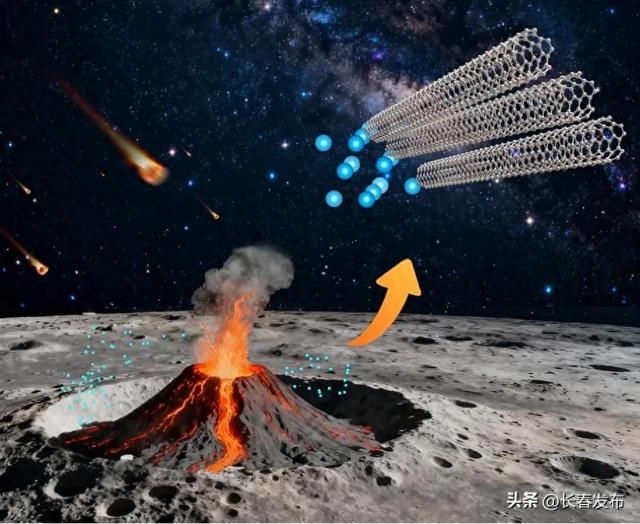
Core Insights - The research team from Jilin University has made a significant discovery by identifying naturally formed single-walled carbon nanotubes and graphite carbon from lunar soil samples collected by the Chang'e 6 mission, highlighting the intricate "high-energy physical-chemical processes" on the moon's surface and confirming more active geological activity on the moon's far side, which provides crucial data for studying the moon's evolutionary history [1][3]. Group 1 - The study utilized various microscopy and spectroscopy techniques to systematically characterize the lunar samples from the Chang'e 6 mission, marking the first identification of graphite carbon and the natural formation of single-walled carbon nanotubes without human intervention [3]. - The formation of these carbon nanotubes is closely related to multiple factors such as micro-meteorite impacts, volcanic activity, and solar wind irradiation, showcasing nature's ability to synthesize key materials under extreme conditions [3]. - A comparative study between the Chang'e 6 lunar far side samples and the Chang'e 5 lunar near side samples revealed that the carbon structure in the Chang'e 6 samples exhibited more pronounced defect characteristics, likely due to a more intense history of micro-meteorite impacts on the moon's far side, indicating new asymmetries in material composition and evolutionary processes between the moon's near and far sides [3].
国际上首次!我国科研团队又一重要发现
中国能源报· 2026-01-20 11:23
Core Viewpoint - The research team from Jilin University has made a significant discovery by identifying naturally formed single-walled carbon nanotubes and graphite carbon in lunar samples from the Chang'e 6 mission, providing critical data for understanding the Moon's evolutionary history [1][2]. Group 1 - The study utilized various microscopy and spectroscopy techniques to systematically characterize the lunar samples collected from the far side of the Moon, marking the first international confirmation of naturally occurring single-walled carbon nanotubes [1]. - The research indicates that the formation of these carbon nanotubes is closely related to multiple factors, including micro-meteorite impacts, volcanic activity, and solar wind irradiation, showcasing nature's ability to synthesize key materials under extreme conditions [1]. - A comparative study between the Chang'e 6 samples and those from the Chang'e 5 mission revealed that the carbon structures in the Chang'e 6 samples exhibit more pronounced defect characteristics, likely due to a more intense history of micro-meteorite impacts on the Moon's far side [2]. Group 2 - This discovery follows the previous finding of few-layer graphene in the Chang'e 5 lunar samples, highlighting a new asymmetry in the material composition and evolutionary processes between the Moon's near and far sides [2]. - The research findings have been published in the academic journal "Nano Letters," further contributing to the scientific understanding of lunar geology [2].