
嫦娥五号月壤样品

Search documents
重磅!嫦娥五号月壤样品落户东南大学
Yang Zi Wan Bao Wang· 2026-02-06 06:25
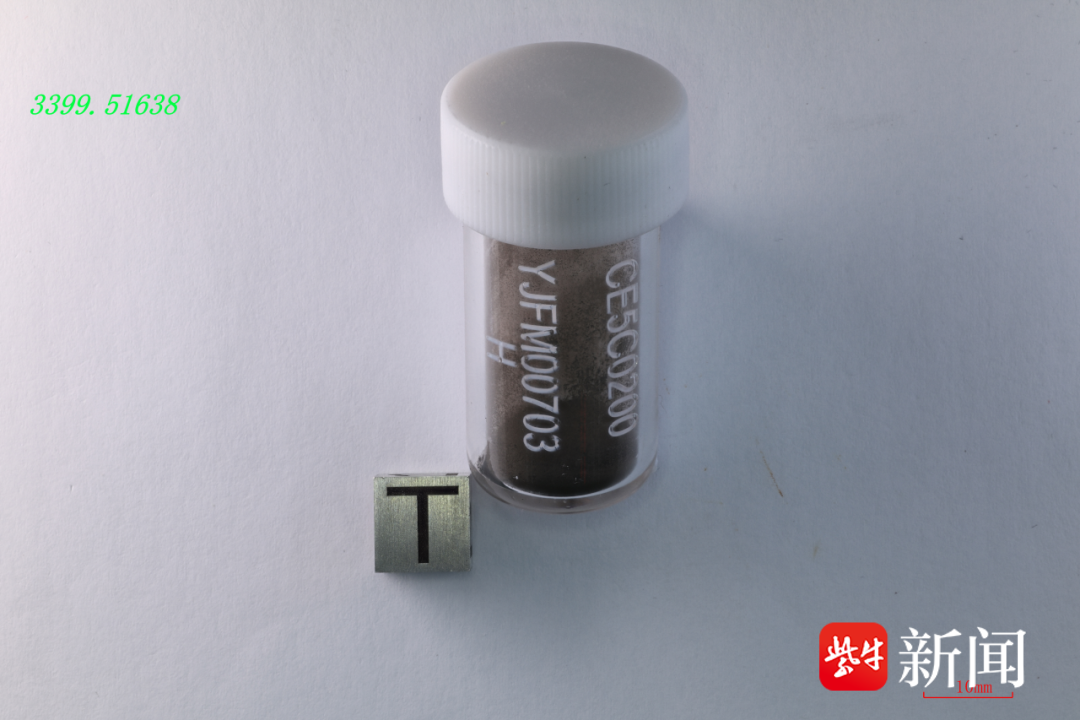
Core Insights - The Chang'e 5 lunar soil sample has been approved for research by Southeast University, marking the first time the university has received authentic lunar samples for scientific study [1][3] - The approval signifies a new phase in the university's research on in-situ resource utilization and extraterrestrial construction materials [3] Group 1: Research and Development - A total of 49 applications from 14 research institutions were approved, with a total sample issuance of 22,836.6 mg [1] - The lunar soil sample awarded to Southeast University is 350 mg of CE5C0200YJFM00703H powder [1][3] - The research team, led by Academician Miao Changwen, includes top talents from various disciplines such as civil engineering, materials science, and energy [3] Group 2: Research Objectives and Implications - The core research topic focuses on the macro-accumulation performance control of Chang'e 5 lunar soil particles and the design of key materials for lunar surface construction [3] - The research aims to address challenges posed by the extreme environment of the lunar surface and is expected to provide critical material preparation technologies for lunar base construction [3] - The Chang'e 5 and 6 missions have collectively returned 3,666.3 grams of lunar soil, which is considered invaluable for advancing human exploration of space [3]


嫦娥六号月壤研究成果上新,专家讲述发现过程
Ren Min Ri Bao· 2026-02-03 03:12
Core Insights - The research team has successfully analyzed lunar soil samples from the Chang'e 6 mission, revealing the presence of naturally formed single-walled carbon nanotubes and graphite carbon, which alters the understanding of the Moon's environment and its ability to generate fine carbon nanostructures [1][2] Group 1: Research Achievements - The core research objective for the Chang'e 6 lunar soil samples was to systematically analyze the unique nanostructures of carbon within the samples [1] - The team utilized advanced microscopy and analytical techniques to capture clear images and dynamic videos of the carbon structures, marking the first international confirmation of these findings [1] - A comparison between lunar surface samples and those from the far side indicated a higher number of carbon structural defects in the far side samples, suggesting asymmetry in material composition and evolutionary processes between the two sides of the Moon [1] Group 2: Challenges and Innovations - The primary challenge faced was to present clear nanostructures under a transmission electron microscope while preventing damage from high-energy electron beams [2] - The team adopted a dual approach of optimizing instrument parameters and enhancing efficiency in sample preparation and observation to minimize observation time [2] - The successful results were attributed to collaborative efforts, theoretical research foundations, and expertise in sample testing and data analysis, highlighting the importance of teamwork in achieving these breakthroughs [2]
嫦娥六号月壤样品中首次发现天然单壁碳纳米管与石墨碳 在微观尺度上探寻月球的历史(我身边的最强大脑)
Ren Min Ri Bao· 2026-02-01 22:26
Core Insights - The research team involved in the Chang'e 6 lunar mission has made significant discoveries regarding the unique carbon nanostructures found in lunar soil samples, which have implications for understanding the Moon's geological history and environment [1][2] Group 1: Research Findings - The team successfully identified and confirmed the presence of naturally occurring single-walled carbon nanotubes and graphite carbon in lunar soil, marking a first in international research [1] - A comparison between lunar surface samples and those from the far side revealed a higher number of carbon structural defects in the far side samples, indicating asymmetry in material composition and evolutionary processes between the two sides of the Moon [1] Group 2: Research Methodology - The research faced challenges in presenting clear nanostructures under transmission electron microscopy while preventing damage from high-energy electron beams, leading to a dual approach of optimizing instrument parameters and enhancing sample preparation efficiency [2] - The successful results were attributed to the collaborative efforts of the research team, which combined theoretical research foundations with expertise in sample testing, preparation, and data analysis [2] Group 3: Implications for Future Research - The findings from the Chang'e 6 lunar soil samples open new avenues for fundamental research, allowing for deeper insights into scientific questions arising from lunar exploration [2]
在微观尺度上探寻月球的历史(我身边的最强大脑)
Ren Min Wang· 2026-02-01 22:13
Core Insights - The research team involved in the Chang'e 6 lunar sample analysis has made significant discoveries regarding the unique carbon nanostructures found in lunar soil, which challenge previous understandings of the Moon's surface environment [1][2] Group 1: Research Findings - The team successfully identified and confirmed the presence of naturally occurring single-walled carbon nanotubes and graphite carbon in lunar soil samples, marking a first in international research [1] - A comparative analysis between lunar surface samples and those from the far side revealed a higher number of carbon structural defects in the far side samples, indicating asymmetry in material composition and evolutionary processes between the two sides of the Moon [1] Group 2: Research Methodology - The research faced challenges in presenting clear nanostructures under transmission electron microscopy while preventing damage from high-energy electron beams, leading to a dual approach of optimizing instrument parameters and enhancing sample preparation efficiency [2] - The successful results were attributed to the collaborative efforts of the research team, which combined theoretical research foundations with practical skills in sample testing, preparation, and data analysis [2]
通讯|中泰航天合作助力泰国航天事业发展
Xin Hua She· 2025-04-12 12:42
Core Viewpoint - The cooperation between China and Thailand in the aerospace sector is significantly contributing to the development of Thailand's space technology and capabilities [1][2][3] Group 1: Cooperation and Development - The Space Innovation Park in Chonburi, Thailand, houses various aerospace-related institutions, including the Thai Satellite Manufacturing Center [1] - The Thai Geo-Informatics and Space Technology Development Agency (GISTDA) acknowledges China's support in advancing Thailand's space technology, with over 10 collaborative partners in the aerospace field [1][2] - The signing of memorandums of understanding between the China National Space Administration and Thailand's Ministry of Higher Education, Science, Research and Innovation marks a significant step in space exploration and cooperation [2] Group 2: Technological Advancements - The Chang'e 7 mission will carry a Thai-developed "Global Space Weather Monitoring" device, marking Thailand's first scientific instrument to enter deep space [2] - The successful recovery of the "Shijian-19" satellite, which carried Thai agricultural resources, demonstrates the practical applications of space technology for Thailand's food security [2] Group 3: Talent Development - Collaboration with Wuhan University has led to the establishment of a Master's program in Geographic Information Science, enhancing educational opportunities for Thai students in aerospace technology [3] - Young Thai individuals are benefiting from exchanges and study opportunities in China, gaining exposure to cutting-edge aerospace technologies [3] - The ongoing partnership with China is expected to elevate Thailand's space technology to a globally competitive level and contribute to the future space economy [3]